
京野菜は何品目あるのか、読み方の一覧と認定の枠組みから確かめる

Summary of this article
「京野菜」という言葉に公的な定義はなく、定義があるのは「京の伝統野菜」(京都府・37品目)と「京のブランド産品」(京のふるさと産品協会が認証)の2つです。読み方を間違えやすい27品目のふりがな一覧に加えて、地理的表示に登録された万願寺甘とうと京賀茂なす、京都府が育成して品種登録した京都万願寺1号・2号まで、4つの枠組みが何を保証しているのかを公表資料から整理しました。
京野菜を調べはじめると、最初に引っかかるのが名前の読みです。九条ねぎ、Shishigatani kabocha、聖護院大根、柊野ささげ。どれも京都の地名がそのまま品目名になっているため、地名を知らないと読めません。そしてもうひとつ引っかかるのが品目数です。37品目と書いてあるページもあれば、40品目、21品目、31品目と書いてあるページもあります。
数が合わないのは、どれかが間違っているからではありません。京都には性格の違う複数の認定・認証の枠組みがあり、それぞれ数える対象が違うからです。この記事では、読み方を一覧表にしたうえで、枠組みごとに何が保証されているのかを公的な資料に沿って整理します。
TOC
「京野菜」という言葉に公的な定義はない
先に結論を書きます。「京野菜」そのものを定義した公的な文書は、京都府にも京都市にも、認証を担う公益社団法人京のふるさと産品協会にも見当たりません。定義が置かれているのは「Kyoto Heirloom Vegetables」と「京のブランド産品」という2つの枠組みのほうです。
京都府が定義しているのは2つの枠組みだけ
京都府のウェブサイトで京野菜を扱っているページは「京の伝統野菜・京のブランド産品」という表題になっています。そこに並んでいるのは、京の伝統野菜の定義5項目と、京のブランド産品の認証要件です。「京野菜とは何々である」という一文は、このページのどこにも出てきません。京都市の「京の伝統野菜について」も同じで、示されているのは伝統野菜の定義だけです。
JA京都は府内産の野菜すべてを京野菜と呼んでいる
この点をはっきり書いているのがJA京都です。同会の京野菜のページには「『京野菜』の具体的な定義はありません。京都府内で取れた野菜は全て京野菜と総称されています」と明記され、続けて「JA京都においても、管内で生産された野菜全てを『京野菜』として位置づけています」と書かれています。
実際、JA京都のページには「京野菜に含まれるJA京都管内の一般野菜」として、小松菜、胡瓜、枝豆、ほうれん草、実えんどう、トマト、玉ねぎ、里芋、春菊、人参、グリーンアスパラ、白菜などが並びます。トマトやアスパラガスも、この立場では京野菜です。京都らしいイメージのある野菜だけを京野菜と呼ぶ言い方は、あくまで通称にすぎません。
品目数が資料ごとに食い違う理由
37、40、21、31という数字は、それぞれ別のものを数えています。37は京の伝統野菜の品目数、40は伝統野菜に「準じるもの」3品目を足した数、21は京のブランド産品のうち野菜の品目数、31はブランド産品を米や豆や水産物まで含めて数えた総数です。どれも正しく、対象が違うだけです。読んでいる資料がどれを数えているのかを先に確かめると、混乱しなくなります。
読み方を間違えやすい京野菜を一覧で確認する
読み、所属する枠組み、出回る季節、覚えておきたい点を1枚にまとめました。枠組み欄の「伝統」は京の伝統野菜、「準」は京の伝統野菜に準じるもの、「ブランド」は京のブランド産品、「GI」は農林水産省の地理的表示保護制度を指します。
| Item name | ふりがな | 枠組み | 主に 出回る頃 | 覚えて おきたい点 |
|---|---|---|---|---|
| Kujo green onion | くじょうねぎ | 伝統/ Brand | Anniversary | 京都市南区の 九条が名の由来 |
| Kyo-mibuna | きょうみぶな | 伝統/ Brand | Anniversary | 壬生寺のあたりで 作られていた |
| Kyo mizuna | きょうみずな | 伝統/ Brand | Anniversary | 京都以外では 京菜とも呼ばれる |
| Kamo eggplant | かもなす | 伝統/ ブランド/GI | Summer | GI名は 「京賀茂なす」 |
| Shishigatani kabocha | ししがたに kabocha | 伝統/ Brand | Summer | 「しかがたに」 とは読まない |
| Fushimi togarashi | ふしみ とうがらし | 伝統/ Brand | Summer | 細長く ひもとうとも呼ぶ |
| Kyo Yamashina eggplant | きょう やましななす | 伝統/ Brand | Summer | 「やましろ」 ではない |
| Manganji togarashi (万願寺甘とう) | まんがんじ とうがらし | 準/ ブランド/GI | Summer | ブランド名と GI名は甘とう |
| 京夏ずきん | きょう なつずきん | Brand | Summer | 黒大豆から生まれた 夏のえだまめ |
| 柊野ささげ | ひらぎのささげ | 伝統 | Summer | 「ひいらぎの」 とは読まない |
| 桂うり | かつらうり | 伝統 | Summer | 西京区桂が産地 |
| 鷹峯とうがらし | たかがみね とうがらし | 準 | Summer | 北区鷹峯の とうがらし |
| Hanana | はなな | 準/ Brand | Spring | なたねの蕾を 食用にしたもの |
| 京はたけ菜 | きょうはたけな | Brand | Spring | 在来種の なたねが由来 |
| Kyoto bamboo shoots | きょうたけのこ | 伝統/ Brand | Spring | 定義上たけのこも 野菜に含まれる |
| Shogoin daikon | しょうごいん だいこん | 伝統/ Brand | Autumn–winter | 「せいごいん」 とは読まない |
| Shogoin turnip | しょうごいんかぶ | 伝統/ Brand | Autumn–winter | 千枚漬に使われる 大型のかぶ |
| Horikawa gobo | ほりかわごぼう | 伝統/ Brand | Autumn–winter | 2年がかりで 栽培する |
| Ebi-imo | Ebi-imo | 伝統/ Brand | Autumn–winter | 海老芋とも書く さといもの一種 |
| Kuwai | Kuwai | 伝統/ Brand | Autumn–winter | 漢字では慈姑 |
| Murasaki zukin | むらさきずきん | Brand | Autumn–winter | 丹波黒大豆から 生まれたえだまめ |
| Kyo-kokabu | きょうこかぶ | Brand | Autumn–winter | 伝統野菜には 含まれない |
| Kintoki carrot | きんとき Carrot | Brand | Autumn–winter | 伝統野菜には 含まれない |
| Yama-no-imo | Yama-no-imo | Brand | Autumn–winter | つくねいもとも 呼ばれる |
| すぐき菜 | すぐきな | 伝統 | Autumn–winter | 上賀茂の漬物 すぐきの原料 |
| 松ヶ崎浮菜かぶ | まつがさき うきなかぶ | 伝統 | Winter | 左京区松ヶ崎の 固有品種 |
| 佐波賀だいこん | さばかだいこん | 伝統 | 冬から春 | 舞鶴市佐波賀が 発祥とされる |
| うぐいす菜 | うぐいすな | 伝統 | Winter | 鶯の鳴く頃に 収穫する |
地名がそのまま品目名になっている
読みにくい京野菜の多くは、京都の地名を冠しています。九条は京都市南区、鹿ヶ谷と聖護院は左京区、堀川は上京区から中京区にかけての通り、松ヶ崎は左京区、鷹峯と柊野は北区、桂は西京区、山科は山科区です。佐波賀と大内と舞鶴は舞鶴市にあたります。地名を先に覚えると、読みだけでなく産地の見当もつくようになります。
逆に言えば、地名を知らない人が初見で正しく読めないのは当然です。京都市内に住んでいても、柊野や佐波賀を正確に読める人はそれほど多くありません。
柊野は「ひらぎの」、佐波賀は「さばか」
柊野ささげは、読みを間違えやすい筆頭です。柊の字から「ひいらぎのささげ」と読んでしまいがちですが、京都市北区上賀茂柊野という地名は「ひらぎの」です。さやの長さが80センチから90センチにもなることから三尺ささげとも呼ばれます。
佐波賀だいこんも同じ種類のつまずきがあります。「さばが」と濁って読まれることがありますが、舞鶴市佐波賀は「さばか」です。秋に種をまいて翌年の2月から3月に収穫する晩成型で、一般的な大根が約3か月で収穫できるのとは栽培期間がまるで違います。昭和33年頃から急速に衰退し、平成22年に京都府が保管していた種子を使って生産を復活させるEffortsが始まりました。
「ずきん」「甘とう」は比較的新しい名前
紫ずきん、京夏ずきん、万願寺甘とうは、古くからの呼び名ではなく、流通のためにつけられた名前です。紫ずきんは丹波黒大豆から生まれたえだまめで、豆の薄皮が薄紫色をしていること、豆の形が頭巾に似ていることが名の由来とされています。万願寺甘とうは、万願寺とうがらしを辛くない甘味種として売り出すためのブランド名です。
この3つは読み違えこそ少ないものの、「京の伝統野菜なのか」という別の疑問を呼びます。紫ずきんと京夏ずきんは伝統野菜ではなくブランド産品だけ、万願寺とうがらしは伝統野菜に準じるものとブランド産品の両方に入ります。次の章から、その枠組みの中身に入ります。
京の伝統野菜を決めている5つの条件
京の伝統野菜は、昭和63年3月に京都府農林水産部が発行した資料で定義されました。京都府が公表している定義は次の5項目です。
- 明治以前の導入栽培の歴史を有する
- 京都市域のみならず府内全域を対象とする
- たけのこを含む
- キノコ類、シダ類(ぜんまい、わらび他)を除く
- 栽培又は保存されているもの及び絶滅した品目を含む
京都市内のものだけを指す言葉ではない
2つめの条件が効いてきます。京の伝統野菜は京都市域に限りません。佐波賀だいこん、佐波賀かぶ、舞鶴かぶは舞鶴市が発祥とされ、大内かぶも舞鶴市の地名に由来します。じゅんさいも京都市内の品目ではありません。京都市が紹介しているのは、市内で栽培されている品目に絞った一覧なので、府全体の一覧より数が少なくなります。
「京の伝統野菜の一覧を見たのに、聞いたことのある名前が載っていない」というときは、市の一覧と府の一覧のどちらを見ているかを確かめてください。
たけのこを含み、きのことしだを除く
3つめと4つめの条件は、対象の線引きです。植物学の分類ではなく、京都の食卓での扱われ方に合わせた区切りになっています。たけのこは野菜として扱われ、京たけのことして伝統野菜にもブランド産品にも入ります。一方、きのこ類としだ類は、ぜんまいやわらびを含めて対象から外されました。丹波産のきのこが京野菜の話に出てこないのは、この線引きのためです。
「準じるもの」という別枠に入る3品目
明治以前という条件を満たさないものの、京都の市場流通で欠かせなくなった野菜には、「京の伝統野菜に準じるもの」という別枠が用意されています。該当するのは万願寺とうがらし、鷹峯とうがらし、花菜(伏見寒咲きなたね)の3品目で、伝統野菜37品目と合わせて計40品目という数え方になります。
万願寺とうがらしは大正時代に舞鶴で生まれたとされ、伏見とうがらしと日本海を経由して伝わったアジア系の品種などが自然交雑して誕生したと考えられています。明治以前という条件には届かないため、伝統野菜そのものではなく準じるものに位置づけられています。「万願寺とうがらしは京の伝統野菜ですか」という問いに一言で答えにくいのは、この扱いのためです。
FOR BUSINESS
乾燥野菜を業務用でお探しですか
国産の野菜・果物を乾燥し、必要に応じて粉砕してお出ししています。扱っている品目は100種前後で、規格は 乾燥品の一覧・パウダーの一覧 に掲載しています。
少量でのご購入は、姉妹ブランドの通販サイト OYAOYA で承っています。
京の伝統野菜37品目と、いま誰が作っているのか
37品目を分類ごとに並べます。昭和63年の整理では、現存するものが34品目、絶滅したものが3品目とされました。
| Category | 品目名(ふりがな) | 数 |
|---|---|---|
| だいこん | 辛味だいこん(からみ)、青味だいこん(あおみ)、時無しだいこん(ときなし)、桃山だいこん(ももやま)、茎だいこん(くき)、佐波賀だいこん(さばか)、聖護院だいこん(しょうごいん) | 7 |
| Q3. Can you powder-process raw material I bring in? | 松ヶ崎浮菜かぶ(まつがさきうきな)、鶯菜(うぐいすな)、佐波賀かぶ(さばか)、大内かぶ(おおうち)、すぐき菜(すぐきな)、舞鶴かぶ(まいづる)、聖護院かぶ(しょうごいん) | 7 |
| つけ菜 | みず菜(みずな)、壬生菜(みぶな)、畑菜(はたけな) | 3 |
| Eggplant | もぎなす、賀茂なす(かも)、山科なす(やましな) | 3 |
| とうがらし | 伏見とうがらし(ふしみ)、田中とうがらし(たなか) | 2 |
| kabocha ・うり | 鹿ヶ谷かぼちゃ(ししがたに)、桂うり(かつらうり) | 2 |
| いも ・根菜 | えびいも、堀川ごぼう(ほりかわ)、くわい、京うど(きょううど) | 4 |
| Others | 柊野ささげ(ひらぎの)、京みょうが(きょうみょうが)、九条ねぎ(くじょう)、京せり(きょうせり)、京たけのこ(きょう)、じゅんさい | 6 |
| 絶滅した もの | 郡だいこん(こおり)、東寺かぶ(とうじ)、聖護院きゅうり(しょうごいん) | 3 |
だいこんとかぶで37品目の4割近くを占める
だいこん7品目とかぶ7品目で14品目、絶滅した郡だいこんと東寺かぶを足すと16品目になります。京都の食文化で漬物と煮物が大きな位置を占めてきたことが、そのまま品目の偏りに表れています。聖護院だいこんは、尾張から入った長い大根が耕土の浅い聖護院のあたりで作り続けられるうちに丸くなったと伝えられており、産地の土がかたちを変えた例としてよく引かれます。
個々の品目の育て方や食べ方は、聖護院大根の記事introduced in detail on.
現存と絶滅の数が資料によって違う
「現存34・絶滅3」と書いてある資料と、「現存35・絶滅2」と書いてある資料の両方が出回っています。これは書き間違いではなく、出典の違いです。国立国会図書館のレファレンス協同データベースに登録された調査回答によれば、京都府農林水産部が1988年に発行した『京の伝統野菜』では絶滅したものを郡だいこん、東寺かぶ、聖護院きゅうりの3種類としているのに対し、2002年に京のふるさと産品価格流通安定協会が発行した同名の資料の一覧表では、聖護院きゅうりを現存するものとして記載しています。
どちらの数字を見ても37品目という合計は変わりません。食い違うのは聖護院きゅうりの扱い1件だけです。
京都市内では1戸に委託して守られている品目がある
伝統野菜の一覧に名前が載っていることと、市場で買えることは別の話です。京都市は「京都市特産そ菜保存圃」を設置し、市内の農家に栽培を委託して品目を維持しています。市が品目ごとに公表している栽培戸数を拾うと、産地の厚みがまるで違うことが見えてきます。
| Item | 京都市内の 栽培戸数 | 委託先など |
|---|---|---|
| Horikawa gobo | 20戸 | 市内で広く 栽培が続く |
| Ebi-imo | 9戸 | 市内で広く 栽培が続く |
| 辛味だいこん | 7戸 | — |
| 鷹峯とうがらし | 5戸 | 準じるもの |
| 青味だいこん | 4戸 | 種の自家採種を 続けている |
| Yamashina eggplant | 3戸 | — |
| もぎなす | 2戸 | — |
| Shishigatani kabocha | 2戸 | — |
| 松ヶ崎浮菜かぶ | 1戸 | 北区上賀茂の 農家に委託 |
| うぐいす菜 | 1戸 | 保存圃による 維持 |
| 桂うり | 1戸 | 西京区上桂の 農家に委託 |
| 柊野ささげ | 1戸 | 北区上賀茂の 農家に委託 |
| 京みょうが | 1戸 | 保存圃による 維持 |
| 桃山だいこん | 1戸 | 種子保存用が 中心 |
松ヶ崎浮菜かぶ、うぐいす菜、桂うり、柊野ささげ、京みょうが、桃山だいこんは、京都市内では1戸の農家が栽培を担っています。一般の小売店に並ぶことはほとんどなく、名前を知っていても実物を見る機会は限られます。Shishigatani kabochaが市内2戸というのも、名前の知名度からすると意外に映るはずです。
京のブランド産品を認証しているのは京都府ではない
ここが最も誤解されている点です。京の伝統野菜を定義したのは京都府ですが、京のブランド産品を認証しているのは公益社団法人京のふるさと産品協会です。定義する主体も、審査する対象も違います。
審査しているのは品目ではなく出荷物
京のブランド産品は、「京都こだわり生産認証システム」によって生産された京都産の農林水産物のうち、品質・規格・生産地を厳選したものを協会が認証する仕組みです。認証の要件として、イメージが京都らしいこと、出荷単位としての適正な量を確保できること、品質と規格を統一できること、他産地に対する優位性や独自性の要素があることが挙げられています。
つまり、品目を歴史で選ぶ京の伝統野菜と違い、京のブランド産品は毎年の出荷物が基準を満たしているかどうかを見ます。同じ品目でも、基準に届かない出荷物にはマークが付きません。
京マークが示していること
認証された産品には「京のブランド産品」マーク、通称・京マークが貼られます。京都の頭文字のKをシンボル化し、京都の農・林・水産の実りを3つの丸に、その源である大地・水・太陽を3本のラインで表現したデザインです。ブランド指定産地で生産された農林水産物を原材料とする加工品も、基準を満たせばこのマークを使用できます。
もとになる京都こだわり生産認証システムは、農薬と化学肥料の使用を減らした栽培指針に沿うこと、認証検査員が栽培状況と記帳をチェックすること、情報の開示によって生産者が分かることを特徴としています。マークは産地と作り手をたどれる目印として機能します。
野菜21品目を含む31品目が認証されている
京のブランド産品は全体で31品目です。内訳は野菜21品目、栗・豆3品目、果実2品目、水産物2品目、加工品2品目、酒米1品目です。野菜21品目は季節ごとに次のように区分されています。
- 周年(3品目)京みず菜、京壬生菜、九条ねぎ
- 春(3品目)京はたけ菜、花菜、京たけのこ
- 夏(6品目)賀茂なす、伏見とうがらし、万願寺甘とう、京山科なす、鹿ヶ谷かぼちゃ、京夏ずきん
- 秋冬(9品目)紫ずきん、京こかぶ、堀川ごぼう、えびいも、金時にんじん、やまのいも、聖護院かぶ、聖護院だいこん、くわい
周年に区分されている3品目は、小株で早取りする作型が広がったことで一年を通して出荷されるようになりました。Kujo green onionが全国の飲食店で使われるようになったのも、この供給の安定が背景にあります。
金時にんじんは京の伝統野菜には含まれない
「ブランド京野菜は京の伝統野菜の中から選ばれている」という説明を見かけますが、これは正確ではありません。京のふるさと産品協会は金時にんじんについて、明治以前から京都が主産地で栽培していたという史実はなく、京の伝統野菜には含まれていないと明記しています。京料理の彩りとして古くから使われてきたことと、伝統野菜の定義を満たすこととは別だという整理です。
同じく、京こかぶ、紫ずきん、京夏ずきん、やまのいもも伝統野菜ではありません。ブランド産品21品目のうち伝統野菜ではない品目は複数あり、2つの枠組みは包含関係にはなっていません。
平成元年度は7品目18産地から始まった
ブランド認証事業が始まったのは平成元年です。開始時点の認証品目は、春夏が万願寺とうがらし、伏見とうがらし、賀茂なすの3品目、秋冬がみず菜、えびいも、黒大豆、小豆の4品目で、合わせて7品目。指定された産地は18か所でした。そこから品目と産地の指定が進み、現在の31品目に広がっています。
4つの枠組みは、それぞれ何を保証しているのか
京の伝統野菜、京のブランド産品、地理的表示、品種登録。この4つは目的も主体も保証する内容も違います。並べて比べると、混同しなくなります。
| 比較する点 | 京の Heirloom vegetables | 京の ブランド産品 | 地理的表示 (GI) | 品種登録 |
|---|---|---|---|---|
| 決めている Actor | Kyoto Prefecture | 京のふるさと 産品協会 | 農林水産大臣 | 農林水産大臣 |
| 保証して いること | 明治以前から の栽培の歴史 | 生産方法と 品質・規格 | 産地と 結びついた Quality | 品種の 区別性と 育成者の権利 |
| 審査の対象 | Item | 出荷物 | 生産者団体と 生産地 | Variety |
| 産地の限定 | 京都府全域 | 指定された ブランド産地 | 登録された 市町村のみ | 限定しない |
| 表示できる マーク | None | 京マーク | GIマーク | None |
| 期限 | None | 認証の 更新が前提 | None | 育成者権に 存続期間あり |
| 京都の 該当数 | 37 items (準じるもの 3品目は別枠) | 31品目 (うち野菜 21品目) | 2件 | 野菜では 数品種 |
品目を選ぶ制度と、出荷物を選ぶ制度
京の伝統野菜は品目のリストです。一度定義に当てはまれば、その品目は伝統野菜であり続けます。店頭に並んでいる個々の野菜が良いものかどうかを保証する仕組みではありません。対して京のブランド産品は、その年その産地のその出荷物が基準を満たしたかどうかを見ます。買う側から見ると、品質の目印になるのは後者です。
産地を限定するかどうか
最も厳しく産地を絞るのは地理的表示です。登録された市町村の外で作られたものは、同じ品種であってもその名称を使えません。京の伝統野菜は京都府全域が対象なので、府内であれば産地を問いません。品種登録にいたっては産地の制限がなく、種苗を適法に入手できれば他県でも栽培できます。
期限があるのは品種登録だけ
品種登録によって生じる育成者権には存続期間があり、満了すると権利は消滅します。権利が消滅しても品種そのものが消えるわけではなく、むしろ誰でも自由に増殖できるようになります。地理的表示や京の伝統野菜には、こうした期限はありません。同じ野菜でも、枠組みごとに時間の扱いが違う点は押さえておくと役に立ちます。
地理的表示に登録された京都の産品は2つ
農林水産省の地理的表示保護制度は、産地と結びついた品質や評価を持つ産品の名称を、国が登録して保護する仕組みです。農林水産省が公表している登録産品一覧の京都府欄に載っているのは2件です。
| 登録番号 | Name | 登録年月日 | 生産地 | 登録 生産者団体 |
|---|---|---|---|---|
| 第37号 | 万願寺甘とう (マンガンジ アマトウ) | 平成29年 6月23日 | 京都府綾部市、 舞鶴市及び 福知山市 | 全国農業協同 組合連合会 |
| 第165号 | 京賀茂なす (キョウ カモナス) | 令和7年 3月18日 | 京都府京都市 北区、左京区 | 上賀茂特産 野菜研究会 |
万願寺甘とうを名乗れるのは3市だけ
第37号の万願寺甘とうは、生産地が京都府綾部市、舞鶴市及び福知山市に限られています。登録情報では、辛み成分のない甘味種のとうがらしで、大型果でありながら果肉が柔らかく丸ごと食べられること、肩部のくびれとやや湾曲した果形が特徴であることが挙げられています。
地域との結び付きの欄には、舞鶴市万願寺地区で伏見とうがらしが自然交雑して誕生した在来種をもとに、京都府が「京都万願寺2号」という品種を育成したこと、採種など品種の維持は生産地の生産者部会と地元JAが管理していることが記されています。品種と産地の両方を押さえることで、名称を守っています。品目としての姿は万願寺とうがらしの記事.
京賀茂なすは令和7年に登録された
第165号の京賀茂なすは、令和7年3月18日に登録された新しい産品です。生産地は京都市北区と左京区に限られ、登録生産者団体は上賀茂特産野菜研究会です。正円形でヘタに大きな棘があり、黒光りする紫色の外観を持つ大型の丸なすで、肉厚でとろみが強いものの加熱しても煮崩れしないと説明されています。
地域との結び付きの欄では、昭和後期に他地域で小ぶりな賀茂なすの生産が広がるなかで、固定種の自家採種と伝統的栽培技術の伝承に取り組んできた経緯が挙げられています。つまり「賀茂なす」という名前自体は他地域でも使われてきたということです。登録名が「賀茂なす」ではなく「京賀茂なす」になっているのは、その区別のためと読み取れます。
京都のえびいものGIは大阪府に登録されている
紛らわしい例をひとつ挙げます。えびいもは京の伝統野菜でもブランド産品でもありますが、地理的表示に登録されているえびいもは「富田林の海老芋」で、登録は大阪府です。京都の伝統野菜だからといって、その名前のGIが京都府にあるとは限りません。GIを確認するときは、産品名ではなく登録番号と生産地の欄を見てください。
京都府が育成して品種登録した京野菜
4つめの枠組みが品種登録です。農林水産省の登録品種データベースで、出願者名または育成者権者名が京都府になっている品種を調べると、京野菜として流通している品目の裏側が見えてきます。
| 品種名称 | 登録番号 | 登録年月日 | 現在の状態 |
|---|---|---|---|
| 京都万願寺1号 | 14680 | 2007年 1月22日 | 育成者権は 2024年1月21日 に消滅 |
| 京都万願寺2号 | 20759 | 2011 3月28日 | 育成者権が 存続 |
| 京都えびいも1号 | 15655 | 2007年 10月22日 | 育成者権が 存続 |
| Murasaki zukin | 4715 | 1995年 9月14日 | 育成者権は 2010年9月15日 に消滅 |
| 紫ずきん2号 | 17081 | 2008 10月16日 | 育成者権が 存続 |
| 紫ずきん3号 | 23850 | 2015年 2月18日 | 育成者権が 存続 |
| 紫ずきん4号 | 25185 | 2016年 4月27日 | 育成者権が 存続 |
| 京千二百年 (かぶ) | 4719 | 1995年 9月14日 | 育成者権は 2003年9月17日 に消滅 |
万願寺は1号と2号が登録されている
京都万願寺1号は2004年3月19日の出願で2007年1月22日に登録され、育成者権は2024年1月21日に消滅しました。京都万願寺2号は2009年2月6日の出願で2011年3月28日に登録され、育成者権が存続しています。地理的表示の登録情報で品種として挙げられているのは2号のほうです。
ここに、枠組みを重ねる意味が表れています。1号の育成者権は期限切れで消滅しましたが、万願寺甘とうという名称のほうは地理的表示で引き続き守られます。品種の権利と名称の保護を別々に確保しておくと、片方が切れてもブランドは残ります。
えびいもは1号だけが登録に至った
京都えびいも1号は2007年10月22日に登録され、育成者権が存続しています。一方、京都えびいも2号は2011年3月29日に出願されたものの、2013年9月30日に取り下げられ、登録には至っていません。同じように、夏どり丹波黒1号は2012年5月21日に取り下げ、3号は2023年8月30日の出願で登録前の状態です。育成した品種がすべて登録されるわけではないことが分かります。
紫ずきんは4号まで登録されている
紫ずきんは、初代が1993年3月29日出願・1995年9月14日登録で、育成者権は2010年9月15日に消滅しています。その後、2号が2008年、3号が2015年、4号が2016年に登録され、いずれも育成者権が存続しています。店頭で「紫ずきん」として売られているものが具体的にどの品種かは、袋の表示だけでは判断できません。世代が更新され続けているブランド名だと理解しておくのが実際的です。
京野菜を乾燥品にするときに決めておくこと
ここまで見てきたとおり、京野菜には出回る時期が数か月に限られる品目が少なくありません。旬を外した時期にも扱いたいときの選択肢のひとつがDriedです。当社は国産の野菜と果物の温風乾燥と粉砕を受託しており、実際にご相談をいただくときに最初に決めていただく点をまとめます。
形を残すか、粉にするか
最初の分かれ道はここです。スライスやダイスのまま乾燥させて形を残すか、乾燥後に粉砕して粉末にするかで、その後の使い道が変わります。粉砕は100メッシュ相当まで対応しています。汁物やスープに戻して具として使うなら形を残し、生地や調味料に混ぜ込むなら粉にする、という選び方が目安になります。
下処理をどこまで行うか
葉物と根菜、果菜では、洗浄や皮むき、カットの手間がまるで違います。堀川ごぼうのように太くて長いもの、鹿ヶ谷かぼちゃのように形がそろわないものは、カットの仕様を先に決めておくと話が早く進みます。." With a refreshing flavor and crisp bite as its charm, it has the depth to enhance both hot pots and salads. It's easily confused with mibuna, another Kyoto vegetable, but the leaf shape and growth are quite different. This article explains, from the standpoint of one who has faced vegetables in the growing region, everything from Kyo mizuna's features and history to how to tell the varieties apart, its differences from mibuna, its season and growing regions, choosing and storing it, cooking with it, and the commercial and OEM use of dried Kyo mizuna.のような葉物は、洗浄後の水切りをどうするかで仕上がりが変わります。
賞味期限と小分けの単位
乾燥品の賞味期限は、出荷日からおよそ6か月を目安としています。小袋への充填は10グラム以上から対応しています。業務用でまとめて使うのか、小袋で配るのかによって必要な包装が変わるため、想定する使い方を先に共有いただけると仕様が固まりやすくなります。なお、フリーズドライ、焙煎、チップス、レトルトは受託していません。
FOR BUSINESS
乾燥野菜を業務用でお探しですか
国産の野菜・果物を乾燥し、必要に応じて粉砕してお出ししています。扱っている品目は100種前後で、規格は 乾燥品の一覧・パウダーの一覧 に掲載しています。
少量でのご購入は、姉妹ブランドの通販サイト OYAOYA で承っています。
FAQ
Summary
「京野菜」そのものに公的な定義はありません。定義があるのは、京都府が明治以前からの栽培の歴史で品目を選ぶ「京の伝統野菜」37品目と、京のふるさと産品協会が生産方法と品質・規格で出荷物を選ぶ「京のブランド産品」31品目です。この2つは包含関係になく、金時にんじんのようにブランド産品でありながら伝統野菜ではない品目もあります。
さらに、産地を市町村単位まで絞る地理的表示には万願寺甘とうと京賀茂なすの2件が登録され、品種登録には京都万願寺2号や京都えびいも1号など京都府が育成した品種が並びます。枠組みごとに主体も保証する内容も違うため、品目数が資料によって食い違うのは当然です。どの枠組みの話をしているのかを先に確かめると、資料どうしの食い違いに迷わなくなります。
読みに迷ったときは、地名を思い出してください。九条、鹿ヶ谷、聖護院、堀川、柊野、佐波賀。品目名の大半は、その野菜が育った場所の名前です。
We have materials available to help you understand dried processing OEM
Agriture OEM, flexibly handling everything from small lots to large lots
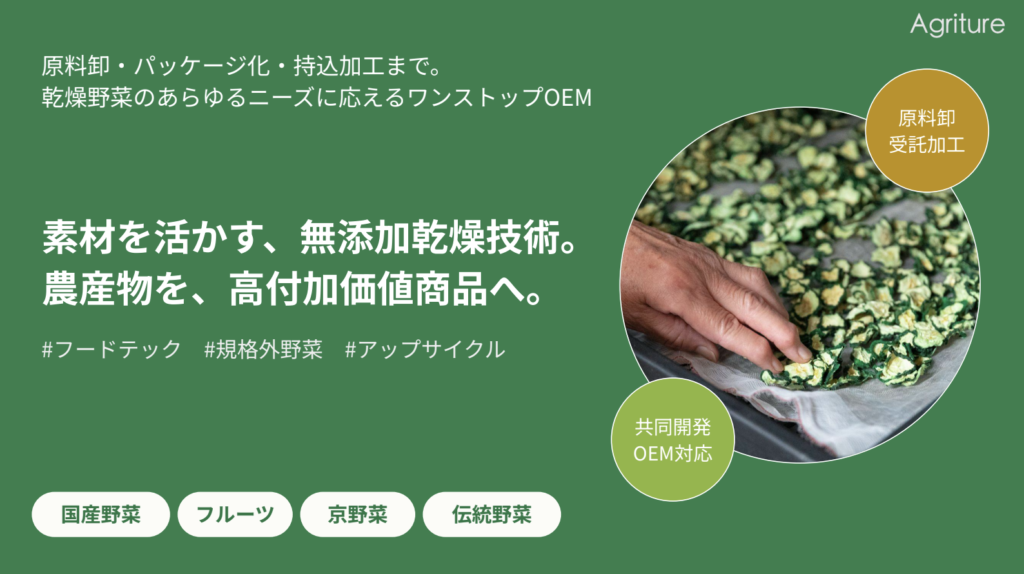
- OEM available from small lots of 10 kg
- Drying of brought-in raw materials also possible
- Support from processing to filling in one place
Recommended reading
Download the OEM contract processing materials
We will send the materials to your email address based on the information you provide.
- How to Build a Seasonal Course Woven with Kyoto Vegetables
- The Work of "Subtraction" That Makes the Most of Kyoto Vegetables
Author of this article
Related articles
-
 Drying Is Another Kind of Cooking
 -
 The Technology to Lock In the Season. The Seasonal Story Dried Vegetables Connect.
 -
 The Cut Face of a Vegetable. The Difference the Cut Makes.
 -
 Tasting Kyoto Vegetables by Aroma. The Pleasure of Cooking That Begins at the Tip of the Nose
 -
 Vessels and Kyoto Vegetables. Creating the Scenery of Plating.
 -
 Vegetables and Heat Control. Between High and Low Flame
 -
 Kyoto Vegetables and Sake. The Happy Relationship of a Dish and a Cup.
 -
 Kyoto Vegetables and Dashi —The Resonance Between the Ingredient's Voice and the Dashi—