
Fushimi Togarashi: A Kyoto Vegetable with Little Heat and Standout Sweetness

Summary of this article
Fushimi togarashi (Fushimi ama-naga, himoto) is a Kyoto heirloom vegetable originating in Kyoto's Fushimi Ward, characterized by a slender 10–15cm shape, vivid green color, and a mild sweetness with almost no heat. With cultivation records since the Edo period, it is in season June–September. It's used in obanzai staples such as simmered with fried tofu, grilled and steeped, tempura, and jako-piman style. The leaves can be enjoyed as "kigosho" in tsukudani, and it can also be grown in home gardens.
Fushimi togarashi (Fushimi togarashi) is one of the Kyoto vegetables originating in Kyoto's Fushimi Ward. Characterized by a slender, wrinkled, vivid-green form, it bears the name togarashi (chili pepper) but is a kind of sweet chili with almost no heat. That's why children and those who dislike spicy food can eat it with peace of mind.
TOC
Features and Appearance of Fushimi Togarashi
Fushimi togarashi is characterized by a slender 10–15cm shape and a vivid green color. Put it in your mouth and you feel its tenderness and distinctive sweetness; it's also called "Fushimi ama-naga" (Fushimi sweet-long) or "himoto." When ripe the flesh turns red, but it doesn't get hot. With few seeds and easy to eat, it's popular across a wide range of ages, from children to adults.
Differences from Manganji Togarashi
| Comparison item | Fushimi togarashi | Manganji togarashi |
|---|---|---|
| Size | 10–15cm, slender | 15–20cm, thick |
| Flesh thickness | Thin | Thick, juicy |
| Texture | Tender | Thick and firm |
| Turnip and daikon look similar, but there is a clear difference in their characteristics after drying. Please use this as a reference for material selection. | Mild sweetness | Strong sweetness |
| Heat | Almost none | Almost none (rarely a hot individual) |
| Well-suited dishes | Grilled dishes, simmered dishes, tempura | Grilled dishes, stir-fries |
| Season | June–September | June–September |
Season and production area
Fushimi togarashi is in season in summer, from June to September. Its birthplace is Kyoto's Fushimi Ward, but it is now grown across Kyoto Prefecture as well as in Nara and Shiga. So familiar in Kyoto's summer that it's even grown in home gardens, it can be bought easily at farm stands and supermarkets.
JA Kyoto official site – Fushimi Togarashi
History and Origin of Fushimi Togarashi
Its history is very old, with records of cultivation remaining from the Edo period. It is still grown mainly in Kyoto, coming into season each year from summer to autumn. Used in obanzai and a wide range of dishes, it is popular not only as a side dish but as a nibble to go with drinks.
Certification as a Kyoto heirloom vegetable
Fushimi togarashi is one of the varieties certified as a "Kyoto Heirloom Vegetable." Chili peppers are said to have come to Japan around the 16th century, and Fushimi togarashi is a sweet chili grown in Kyoto from an early stage. Kyoto's food culture, which favors chilis without heat, nurtured Fushimi togarashi. List of Kyoto vegetable varieties, where you can also check other traditional varieties. Reference
FOR BUSINESS
乾燥伏見唐辛子を、原料としてお探しですか
国産の伏見唐辛子を乾燥・粉砕してお出ししています。カット形状や粒度の指定、継続してのお取引もご相談ください。規格は Dried Fushimi togarashi に掲載しています。
少量でのご購入は、姉妹ブランドの通販サイト OYAOYA で承っています。
Its Connection to the Fushimi Place Name
Kyoto's Fushimi Ward, the source of its name, once flourished as a castle town and is where Toyotomi Hideyoshi built Fushimi Castle. Blessed with water, Fushimi is famous for sake brewing too, and its abundant water and fertile soil suited vegetable growing as well. Fushimi togarashi is a Kyoto vegetable nurtured by the region's climate, and bearing the place name expresses the pride of its growing region.
The Flavor of Fushimi Togarashi and Ways to Enjoy Cooking It
The charm of Fushimi togarashi is that, though a chili, it has almost no heat and offers a mild sweetness and tender texture. With little to overcome, it takes to any cooking method—grilling, simmering, or frying—coloring the summer table.
Sweetness and Aroma Brought Out by Heat
Fushimi togarashi grows sweeter when heated, and a fresh green aroma rises. Grilled, it gains savory char; simmered in dashi, it turns melt-in-the-mouth tender. With thin skin and quick cooking, it can be prepared in a flash—another reason it's beloved as a summer vegetable.
A Summer Vegetable That Pairs Well with Oil
Fushimi togarashi pairs well with sesame oil and olive oil, and stir-fried or made into tempura, its flavor grows rich. Coated in oil, its green finishes vivid, and its appetizing looks stir the appetite. With none of the bitterness of a bell pepper, it's a summer vegetable easy for children to eat too.
Recommended Ways to Eat Fushimi Togarashi
Fushimi togarashi can be enjoyed in various ways. Even simply grilled and sprinkled with salt, its sweetness and savoriness stand out, making a very tasty dish. Made into tempura, you enjoy a crisp outside and tender inside. Added to simmered dishes and stir-fries, it spreads a faint sweetness through the whole dish, serving as an accent.
Classic Obanzai Recipes
"Fushimi togarashi simmered with fried tofu" and "Fushimi togarashi stir-fried with miso" are beloved as home cooking. The sweetness and tenderness of Fushimi togarashi stand out, and you enjoy a melt-in-the-mouth texture. "Jako-piman style" stir-fried with jako is also an easy, tasty dish. Crisply stir-fry jako in sesame oil, add Fushimi togarashi, and season with soy sauce and mirin—a side dish that goes great with rice.
Grilled-and-Steeped and Tempura
Grilled-and-steeped is a staple way to eat it in Kyoto's summer. Grill Fushimi togarashi on a grill or in a frying pan until it browns, then steep it in a marinade of dashi, soy sauce, and mirin. Chilled in the fridge, it makes a refreshing dish perfect for hot summers. For tempura, just batter it and fry at 170°C for a crisp outside and tender inside. Kamo eggplant Arranged with tempura, it makes a Kyoto-vegetable tempura platter exceptional in both looks and taste.
The Leaves of Fushimi Togarashi Are Edible Too
At farm stands and supermarkets, not just the pepper part but the leaves are sold too. With no heat, they're beloved in home cooking and children can eat them safely. Young leaves are called "kigosho" and are often used in tsukudani. Recently, a variety called "Kyo Togana (kyotona)," specialized for eating the leaves, has also been developed and is drawing attention.
How to Make Leaf-Chili Tsukudani
Pick the Fushimi togarashi leaves along with the stems, boil them briefly to remove astringency. Chop them finely, then stir-fry in a pan with sesame oil, seasoning with soy sauce, mirin, and sugar while cooking off the moisture. Finish with white sesame and you have a tsukudani perfect as an accompaniment to rice. It keeps about a week in the fridge, so it suits making ahead too.
How to Grow It in a Home Garden
Fushimi togarashi is a Kyoto vegetable relatively easy to grow in a home garden. Plant seedlings from late April to early May and manage them in a sunny, well-drained spot. Top-dress with fertilizer once or twice a month, and harvest when the fruit reaches about 10cm. Because it keeps setting fruit, harvesting frequently lets you enjoy it all season. Container growing is also possible, so it's recommended for balcony gardens too.
How to Choose and Store Fushimi Togarashi
How to Spot Fresh Fushimi Togarashi
Ones that are vivid green, glossy, and not wilted are fresh. Choose ones with elasticity when lightly pressed with a finger. A calyx that isn't blackened is also a mark of freshness. Bent ones taste no different, but straight ones look better in dishes. Kyoto vegetable calendar Check the seasons of summer Kyoto vegetables at .
Storage Tips
The basic method is to place Fushimi togarashi in a plastic bag and store it in the refrigerator's vegetable drawer, using it up within 3–5 days. Because it spoils easily when wet, wrap it in a paper towel before bagging. To freeze it, remove the calyx and freeze as-is; when using, you can cook it straight from frozen.
Fushimi Togarashi as a Dried Vegetable
Drying greatly extends the storage period, so you can enjoy Fushimi togarashi year-round even past its season. Even after rehydrating before cooking, you can clearly sense its distinctive sweetness and tender texture. Because drying concentrates the umami, using it in simmered dishes and stir-fries deepens the flavor. And added to soups and clear broths, it draws out its umami without needing to be rehydrated first, making it a handy, easy-to-use ingredient.
Ideas for Using Dried Fushimi Togarashi
Commercial dried Fushimi togarashi can be crushed fine for a furikake, or added as an ingredient to pasta and fried rice—usable in a wide range of dishes, Japanese and Western alike. With thin skin and flesh, Fushimi togarashi dries quickly, and even dried with the seeds it's easy to eat. For soups and clear broths, just add it as-is without rehydrating to draw out its umami. At Agriture, we dry Kyoto vegetables like Fushimi togarashi—shipped in abundance in summer—at low temperature, into a form that curbs food loss while letting you enjoy the flavor of the season for longer. Kyoto-grown dried vegetables are OYAOYA.
FOR BUSINESS
乾燥伏見唐辛子を、原料としてお探しですか
国産の伏見唐辛子を乾燥・粉砕してお出ししています。カット形状や粒度の指定、継続してのお取引もご相談ください。規格は Dried Fushimi togarashi に掲載しています。
少量でのご購入は、姉妹ブランドの通販サイト OYAOYA で承っています。
Frequently Asked Questions About Fushimi Togarashi
Recommended reading
List of Kyoto vegetable varieties / Kyoto vegetable calendar / Commercial dried vegetables / Drying Is Another Kind of Cooking / Kamo Eggplant: A Kyoto Vegetable Prized for Its Round Shape and Rich Flavor
We have materials available to help you understand dried processing OEM
Agriture OEM, flexibly handling everything from small lots to large lots
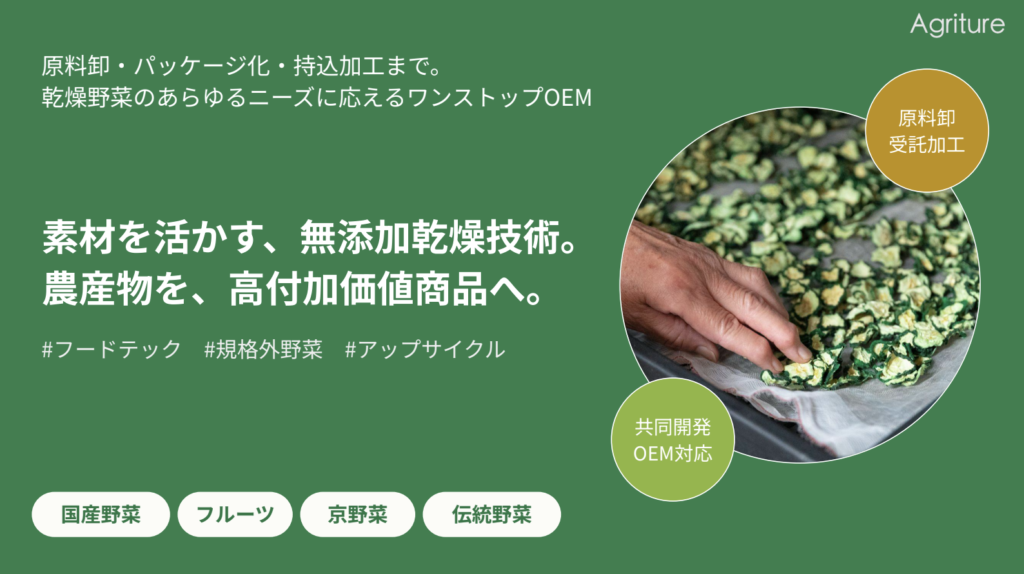
- OEM available from small lots of 10 kg
- Drying of brought-in raw materials also possible
- Support from processing to filling in one place
Related articles
- Manganji Togarashi | A Large, Thick-Fleshed Summer Kyoto Vegetable
- Kamo eggplant — a round, rich summer Kyoto vegetable
- Kujo Green Onion | A Representative Kyoto Vegetable Supporting Kyoto's Cuisine
- A list of Kyoto vegetable varieties — famous heirloom vegetables and their characteristics
- Kyoto vegetable calendar — check the seasons of the four seasons at a glance
Download the OEM contract processing materials
We will send the materials to your email address based on the information you provide.
- Winter Kyoto vegetables: the deep umami of Shogoin daikon and Kujo green onion
- What Is Horikawa Gobo? A Thorough Explanation of Its Characteristics, Cultivation, How to Eat It, and Nutrition
Author of this article
Related articles
-
 京野菜は何品目あるのか、読み方の一覧と認定の枠組みから確かめる
 -
 Drying Is Another Kind of Cooking
 -
 The Technology to Lock In the Season. The Seasonal Story Dried Vegetables Connect.
 -
 The Cut Face of a Vegetable. The Difference the Cut Makes.
 -
 Tasting Kyoto Vegetables by Aroma. The Pleasure of Cooking That Begins at the Tip of the Nose
 -
 Vessels and Kyoto Vegetables. Creating the Scenery of Plating.
 -
 Vegetables and Heat Control. Between High and Low Flame
 -
 Kyoto Vegetables and Sake. The Happy Relationship of a Dish and a Cup.