Dried Fushimi togarashi


TOC
Dried Fushimi Pepper: product overview
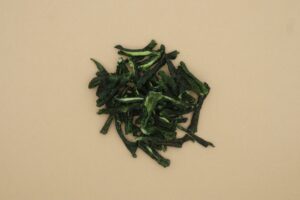
Made with the traditional vegetable "Fushimi pepper," handed down in Fushimi, Kyoto, since the Edo period. a clean aroma and a gentle sweetness with no pungency This green chili has, and drying it makes its hidden umami stand out even more, finishing it soft yet with a satisfying chew.
Even after drying, the seeds' popping texture remains, and added to cooking, it spreads a faint aroma and sweetness as a flavor-accent material. With color, aroma, and texture all together, dried Fushimi pepper can be used as a vegetable and a hidden ingredient that creates new added value in both Japanese and Western cuisine.
Dried Fushimi pepper: three points of care
01 A Kyoto traditional vegetable continuing since the Edo period
Fushimi pepper is a Kyoto traditional vegetable, with cultivation records in the Fushimi district remaining even in Edo-period writings. Though the name says "pepper," it is a sweet variety characterized by a gentle sweetness and refreshing aroma, as if the heat had been spirited away.
02 Drying draws out sweetness and umami
Fushimi pepper has a delicate flavor even raw, but drying makes the sweet umami hidden within the green flavor rise a notch. The seeds' popping texture stands out too, and you can discover an unexpected deliciousness different from fresh.
03 Raw-material supply supporting the Kyoto-vegetable brand
Fushimi pepper, scarce as a Kyoto traditional vegetable, is a material that becomes the core of "Kyoto vegetable" appeal in product planning. Through partnership with partner farmers, we procure raw material stably.
Product catalog showing the items we handle
Flexible support from small lots to large lots
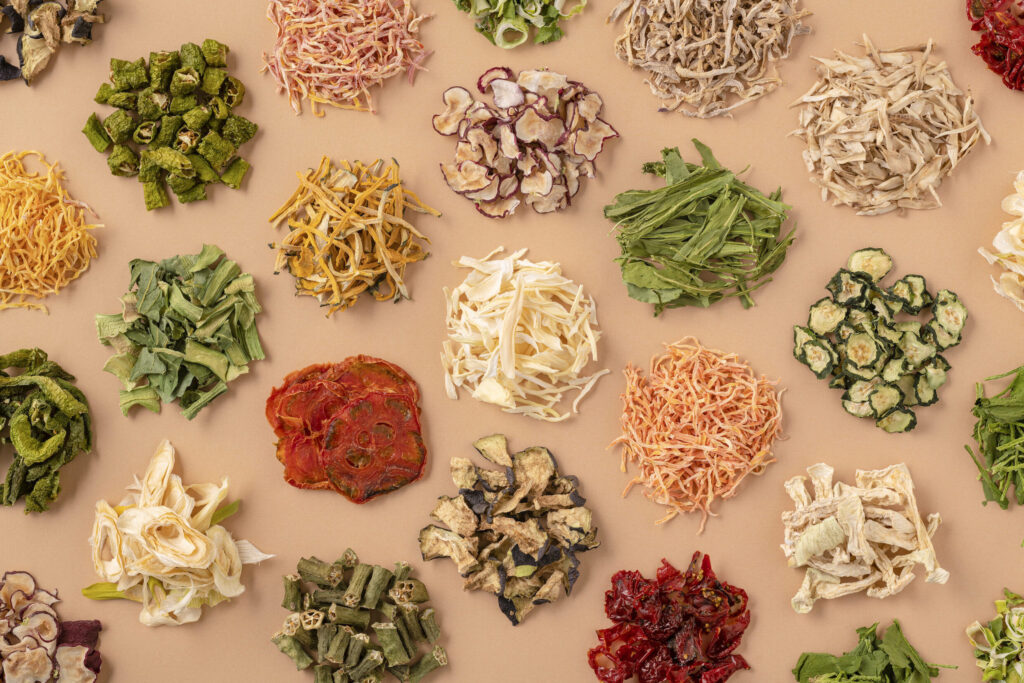
- Sold in small lots from 1 kg
- Handling heirloom vegetables from across Japan
- Dried fruits and herbs also supported
Features of commercial dried Fushimi pepper
Produced in Kyotamba, Kyoto
Uses Fushimi pepper, known as a traditional vegetable. A green chili yet strongly sweet, with a flavor free of off-notes.
Soft texture and the seeds' popping bite
Even after drying, there is softness, with the seeds' popping bite and a moderate chew remaining. An excellent material as a textural accent.
No glucose added
Finished as the ingredient itself. No sugar-liquid treatment or coating whatsoever.
A pepper that is not hot
Because, contrary to its name, it has almost no pungency, it is a rare "sweet pepper" usable even for products for those who dislike heat and for children.
Good affinity with pasta and noodles
As an ingredient in peperoncino, yakisoba, cup noodles, and the like, it can add color and umami at once.
A pillar of Kyoto-vegetable appeal
Because it has the narrative of being a Kyoto traditional vegetable, it is a raw material easy to place at the center of brand appeal.
Main use
It can be used for ingredients in yakisoba, pasta, and hot noodles (adding refreshing aroma and umami), veggie prepared dishes and dressed dishes (as an accent of color and texture), OEM product raw materials (dried green-vegetable mixes and prepared-dish materials), and frozen foods and retort products (aroma remains even on reheating).
Product specifications
Item | Details |
|---|---|
Raw material growing region | Kyoto Prefecture (partner farm) |
Specification | Round slices |
Storage method | Room temperature (store away from high heat and humidity) |
Best-before date | 6 months from the shipping date |
Minimum lot | From 10 bags / 100 g |
Powder | Available |
Manufacturing period | August and September |
Customization support
Custom size support (cut-thickness change, shape adjustment): can be discussed for orders of 10kg and up. OEM support: available. Large-lot production: available (consultation required 3 months before the production period). Past initiative case studies are here。
POWDER
Development into Fushimi pepper powder is also possible
Fushimi pepper can also be powdered. Development as a powder material—spice blends themed on Kyoto vegetables, soup bases, furikake, and the like—can also be discussed.
Variety, grower, origin
BRAND
Cultivar:Fushimi pepper (a sweet variety). One of Kyoto's traditional vegetables, with cultivation records in the Fushimi district even in Edo-period writings.
PRODUCER
Producer:Partner farmers in Kyotamba Town, Kyoto. Young farmers who made a U-turn back to farming in the food town of Kyotamba, working at regional revitalization.
REGION
Production area:Kyotamba Town, Kyoto. Known as a growing area with large day-night temperature swings that tighten the flavor of vegetables.
CULTIVATION
Cultivation method:Cultivated to coincide with the August-to-September harvest season. For details, please see the Fushimi pepper explanation page as well.
*Reference: OYAOYA product page
Low-temperature drying protects the delicate aroma
Fushimi pepper is a Kyoto vegetable whose aroma is everything. At Agriture, by drying slowly at low temperature, we keep a refreshing aroma close to the fresh state. It is a design that makes use of our know-how in handling vegetables not suited to drying.
💡 TIPS | Drying-processing trivia
Vegetables of the bell-pepper and chili family have volatile aroma components such as capsiate and pyrazines. When dried at high heat, such aromas are easily lost and the soft texture becomes hard to reproduce. For vegetables with delicate aromas like Fushimi pepper, the design of drying temperature and time ties directly to the finish.
Use cases
Kyoto-style mixed rice
A material seeing spreading use in hotel and ryotei banquet menus and in OEM development of souvenir-oriented retort mixed rice. Fresh Fushimi pepper has a limited harvest season and year-round origin procurement is difficult, but the dried product allows year-round room-temperature inventory and stable securing of the needed amount. Just adding it when cooking the rice raises a refreshing aroma with suppressed pungency, and with "made with Kyoto vegetables" appeal, it can be used as a differentiating point for souvenirs and local EC brands.
Pasta, yakisoba, and hot noodles
A use easy to adopt as a flavoring material on noodle and pasta production lines and at restaurant-chain central kitchens. Fresh Fushimi pepper is limited by harvest season and origin, making fixed-quantity securing difficult, but the dried product allows year-round room-temperature inventory and makes it easy to standardize the weighing and adding steps. Because it has almost no pungent components, there is no hindrance to menu design for children and family segments, and because cut shapes such as slices and rounds can be discussed to match the application, it also handles development across multiple item numbers—cup noodles, frozen pasta, prepared-dish noodles, and more.
Chinese-style congee with dried vegetables
A use adopted in hotel breakfast buffets, ryokan, and ready-meal menus for hospitals and welfare facilities. Fresh raw materials of ginger, white leek, and Kujo negi pile up prep and inventory management, but preparing a dried blend lets you greatly simplify the cooking process, just weighing the needed amount while storing at room temperature. It is also easy to use for seasonal-limited proposals as a body-conscious menu, and we handle pouch-portioned OEM, so it suits development into gift and souvenir channels too.
Combining with tofu and soy milk
A material easy for food makers and EC / mail-order brands driving product development around vegan and plant-based foods to adopt. Building dried Fushimi pepper into processed products based on tofu or soy milk lets you add a distinctive pungency and Kyoto-vegetable-like color without using animal-derived materials. Because it allows stable room-temperature storage, year-round procurement plans are easy to draw up, and we also handle consultations on cut shapes tailored to the application, such as rounds for toppings and powder form.
How to use commercial dried Fushimi pepper
Fushimi pepper is one of the few raw materials that can give a product the story of "a Kyoto traditional vegetable." Please refer to the related cases as well.
- We Began Selling Kyoto Vegetable Coffee
- Fushimi Togarashi: A Kyoto Vegetable with Little Heat and Standout Sweetness
- How Dried Vegetables Are Made: The Production Flow and Tricks for Vegetables Not Suited to Drying
Product catalog showing the items we handle
Flexible support from small lots to large lots
- Sold in small lots from 1 kg
- Handling heirloom vegetables from across Japan
- Dried fruits and herbs also supported
Frequently asked questions (FAQ)
Q. About what is the minimum lot?
A. You can try it from 10 bags / 100g. For regular supply, consultations in 1kg and 10kg units are common.
Q. Can you tell me a rough price?
A. Because it is a scarce raw material as a traditional vegetable, the price range is higher than other dried vegetables. We provide a quote together with samples.
Q. About how much lead time is needed?
A. For stock items, around 2 weeks. For planned production timed to the August–September harvest season, we recommend consulting 3 months in advance.
Q. Can you disclose the raw material's origin and variety?
A. We can prepare documents certifying it is Fushimi pepper, a Kyoto traditional vegetable grown by partner farmers in Kyotamba Town, Kyoto.
Q. Are you HACCP-compliant?
A. At our own factory, we conduct hygiene management based on HACCP principles.
Q. Is an OEM project themed on Kyoto vegetables possible?
A. Yes. As a blend raw material for a Kyoto-vegetable series including Fushimi pepper, you can consult us from the product-development stage.
RETAIL
For those looking to purchase in small packs
Small packs for home and restaurant use are handled at our sister brand "OYAOYA's" online shop. Choose from a lineup of 15g, 60g, and 150g.
Recommended reading
- We Began Selling Kyoto Vegetable Coffee(News)
- Fushimi Pepper Explanation(Kyoto Vegetables)
- How Dried Vegetables Are Made(OEM)
Download the product catalog
We will send the materials to your email address based on the information you provide.