
長ねぎと白ねぎは同じもの?ねぎの種類と呼び名を国の資料で確かめる

Summary of this article
長ねぎ・白ねぎ・根深ねぎは同じものを指し、小ねぎはねぎを若どりしたもの、わけぎだけが別の作物として立っています。農薬登録の作物分類表と日本食品標準成分表、品種登録データベースでねぎの呼び名を整理し、千住群・加賀群・九条群という三つの系統、GI登録3件を含むブランドねぎの裏づけ、産地と出回り時期までまとめました。
ねぎの売り場には、長ねぎ、白ねぎ、根深ねぎ、青ねぎ、葉ねぎ、小ねぎ、万能ねぎ、Wakegi、あさつきと、呼び名だけが増えていきます。同じものを指している言葉と、植物としてまったく別の作物を指している言葉が、同じ棚に並んでいるからです。
この記事は、呼び名の整理を推測ではなく公の資料でおこないます。使うのは、農薬登録で使われる作物分類表, and the Ministry of Education, Culture, Sports, Science and Technology's日本食品標準成分表、農林水産省の品種登録データベース、作物統計調査and地域特産野菜生産状況調査、そして地理的表示(GI)の登録産品一覧です。制度ごとに「ねぎ」の線の引き方が違うことが分かると、売り場の呼び名の食い違いもほどけます。
後半では、ブランドねぎが何によって裏づけられているのか、産地と出回り、料理での選び分け、業務用で乾燥品を使うときの判断までをまとめます。
TOC
長ねぎ・白ねぎ・根深ねぎは同じねぎを指しているのか
結論から書くと、この三つは同じ野菜の呼び名です。違うのは、どの場面で使われる言葉かという点だけで、植物としての区別ではありません。
国の食品分類では「根深ねぎ」が正式な呼び名になっている
文部科学省の日本食品標準成分表は、野菜類のなかに〈ねぎ類〉という括りを置いています。そこに収載されているのは「根深ねぎ 葉 軟白」「葉ねぎ 葉」「Kujo green onion 葉」「こねぎ 葉」「めねぎ 葉」の五つです。
つまり、国が食品として整理するときの書き方は根深ねぎand葉ねぎであって、長ねぎでも白ねぎでもありません。「長ねぎ」「白ねぎ」「青ねぎ」という食品名は、この表には一つも出てきません。売り場でいちばんよく見る言葉が、公的な分類には存在しない言葉だというところが、混乱の出発点になっています。
根深ねぎの「根深」は、根が深いという意味ではなく、白くなった部分が土のなかに深く埋まっている姿から来ています。食べている白い部分は根ではなく、葉が何枚も巻き重なった葉鞘(ようしょう)です。ねぎの根は、その下にひげ状に広がっています。
売り場で「長ねぎ」と「白ねぎ」が使い分けられる理由
「長ねぎ」は、束ねたときの見た目をそのまま言い表した売り場の言葉です。葉を落として白い部分を長く残した荷姿が、文字どおり長いからそう呼ばれています。
「白ねぎ」は、その白い部分を食べる前提で呼んだ言葉です。西日本では青ねぎが日常づかいなので、区別するために白ねぎと呼ぶ必要がありました。逆に東日本では、ねぎといえば根深ねぎが当たり前だったため、わざわざ白と付けずに「ねぎ」あるいは「長ねぎ」で通じます。
同じ商品が、産地の売り場では白ねぎ、東京の量販店では長ねぎ、Specification sheetでは根深ねぎと書かれることがあります。仕様書のやり取りで食い違ったときは、呼び名ではなく「軟白部の長さ」と「葉をどこで切っているか」で確認すると早く決着します。
青ねぎ・葉ねぎ・小ねぎも一つの作物を指している
緑の葉まで食べるねぎは、成分表では「葉ねぎ」と書かれます。売り場では青ねぎと呼ばれ、関西ではこれがねぎの既定値です。細く若いうちに収穫したものが「こねぎ(小ねぎ)」で、これも成分表の〈ねぎ類〉のなかに置かれています。
種をまいて芽が出たばかりの段階で摘むものが「めねぎ」で、すしダネや吸い口に使われます。成分表には、この芽ねぎも〈ねぎ類〉の一員として収載されています。
ここまでの呼び名は、どれも同じ一つの作物の、育て方と収穫時期の違いです。見た目で迷ったときに確かめる場所は三つに絞れます。根元がふくらんでいるか、株が何本に分かれているか、葉の断面が中空の丸い筒かどうかです。根深ねぎと葉ねぎはどちらも根元がふくらまず、葉の断面は中空の筒になります。根元が小さな球のようにふくらんでいたら、それはねぎではなく、わけぎかあさつきの可能性が高くなります。
次の表は、日常の呼び名が公の資料のどこに位置づけられているかを並べたものです。
| 呼び名 | 食品成分表での Positioning | 作物分類表 での扱い | 主に使われる場面 |
|---|---|---|---|
| 長ねぎ | 収載なし | 「ねぎ」に該当 | 小売の売り場 東日本の日常語 |
| white green onion, | 収載なし | 「ねぎ」に該当 | 西日本の売り場 産地の通称 |
| 根深ねぎ | 〈ねぎ類〉に収載 | 「ねぎ」に該当 | 規格書・統計 学校教育 |
| Green scallion | 収載なし | 「ねぎ」に該当 | 西日本の売り場 Restaurants |
| 葉ねぎ | 〈ねぎ類〉に収載 | 「ねぎ」に該当 | 規格書・産地 |
| Konegi (こねぎ) | 〈ねぎ類〉に 「こねぎ」で収載 | 独立の区分なし | 薬味用の小売 業務用の規格 |
| 細ねぎ | 収載なし | 独立の区分なし | 小売の売り場 |
| Banno negi | 収載なし | 独立の区分なし | 産地ブランドの Product name |
| めねぎ | 〈ねぎ類〉に収載 | 独立の区分なし | すし・日本料理 |
| Wakegi | 独立して収載 | 「わけぎ」として 別の作物 | 西日本の売り場 特に広島 |
| わけねぎ | 収載なし | 「ねぎ」の別名例 に明記 | 産地・種苗 |
| Asatsuki | 独立して収載 | 「あさつき」として 別の作物 | 山菜・薬味 |
| チャイブ | 収載なし | 「チャイブ」として 別の作物 | ハーブ売り場 |
| Leek | 独立して収載 | 「ねぎ」の別名例 に明記 | 洋食・輸入品 |
白い部分が長いねぎは、どう育てられているのか
白ねぎが白いのは、白い品種だからではありません。育てる途中で土を寄せて光を当てないようにした結果です。同じ種から育てても、土を寄せなければ緑の葉ねぎになります。
土を寄せて光を当てない軟白栽培
苗を溝に植え、生育に合わせて何度も土を寄せていきます。土に埋まった葉鞘には光が届かないので葉緑素がつくられず、白いまま伸びます。この作業が軟白(なんぱく)で、地理的表示に登録されているねぎの説明文でも「軟白部」という言い方が使われています。
土寄せは、一度にたくさん寄せると生育が止まり、少なすぎると白い部分が伸びません。何回に分けて、どの高さまで寄せるかが産地ごとの技術になっていて、軟白部の長さと太さの差はここから生まれます。
曲がりねぎが曲がっている理由
宮城県の公式サイトによると、仙台の曲がりねぎは仙台市宮城野区岩切の余目(あまるめ)地区で栽培が始まったとされています。七北田川沿いのこの一帯は地下水の水位が高く水はけが悪いため、深く植える根深ねぎは根腐れを起こしやすい土地でした。
そこで明治末期の1909年に、余目地区の永野一氏が「やとい」と呼ばれる方法を考えます。育ちかけのねぎを一度抜いて、斜めにつけた溝へ寝かせて植え直し、土をかけるというやり方です。根が深くまで伸びないので根腐れを避けられ、ねぎは太陽へ向かって起き上がろうとするので、弓なりの形になります。
地理的表示に登録されている新里ねぎと阿久津曲がりねぎも、軟白部が曲がった姿を特性として登録しています。曲がりは失敗ではなく、土地の条件に合わせた栽培方法が形として残ったものです。
同じ畑でも、収穫の時期を変えれば別の商品になります。葉ねぎは、若いうちに収穫すれば小ねぎとして出荷され、そのまま育てれば葉ねぎとして出荷されます。芽ねぎはさらに手前の段階です。買う側から見ると別の商品ですが、作物としては同じものを途中で止めているだけです。
この「どこで止めるか」が規格になっているため、小ねぎの規格書には長さと本数が細かく書かれます。乾燥や冷凍に回すときも、仕上がりの見え方は品種より収穫時期の影響を受けます。
わけぎ・あさつき・リーキはねぎと別の作物なのか
ここが呼び名の整理でいちばん食い違う場所です。媒体によって「わけぎはねぎとたまねぎの雑種」「あさつきはねぎの一種」と説明がばらつきますが、国の制度は制度ごとにはっきり線を引いています。
農薬登録の作物分類では「ねぎ」「わけぎ」「あさつき」が別々に立っている
農薬をどの作物に使えるかを決めるために、農林水産消費安全技術センターが作物分類表を公開しています。2024年4月1日版のこの表では、野菜類のなかに鱗茎類という中分類があり、さらに鱗茎類(葉物)という小分類が置かれています。
その小分類に並ぶのは、あさつき、ぎょうじゃにんにく、チャイブ、にら、ねぎ、わけぎです。あさつき・チャイブ・わけぎは、ねぎとは別の作物名として立っています。同じ鱗茎類でも、らっきょうやにんにく、たまねぎは鱗茎類(根物)のほうに入っていて、収穫する部位で分けられています。
備考欄の書き方も違います。ねぎは「茎葉を収穫するもの」、わけぎは「葉及び鱗茎を収穫するもの」です。わけぎは根元のふくらんだ部分まで食べる前提で定義されている、ということになります。
「わけねぎ」は、わけぎではなく、ねぎに含まれる
同じ表で「ねぎ」の別名の例として挙げられているのは、九条ねぎ、加賀太ねぎ、千住ねぎ、やぐらねぎ、Shimonita negi、リーキ、そしてわけねぎ, contained in burdock and cocoa.
わけぎとわけねぎは一文字しか違いませんが、扱いは正反対です。わけぎは独立した作物名として立てられ、わけねぎはねぎの別名として扱われています。売り場で「わけぎ」の札が付いているものが本当にわけぎなのか、それとも株分かれの多い葉ねぎなのかは、この一文字で変わります。
見分けの手がかりは根元です。わけぎは根元が小さな球のようにふくらみ、この鱗茎で株を増やします。わけねぎは種で増える葉ねぎの仲間なので、根元はふくらまずまっすぐ下へ伸びます。
国の統計も「わけぎ」から「わけねぎ」を除いて数えている
農林水産省の地域特産野菜生産状況調査は、二年に一度、全国の都道府県に作付面積と収穫量を報告させる調査です。この調査票の「わけぎ」の欄には、はっきりと注記が付いています。「わけぎ」は、「わけねぎ」を除きます、と書かれています。
統計をとる現場でも両者の取り違えが起きるので、わざわざ注記を置いて線を引いているわけです。呼び名の混乱は消費者の思い違いではなく、制度側も対処が必要と考えてきた古い問題だということが、この一行から読み取れます。
品種登録の世界では「ネギ種」と「ワケギ種」が別の種類になっている
農林水産省の品種登録データベースでは、出願のときに「農林水産植物の種類」を選びます。ここには和名と学名が対になって登録されていて、ネギ種は Allium fistulosum L.、ワケギ種は Allium x proliferum です。別の種類として登録の枠そのものが分かれています。
実際の登録を見ると、ワケギ種として登録された品種は多くありません。佐賀県の「さが乙女」、広島県と全国農業協同組合連合会が共同で登録した「広島12号」「広島13号」、そして種苗会社が2026年5月に登録した「NB304」です。さらに、ワケギ種とネギ種を掛け合わせた品種として佐賀県の「さがゆたか」が登録されています。ワケギ種とネギ種は、掛け合わせが成立する近さにありながら、制度上は別の枠にあるという関係です。
一方で、「あさつき」という和名の種類で登録された品種は、データベース上に一件も見あたりません。あさつきは作物分類表でも成分表でも独立して扱われているのに、品種登録の世界では登録品種が出ていない作物だということになります。
リーキは制度によって「ねぎ」だったり別品目だったりする
Leek(ポロねぎ、西洋ねぎ)は、作物分類表では「ねぎ」の別名の例として挙がっています。農薬の使い方を決めるうえでは、ねぎと同じ枠で扱われているということです。
ところが日本食品標準成分表では、リーキは〈ねぎ類〉の外に「リーキ りん茎葉」として独立して収載されています。食品としては別のものとして数えたほうが実態に合う、という判断です。
同じ植物でも、農薬の登録では一緒、食品の集計では別、という食い違いが起きます。原料表示や規格書をつくるときは、どちらの制度の言葉を使っているのかを先に確かめておくと安全です。
| 作物 | 農薬登録の 作物分類表 | 日本食品 標準成分表 | 品種登録の 「種類」 |
|---|---|---|---|
| Green onion | 作物名「ねぎ」 茎葉を収穫 | 〈ねぎ類〉に 根深・葉・九条 こねぎ・めねぎ | ネギ種 Allium fistulosum L. |
| Wakegi | 作物名「わけぎ」 葉と鱗茎を収穫 | 独立して収載 | ワケギ種 Allium x proliferum |
| わけねぎ | 「ねぎ」の 別名例 | 収載なし | ネギ種に含む |
| Asatsuki | 作物名 「あさつき」 | 独立して収載 | 登録品種は 見あたらない |
| チャイブ | 作物名 「チャイブ」 | 収載なし | 登録品種は 見あたらない |
| Leek | 「ねぎ」の 別名例 | 独立して収載 | アンペロプラスム種 として1件のみ |
| やぐらねぎ | 「ねぎ」の 別名例 | 収載なし | ネギ種に含む |
FOR BUSINESS
乾燥野菜を業務用でお探しですか
国産の野菜・果物を乾燥し、必要に応じて粉砕してお出ししています。扱っている品目は100種前後で、規格は 乾燥品の一覧・パウダーの一覧 に掲載しています。
少量でのご購入は、姉妹ブランドの通販サイト OYAOYA で承っています。
We have materials available to help you understand dried processing OEM
Agriture OEM, flexibly handling everything from small lots to large lots
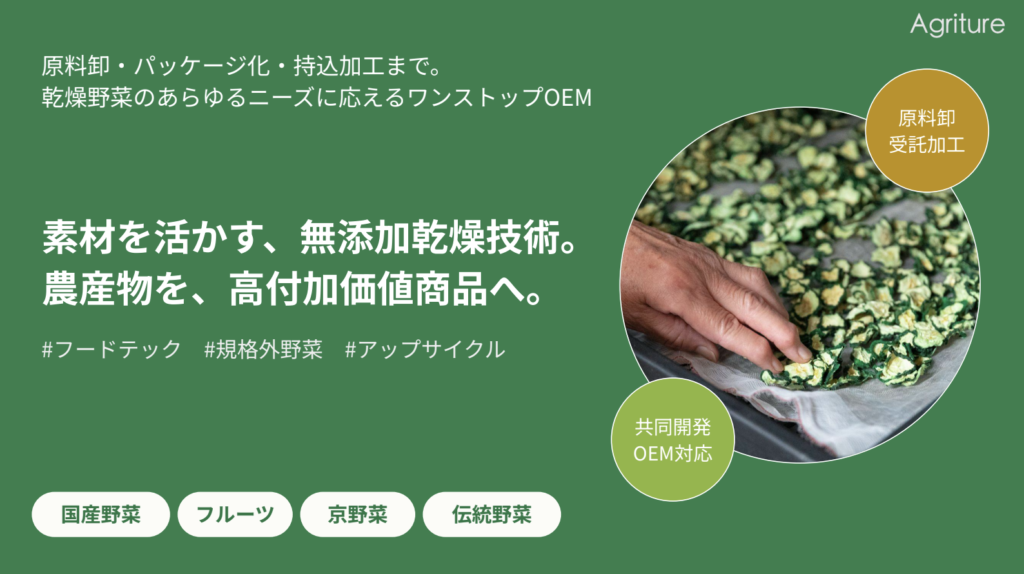
- OEM available from small lots of 10 kg
- Drying of brought-in raw materials also possible
- Support from processing to filling in one place
小ねぎはどのねぎを指す言葉なのか
検索でよく並ぶ「わけぎと小ねぎの違い」は、答えの形が二つに分かれます。わけぎは作物として別、小ねぎはねぎの育て方の違い、という非対称な関係だからです。
農薬登録の作物分類表に「小ねぎ」という区分はない
作物分類表を通して探しても、「小ねぎ」という作物名は出てきません。「ねぎ」の別名の例としても挙げられていません。葉ねぎや根深ねぎも同じで、表に現れるのは「ねぎ」の一語だけです。
これは小ねぎが存在しないという意味ではなく、農薬の使い方を決めるうえでは、ねぎと分ける必要がないと判断されているということです。作物として別の扱いを受けているわけぎとは、そこが決定的に違います。
食品の分類では「こねぎ」がねぎ類の中に置かれている
日本食品標準成分表には「こねぎ 葉 生」が収載されていて、根深ねぎや葉ねぎと同じ〈ねぎ類〉の並びに入っています。食品として数えるときは、ねぎの一形態として扱われているということです。
ここでも、わけぎは〈ねぎ類〉の外に独立して置かれています。食品の集計の世界でも、小ねぎはねぎの内側、わけぎは外側という線が引かれています。
「万能ねぎ」は、作物分類表にも成分表にも出てきません。これは産地が育てたブランドの商品名であって、作物の名前でも食品の分類名でもないからです。売り場で万能ねぎとして並んでいるものは、分類のうえでは葉ねぎか小ねぎに当たります。
わけぎと小ねぎを見分けるときに見る場所
細くて青い、という見た目だけでは判別できません。手に取って確かめられるのは次の三点です。
- 根元がふくらんで球状になっていればわけぎ、まっすぐならねぎ
- 一株から何本も分かれて出ていれば、わけぎである可能性が高い
- 切ったときに強いぬめりが出るのは葉ねぎ系に多い
店頭で根を落として出荷されている場合は、根元の形が見えません。産地表示を見て、広島県産なら本物のわけぎである確率が上がります。統計上、わけぎの作付面積は広島県に大きく偏っているためです。
ねぎは千住群・加賀群・九条群の三つに分かれる
売り場の呼び名とは別に、栽培のうえで使われてきた系統の分け方があります。農林水産省の消費者相談の回答でも、ねぎを大きく分けると千住群・加賀群・九条群の三つになると説明されています。
千住群は売り場の白ねぎの多くを占める
北海道から九州まで広く栽培されていて、市販されている白ねぎや長ねぎのほとんどが千住群だと同省は説明しています。冬のあいだもゆっくり生長を続け、株分かれが少なく、葉鞘部が太くてよく伸びるのが特徴です。
名前は江戸・千住の青物市に由来します。深谷市が公開している深谷ねぎの歴史にも、明治30年頃に千葉県柏地方から千住赤柄系のねぎを導入したのが始まりだと記されています。関東の根深ねぎの産地は、この系統を土台に広がりました。
加賀群は寒さと雪に強く、下仁田ねぎもこの仲間
寒いところや雪の多いところでの栽培に向いた系統です。冬が近づくと地下の茎や根に養分をためこみ、春になると勢いよく新しい葉を伸ばします。同省の回答では、下仁田ねぎは加賀群の一種だと明記されています。
太く短く、加熱するととろけるように軟らかくなるタイプが多いのが加賀群です。下仁田ねぎについては、産地と食べ方をまとめた下仁田ねぎの解説記事で詳しく取り上げています。
九条群は分げつが多く葉がやわらかい
京都府を中心に栽培されていたことから九条群と呼ばれるようになったとされ、現在は主に西日本で栽培されています。株分かれが多く、葉が薄くてやわらかく、辛みも少ないため、葉ねぎとして食べられます。
日本食品標準成分表には、〈ねぎ類〉のなかに「九条ねぎ」が独立した食品として収載されています。地域の品種名が食品分類の項目として立てられている例は多くありません。九条ねぎの歴史と系統については、九条ねぎの解説記事.
系統と売り場の呼び名は一対一で対応しない
千住群だから白ねぎ、九条群だから青ねぎ、という単純な対応にはなりません。兵庫県朝来市は、岩津ねぎを関東の根深ねぎ・千住ねぎと関西の九条系ねぎのちょうど中間種だと説明しています。愛知県も、越津ねぎを白い部分が多い太ねぎと緑の部分が多い葉ねぎの両方の性質を兼ね備えた中間種として紹介しています。
系統は育種と栽培の話、白ねぎ・青ねぎは食べ方と荷姿の話です。層が違う分類なので、重ねて考えると必ずどこかで矛盾が出ます。
ブランドねぎは何によって裏づけられているのか
ブランドねぎという言い方には、少なくとも四種類の裏づけが混ざっています。地理的表示の登録、自治体が取得した商標、都道府県が選んだHeirloom vegetables、そして産地の総称です。どれに当たるかで、名乗れる範囲がまるで変わります。
地理的表示に登録されているねぎは三つだけ
地理的表示保護制度(GI)は、産地と結びついた品質を国が登録して守るしくみです。登録産品一覧を通して確認すると、名称にねぎを含む登録産品は次の三つです。
- 第35号 新里ねぎ(栃木県宇都宮市新里町/平成29年5月26日登録)
- 第59号 水戸の柔甘ねぎ(茨城県水戸市ほか/平成30年2月7日登録)
- 第113号 阿久津曲がりねぎ(福島県郡山市/令和4年2月3日登録)
よく知られた九条ねぎ、下仁田ねぎ、深谷ねぎ、岩津ねぎは、いずれもGIには登録されていません。知名度とGI登録は別の話だということです。
登録されている三つはいずれも根深ねぎで、新里ねぎと阿久津曲がりねぎは軟白部が曲がる曲がりねぎです。新里ねぎの登録情報には、品種や栽培方法を変えずに江戸時代末期から100年以上にわたり栽培が続いていると記されています。
自治体が商標を持っているねぎがある
兵庫県朝来市は、「岩津ねぎ」について市が商標権を取得したことを公表しています。標準文字商標として二件の登録番号が示されていて、商標の使用は無料だが申請が必要だと案内されています。産地の名前を市が預かって管理している形です。
朝来市は販売解禁日と出荷終了日も定めています。解禁日は11月23日、出荷終了は3月21日です。名前と出回り時期の両方を管理することで、品質のばらつきを抑えようとしているのが分かります。
さらに2025年1月24日には、「岩津ねぎを核とした資源循環型農業システム」が日本農業遺産に認定されています。ねぎそのものではなく、ねぎを中心にした農業のしくみが評価された例です。
都道府県が選んだ伝統野菜に入っているねぎ
京都市が公開している京の伝統野菜の定義は、昭和63年3月に京都府農林水産部が定めたもので、明治以前に導入されたもの、京都府内全域が対象、たけのこを含む、キノコとシダを除く、栽培または保存されているものと絶滅した品種を含む、の五項目です。この枠に入るねぎは九条ねぎだけです。
愛知県は37品目をあいちの伝統野菜として選んでいます。選定の条件は、昭和30年頃に栽培されていたこと、地名や人名がついているなど愛知県に由来すること、今でも種や苗があること、種や生産物が手に入ることの四つです。ねぎは越津ねぎと法性寺ねぎの二つが入っています。
越津ねぎは旧海部郡神守村越津地域、いまの津島市越津町が発祥とされ、徳川三代将軍家光の時代に献上品として扱われていたと愛知県は紹介しています。あいちの伝統野菜37品目の全体像は、あいちの伝統野菜の解説記事for more.
深谷ねぎは品種名ではなく地域の総称
深谷市は、深谷ねぎについて品種名ではなく深谷地方で栽培されたねぎの総称だと明言しています。根深ねぎ・千住群に属し、品種は多数存在するとも書かれています。さらに、深谷市外の利根川流域で栽培されたねぎも「深谷ねぎ」の名称で販売されているという記述まで公開されています。
名前の由来もはっきりしています。大正時代にねぎの相場が下がったとき、八基村の指導者が乾物屋の店主に相談し、信州・北陸・北海道・東北へ深谷駅から出荷する際に駅名をとって「深谷葱」の商標をつけたのが最初だと伝えられています。産地ブランドが鉄道の駅名から生まれた例です。
この三つ、つまりGI登録、自治体の商標、伝統野菜の選定は、要求される条件も守られる範囲も違います。仕入れの場面では、名前の強さより、どの裏づけに支えられている名前なのかを見たほうが実務に効きます。
| Name | Growing region | 公的な裏づけ | Features |
|---|---|---|---|
| Nissato negi | 栃木県 Nissato, Utsunomiya | GI 第35号 | 軟白部が弓形に 曲がる曲がりねぎ |
| 水戸の柔甘ねぎ | 茨城県水戸市 城里町・茨城町 | GI 第59号 | 軟白部が長く 曲がりが少ない |
| Akutsu magari-negi | 福島県郡山市 | GI 第113号 | 昭和初期から 阿久津地区で栽培 |
| Iwatsu negi | 兵庫県朝来市 | 朝来市の登録商標 日本農業遺産 | 根深と九条系の 中間種 |
| Kujo green onion | Kyoto Prefecture | Kyoto Heirloom Vegetables 成分表に収載 | 分げつが多く 葉がやわらかい |
| Shimonita negi | Shimonita, Gunma | 作物分類表に 別名として記載 | 加賀群の一種 太くて短い |
| Koshizu negi | 愛知県津島市 あま市ほか | Aichi's heirloom vegetables | 太ねぎと葉ねぎの 中間種 |
| Hosshoji negi | 愛知県岡崎市 | Aichi's heirloom vegetables | 尾張・三河に 残る在来のねぎ |
| Fukaya green onion | 埼玉県深谷市 利根川流域 | 深谷市が総称と明記 | 品種名ではなく 地域の総称 |
| Sendai magari-negi | 宮城県仙台市 岩切ほか | 宮城県が伝統野菜 として紹介 | やといで 弓なりに育てる |
| 太白太ねぎ | 宮城県仙台市 太白区 | 太白区が定義を公表 | 太白一本太葱 およびその類似 |
| Senju negi | 関東一円 | 作物分類表に 別名として記載 | 千住群の中心 市販の白ねぎの多く |
| 加賀太ねぎ | Hokuriku | 作物分類表に 別名として記載 | 加賀群 寒地向き |
We have materials available to help you understand dried processing OEM
Agriture OEM, flexibly handling everything from small lots to large lots
- OEM available from small lots of 10 kg
- Drying of brought-in raw materials also possible
- Support from processing to filling in one place
都道府県はどんなねぎの品種を育てているのか
ブランドねぎの陰で、もうひとつの系譜が動いています。都道府県の試験場や公的な研究機関が育てて、品種登録に出しているねぎです。名前は地味ですが、産地の実力はここに表れます。
品種登録データベースで見えるネギ種の登録件数
農林水産省の品種登録データベースから全件を書き出して、農林水産植物の種類がネギ種のものを抜き出すと52件が登録されています。このうち育成者権が消滅していないものは25件で、残りは存続期間が過ぎて誰でも使える状態になっています。
同じデータベースでねぎ属の他の作物を見ると、登録がいちばん多いのはタマネギ種で、ネギ種がそれに次ぎます。さらにニラ種、ラッキョウ種と続きます。ねぎは品種改良の対象として、長いあいだ手が入れられてきた作物だということが件数から分かります。
県名や地名がついた登録品種が並ぶ
育成者を見ると、都道府県とその試験研究機関が目立ちます。千葉県の「足長美人」、神奈川県の「湘南一本」、茨城県の「ひたち紅っこ」、富山県の「越中なつ小町」と「越中ふゆ小町」、山口県の「YSG1号」と「やまひこ」、東京都の外郭団体が育成した「東京小町」、秋田県の「秋田はるっこ」、兵庫県の「兵庫 N-1号」などです。
茨城県の「ひたち紅っこ」は、登録情報に葉鞘の外観の色が帯赤と記された太ねぎ用の品種です。売り場で赤ねぎとして並ぶものの一部は、こうした県育成の登録品種にあたります。
公的な研究機関からは、ねぎ中間母本農1号やゆめわらべ、ふゆわらべ、こいわらべ、すずわらべ、夏もえかといった品種が登録されています。母本という名前がつくものは、そのまま栽培するためではなく、次の品種をつくる親として使う前提で登録されたものです。
九条ねぎや下仁田ねぎは登録品種ではない
データベース全体を「九条」「下仁田」「岩津」「深谷」「千住」「加賀」という文字で探しても、ねぎ属の登録品種は一件も出てきません。これらは在来の系統であって、育成者権で守られた登録品種ではないということです。
在来の系統は、産地で採種を続けながら維持されます。だからこそ産地ごとの微妙な違いが残り、同じ九条ねぎでも種苗業者や農家によって太さや色が少しずつ違います。登録品種のように形がそろわない代わりに、産地の性格がそのまま出るのが在来系統です。
| Variety name | 登録者 | 登録年 | Notes |
|---|---|---|---|
| 足長美人 | Chiba Prefecture | 2007年 | 抽台しない 太ねぎ用 |
| 湘南一本 | 神奈川県ほか | 2007年 | 根深ねぎ向け |
| ひたち紅っこ | Ibaraki Prefecture | 2007年 | 葉鞘の外観が 帯赤の太ねぎ用 |
| 越中なつ小町 | 富山県 | 2010年 | 夏どり向け |
| 越中ふゆ小町 | 富山県 | 2010年 | 冬どり向け |
| ねぎ中間母本農1号 | 公的研究機関 | 2014 | 育種の親として 使う母本 |
| YSG1号 | 山口県ほか | 2015年 | 県と農協の 共同育成 |
| 東京小町 | 東京都の 外郭団体 | 2017 | 株立ち型 分げつが極めて多い |
| 秋田はるっこ | Akita Prefecture | 2018年 | 春どり向け |
| 兵庫 N-1号 | Hyogo Prefecture | 2024 | 県育成の新しい 登録品種 |
| やまひこ | 山口県ほか | 2025年 | 県と種苗会社の 共同育成 |
| NB304 | 種苗会社 | 2026 | ワケギ種として 登録 |
ねぎの生産はどこに集まり、いつ出回るのか
ねぎは、国が価格の安定をはかる指定野菜14品目のひとつです。だいこんやキャベツ、たまねぎと同じ枠で、毎年きちんと統計がとられています。
国の統計は春・夏・秋冬の三つの作季で数える
作物統計調査の野菜調査では、ねぎを春・夏・秋冬の三つに分けて集計しています。根深ねぎと葉ねぎを分けた統計はなく、小ねぎという区分もありません。国が把握しているのは「ねぎ」という一品目の、季節ごとの動きです。
令和6年産の作付面積は全国で21,200ヘクタール、収穫量は399,200トン、出荷量は333,000トンでした。作季別に見ると秋冬が13,200ヘクタールで242,200トンと最も大きく、春が3,350ヘクタールで74,100トン、夏が4,720ヘクタールで82,900トンです。収穫量のおよそ六割が秋冬に集中しています。
鍋の季節にねぎが安くなるのは、この偏りが理由です。逆に、初夏から盛夏にかけては出回り量が絞られ、相場が動きやすくなります。
出荷量が多い都道府県と、用途の偏り
令和6年産の都道府県別の出荷量では、茨城県が44,100トンで最も多く、千葉県39,200トン、埼玉県39,000トンが続きます。関東の三県で全国の三分の一以上を占めている計算です。そのあとに北海道と大分県がそれぞれ19,000トン、群馬県14,200トン、秋田県11,600トン、長野県11,100トンと並びます。
用途別に見ると、全国の出荷量333,000トンのうち生食向けが314,000トン、加工向けが12,000トン、業務用向けが7,010トンです。ねぎは、いまも圧倒的に生鮮で流通している野菜だということになります。
加工向けの比率が高い産地がある
全体では加工向けが少ないなかで、香川県や徳島県、愛媛県は出荷量に占める加工向けの比率が際立って高くなっています。四国は生食向けより加工向けが多い県が複数ある、珍しい地域です。
茨城県は加工向けの実数そのものが全国で最も大きく、京都府も出荷量の規模に対して加工向けと業務用向けの比率が高い産地です。加工の受け皿が産地の近くにあるかどうかで、同じねぎでも流れ方が変わります。
| 都道府県 | 出荷量計 | うち加工向け | うち業務用向け |
|---|---|---|---|
| Ibaraki | 44,100 t | 2,840 t | 1,760 t |
| 千葉 | 39,200 t | 47 t | 56 t |
| Saitama | 39,000 t | 15 t | 347 t |
| Hokkaido | 19,000 t | 87 t | 182 t |
| Oita | 19,000 t | 201 t | 460 t |
| Gunma | 14,200 t | 367 t | 79 t |
| Akita | 11,600 t | 239 t | 373 t |
| Nagano | 11,100 t | 20 t | 960 t |
| 栃木 | 9,440 t | 7 t | 4 t |
| Aomori | 8,470 t | 135 t | 10 t |
| 鳥取 | 7,360 t | 126 t | – |
| 静岡 | 7,020 t | 329 t | 801 t |
| Kyoto | 6,500 t | 855 t | 711 t |
| 香川 | 3,470 t | 1,490 t | 104 t |
| Tokushima | 2,490 t | 1,320 t | 3 t |
わけぎの産地は広島県に大きく偏っている
わけぎは指定野菜ではないため、二年に一度の地域特産野菜生産状況調査で数えられています。令和6年産の全国の作付面積は35ヘクタール、収穫量は396トン、出荷量は372トンでした。
このうち広島県が22ヘクタール、200トンを占めています。全国の作付面積の六割以上、収穫量の半分以上が広島県に集中しているということです。続くのは愛知県と大阪府がそれぞれ2ヘクタール、福岡県と神奈川県が1ヘクタールという規模感です。
ねぎの出荷量が33万トンを超えるのに対して、わけぎは400トンに届きません。売り場で見かける頻度の差は、そのまま生産量の差です。わけぎを通年で安定して調達しようとすると難しいのは、この規模の小ささに理由があります。
料理に合わせてどのねぎを選ぶか
品種名を覚えるより、加熱するのか生で使うのかを先に決めたほうが選びやすくなります。ねぎの性格は、火を通したときの変化にいちばん強く出るからです。
加熱してとろみと甘みを出したいとき
軟白部が太い根深ねぎが向きます。加賀群の系統、たとえば下仁田ねぎや岩津ねぎは、太く短く、火を通すと軟らかくなるタイプです。朝来市も岩津ねぎについて、冬のカニすきや鴨すきなどの鍋物に欠かせないと案内しています。
焼きねぎにするなら、軟白部を4センチほどの筒切りにして、強めの火で表面に焼き色をつけてから弱火に落とします。中まで火が通ると層のあいだがほどけて、口当たりが変わります。
薬味として香りを立てたいとき
葉ねぎや小ねぎが向きます。細く切るほど断面が増えて香りが立つので、薬味には小口切りが使われます。九条ねぎのように葉の内側にぬめりのある系統は、刻んだときのまとまりがよく、麺類の上にのせても散りにくいという利点があります。
辛みを抑えたいときは、切ってから少し置くか、水に短くさらします。さらしすぎると香りまで抜けるので、切ってすぐ使うか、置くなら数分にとどめるのが扱いやすい範囲です。
鍋やすき焼きで主役にしたいとき
太いねぎを斜めに厚く切ると、煮汁を含みながら形が残ります。愛知県が紹介している越津ねぎのように、白い部分と緑の葉の両方を食べられる中間種は、一本で二つの食感を出せるので鍋向きです。
葉ねぎを鍋に使うなら、火を止める直前に入れます。長く煮ると色が沈んで香りも飛ぶので、白い部分と同じタイミングで入れないほうが仕上がりがきれいです。
買ってからの持たせ方も、白い部分を食べるものと葉を食べるもので分かれます。根深ねぎは、泥つきのまま新聞紙に包んで立てて置くのが基本です。横にすると起き上がろうとして養分を使うので、傷みが早くなります。土に埋められる環境があれば、埋めておくとさらに長く持ちます。
葉ねぎと小ねぎは乾きやすいので、刻んで冷凍しておくと扱いやすくなります。凍ったまま汁物に落とせるので、少量ずつ使う家庭の用途とは相性がいい方法です。
We have materials available to help you understand dried processing OEM
Agriture OEM, flexibly handling everything from small lots to large lots
- OEM available from small lots of 10 kg
- Drying of brought-in raw materials also possible
- Support from processing to filling in one place
業務用でねぎを使うときに決めること
業務用では、味の好みより先に、年間を通して同じ形と同じ量をそろえられるかが問われます。ねぎは作季の偏りが大きい作物なので、形態の選び方が供給の安定に直結します。
生鮮で通年をまかなおうとすると、秋冬に集中する出回りの波をそのまま受けます。秋冬の収穫量が全体の六割を占める以上、夏場の調達は産地をまたぐか、形態を変えるかのどちらかになります。加工向け出荷が12,000トン、業務用向けが7,010トンという数字は、生食向けの314,000トンに比べればごく小さな流れで、加工の受け皿はまだ大きくありません。事前に数量を押さえておくかどうかで条件が変わります。
生・冷凍・乾燥で変わる保管と手間
それぞれに向き不向きがあります。冷蔵の生鮮は風味が最も近い代わりに保管日数が短く、冷凍は色と香りを保ちやすい代わりに保管設備が要ります。乾燥は常温で置けて軽い代わりに、戻したときの食感が生鮮とは別のものになります。
| Form | Refrigerator needed | 使う前の手間 | Suited use |
|---|---|---|---|
| Fresh | Refrigerated 日持ちは短い | 洗浄と切裁が 毎回必要 | 仕上げの薬味 鍋の具材 |
| Frozen | 冷凍庫が必要 常温放置は不可 | 凍ったまま 投入できる | Soups Stir-fry |
| Dried | 常温で保管 場所をとらない | そのまま散らすか 湯で戻す | Instant noodles Furikake シーズニング |
| Powder | 常温で保管 吸湿に注意 | 混ぜるだけ | だし Soup Seasoning |
乾燥ねぎをつくるときに決めるカットサイズ
乾燥に回す前に決めるのは、まず切り方です。小口切りにするのか、輪切りの幅をどれだけにするのか、白い部分だけを使うのか葉まで入れるのかで、仕上がりの見え方が変わります。
即席麺やカップスープのように湯を注いで戻す用途では、薄く小さく切ったほうが戻りが早くなります。逆に、具材としての存在感を残したいときは厚めに切って、戻り時間を長めに見込みます。
白い部分と緑の葉では、乾燥したあとの色の出方が違います。混ぜて使うのか分けるのかも、最初に決めておくと後戻りがなくなります。
当社で受けられる加工の範囲
Agritureでは、国産の野菜と果物を温風で乾燥させ、必要に応じて100メッシュ相当まで粉砕する加工を受けています。乾燥品と粉末の小袋充填は10グラム以上から対応しています。乾燥品の賞味期限は、出荷日からおよそ6か月を目安にしています。
フリーズドライ、焙煎、チップス、レトルトは受けていません。この四つが必要な企画の場合は、別の設備を持つ工場を探していただくことになります。
乾燥ねぎの相談で最初に伺うのは、どの部位を使うか、切り方をどうするか、どんな袋に何グラム詰めるかの三点です。ここが決まると、必要な原料の量と工程が見えてきます。
FOR BUSINESS
乾燥野菜を業務用でお探しですか
国産の野菜・果物を乾燥し、必要に応じて粉砕してお出ししています。扱っている品目は100種前後で、規格は 乾燥品の一覧・パウダーの一覧 に掲載しています。
少量でのご購入は、姉妹ブランドの通販サイト OYAOYA で承っています。
FAQ
Summary
ねぎの呼び名がもつれて見えるのは、制度ごとに線の引き方が違うからでした。農薬登録の作物分類表では、ねぎ・わけぎ・あさつき・チャイブが別々の作物名として立ち、リーキとわけねぎとやぐらねぎは「ねぎ」の別名に入ります。日本食品標準成分表では、根深ねぎ・葉ねぎ・九条ねぎ・こねぎ・めねぎが〈ねぎ類〉にまとまり、わけぎ・あさつき・リーキが外に置かれます。品種登録の世界では、ネギ種とワケギ種が別の種類として立てられています。
長ねぎ・白ねぎ・根深ねぎは同じものの呼び名違いで、小ねぎはねぎの若どりです。わけぎだけが作物として別で、わけねぎは名前が似ているのにねぎの側に入ります。国の統計が「わけぎ」から「わけねぎ」をわざわざ除くと注記しているのは、この取り違えが現場でも起きるからです。
ブランドねぎを見るときは、名前の強さより裏づけの種類を見ます。地理的表示に登録されているねぎは新里ねぎ・水戸の柔甘ねぎ・阿久津曲がりねぎの三つだけで、岩津ねぎは自治体の商標、九条ねぎと越津ねぎは都道府県の伝統野菜、深谷ねぎは産地自身が総称だと明言しています。九条ねぎや下仁田ねぎは登録品種ではなく、産地で採種が続けられてきた在来の系統です。
生産は秋冬に大きく偏り、令和6年産の収穫量399,200トンのうち六割を秋冬どりが占めました。通年で同じ形をそろえたい業務用では、この偏りをどう吸収するかが設計の出発点になります。乾燥や粉末は、その選択肢のひとつです。
Recommended reading
Download the OEM contract processing materials
We will send the materials to your email address based on the information you provide.
- How to source commercial vegetable powder in small lots, and how to use it
- Heirloom vegetable OEM | A commercialization case guide using Kyoto vegetables and local ingredients
Author of this article
Related articles
-
 Original coffee marketing strategy | Ways to grow sales
 -
 ベジタリアンとは?国の規格が分けている4つの区分と食べられないもの
 -
 柚子の種類は何種類あるのか、公の資料で名前が残る系統を数えた
 -
 ゆずの時期は年に二度、青ゆずは7月から黄ゆずは10月から
 -
 ゆずの産地は高知が半分を占め、二位は徳島から愛媛に変わった
 -
 Preventing Food OEM Failures: Common Failure Cases and Countermeasures for Success
 -
 How to find a food OEM | How to efficiently find the best manufacturing partner
 -
 What Is the Minimum Lot for a Food OEM? How to Choose a Small-Lot-Capable Food Factory Explained