Dried Horikawa Gobo

Dried Horikawa Burdock is a commercial ingredient made from "Horikawa burdock," a heirloom Kyoto vegetable. Horikawa burdock is a large burdock that swells to 6-9 cm thick and around 50 cm long, with a hollow center, and has soft flesh and a distinctive fragrance. We capture this thick, hollow shape and soft fiber directly in the raw material through low-temperature drying. Agriture also develops, in parallel, a finely powdered version of the same Horikawa burdock, Horikawa Gobo Powder, proposing a division of roles — dried Horikawa burdock for uses that want to keep the round-cut or rangiri shape and fiber feel, and powder for scenting dashi, dough, and powder blends.
Compared with ordinary Takinogawa burdock or short-rooted salad burdock, Horikawa burdock can be differentiated by its "thick, hollow shape you can stuff with fillings," its "soft fiber that lets flavor soak to the core," and its "presence as a Kyoto vegetable." It's an ingredient we often get prototyping inquiries about — for simmered stuffed dishes filled with ebi-shinjo or minced chicken, tube-cut oden ingredients, nishime, yawata-maki, mixed rice, and Kyoto-style prepared foods.
TOC
Three points of pride in Agriture's dried Horikawa burdock
1. Low-temperature drying that makes the most of aroma and fiber feel
The appeal of Horikawa burdock is its distinctive fragrance and soft fiber that lets flavor soak to the core. Agriture uses a design that keeps the drying temperature down and removes moisture in a short time, retaining the aroma and texture in the finish as much as possible. The Horikawa-burdock-like aroma rising up when rehydrated is an element that shapes the finish of simmered stuffed dishes and nishime.
2. A cut design that makes the most of the hollow shape
Horikawa burdock is a large burdock with a hollow center. We shape it into cuts that make the most of the hollow and thickness — tube-cut, round-cut, rangiri — before drying. For stuffing uses we keep the tube shape, and for nishime and mixed-rice uses we adjust to an easy-to-rehydrate thickness, letting you select to match the finished product's look and texture.
3. Selecting Kyoto-grown Horikawa burdock as raw material
Agriture uses Kyoto-grown Horikawa burdock, discerning thickness, degree of hollowness, and aroma to turn it into raw material. As a traceable raw material with a visible origin — a heirloom Kyoto vegetable — it's easy to design traceability into, and it's one reason Kyoto-cuisine, prepared-food, and confectionery makers choose it in prototyping.
Product catalog showing the items we handle
Flexible support from small lots to large lots
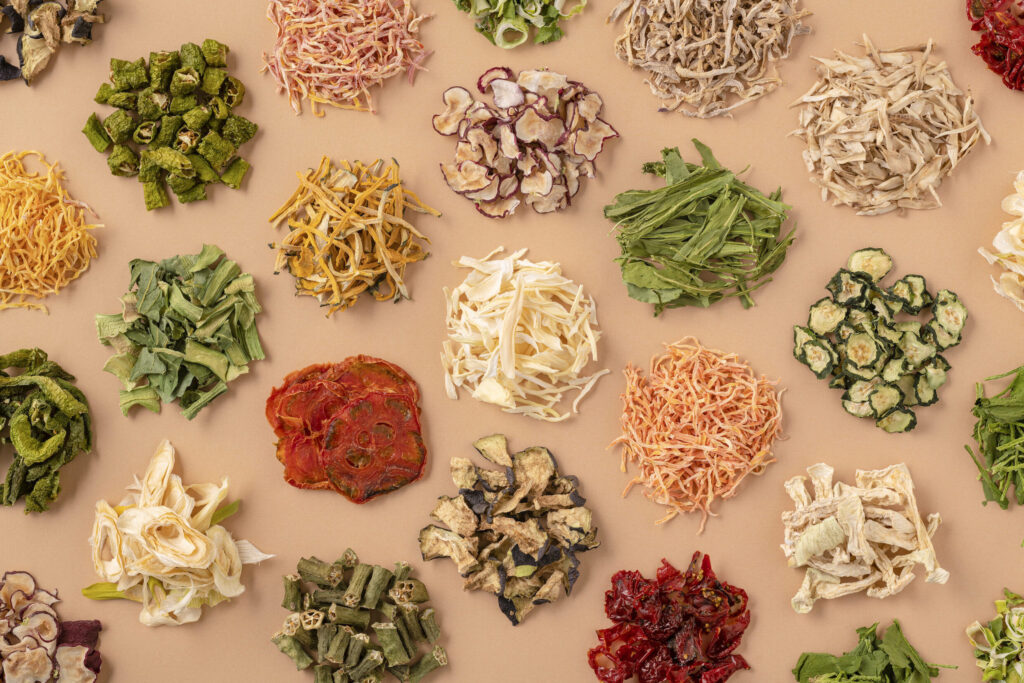
- Sold in small lots from 1 kg
- Handling heirloom vegetables from across Japan
- Dried fruits and herbs also supported
Features of commercial dried Horikawa burdock
Even among burdock-type dried raw materials, Horikawa burdock holds a unique position for its thickness, hollow shape, and aroma. We organize its shape-based strengths across six perspectives.
A thick, hollow shape suited to stuffing
Horikawa burdock swells to 6-9 cm in diameter, with a hollow center. It's a shape suited to dishes that make the most of the thickness and hollow, such as simmered stuffed dishes where you tube-cut it and fill it with ebi-shinjo or minced chicken.
Soft fiber that lets flavor soak to the core
Because the flesh is soft and the fibers fine, it's an ingredient into which dashi and simmering liquid soak easily to the center. It suits prepared dishes where you want to infuse flavor slowly, such as simmered stuffed dishes and nishime.
The distinctive fragrance of Horikawa burdock
It has a stronger aroma than ordinary burdock, with a Horikawa-burdock-like fragrance rising when rehydrated. It suits recipe design that wants to make the most of aroma, such as Kyoto-style simmered dishes, mixed rice, and yawata-maki.
Its presence as a heirloom Kyoto vegetable
Horikawa burdock is a heirloom Kyoto vegetable with about 400 years of cultivation history. It becomes an accent in product design that wants to showcase it as an ingredient for Kyoto cuisine, osechi, and New Year's prepared foods.
Easy to handle as room-temperature stock
Horikawa burdock is a seasonal vegetable centered on winter, but as a dried product it can be stocked at room temperature, letting you incorporate Horikawa burdock's aroma and texture into the finished product regardless of season.
Use in combination with powder
Finely milled Horikawa Gobo Powder Using it together with lets you design recipes that achieve both an ingredient feel (cut product) and scenting for dashi and dough (powder).
Product specifications (commercial)
Basic specifications at the prototype stage are as follows. Purchase lot, lead time, and packaging format are worked out through individual consultation.
| Item | Details |
|---|---|
| Product name | Dried Horikawa Gobo |
| Raw material | Horikawa burdock (Kyoto-grown) |
| Shape | Tube-cut / round-cut / rangiri. Size adjusted to the use |
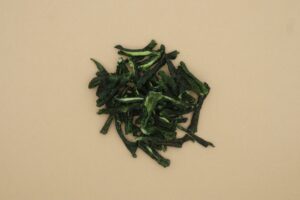
| Appearance | Dark-brown burdock. A cut product with the hollow center retained |
| Aroma | The distinctive fragrance of Horikawa burdock |
| Net content | Individual quote according to use and lot |
| Best-before date | About 6 months from the shipping date |
| Storage method | Avoid high temperature, high humidity, and direct sunlight; after opening, seal and store in a cool, dark place |
| Minimum prototype lot | From 1 kg of raw material |
Customization support
You can consult us from the prototype stage about shape, cut size, packaging, and final commercialization. Because we nail down the recipe while keeping records, it is a setup where specifications don't drift between prototype and mass production.
| Item | Available | Details |
|---|---|---|
| Shape adjustment | Tube-cut / round-cut / rangiri | Designed to match the finished product — stuffing use with the hollow retained, easy-to-rehydrate simmering use, and the like |
| Powdering | Fine powder (made to order) | For scenting dashi, dough, and powder blends |
| Blend design | Combining with other root and other vegetables | Japanese prepared-food mixes with carrot, lotus root, and other burdock |
| Packaging form | Commercial bulk / small bag / individual wrapping | Handles everything from prepared-food bulk to packs for confectionery and snack raw materials |
| OEM productization | End-to-end support through the finished product | From planning through production of Kyoto-style prepared foods, mixed-rice base, and burdock snacks |
For those considering the fine-powder type
For scenting dashi, dough, and beverages or for powder blends, where you want to spread Horikawa burdock's aroma evenly, use the finely powderedHorikawa Gobo Powderis well suited. Please also see the list of powder raw materials.
Commitments to variety, grower, and growing region
Horikawa burdock is a burdock of the Asteraceae family, one of the heirloom Kyoto vegetables with about 400 years of cultivation history in Kyoto. Agriture makes growing region, harvest time, thickness, and aroma the axes of its raw-material design.
BRAND | The positioning of Horikawa burdock as a raw material
Horikawa burdock is a large burdock that has been used as an ingredient in Kyoto cuisine — simmered stuffed dishes, yawata-maki, Kyoto-style prepared foods, osechi, and more. Agriture translates this thickness, hollow shape, and aroma into a commercial raw material, offering it as an ingredient usable in a wide range of finished products, from Kyoto-style prepared foods to confectionery and snacks.
PRODUCER | Basic policy for sourcing and coordination
We select lots with consistent thickness, degree of hollowness, and aroma by aligning directly with the growing region. At the prototyping stage we obtain small amounts at a time and, after evaluating aroma retention and rehydration quality during drying, we build the supply line for mass-production lots.
REGION | Characteristics of the main growing region
Horikawa burdock is a heirloom Kyoto vegetable grown in Kyoto Prefecture, centered on Kyoto City, and its name is said to derive from the tradition that it grew in the moat ruins of Jurakudai, built by Toyotomi Hideyoshi. Grown by a distinctive method of raising it large over more than a year, it finishes into a thick, hollow, large burdock. Agriture discerns and turns Kyoto-grown ones into raw material.
CULTIVATION | Harvest timing and aroma
Horikawa burdock comes into season in winter (around November-December), appearing to meet year-end and New Year demand. The more slowly it's grown, the more thickness and aroma it tends to have. Agriture selects and turns into raw material the in-season ones with good aroma and texture.
Low-temperature drying technology and quality control
Prompt drying after cutting
After Horikawa burdock is cut, the cut faces oxidize over time, dulling the color and letting the aroma escape more easily. By moving swiftly from cutting to drying, we finish it under conditions that achieve both aroma and color.
Retaining aroma through low-temperature drying
High-temperature drying drives off Horikawa burdock's fragrance and tends to make the fibers hard, too. By removing moisture slowly in a low-temperature range, we finish it so aroma and softness remain even when rehydrated. When using it for simmered stuffed dishes, simmering the rehydrated cut product in dashi lets the flavor soak to the core while keeping the aroma. For mixed rice, cooking it together with the rice without rehydrating transfers the aroma and umami along with the soaking liquid.
Use cases
We organize the uses we get prototyping inquiries about at Agriture into six categories. Each is an example of recipe design that makes the most of Horikawa burdock's thickness, hollow shape, and aroma.
1. Simmered stuffed and stuffed dishes
It can be used as a raw material for stuffed dishes long enjoyed at Kyoto restaurants, such as simmered stuffed dishes where you tube-cut it and fill the hollow with ebi-shinjo or minced chicken. Rehydrated and simmered in dashi, the aroma remains and the flavor soaks to the core. Being securable as room-temperature stock, its ability to cut prep labor in busy periods is also valued in commercial use.
2. Japanese prepared foods and nishime
It can be used as a raw material for Japanese prepared foods such as nishime, chikuzen-ni, yawata-maki, and kinpira. The soft fiber lets dashi and simmering liquid soak in easily, and the aroma and texture come alive. Being pre-prepped, it also leads to cutting labor in prepared-food manufacturing.
3. Mixed rice and seasoned rice
It can be used as an ingredient for mixed rice, combined rice, and kamameshi. Cooking it with the rice without rehydrating transfers the aroma and umami into the rice along with the soaking liquid, finishing it richly fragrant. It can also be deployed for instant mixed-rice base and onigiri fillings.
4. Confectionery and snacks
It can be used as a raw material for burdock chips, karinto, and baked goods. Making the most of Horikawa burdock's aroma and the story of a Kyoto vegetable, it can be deployed into confectionery and snack products that showcase vegetables, such as Kyoto souvenirs and healthy snacks.
5. Retort, frozen foods, and prepared dishes
It can be incorporated as a Kyoto-vegetable ingredient in retort and frozen prepared foods and meal kits. Securable stably as room-temperature stock, and being pre-prepped, it cuts labor on the manufacturing line. It suits products that factor in rehydration time, such as simmered dishes and mixed-rice base.
6. Dashi, soup, and veggie-based products
It can be used as an aromatic vegetable in kenchin-jiru, tonjiru, Japanese-style soups, and veggie-based meals. Because Horikawa burdock has a strong aroma, it suits an accent in soups and veggie designs that want to bring out burdock's flavor. Combined with the powder, it can achieve both scenting and an ingredient feel.
Commercial usage and rehydration
Rehydration basics
- For Japanese prepared foods: rehydrate in water for 15-20 minutes, or in hot water for 8-12 minutes. For nishime and kinpira
- For simmered stuffed dishes: rehydrate, then cook in dashi or simmering liquid to let the flavor soak to the core while keeping the aroma
- For mixed rice: cook it together with the rice without rehydrating. The aroma and umami transfer along with the soaking liquid
- Because the soaking liquid carries Horikawa burdock's aroma and umami, it's good to use it as is in soup dishes and mixed rice
Blending guide
- Nishime: a rehydration amount of 10-15 g dried per 100 g finished
- Kinpira: a rehydration amount of 12-18 g dried per 100 g finished
- Mixed rice: add roughly 8–12 g dried per 2 go of rice
- Japanese-style soup: use 6-10 g dried, rehydrated, per serving (200 ml)
How to store
- Before opening: store in a cool, dark place at room temperature, away from heat, humidity, and direct sunlight
- After opening: transfer to a zip bag or airtight container and use up within 1 to 2 months
- The best-before date is about 6 months from the date of shipment. Note that the aroma weakens if it absorbs moisture
- Refrigerated storage is possible. Because condensation forms right after taking it out, return it to room temperature before opening
Related cases and articles
- What is Horikawa burdock – a look at it as a Kyoto vegetable
- Dried burdock (sasagaki) – a raw material for ordinary burdock
- List of dried vegetable raw materials
- Consult us on food OEM and raw material supply
Product catalog showing the items we handle
Flexible support from small lots to large lots
- Sold in small lots from 1 kg
- Handling heirloom vegetables from across Japan
- Dried fruits and herbs also supported
Frequently asked questions
What's the difference from ordinary burdock?
Horikawa burdock is a heirloom Kyoto vegetable, a large burdock that swells to 6-9 cm thick and around 50 cm long with a hollow center. Compared with ordinary Takinogawa burdock or salad burdock, it's thicker and, being soft-fleshed, lets flavor soak in easily to the core, with a distinctive fragrance. A major difference is that you can make stuffed dishes using the hollow, and you can use it differently from dried burdock (sasagaki) by shape and use.
Can it be used for stuffed dishes?
It supports tube-cutting that keeps the hollow, so it can be used for stuffed dishes distinctive to Horikawa burdock, such as simmered stuffed dishes filled with ebi-shinjo or minced chicken. Rehydrated and then simmered in dashi, the flavor soaks to the core while the aroma remains. The cut size can be adjusted to the finished product — stuffing use, simmering use, and so on.
How much of the aroma remains?
By moving swiftly from cutting to low-temperature drying, we finish it retaining the Horikawa-burdock-like fragrance. You can confirm the aroma even after rehydrating, in simmered stuffed dishes, mixed rice, and Japanese prepared foods. Because the aroma weakens easily with moisture absorption or long storage, care is needed in the finished product's storage design.
How does it differ in use from Horikawa burdock powder?
Dried Horikawa burdock is for "uses that want to keep the ingredient feel and aroma of the cut product," while powder is for "scenting dashi, dough, and beverages, and powder blends." Simmered stuffed dishes, nishime, and mixed rice suit the cut product, while scenting Japanese-style soups, dough, and snacks suits the powder. Using them together enables recipe design that achieves both an ingredient feel and even scenting.
What is the minimum prototype lot?
Prototyping is accepted from 1 kg of raw material. You can prototype multiple conditions in parallel — comparing tube-cut and rangiri, comparing simmering-use and confectionery-use specifications, and so on. Full production is from 10 kg, and we can consult with you through to OEM finished products. After hearing the intended finished product's specifications, lot, and schedule, we propose an estimate and delivery time individually.
Please tell me the best-before date and how to store it.
The best-before date is about 6 months from the date of shipment. When unopened, store it in a cool, dark place at room temperature, away from high heat, humidity, and direct sunlight. Because Horikawa burdock's aroma weakens easily with moisture absorption, after opening transfer it to a zip bag or airtight container and use it up within 1-2 months as a guide. Refrigerated storage is also possible, but watch out for condensation right after taking it out — return it to room temperature before opening.
Recommended reading
- What is Horikawa burdock – a look at the Kyoto vegetable
- Dried burdock (sasagaki)
- List of dried vegetables
- List of powders
Download the product catalog
We will send the materials to your email address based on the information you provide.