Dried Cherry Blossom

Dried sakura is an edible-flower and dried-flower material made from the flowers of the cherry (Prunus, family Rosaceae). Flowers salted and then dried take on the soft aroma and pale-crimson color unique to sakura, and drying arranges that aroma and color into an easy-to-handle form. At Agriture, we develop it in parallel with sakura powder (made to order) that powders the sakura flowers, proposing dried sakura for uses where you want to keep the flower's shape and color, and the powder for coloring doughs, sauces, and dry mixes.
Even among edible flowers, sakura is a material that symbolizes the "colors of spring," such as sakura tea, sakura mochi, wagashi, and confectionery decoration. Moreover, salted flowers that have been dried can also be handled as dried flowers, expanding into craft uses such as herbariums, potpourri, resin embedding, and sachets. As color for sakura tea and sakura mochi, a topping for baked goods and wagashi, the design of spring-limited products, and a flower material for craft goods, it is a material for which we receive many prototyping inquiries on both the edible and decorative fronts.
TOC
Three Commitments Behind Agriture's Dried Sakura
1. Low-temperature drying that makes the most of aroma and color
Sakura flowers, through the salting process, generate the aromatic compound coumarin, giving off the soft aroma characteristic of sakura. At Agriture, to keep this aroma and pale-crimson color in the finish as much as possible, we design the drying temperature low. That the flowers unfurl and the aroma and color rise when hot water is poured becomes a factor that governs the look and impression of sakura tea and wagashi.
2. Careful drying that keeps the flower's shape
Sakura flowers have thin petals and are a material whose shape breaks easily if mishandled. By drying them carefully to keep the flower's form as much as possible, we achieve a finish well suited to uses that make the most of the flower's shape—wagashi toppings, confectionery decoration, and flower materials for herbariums and resin. You can select the shape to suit the use, such as whole flowers or loosened petals.
3. Handles both edible and decorative uses by application
Agriture's dried sakura can be developed for both edible uses such as sakura tea and confectionery toppings, and craft uses such as herbariums, potpourri, and resin. Because the specifications required differ between food use and decorative/flower-material use, we design the shape and packaging after hearing about your intended final product. It broadens the range of product-making built around spring color with a single material.
Product catalog showing the items we handle
Flexible support from small lots to large lots
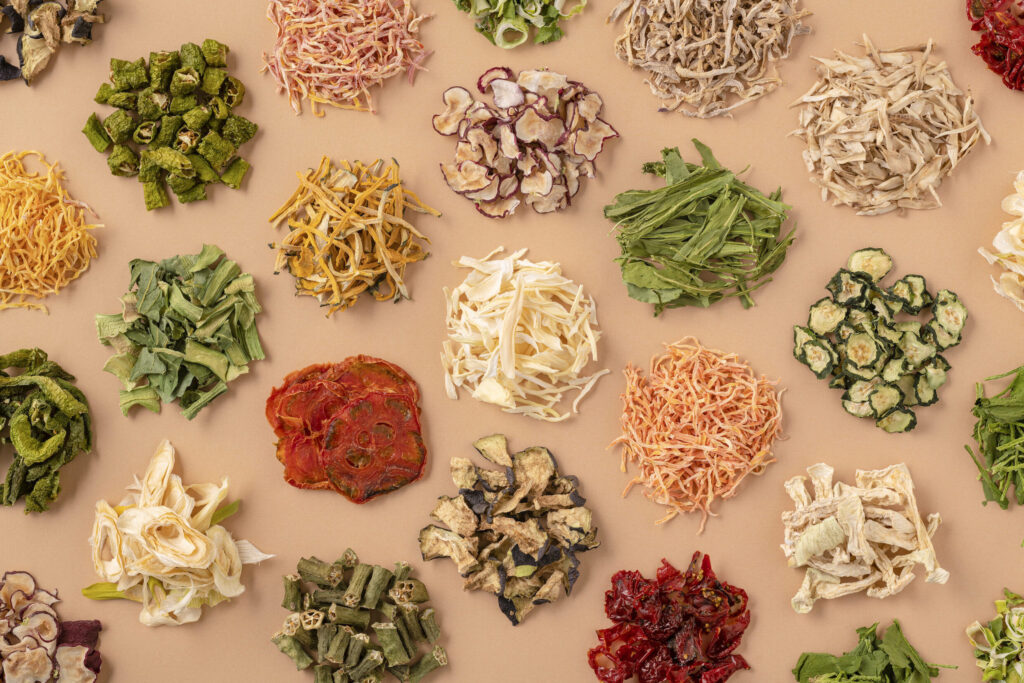
- Sold in small lots from 1 kg
- Handling heirloom vegetables from across Japan
- Dried fruits and herbs also supported
Features of Commercial Dried Sakura
Even among edible-flower and dried-flower materials, sakura is a material with a unique position for aroma, color, and a spring seasonal feel. We organize its strengths—envisioning both edible and decorative uses—from six perspectives.
The soft aroma characteristic of sakura
Through the aromatic compound coumarin generated in the salting process, it takes on the soft aroma unique to sakura. Pour hot water and the aroma rises, adding a spring-like impression to sakura tea and wagashi.
The color of pale crimson
The pale-crimson color the flower holds stands out as a topping for wagashi and baked goods or as color for sakura tea. It is a color that can be put to use as-is in designing the look of spring-limited products.
Makes the most of the flower's shape
By drying while keeping the flower's form, it can be used in ways that show the flower's very shape—as a top decoration for wagashi, as confectionery decoration, and as a flower material for resin and herbariums.
Evokes a spring seasonal feel
Sakura is a flower that symbolizes spring. As a dried product handled at room temperature, it lets you bring sakura's color and aroma into a final product regardless of season, and use it for spring-like product staging.
Handles both edible and decorative uses
It can be developed for both edible uses such as sakura tea, sakura mochi, and confectionery toppings, and craft uses such as herbariums, potpourri, and resin. You can choose the shape and packaging to suit the use.
Use in combination with powder
Using it together with powdered sakura powder (made to order) lets you design recipes that combine uses that show the flower's shape (dried sakura) with coloring and flavoring of doughs and sauces (powder).
Product specifications (commercial)
Basic specifications at the prototype stage are as follows. Purchase lot, lead time, and packaging format are worked out through individual consultation.
| Item | Details |
|---|---|
| Product name | Dried Cherry Blossom |
| Raw material | Sakura (flower), salt |
| Shape | Whole flowers. Adjusted to the use, such as loosened petals |
| Appearance | Flowers in pale crimson |
| Aroma | The soft aroma characteristic of sakura |
| Net content | Individual quote according to use and lot |
| Best-before date | About 6 months from the shipping date |
| Storage method | Avoid high temperature, high humidity, and direct sunlight; after opening, seal and store in a cool, dark place |
| Minimum prototype lot | Inquire |
Customization support
You can consult us from the prototyping stage on shape, packaging, and through to finished product. Because we refine the specification while keeping records, it stays consistent between prototype and mass production.
| Item | Available | Details |
|---|---|---|
| Shape adjustment | Whole flowers / loosened petals | Selected to match the look of the final product, such as edible topping or decoration |
| Powdering | Fine powder (made to order) | For coloring and flavoring of confectionery, doughs, and sauces, and powder blending |
| Blend design | Combined with other flower materials and herbs | Blends for potpourri, sachets, and herbal tea |
| Packaging form | Commercial bulk / small bag / individual wrapping | Handled from packs for confectionery raw material to packs for craft flower material |
| OEM productization | End-to-end support through the finished product | From planning to production of sakura tea, spring-limited sweets, and craft goods |
For those considering the fine-powder type
For uses where you want to spread sakura's color and aroma evenly, such as coloring and flavoring of confectionery, doughs, and sauces, and powder blending, the powdered sakura powder (made to order) is well suited. Please also see the list of powder raw materials.
Commitments to variety, grower, and growing region
Sakura is a tree of the genus Prunus, family Rosaceae, that blooms in spring. For edible use, the double-flowered yae-zakura, which readily takes on aroma and color, is often used, and at Agriture we make the flower's condition, color, and aroma the axis of our raw-material design.
BRAND | The positioning of dried-sakura raw material
Sakura is an edible flower long enjoyed as a color of spring, such as sakura tea, sakura mochi, wagashi, and confectionery decoration. At Agriture, we translate this aroma and pale-crimson color into a commercial raw material, providing it as an ingredient usable in a wide range of final products from sakura tea and spring-limited sweets to craft goods.
PRODUCER | Basic policy for sourcing and coordination
We select lots with consistent flower color, aroma, and shape. At the prototyping stage, we obtain small quantities, evaluate them for how the aroma rises and color remains after salting and drying and for retention of the flower's shape, and then build the supply line for mass-production lots.
REGION | Our approach to raw material
Sakura is grown in various places, and the flower's color, size, and aroma differ by variety and cultivation environment. At Agriture, without limiting the growing region, we assess flowers with color and aroma suited to drying and turn them into raw material. With prep timed to the spring blooming season, we select flowers in good condition.
CULTIVATION | Blooming season and flower condition
Sakura flowers bloom in spring, and those suited to salting and drying are flowers from the start of blooming through full bloom. Because yae-zakura has many petals and a deeper color, it suits the color of edible and decorative uses. At Agriture, we select flowers from the period when color and aroma are present and turn them into raw material.
Low-temperature drying technology and quality control
Careful drying after salting
Sakura flowers, by being salted, generate the aromatic compound coumarin, and the aroma characteristic of sakura rises. By carefully managing the process from salting to drying, we finish them under conditions that achieve aroma, pale-crimson color, and the flower's shape together. Because the petals are thin, we base our handling on drying them while keeping the handling gentle.
Retention of fragrance and color through low-temperature drying
High-temperature drying drives off sakura's aroma and tends to dull the crimson as well. By removing moisture slowly in a low-temperature range, we achieve a finish where aroma and color rise when hot water is poured. When using it for sakura tea, lightly desalting it and then pouring hot water lets the flower unfurl and the aroma and color spread. When using it for confectionery decoration, make the most of the flower's shape as a top decoration or topping.
Use cases
We organize into six categories the uses for which we receive prototyping inquiries at Agriture. Each is an example of product design that makes the most of sakura's aroma, pale-crimson color, and flower shape.
1. Sakura tea and beverages
As sakura tea, it can be used in a beverage where the flower unfurls and aroma and color spread when hot water is poured. Besides the sakura tea served at engagement ceremonies and celebratory occasions, it can also be developed as a flower material for sakura-flavored tea bags, blend teas, and season-limited drinks. It can be secured as room-temperature stock and suits prep for spring-limited menus.
2. Wagashi and sakura mochi
It can be used as a top decoration or color for wagashi such as sakura mochi, jonamagashi, yokan, and nerikiri. The aroma and pale-crimson color of the salted flower set off the design of spring-like wagashi. Material that keeps the flower's shape can be used by decorating it directly on top of the sweet.
3. Confectionery and bakery
It can be used as a topping or decoration for baked goods, steamed sweets, and bread. Decorating a flower on cookies, macarons, steamed buns, and scones makes color for spring-limited confectionery and bakery products. Combined with the powder, you can achieve both coloring and flavoring of dough and a top decoration.
4. Herbarium and resin
It can be used as a flower material for herbariums and resin embedding. Dried sakura that keeps the flower's shape can be built into bottled herbariums and resin works for accessories and goods as a spring-like flower material. It can also be developed as a material for craft kits and goods products.
5. Potpourri and sachets
It can be used as a flower material for potpourri, sachets, and room fragrances. Making the most of sakura's soft aroma and pale-crimson color, it can be blended with other flower materials and herbs and developed into spring-like fragrance goods. There are also inquiries for it as the contents of favors and seasonal gifts.
6. Spring-limited products and gifts
It can be built in as the design of seasonal products, such as spring-limited sweets, beverages, and goods sets. Because sakura is a material that symbolizes spring, it suits store seasonal staging and differentiation of gift products. Because it can be handled for both edible and decorative uses, a single material can broaden the range of a product line.
Commercial usage and rehydration
Basics of use
- For sakura tea: lightly desalt, then pour hot water, and the flower unfurls as aroma and color spread
- For wagashi and confectionery: decorate the flower on top of the sweet, or desalt and knead it into dough
- For craft: make the most of the flower's shape as a flower material for herbariums, resin, and potpourri
- The degree of desalting lets you adjust the strength of saltiness and aroma, so it can be used differently to suit the application
Guide for Blending and Use
- Sakura tea: use 1–2 flowers per teacup as a guide
- Top decoration for wagashi: decorate with 1 flower per piece as a guide
- Topping for baked goods: 1 flower per piece, or scatter petals
- Potpourri and sachets: blend with other flower materials as an aroma accent
How to store
- Before opening: store in a cool, dark place at room temperature, away from heat, humidity, and direct sunlight
- After opening: transfer to a zip bag or airtight container and use up within 1 to 2 months
- The best-before period is about six months from the shipping date. Take care, as color changes with light and moisture absorption
- Because the petals are thin and break easily, avoid impact and handle gently and quietly
Related cases and articles
- Dried Edible Rose – an edible-flower material
- Dried Moringa – a herbal-material raw material
- Dried Mugwort – a Japanese plant material
- Dried vegetable and raw-material list
- Consult us on food OEM and raw material supply
Product catalog showing the items we handle
Flexible support from small lots to large lots
- Sold in small lots from 1 kg
- Handling heirloom vegetables from across Japan
- Dried fruits and herbs also supported
Frequently asked questions
What kind of sakura do you use?
Sakura is a tree of the genus Prunus, family Rosaceae, and for edible use, yae-zakura—with many petals that readily take on color and aroma—is often used. At Agriture, we assess the flower's color, aroma, and shape condition and turn them into raw material. Salting and then drying achieves a finish that keeps the soft aroma and pale-crimson color characteristic of sakura.
Can it be used for both edible and decorative uses?
It can be used for both. It can be developed for edible uses such as sakura tea, sakura mochi, wagashi, and confectionery toppings, and for craft and decorative uses such as herbariums, potpourri, resin, and sachets. Because the required shape and packaging differ by use, we design the specification after hearing about your intended final product.
How do I use it for sakura tea?
When using it for sakura tea, lightly desalt it and then pour hot water, and the flower unfurls as aroma and color spread. The degree of desalting lets you adjust the strength of saltiness and aroma. Besides engagement ceremonies and celebratory occasions, it can also be developed as a flower material for sakura-flavored tea bags and season-limited drinks.
How does it differ from sakura powder?
Dried sakura suits uses where you want to keep the flower's shape and color, while the powder suits coloring and flavoring of doughs, sauces, and beverages, and powder blending. Top decorations for wagashi, sakura tea, and craft flower materials call for dried sakura; coloring of sakura-flavored dough and cream calls for the powder. Using both together lets you design recipes that combine the flower's design with even coloring and flavoring.
What is the minimum prototype lot?
Prototyping lots are accepted on inquiry. You can run multiple conditions in parallel, such as comparing whole flowers versus loosened petals, or comparing specifications for edible use versus decorative use. After hearing the specifications, lot size, and schedule of your intended finished product, we will provide an individual quote and lead time. We can support you through OEM finished-product development.
Please tell me the best-before date and how to store it.
The best-before period is roughly six months from the shipping date. While unopened, avoid heat, humidity, and direct sunlight, and store in a cool, dark place at room temperature. Because color changes easily with light and moisture absorption, we recommend transferring to a zip bag or light-blocking container after opening and using it up within one to two months. Because the petals are thin and break easily, avoid impact and handle gently and quietly.
Recommended reading
- Dried Edible Rose – an edible-flower material
- Dried Moringa – herbal material
- Dried Mugwort – a Japanese plant material
- Dried vegetable and raw-material list
- List of powders
Download the product catalog
We will send the materials to your email address based on the information you provide.