Dried Clove

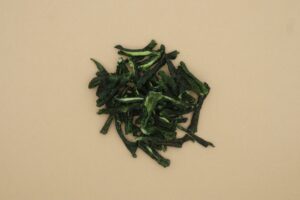
Dried clove is a spice made by drying the pre-bloom buds (flower buds) of the clove tree of the myrtle family. Also called "choji," it is characterized by a distinctive nail-like shape and a sweet, rich aroma, and that aroma and flavor are sealed in through low-temperature drying. Agriture also offers, in parallel, clove powder (made to order) produced by finely grinding the same clove, and proposes them by division of roles—dried clove (whole) for uses where you want to keep the bud shape, and powder for flavoring sauces, dough, and powders.
Compared with other spices such as cinnamon, nutmeg, and cardamom, clove can be differentiated by its "sweet, rich, warm aroma," its "strength that lets the aroma rise even in small amounts," and its "presence in simmered dishes, chai, and baked goods." It is a material often requested for prototyping as an ingredient for flavoring uses—simmered dishes such as curry and stew, chai, mulled wine, baked goods, potpourri, and sachets.
TOC
Three commitments of Agriture's dried clove
1. Low-temperature drying that makes the most of the aroma
Clove's appeal is the sweet, rich aroma derived from eugenol. Agriture keeps the drying temperature low and designs the process to suppress aroma loss, retaining as much of the aroma contained in the buds in the finished product as possible. The way the aroma rises when heated becomes a factor that shapes the flavor of simmered dishes, chai, and baked goods.
2. Whole ingredient that makes use of the bud shape
Clove is made into an ingredient as whole (whole pieces) in its nail-like bud form. Whole clove suits uses where you steep it in simmered dishes and chai to transfer the aroma and remove it at the finish. You can use whole and powder differently according to the application, choosing to match the aroma strength and appearance of the final product.
3. Selecting aromatic lots for the ingredient
Agriture makes clove into an ingredient by carefully judging aroma strength, uniformity of pieces, and color. Selecting aromatic lots is one reason it is chosen in the prototyping of simmered-dish, chai, and confectionery makers. We nail down the specifications of the mass-production lot while checking aroma strength at the prototype stage.
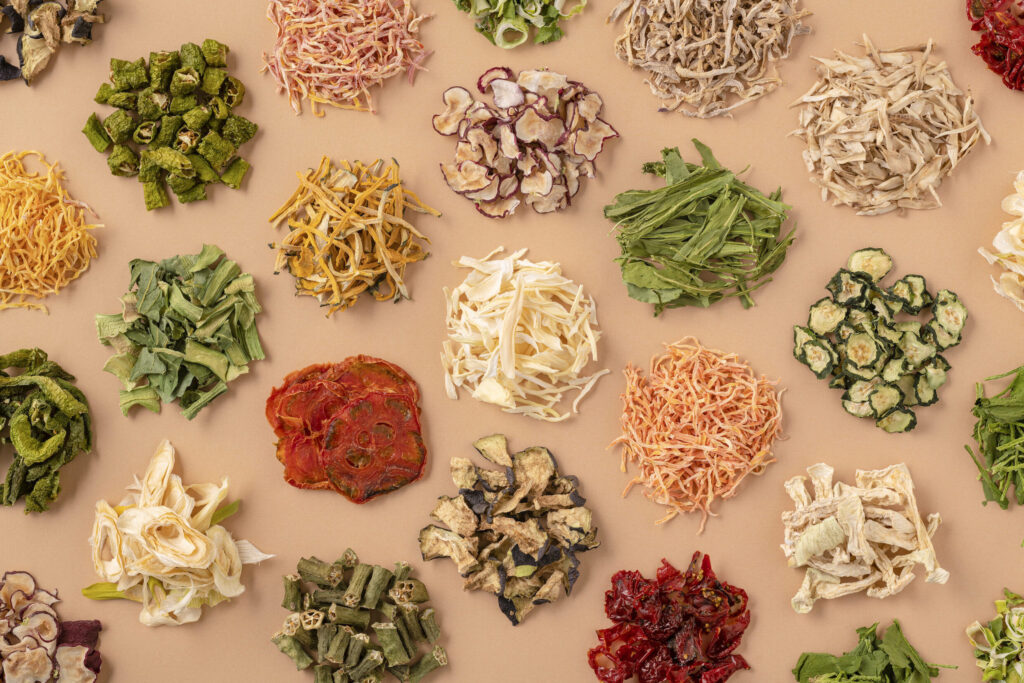
Product catalog showing the items we handle
Flexible support from small lots to large lots
- Sold in small lots from 1 kg
- Handling heirloom vegetables from across Japan
- Dried fruits and herbs also supported
Features of commercial dried clove
Among spice-type dried ingredients, clove is a material with a unique position—its sweet, rich aroma, its strength that lets the aroma rise even in small amounts, and its presence in simmered dishes and confectionery. We organize the strengths that assume a whole form from six perspectives.
Sweet, rich aroma
Clove's aroma involves the aroma component eugenol. It is a sweet, rich, warm aroma that adds an accent to the flavor of curry, simmered dishes, chai, and baked goods.
Strength that lets the aroma rise even in small amounts
Clove has a strong aroma, and even a small amount makes the flavor clearly rise. Because you can transfer the aroma just by steeping a few whole pieces, it is easy to use as a flavoring accent in simmered dishes, chai, mulled wine, and more.
A staple in simmered dishes and chai
It is a material that has been used to flavor warm drinks and dishes—simmered dishes such as curry and stew, spiced chai, and mulled wine. A dried product that can be stored at room temperature lets you bring clove's aroma into the final product regardless of season.
A distinctive nail-like shape
Clove buds have a distinctive nail-like shape that also serves as a visual accent in dishes and potpourri. Used whole, they allow a presentation befitting a spice-forward product.
Suitability as a confectionery and aroma ingredient
Making use of its sweet aroma, it can be used as a flavoring material for baked goods, spice cakes, compotes, and syrups. It suits accents in spice-forward product designs.
Use in combination with powder
Used together with finely ground clove powder (made to order), you can design recipes that achieve both steeping to transfer aroma (whole) and blending into spice mixes or dough (powder).
Product specifications (commercial)
Basic specifications at the prototype stage are as follows. Purchase lot, lead time, and packaging format are worked out through individual consultation.
| Item | Details |
|---|---|
| Product name | Dried Clove |
| Raw material | Clove (choji) |
| Shape | Whole (pieces). Powdering is accommodated according to the application |
| Appearance | Nail-shaped, dark-brown buds |
| Aroma | Sweet, rich, warm aroma |
| Net content | Individual quote according to use and lot |
| Best-before date | About 6 months from the shipping date |
| Storage method | Avoid high temperature, high humidity, and direct sunlight; after opening, seal and store in a cool, dark place |
| Minimum prototype lot | Inquire |
Customization support
You can consult us on form, packaging, and turning it into a final product from the prototype stage. Because we keep records while nailing down the recipe, it is a setup where specifications do not drift between prototyping and mass production.
| Item | Available | Details |
|---|---|---|
| Shape adjustment | Whole / powder | Choose whole for steeping or powder for blending, to match the final product |
| Powdering | Fine powder (made to order) | For flavoring spice mixes, confectionery, sauces, and beverages, and for blending into powders |
| Blend design | Combining with other spices | Chai and curry mixes with cinnamon, cardamom, nutmeg, and more |
| Packaging form | Commercial bulk / small bag / individual wrapping | From commercial bulk to packs for confectionery and beverage ingredients |
| OEM productization | End-to-end support through the finished product | From planning to production of spice mixes, chai bases, and confectionery ingredients |
For those considering the fine-powder type
For uses where you want to spread clove's aroma evenly—flavoring spice mixes, confectionery, sauces, and beverages, and blending into powders—finely ground clove powder (made to order) is well suited. Please also see the list of powder raw materials.
Commitments to variety, grower, and growing region
Clove is a spice made by drying the buds of the clove tree of the myrtle family. Also called "choji," it is a spice that has long been used for flavoring and blending. Agriture uses aroma strength, uniformity of pieces, and finished color as the axes of its ingredient design.
BRAND | The position of clove ingredients
Clove is a spice that has been used for flavoring—curry, simmered dishes, chai, mulled wine, baked goods, potpourri, and more. Agriture translates this sweet, rich aroma into a commercial ingredient, offering it as a material usable in a wide range of final products, from spice mixes to confectionery and beverages.
PRODUCER | Basic policy for sourcing and coordination
We select lots with consistent aroma strength, uniform pieces, and even color in coordination with suppliers. At the prototype stage, we order small amounts from multiple suppliers, evaluate them by how the aroma rises and the flavor when steeped, and then set up the supply line for the mass-production lot.
SELECTION | The axes of ingredient selection
Clove's aroma strength changes with the state of the buds and the degree of drying. Agriture selects and processes lots where the aroma rises firmly and the piece shape is not broken, arranging them so they can be used differently according to the application—simmered dishes, chai, confectionery, and more.
PROCESSING | Drying and finish
By drying the buds, clove's aroma is concentrated and takes a form suited to long-term storage. Agriture finishes it under conditions that suppress aroma loss, offering it as a material whose aroma can be used in both whole and powder forms.
Low-temperature drying technology and quality control
A drying design that does not blow off the aroma
Because clove's aroma escapes easily with heat, we finish it under conditions that keep the drying temperature low and retain the aroma components. While checking how the aroma rises at the prototype stage, we aim for a state usable for any application—simmered dishes, chai, or confectionery.
Storage management that suppresses moisture absorption and fading
When clove absorbs moisture, its aroma weakens and its color dulls easily. After drying, we store and ship it kept away from moisture, managing it so we can deliver an ingredient that retains its aroma. When using it in simmered dishes, add the whole pieces and steep them a little before the finish so the aroma transfers throughout while remaining. In chai, lightly crushing the whole pieces before steeping makes the aroma rise more.
Use cases
We organize the applications for which we receive prototype consultations at Agriture into six categories. All are examples of recipe designs that make use of clove's sweet, rich aroma and whole form.
1. Curry and simmered dishes
It can be used as a flavoring ingredient for simmered dishes such as curry, stew, and meat sauce. Steeping a few whole pieces to transfer the aroma gives a spicy finish. Removing them before the finish also allows development into retort and prepared foods that retain only the aroma.
2. Chai and spiced drinks
It can be used to flavor spiced chai, masala tea, spiced coffee, and more. Steeping it with cinnamon, cardamom, and ginger yields a drink with a warm aroma. It can be developed into chai bases, tea bags, and bottled beverages.
3. Mulled wine and fruit syrups
It can be used to flavor mulled wine (vin chaud), spiced syrups, and fruit compotes. Steeping clove with cinnamon and citrus yields fragrant winter drinks and syrups. It can also be developed into bottled syrups and tea-type products.
4. Confectionery and bakery
It can be used as a flavoring ingredient for spice cakes, cookies, and bread. Making use of its sweet, rich aroma, it can be developed into spice-forward confectionery and bakery products—gingerbread, spice cookies, fruit cakes, and more. Made into powder, it is also easy to blend into dough.
5. Spice mixes and seasonings
It can be incorporated as a blending ingredient for garam masala, curry powder, and spice mixes. Made into powder, it can be developed into seasonings, spice salts, and spice pastes blended with other spices. As an aromatic axis, it works in small amounts.
6. Aroma uses such as potpourri and sachets
Whole clove can also be used for non-food aroma uses such as potpourri, sachets, and craft materials. Combined with citrus and cinnamon, it can be developed into craft products with a seasonal aroma. Being whole and retaining its shape, its appearance can also be used.
Commercial usage and rehydration
Basics of use
- For simmered dishes: add a few whole pieces before the finish, steep, and remove them once the aroma has transferred
- For chai and drinks: lightly crush the whole pieces and steep them with other spices to make the aroma rise
- For confectionery and blending: make into powder and blend a little at a time into dough or spice mixes
- Because the aroma is strong, it is best to add it from a small amount and adjust to your preferred aroma
Blending guide
- Curry and simmered dishes: steep about 1–2 whole pieces per one finished serving
- Chai: steep about 1–2 whole pieces per cup (200ml)
- Mulled wine: steep about 1–2 whole pieces per cup (150ml)
- Spice mixes: blend the powder from a small amount relative to the total, adjusting while checking the aroma
How to store
- Before opening: store in a cool, dark place at room temperature, away from heat, humidity, and direct sunlight
- After opening: transfer to a zip bag or airtight container and use up within 1 to 2 months
- The best-before date is roughly 6 months from the shipping date. Note that moisture absorption weakens the aroma
- Refrigerated storage is possible. Because condensation forms right after taking it out, return it to room temperature before opening
Related cases and articles
- Dried moringa – a dried-herb ingredient
- Dried mugwort – a dried ingredient that makes use of aroma
- Dried edible rose – an ingredient for aroma and color
- List of dried raw materials
- Consult us on food OEM and raw material supply
Product catalog showing the items we handle
Flexible support from small lots to large lots
- Sold in small lots from 1 kg
- Handling heirloom vegetables from across Japan
- Dried fruits and herbs also supported
Frequently asked questions
What kind of spice is clove?
Clove is a spice made by drying the pre-bloom buds (flower buds) of the clove tree of the myrtle family, also called "choji." It is characterized by a distinctive nail-like shape and a sweet, rich aroma derived from eugenol. It is widely used for flavoring—curry, simmered dishes, chai, mulled wine, baked goods, potpourri, and more.
How do you use whole and powder differently?
Whole (pieces) suits uses where you steep it in simmered dishes and chai to transfer the aroma and remove it at the finish. Powder suits uses where you want to blend it evenly into dough or powders—confectionery, spice mixes, sauces, and more. The basic division is whole for simmered dishes and drinks, powder for confectionery and seasoning blending. Used together, you can design recipes that achieve both a steeped aroma and even blending.
Can it be used in chai or mulled wine?
It is one of the applications we are often asked about. Lightly crushing the whole pieces and steeping them with cinnamon, cardamom, ginger, and more yields chai and mulled wine with a sweet, rich aroma. It can be widely developed into drink products that make use of aroma—chai bases, tea bags, bottled syrups, and more.
How do you use it differently from clove powder?
Dried clove (whole) is for "uses where you want to steep it to transfer the aroma," while powder is for "blending into confectionery, spice mixes, and sauces"—that is the division. Whole suits curry, chai, and mulled wine, while powder suits blending into spice cakes, garam masala, and spice salt. Used together, you can design recipes that achieve both a steeped aroma and even blending.
What is the minimum prototype lot?
We accept prototype lots (please inquire). You can prototype multiple conditions in parallel—comparing whole and powder, or comparing specifications for simmered dishes and for chai. You can consult us all the way through OEM final production. After hearing the specifications, lot size, and schedule of your intended final product, we provide an individual quote and lead time.
Please tell me the best-before date and how to store it.
The best-before date is roughly 6 months from the shipping date. While unopened, store it in a cool, dark place at room temperature, away from heat, humidity, and direct sunlight. Because clove's aroma weakens easily when it absorbs moisture, after opening we recommend transferring it to a resealable bag or airtight container and using it up within 1–2 months as a guide. Refrigerated storage is also possible, but watch for condensation right after taking it out—return it to room temperature before opening.
Recommended reading
- Dried moringa – a dried-herb ingredient
- Dried mugwort – a dried ingredient that makes use of aroma
- Dried edible rose – an ingredient for aroma and color
- List of dried raw materials
- List of powders
Download the product catalog
We will send the materials to your email address based on the information you provide.