
Spring Kyoto vegetables: the seasonal taste of Kyoto bamboo shoots, mibuna, and Kujo green onion

Summary of this article
We introduce spring Kyoto vegetables through five representative varieties — Kyoto bamboo shoots, hanana, Kyoto udo, mibuna, and Kujo negi. Kyoto bamboo shoots are grown by the roughly 300-year-old “Kyoto-style softening cultivation” in the Nishiyama area of Nagaokakyo, Oyamazaki, and Muko, and go into wakatakeni and bamboo-shoot rice; hanana, made edible after the war from “Fushimi kanzaki natane,” a Fushimi Momoyama cut-flower rapeseed, is enjoyed in karashi-ae; and Kyoto udo, a rare variety grown by just a few farmers in Kameoka City and the Momoyama district of Fushimi Ward, Kyoto City, can be enjoyed as tempura or dressed with vinegar-miso.
Every vegetable has its season, and enjoying them by the season lets you taste flavors unique to that time. Spring, with the start of the new fiscal year, is the season when fresh vegetables line the shops. Among the colorful and characterful spring Kyoto vegetables are Kyoto bamboo shoots, hanana, and Kyoto udo — appealing varieties nurtured by Kyoto's climate.
TOC
Taste the Season with Spring Kyoto Vegetables
Spring in Kyoto is the season when, along with the cherry blossoms, seasonal Kyoto vegetables bring color to the table. Vegetables that stored up strength through winter sprout, offering distinctive aromas, gentle bitterness, and freshness. Spring in the Kyoto basin has wide temperature swings, and this climate lends depth to the vegetables' flavor. Here we introduce representative spring Kyoto vegetables.
Why Spring Kyoto Vegetables Taste So Good
Spring Kyoto vegetables have a vigor that comes from storing nutrients underground through winter and then growing all at once with spring's warmth. Kyoto bamboo shoots grow in Kyoto's bamboo groves, rich in groundwater, and hanana swell their buds in the spring sunlight. Vegetables harvested in step with these natural rhythms have a delicate flavor that is a cut above greenhouse-grown produce. The old teaching that “seasonal ingredients taste best” holds true for spring Kyoto vegetables as well.
Seasonal Calendar of Spring Kyoto Vegetables
| Kyoto vegetables | Peak period | Main growing region | Representative ways to eat |
|---|---|---|---|
| Kyoto bamboo shoots | Late March–early May | Nagaokakyo, Oyamazaki, and Muko | Wakatakeni, bamboo-shoot rice, tempura |
| Hanana | January–March | Fushimi Ward and Minami Ward, Kyoto City | Karashi-ae, ohitashi |
| Kyoto udo | March–May | Kameoka City and Momoyama, Fushimi Ward | Tempura, dressed with vinegar-miso |
| mibuna, | December–March | Nakagyo Ward, Kyoto City | Pickles, ohitashi |
| Kujo green onion | November–May | Minami Ward, Kyoto City | Hot pot, nuta, condiment |
If you'd like to check the seasons of Kyoto vegetables all at once, Kyoto vegetable calendar.
Kyoto Bamboo Shoots: The Kyoto Taste That Heralds Spring
“Kyoto bamboo shoots” are bamboo shoots grown in Kyoto's abundant groundwater, distinguished by little bitterness and a tender, faintly sweet flavor. A traditional cultivation method some 300 years old has been handed down, with everything — from soil preparation and fertilizing to adding soil and thinning the parent bamboo — done by hand. Enjoyed especially as wakatakeni (simmered young shoots) or tempura, they reveal an elegant flavor.
The Growing Regions and Cultivation Secrets of Kyoto Bamboo Shoots
The main growing regions for Kyoto bamboo shoots are the Nishiyama area centered on Nagaokakyo, Oyamazaki, and Muko. Rich in bamboo groves, this area has clay soil and abundant groundwater well suited to growing bamboo shoots. Kyoto's bamboo-shoot farmers have handed down a distinctive technique called “Kyoto-style softening cultivation” for generations, replacing the grove's soil each year and thinning the parent bamboo on a planned basis to grow high-quality shoots that are white and tender. Dug up before dawn, the shoots called “shirako” have faintly brown-white skin and are fresh and juicy. Briefly parboiled, they can be enjoyed like sashimi — a luxurious treat.
Recommended Dishes with Kyoto Bamboo Shoots
Wakatakeni is the classic Kyoto bamboo-shoot dish. Simmering freshly dug shoots lightly in light soy sauce and dashi brings out the shoots' natural sweetness and aroma. Bamboo-shoot rice is as easy as putting rice, dashi, and bamboo shoots in the rice cooker — a dish that fills the air with the scent of spring. Made into tempura, the shoots' fragrance rises with the steam from within the crisp batter, letting you savor spring with all your senses.
Hanana: A Brassica Kyoto Vegetable That Colors Spring
Hanana is a brassica plant harvested when in bud. It originated after the war, when “Fushimi kanzaki natane,” a rapeseed grown for cut flowers near Fushimi Momoyama, was improved for food use. Distinguished by gentle bitterness and a tender texture, it keeps a vivid green when boiled. It's best enjoyed in karashi-ae, ohitashi, or pickles — ways that let the ingredient's own flavor shine.
The Gentle Bitterness and Spring Flavor of Hanana
Hanana's greatest appeal is the gentle bitterness unique to buds and its tender texture. A quick boil keeps a vivid green, adding a spring-like touch of color to the table. The bitterness is easily lost if overcooked, so the trick is to cook it briefly. Dressed as karashi-ae, the bitterness and pungency play off each other, making a dish that goes well with rice or as an accompaniment to drinks.
Recommended Dishes with Hanana
Karashi-ae is the classic hanana dish. A quick boil, a plunge into cold water, and dressing with mustard, dashi, and soy sauce make a spring-like dish where bitterness and pungency meet. Made into ohitashi, it lets you enjoy hanana's flavor more simply. Hanana rice is an easy dish — just finely chopped hanana folded into warm rice — its green adding a spring touch of color to the table.
Kyoto Udo: A Spring Taste of Fragrance and Bitterness
“Kyoto udo” is a Kyoto vegetable that heralds the arrival of spring, distinguished by its fresh fragrance and faint bitterness. Urbanization has reduced the cultivated area, and today only a few farmers in Kameoka City and the Momoyama district of Fushimi Ward, Kyoto City carefully grow it. Made into tempura, dressed with vinegar-miso, or served in salads, its delicate aroma and flavor shine. Kyoto-grown udo has a character different from that of other regions, offering an even deeper sense of the spring season.
How to Cook and Eat Kyoto Udo
Made into tempura, Kyoto udo locks its fragrance and bitterness into the batter, spreading spring flavor from the very first bite while still hot. Dressed with vinegar-miso is the classic Kyoto udo dish — thinly sliced udo dressed with vinegar-miso for a refreshing taste. For a salad, simply slice it thin, soak it in water, and add dressing for an easy dish. The peel can be made into kinpira to use every part without waste.
The Rarity of Kyoto Udo and Conservation Efforts
Kyoto udo takes considerable effort to grow, and production has fallen sharply due to the loss of farmland to urbanization. Today only a very small number of farmers within Kyoto Prefecture continue to produce it while preserving traditional cultivation methods, and the amount reaching the market is limited. To protect Kyoto's food culture, local JA and agricultural groups provide cultivation support and distribute seedlings, working on the conservation of Kyoto udo.
Spring Kyoto Vegetables and Kyoto Vegetables of Other Seasons
In Kyoto, diverse Kyoto vegetables can be enjoyed through the four seasons. As spring's Kyoto bamboo shoots and hanana come to an end, summer's Fushimi togarashi and Kamo eggplant come into season. From autumn into winter, Shogoin turnip and Kintoki carrot、Shogoin daikon take the leading role at the table. Kujo green onion is sweetest from winter into spring, playing an active part in hot pots and as a condiment. List of Kyoto vegetable varieties lets you check the details of each variety.
Example Menu Using Spring Kyoto Vegetables
For a menu using spring Kyoto vegetables, we recommend combining wakatakeni of Kyoto bamboo shoots as the main dish, karashi-ae of hanana as a side, and tempura of Kyoto udo as the fried course. Make the rice into bamboo-shoot rice, and a table full of spring is complete. mibuna,Add an ohitashi of
and you have a luxurious menu that lets you savor Kyoto's spring in full.
Spots to Enjoy Spring Kyoto Vegetables in Kyoto
For enjoying spring Kyoto vegetables in Kyoto, Nishiki Market is the classic choice. In spring, Kyoto bamboo shoots and hanana line the storefronts, offering the pleasure of picking out seasonal ingredients by hand. Some farms in Nagaokakyo City offer bamboo-shoot digging experiences, a luxurious chance to taste freshly dug shoots. Kyoto's ryotei and restaurants serve course meals using spring Kyoto vegetables, letting you savor seasonal flavors drawn out by professional skill.
Enjoying Spring Kyoto Vegetables Year-Round as Dried Vegetables
Many spring Kyoto vegetables have a short season, but making them into dried vegetables lets you enjoy them regardless of the season. Drying concentrates their umami and improves keeping quality, so spring flavors can be brought to the table year-round.
How to Use Dried Kyoto Vegetables Kujo green onion and mibuna,Dried Kyoto vegetables are easy to use — just add them directly to miso soup or other soups. Commercial dried Kujo green onion and Dried mibuna dried vegetables make an instant Kyoto-vegetable soup: just put them in a bowl and pour hot water. Even on a busy morning you can easily taste seasonal Kyoto vegetables, a use well suited to modern lifestyles. Dried vegetables that can be sprinkled straight into dishes are handy when you want to quickly add a condiment or a touch of color. Agriture's
FOR BUSINESS
乾燥野菜を業務用でお探しですか
国産の野菜・果物を乾燥し、必要に応じて粉砕してお出ししています。扱っている品目は100種前後で、規格は 乾燥品の一覧・パウダーの一覧 に掲載しています。
少量でのご購入は、姉妹ブランドの通販サイト OYAOYA で承っています。
dries spring Kyoto vegetables and other Kyoto vegetables at low temperature, delivering seasonal flavors even after their season has passed.
Recommended reading
List of Kyoto vegetable varieties / Kyoto vegetable calendar / Commercial dried vegetables / Vegetables and Heat Control. Between High and Low Flame / Autumn Kyoto Vegetables: The Flavor and Texture of Shogoin Kabu and Kintoki Carrot
We have materials available to help you understand dried processing OEM
Agriture OEM, flexibly handling everything from small lots to large lots
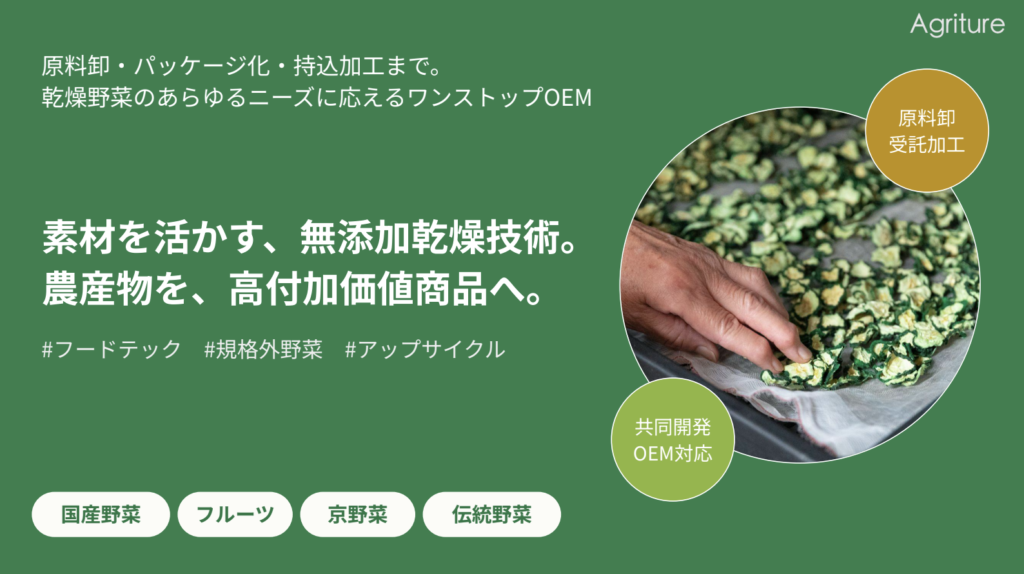
- OEM available from small lots of 10 kg
- Drying of brought-in raw materials also possible
- Support from processing to filling in one place
Related articles
- Freshness is everything for spring Kyoto vegetables, so cook them as soon as possible after buying. Kyoto bamboo shoots are ideally boiled the same day. Simple cooking brings out the ingredient's flavor, so we recommend light, dashi-forward seasoning such as wakatakeni or karashi-ae.
- Autumn Kyoto Vegetables | Shogoin Turnip and Kintoki Carrot
- Winter Kyoto vegetables | Shogoin daikon and Kujo scallion
- Autumn Kyoto Vegetables | Shogoin Turnip and Kintoki Carrot
- Kyoto vegetable calendar — check the seasons of the four seasons at a glance
Download the OEM contract processing materials
We will send the materials to your email address based on the information you provide.
- Autumn Kyoto Vegetables: The Flavor and Texture of Shogoin Kabu and Kintoki Carrot
- Shogoin Kabu: A Kyoto Vegetable with a Smooth, Refined Flavor
Author of this article
Related articles
-
 京野菜は何品目あるのか、読み方の一覧と認定の枠組みから確かめる
 -
 Drying Is Another Kind of Cooking
 -
 The Technology to Lock In the Season. The Seasonal Story Dried Vegetables Connect.
 -
 The Cut Face of a Vegetable. The Difference the Cut Makes.
 -
 Tasting Kyoto Vegetables by Aroma. The Pleasure of Cooking That Begins at the Tip of the Nose
 -
 Vessels and Kyoto Vegetables. Creating the Scenery of Plating.
 -
 Vegetables and Heat Control. Between High and Low Flame
 -
 Kyoto Vegetables and Sake. The Happy Relationship of a Dish and a Cup.