
Why Are Kyoto Vegetables Expensive? History, Brand Power, and Producers' Commitment Explained

Summary of this article
We explain why Kyoto vegetables carry high prices from the angles of history, brand strength, and growers' dedication. We cover the backdrop of the 37 items Kyoto Prefecture designated as "Kyoto Heirloom Vegetables" in 1988, cultivation histories predating the Meiji era, the prestige of being an imperial tribute, the work of agronomist Shiro Takashima, Kyoto's distinctive soil and climate, distribution costs, and growers' efforts such as face-to-face trading and seed management — the structure that supports their brand value and price.

Kyoto vegetables color Kyoto's food culture. When it comes to why they carry higher prices, do you find yourself writing it off with just "because it's Kyoto"?
In fact, behind the high price of Kyoto vegetables lie a long history and tradition, a distinctive growing environment, and the unceasing efforts of growers. This article explains why Kyoto vegetables are expensive, weaving in history, brand strength, and growers' dedication.
TOC
The birth of the concept of Kyoto vegetables
As efforts to reappraise "heirloom vegetables" and "native varieties" advance across Japan, Kyoto vegetables stand as a symbolic presence. In 1988, Kyoto Prefecture officially designated 37 items as "Kyoto Heirloom Vegetables." The criteria are as follows:
Introduced before the Meiji era
Produced throughout Kyoto Prefecture
Meeting these conditions is what earns recognition as a "Kyoto vegetable" and raises its value.

So why are Kyoto vegetables expensive?
Rarity and brand strength
Kyoto vegetables are difficult to grow in other regions, and that rarity drives up their price. They also have a history as imperial tributes, and that tradition and prestige underpins their brand strength.
Growers' dedication and technical skill
Growers who demand high quality raise them with painstaking care, which is costly. Agronomist Shiro Takashima led efforts to make people re-recognize the value of Kyoto vegetables, holding competitive exhibitions and providing technical guidance.
Kyoto's distinctive soil and climate
Many varieties are adapted to Kyoto's soil and climate, making production difficult elsewhere. This distinctiveness is one factor supporting the price of Kyoto vegetables.
The impact of distribution costs
Because production volumes are small, stable supply is difficult, and distribution costs tend to be added on accordingly.
Coexistence of consumers and growers
Not only growers but consumers too take part in efforts to protect Kyoto vegetables. Chefs seek high-quality produce, and growers continue striving to meet that expectation. They value face-to-face exchange and keep refining seed management and quality maintenance.
The brand strength Kyoto vegetables carry
Kyoto vegetables have a history as "imperial tributes," and that prestige underpins their brand strength. A track record of being chosen by the chefs of ryotei and long-established establishments is another element that raises the value unique to Kyoto vegetables.
The certification system that supports the brand value of Kyoto vegetables
Indispensable when discussing the price of Kyoto vegetables is the certification framework that backs their quality. Kyoto Prefecture positions items cultivated within the prefecture since before the Meiji era as "Kyoto Heirloom Vegetables," which include Kamo eggplant, Shogoin daikon, ebiimo, and Kyo mizuna. On the other hand, tanba chestnut and Kintoki carrot which, though not certified as heirloom-vegetable items, are specialty products promoted by Kyoto Prefecture, are called "Brand Kyoto Vegetables" and are distinguished as such.
Furthermore, products that meet set standards for shipping grade and cultivation method carry the certification mark of the Brand Kyoto Products Association. Such certification is a mark that lets consumers choose with confidence, and at the same time it guarantees the quality that growing regions and growers have upheld. The labor and cost required to meet the standards is what leads to the price gap with ordinary vegetables. The difference between Kyoto Heirloom Vegetables and Brand Kyoto Vegetables is The Comprehensive Guide to Kyoto Vegetables also explained in detail.
Representative Kyoto vegetables worth their high price
Even when told that Kyoto vegetables are expensive, it is hard to picture which items hold value and for what reasons. Here we introduce representative Kyoto vegetables that fetch relatively high prices at the shop, along with their growing regions, seasons, and signature dishes.
- Kamo eggplant: A round eggplant grown chiefly around Kamigamo. Because of the care required to develop its dense flesh, it is called the "queen of eggplants" and is enjoyed in dengaku and agedashi.
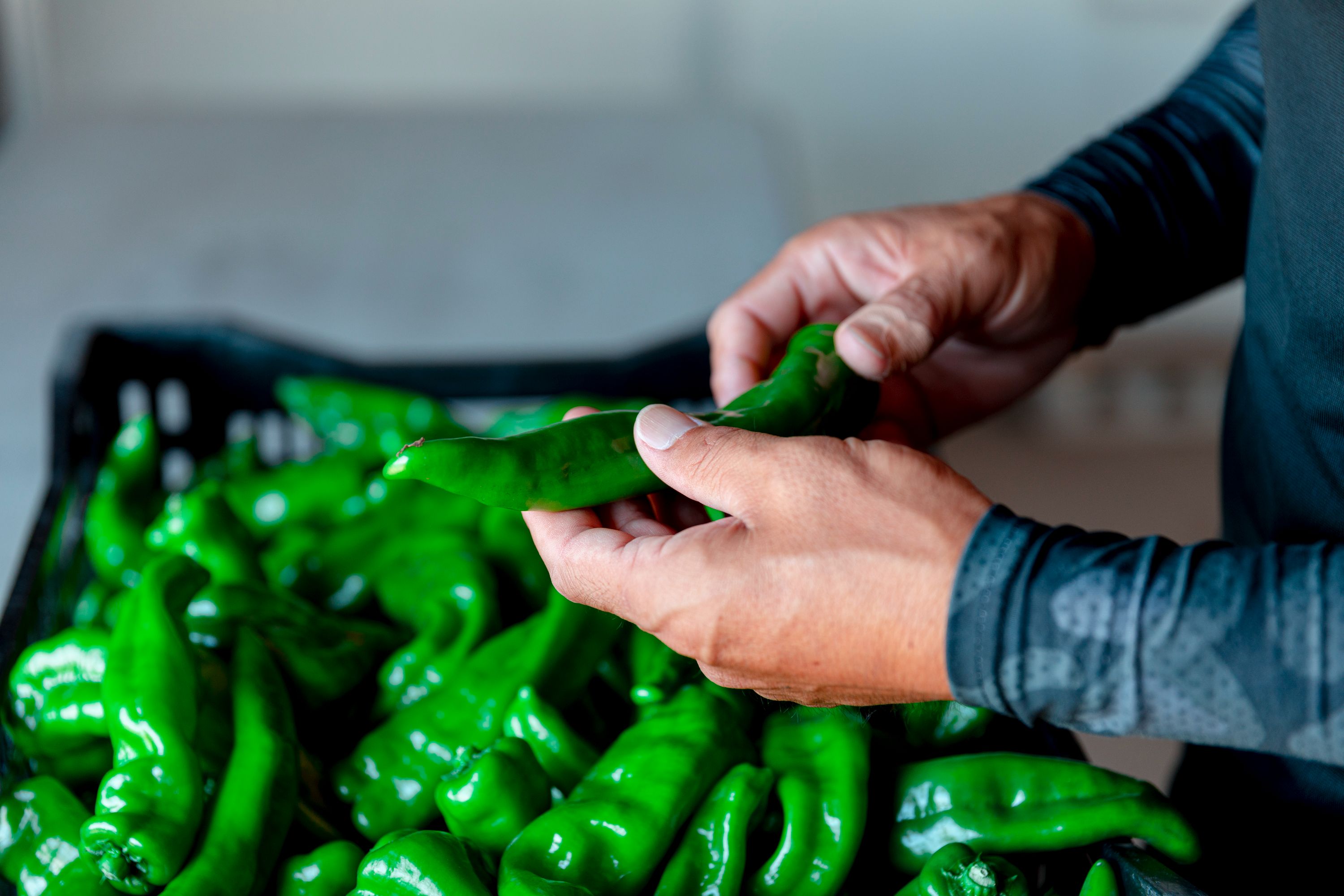
- Manganji togarashi: A large sweet chili born in Maizuru. Low in heat, its sweetness stands out when lightly grilled or stir-fried with chirimen jako.
- Shogoin daikon: A round daikon that holds up well to simmering. A winter staple, indispensable for senmaizuke and furofuki daikon.
- Horikawa gobo: A thick burdock grown over two years. Its hollow center, stuffed and braised, is well known.
- Kintoki carrot: A Brand Kyoto Vegetable that is red to the core. Its harvest is limited to winter, prized for osechi and namasu.
Others such as ebiimo, tanba chestnut, and murasaki zukin also trade high thanks to limited growing regions and harvest seasons and labor-intensive cultivation. All are produced in small volumes and shipped in concentrated bursts during their season, so their rarity is reflected in the price. The season of each item is Kyoto vegetable calendar.
The reason Kyoto vegetables are expensive is the accumulation of their history and natural setting, growers' efforts, and the brand value that certification supports. Rather than judging by price alone, understanding the tradition and passion behind them lets you appreciate their value more deeply.
Enjoying expensive Kyoto vegetables without waste | the drying option
Kyoto vegetables, raised with such care, sometimes cannot reach the market simply because their shape or size does not meet shipping grades. At Agriture, we partner with growers within Kyoto Prefecture and dry even these off-grade Kyoto vegetables at low temperatures, delivering them in a form usable even after the season passes. Drying concentrates the umami and keeps well, so you can enjoy expensive Kyoto vegetables without waste. Kyoto-grown dried vegetables are OYAOYA.
We have materials available to help you understand dried processing OEM
Agriture OEM, flexibly handling everything from small lots to large lots
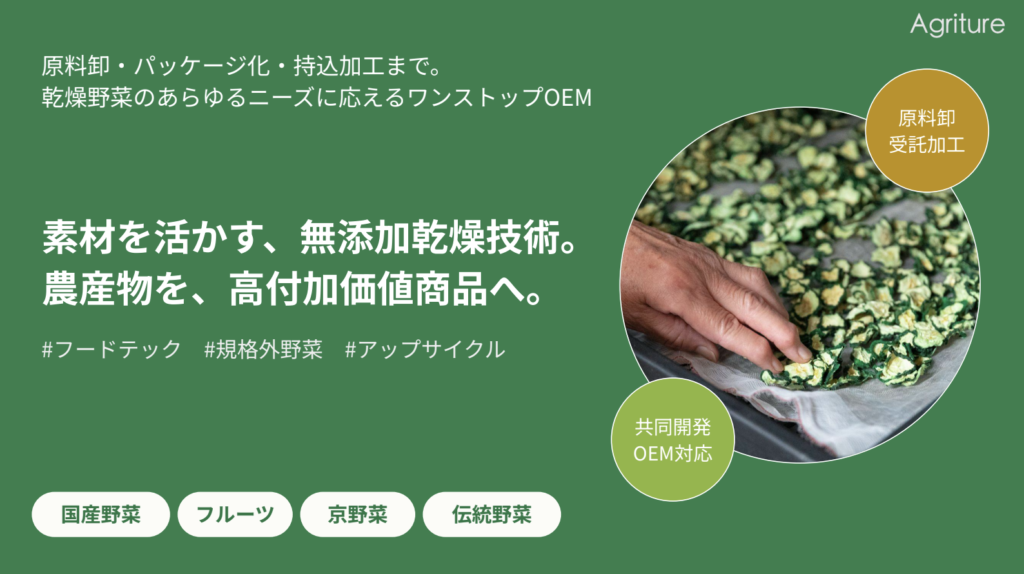
- OEM available from small lots of 10 kg
- Drying of brought-in raw materials also possible
- Support from processing to filling in one place
FOR BUSINESS
乾燥野菜を業務用でお探しですか
国産の野菜・果物を乾燥し、必要に応じて粉砕してお出ししています。扱っている品目は100種前後で、規格は 乾燥品の一覧・パウダーの一覧 に掲載しています。
少量でのご購入は、姉妹ブランドの通販サイト OYAOYA で承っています。
Frequently asked questions about the price of Kyoto vegetables
Related articles
- A guide to reading Kyoto vegetable names | origins and how to remember them
- Kyoto vegetable calendar — check the seasons of the four seasons at a glance
- Comprehensive guide to Kyoto vegetables | What are Kyoto's heirloom vegetables
- What are Kyoto's traditional preserved foods | the wisdom passed down
References: Yoichiro Sato, Kyoto no Shokubunka: Rekishi to Fudo ga Hagukunda "Oishii Machi" (Chuokoron-Shinsha, 2022); Agriculture & Livestock Industries Corporation (2022), "Latest Trends in Kyoto Vegetables," Vegetable Information
Download the OEM contract processing materials
We will send the materials to your email address based on the information you provide.
- What Are Kyoto's Traditional Preserved Foods? Inherited Wisdom and How to Use It Today
- How to Build a Seasonal Course Woven with Kyoto Vegetables
Author of this article
Related articles
-
 京野菜は何品目あるのか、読み方の一覧と認定の枠組みから確かめる
 -
 Drying Is Another Kind of Cooking
 -
 The Technology to Lock In the Season. The Seasonal Story Dried Vegetables Connect.
 -
 The Cut Face of a Vegetable. The Difference the Cut Makes.
 -
 Tasting Kyoto Vegetables by Aroma. The Pleasure of Cooking That Begins at the Tip of the Nose
 -
 Vessels and Kyoto Vegetables. Creating the Scenery of Plating.
 -
 Vegetables and Heat Control. Between High and Low Flame
 -
 Kyoto Vegetables and Sake. The Happy Relationship of a Dish and a Cup.