
Agriculture– tag –
-
What are the challenges of apple farming? A thorough explanation of the current state and solutions
The big picture of the challenges apple farming now faces. Apples are a familiar sight at the table, but their cultivation sites face a stack of overlapping structural problems: a shrinking farming workforce, changing growing conditions, labor concentrated in the harvest season, and ever-rising costs. It's not any one cause alone, but several... -

Kyushu Agriculture Week (J-AGRI KYUSHU)
Kyushu Agriculture WEEK (J-AGRI KYUSHU) is one of the largest comprehensive agriculture shows in western Japan, held at Grandmesse Kumamoto. It brings together products and services related to farm management, from smart farming equipment to materials, livestock, decarbonization and business support, and growers and growing-region staff from Kyushu as well as Shikoku and Chugoku... -
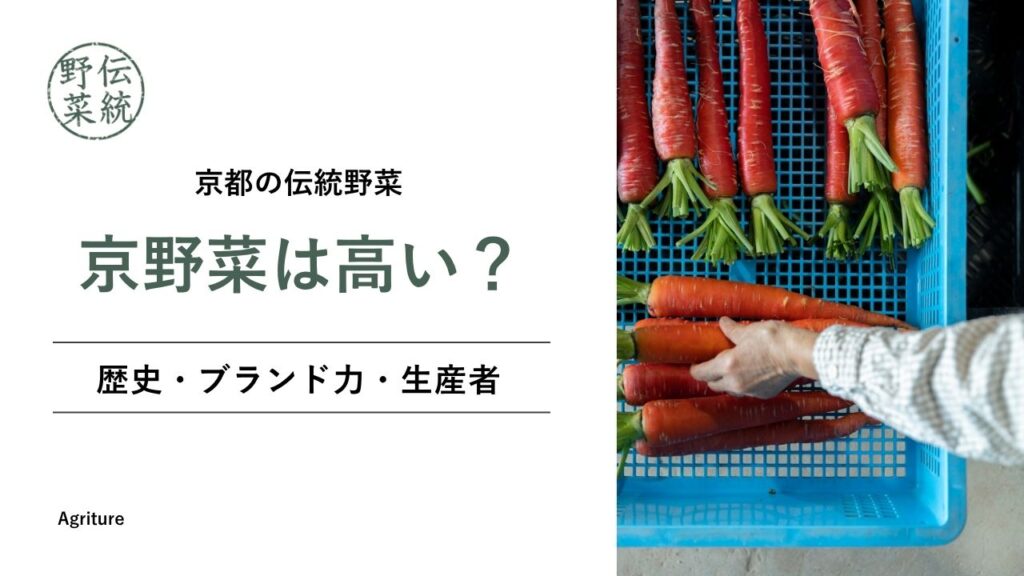
Why Are Kyoto Vegetables Expensive? History, Brand Power, and Producers' Commitment Explained
Kyoto vegetables, which color Kyoto's food culture. Do you dismiss the reason their prices are on the higher side as simply "because it's Kyoto"? In fact, behind Kyoto vegetables' high cost lie a long history and tradition, a unique growing environment, and producers' ceaseless efforts. This article covers why Kyoto vegetables are high... -
The Agriculture & Livestock Industries Corporation's "Vegetable Information, April 2026 Issue" Features ZEROCO's Freshness-Preservation Technology—The Potential of Ice-Temperature Storage for Agriculture and Distribution
The April 2026 issue of the monthly "Vegetable Information," published by the Agriculture & Livestock Industries Corporation (ALIC), carried a feature article on the vegetable freshness-preservation technology developed by ZEROCO Inc. The corporation is a public institution that surveys and publishes vegetable supply-demand and price trends, and being featured in its specialist journal shows industry attention on ZEROCO's technology... -
The global cost of food waste surges to USD 540 billion—3 measures agriculture and the food chain should tackle right now
In 2026, the world's food-waste cost is projected to reach 540 billion dollars. This is up from 526 billion dollars the previous year, and if this continues, cumulative losses for 2025–2030 will reach 3.4 trillion dollars. This figure, reported by New Food Magazine based on expert analysis, relates to the UN SDGs' Goal 12... -
MAFF Announces the April 2026 Vegetable Price Outlook—Cabbage and Lettuce Down Year-on-Year, Potatoes and Onions Remain High
On March 31, 2026, the Ministry of Agriculture, Forestry and Fisheries published the April growth conditions and price outlook for vegetables destined for the Tokyo Metropolitan Central Wholesale Market. With rainfall and rising temperatures since late February, the growth of many leafy vegetables has recovered, and cabbage and lettuce are expected to see supply slightly above average and prices fall year-on-year. On the other hand, last summer's... -
JA Kumamoto Keizairen Regenerates Blemished Vegetables into Washi Lights—"Tomoru Oyasai" Starts Crowdfunding on Makuake Today
On March 30, 2026, JA Kumamoto Keizairen (Kumamoto Prefecture Economic Federation of Agricultural Cooperatives) started crowdfunding on Makuake for "Tomoru Oyasai," which regenerates blemished vegetables (tomato, eggplant) that can't be shipped or eaten into poster lights with washi shades. The JA Keizairen originally... -
Vegetable Shortage Among Those in Their 20s Is 100g Below Target — The Answer Shown by the Solution Idea Contest 2026 and Dried Vegetables
The vegetable-intake target set by the Ministry of Health, Labour and Welfare is 350g per day. But the average intake among those in their 20s remains at about 256g, a reality about 100g short of the target. From March 2, 2026, recruitment began for the 2nd "Vegetable-Shortage Solution Idea Contest 2026 for Those in Their 20s," launching a new effort to increase vegetable intake among the young... -
In late March 2026, cabbage stayed high at 149 yen/kg at the Nagoya market. Against the backdrop of price instability of spring vegetables amid continued poor weather, the strengths of dried vegetables—stable supply, long-term storage, and avoiding price-fluctuation risk—are drawing renewed attention.
In June 2025, the Ministry of the Environment published FY2023 (fiscal 2023) food loss generation. The total was about 4.64 million tons, down 80,000 tons from the previous fiscal year (4.72 million tons), setting a new record low since estimation began. Business-related was about 2.31 million tons and household-related about 2.33 million tons, with business-related falling below household-related for the first time. Reduc... -
Upvege, Which Powders Off-Spec Vegetables, Points to a New Trend in Upcycling
In October 2025, Green Ace Co., Ltd. officially launched the upcycled food brand "upvege." Using its proprietary powdering technology, it transforms "unused vegetables"—those that didn't reach the market because their shape or size didn't meet standards—into high-value-added products with their color, aroma, and nutrition intact... -
The off-spec vegetable delivery service "LossHeru" partnered with Japan Post to begin selling at post offices nationwide. The familiar post office is becoming a new point of contact for reducing food loss. Japan Post Becomes a Channel for Off-Spec Vegetables. On January 19, 2026, the off-spec vegetable delivery service operated by Ekunes Inc...
The FY2023 (fiscal 2023) food loss estimate published by the Ministry of the Environment was 4.64 million tons, a new record low since statistics began. But what deserves attention beyond the figure is the change in the breakdown. Business-related (companies, restaurants, etc.) food loss was 2.31 million tons, falling below household-related (2.33 million tons) for the first time... -
In the food industry, the "upcycling" movement is accelerating. Efforts to use off-spec vegetables and manufacturing by-products not as "waste" but as "valuable ingredients" are drawing attention as part of sustainability management. A movement facing the 4.64-million-ton food-loss challenge. Environ...
We Were Featured on MAFF's "Nippon Food Shift" Suste-Nabe Page -
Vegetable Shortage Among Japanese People Widens | The Reality of Not Reaching the 350g Target
The vegetable-intake target set by the Ministry of Health, Labour and Welfare is 350g per day. But according to the latest National Health and Nutrition Survey, the average intake among Japanese people remains at about 280g, continuing to hover at about 80% of the target. How to fill this "70g wall" has become a new theme for the food industry. Across all age groups... -
The Freeze-Dried Vegetable Market Grows 8.7% Annually | The Background of Its Expansion
The global freeze-dried vegetable market is rapidly growing. The 2026 market size will reach about 9 billion dollars, and the vegetable segment in particular shows high growth at a CAGR of 8.7%. The attention on dried vegetables, which achieve both health-consciousness and convenience, supports this growth. Why freeze-dried vegetables are growing... -
Agri Week 2026 (J AGRI) | Guide to the venue, exhibiting, and highlights
Agri Week 2026 (J AGRI) is one of Japan's largest comprehensive trade shows dedicated to agriculture and livestock. The Tokyo (Makuhari) show is scheduled for autumn 2026 and the Kyushu (Kumamoto) show for spring 2027, and Agri Week as a whole consists of Smart Agriculture, Agricultural Materials, Livestock Materials, Livestock Disease Prevention and Hygiene, Decarbonization and SDGs... -

Buddy’s Farm
About Buddy’s Farm. Buddy’s Farm (Odawara City, Kanagawa) is an agricultural corporation known for growing somewhat rare mini tomatoes. About six years since founding, it has shipped to local direct sales and restaurants while committing to varieties with thin skins and strong individual flavor. Making use of that know-how, last year... -
Takii & Company, Limited
A dried vegetable series using Phytorich. We produced dried vegetables using vegetables from the Phytorich series developed by Takii & Company, Limited, known for its “vegetables with a good reason.” From that series, we used “Kyo-kurenai carrot,” “Orange carrot,” and “Healthy oku... -

Sakura Renkon Co., Ltd.
Our work with Sakura Renkon. Sakura Renkon (Sakura City, Chiba) is an agricultural corporation specializing in growing and selling lotus root. After working in Tokyo, representative Yuma Matsumoto took up farming, and after training, regenerated an abandoned black-soil paddy field. Using only organic fertilizer and no chemical fertilizer, the soil... -

Kubota Corporation
Producing dried tomato in a collaboration with Beppin Farm. In a collaboration with Beppin Farm, operated by Kubota Corporation, we produced dried tomato using tomatoes grown at Kubota Farm, operated within the Kubota Group, for the company’s internal use... -

Aida LLC
A flavored tea using dried Kujo green onion wins a Japanese Tea Award. Aida LLC provides experiences of time and space by making use of diverse cultures—food, art, aroma, music, and more—centered on the tea ceremony and Japanese tea. At the company’s shop located in Minami-ku, Kyoto City, “a Japanese tea space to enjoy time”... -
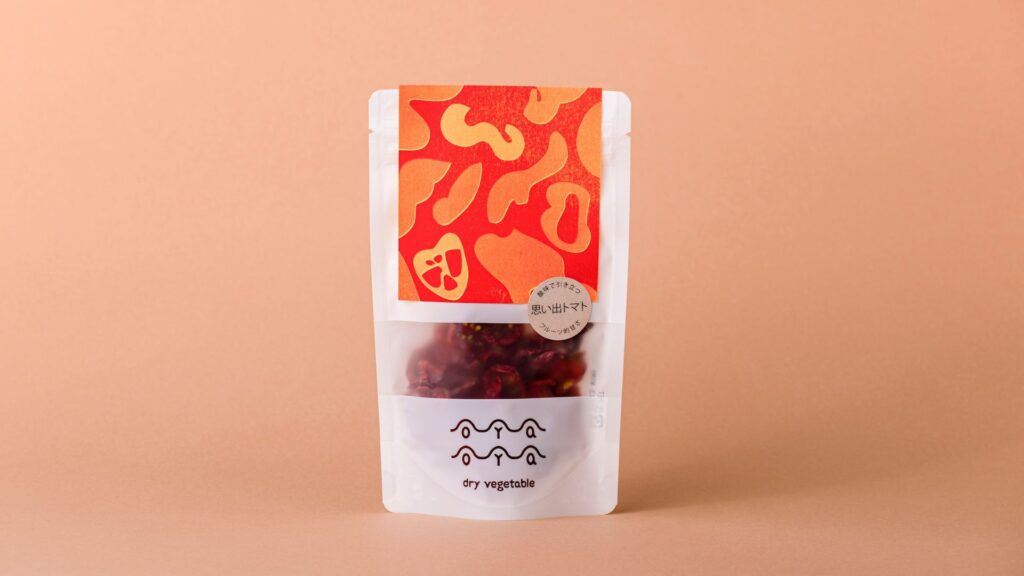
Wada Farm
Commercializing an attention-grabbing fruit tomato from Kyotango. We received the “yarisugi tomato”—grown in Kumihama, Kyotango, in an environment so harsh it is called an “athlete vegetable,” with sweetness and tartness packed densely—from Wada Farm and made it into a product. High-sugar tomatoes are hard to dry... -

Kyotamba radish
A project toward establishing radish as a regional specialty. This is a project started as a means of regional revitalization, initiated by Mr. Nomura, who grows radishes in the Kyotamba area of Kyoto. Agriture CEO Kojima supported the web system construction and the back end including SNS... -

Yasai Yakuzen
Yasai Yakuzen, balancing the body with vegetables. Together with YAKUZEN TOKYO Co., Ltd., we launched the “Yasai Yakuzen” service—a way of eating that balances the body from within using “familiar vegetables” available at supermarkets. Even the vegetables we casually eat, when appropriately chosen and appropriately cooked from a yakuzen perspective... -
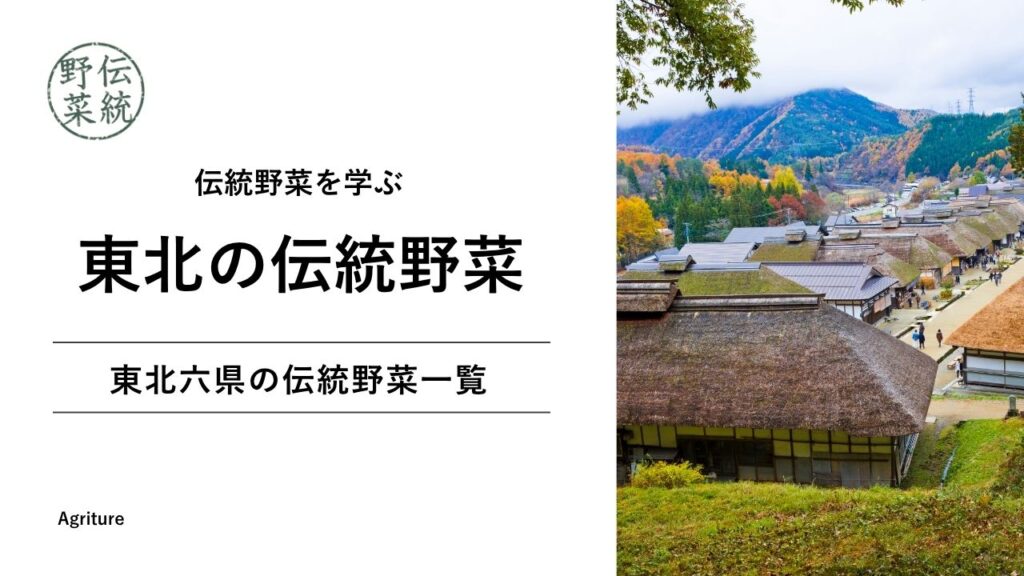
A list of heirloom vegetables from the six Tohoku prefectures | The regional food culture we want to protect
The Tohoku region, with its dramatic seasonal changes, retains many locally distinctive heirloom vegetables. Landrace varieties rooted in the climate and terroir are food materials and, at the same time, a resource that carries the region's cultivation techniques and food culture to the present. On the other hand, with diversifying diets and a shortage of successors, cultivation is declining...
1