Kyushu Agriculture Week (J-AGRI KYUSHU)

"Kyushu Agri Week (J-AGRI KYUSHU)" is one of the largest agricultural trade shows in western Japan, held at Grandmesse Kumamoto. It brings together products and services related to farm management, from smart agriculture equipment to farm supplies, livestock, decarbonization and management support, and producers and regional farming leaders from Kyushu as well as Shikoku and Chugoku visit to select equipment and build sales channels. This article covers the dates, venue, component shows and visitor registration for the Kyushu show, along with how smaller family farms and regional producer groups can prepare to gain an edge in meetings, and how to turn vegetables from your own farm into novelties to hand out at your booth.
We have materials available to help you understand vegetable-based novelties
Agriture OEM, flexibly handling everything from small lots to large lots
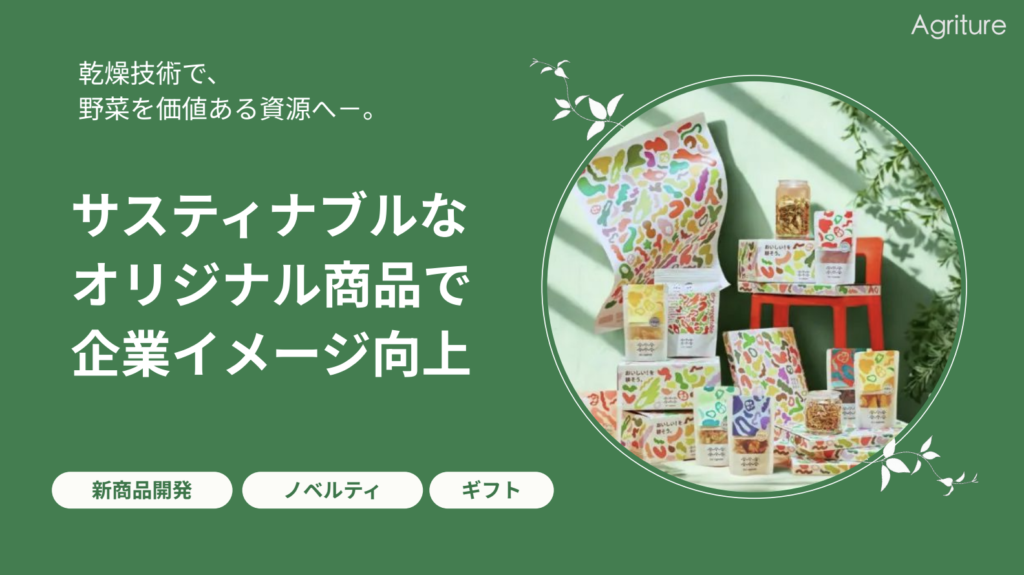
- SDGs-friendly products using non-standard vegetables
- Delivery possible in as short as two weeks
- Small lots from 500 bags
TOC
Basic information on Kyushu Agri Week (J-AGRI KYUSHU)
Separate from J-AGRI in Tokyo, the Kyushu show is held at Grandmesse Kumamoto, which growers from Kyushu, Shikoku and the Chugoku region can easily reach even on a day trip. The most recent edition is the 5th, and entry is free with advance visitor registration. The reason to choose the Kyushu show is that you can compare the latest equipment and materials in person at a venue close to western Japan's farms without traveling to Tokyo.
| Item | 5th (held in 2027) |
|---|---|
| Dates | May 27 (Thu) - 28 (Fri), 2027 |
| Time | 9:00〜16:00 |
| Venue | Grandmesse Kumamoto |
| Admission | Free (advance visitor registration required) |
| Organizer | RX Japan LLC |
The venue, Grandmesse Kumamoto, has spacious exhibition areas that make demonstrations and delivery of large equipment easy, so you can compare machines such as tractors and harvesters while seeing the real thing. With exhibitors and visitors coming from across western Japan, it is a valuable place for growers in the nearby Kyushu, Shikoku and Chugoku regions to gather information in a single day with less travel. Check access and parking details on the official website before you go.
What companies and products does it attract?
Products and services eligible for exhibiting
Exhibits focus on products and services that support agricultural productivity and farm management. They broadly cover everything from production to shipping and management: smart agriculture equipment such as drones, auto-steering, sensors and environmental control; fertilizers, pesticides, covering materials and horticultural materials; livestock feed and hygiene management equipment; technologies related to decarbonization and SDGs; and services supporting farm management and market development. The lineup also makes it easy to find products related to greenhouse horticulture, livestock, fruit and tea production, which are thriving in western Japan.
Beyond equipment sales, businesses that support the use of off-spec produce, value-adding through processing and sixth-sector industrialization also exhibit. Because you can consult on how to sell what you grow and how to process it to raise its value, the show suits not only growers looking to scale up but also those searching for an outlet for what they produce.
Growers and businesses who attend
Visitors include agricultural production corporations and individual farmers, JAs and regional producers, livestock businesses and people aiming to take up farming from Kyushu, Shikoku and the Chugoku region. Western Japan has many fruit, vegetable and tea growing regions that make use of the warm climate, with numerous family farms and small grower groups. These visitors are looking for realistic ways to reduce labor and build up profits with limited hands and land, rather than large-scale investment.
That is exactly why many growers come not only to consider equipment but also to find ways to turn off-spec and surplus produce into income instead of wasting it. At the venue you can consult on both equipment for growing and outlets for selling and processing on the same day, making it an opportunity to rethink your whole operation.
Six specialized shows held concurrently
Kyushu Agri Week (J-AGRI KYUSHU) consists of six specialized shows divided by theme. You can narrow down the exhibits to visit according to your purpose, so you can gather information efficiently even with limited time.
| Specialized show | Main content |
|---|---|
| Smart Agriculture EXPO | Labor-saving technologies such as drones, auto-steering, sensors and environmental control |
| Agricultural Materials EXPO | Fertilizers, pesticides, covering materials, horticultural materials, etc. |
| Livestock Materials EXPO | Feed, barn equipment and livestock-related equipment |
| Agriculture Decarbonization & SDGs EXPO | Technologies and services related to decarbonization and environmental consideration |
| Next-Generation Farm Management EXPO | Support services for market development, management and sixth-sector industrialization |
| Livestock Disease Prevention and Hygiene EXPO | Products related to livestock disease prevention and hygiene management |
It is efficient to start with the specialized shows that relate directly to your challenges: the Smart Agriculture EXPO and Agricultural Materials EXPO if you grow fruit or vegetables, the Livestock Materials EXPO and Livestock Disease Prevention and Hygiene EXPO for livestock, and the Next-Generation Farm Management EXPO if you are thinking about processing or building sales channels.
Highlights for visitors and exhibitors
Choose equipment by comparing real machines
You can compare the size, handling and price range of equipment from multiple manufacturers side by side on the spot, which is hard to judge from catalogs or videos alone. If you tell the staff about your field area, crops and labor situation, you can get proposals that fit your scale. Checking maintenance and support after installation also reduces worries after purchase.
Consult on sixth-sector industrialization and building sales channels
At the Next-Generation Farm Management EXPO, you can consult businesses that support processing and market development for the produce you grow. Information on creating revenue outlets is gathered there, such as how to turn off-spec and surplus produce into dried products, powders and processed goods for sale, and how to make products for direct sales and gifts. For growers who tend to be consumed by production alone, it is a chance to rethink how they sell.
Get management tips at seminars
During the show, seminars are held on themes such as smart agriculture adoption case studies, management improvement and responding to decarbonization. You can quickly learn how fellow growers in western Japan have overcome challenges and find tips to take back to your own operation. Popular talks fill up quickly, so it is best to sign up early for seminars you want to attend.
For companies considering exhibiting
Eligible exhibitors include manufacturers and trading companies handling agricultural equipment, materials and livestock-related products, as well as businesses supporting farm management and sixth-sector industrialization. The advantage of exhibiting at a regional trade show is that growers in western Japan can see your products directly, and you can align on usage and terms on the spot. Check exhibit types and booth fees with the organizer, RX Japan LLC, or through the contact point on the official website.
Many visiting growers are family farms or small grower groups, so adoption plans that let them start small and confirm the results resonate more than proposals premised on large investment. Preparing live machine demos and a one-page sheet that clearly shows post-installation support at your booth lets you move into concrete discussions on the spot.
Visitor registration and how to participate
Visitor attendance requires pre-registration on the official website, and an entry badge is issued once registration is complete. Besides avoiding congestion at reception on the day, you can look at the exhibitor list before the show and choose the booths you want to visit in advance. The venue, Grandmesse Kumamoto, is in Kumamoto Prefecture and can be reached by car or public transport from across Kyushu, Shikoku and the Chugoku region. Check directions and parking availability on the official website before you set off. If you are coming from far away and attending for several days, booking nearby accommodation early lets you look around at a relaxed pace.
Tips for growers in western Japan
Kyushu, Shikoku and the Chugoku region have many vegetable, fruit and tea growing areas that make use of the warm climate, but in bumper years off-spec and surplus produce is common, and many growers struggle with what to do with it. Fresh produce doesn't keep and has limited buyers, but once dried or powdered it becomes light and long-lasting, making it easier to store and sell. Agriture processes dried vegetables, vegetable powders, dried vegetable soups, tea and dried fruit, and you can consult us from the raw material selection stage about creating outlets for your harvest.
Rather than ending with equipment talk at the show, taking home the question of how to sell the surplus from your fields changes how you see your operation. Start by drying and processing a small amount of vegetables from your own fields as a test, and move to full commercialization after seeing the response. This way of starting small suits operations of limited scale.
Farm-grown vegetable novelties to hand out at your booth
At the Kyushu show, surrounded by machinery and materials exhibitors, it isn't easy for growers to get people to remember where they are from and who they are. Visitors receive many business cards and flyers at the venue, so these tend to slip from memory on the way home. That is where novelties made by turning vegetables harvested from your own fields into small processed products come in. Even vegetables that couldn't be shipped because they were off-spec can be dried or powdered and packed into small bags, letting visitors take home the flavor of your growing region.
Hand nearby growers who came to Kumamoto the face of your growing region
The Kyushu show mainly attracts growers and regional producers who run fields, orchards and tea plantations in western Japan. Precisely because they are growers themselves, a bag of dried vegetables from your own fields conveys at a glance that you grow this crop in this place, better than ready-made goods. Dried vegetables and vegetable powders are light and keep well, individually wrapped bags are hygienic to hand out, and they don't take up space on the way home from Kumamoto. The growers who attend are the ones who grow the produce; what Agriture takes on is the processing, drying or powdering the off-spec vegetables we receive and packing them into small bags. The fields belong to the grower, and Agriture handles processing and small-bag packing.
Don't just hand them out: take them home as product ideas for the next harvest
A bag made for handing out becomes a preview for your next product. If you prepare several prototypes in different forms from the same fields, such as a dried vegetable mix, vegetable powder and dried vegetable soup, you can gauge the response by which ones visitors reach for. Expanding only the well-received formats to farm stands and gifts lets you take the first step toward secondary processing without strain. Prototypes can be discussed from 50 bags, so you can also make just enough to hand out during the show and increase the quantity after seeing the response.
We have materials available to help you understand vegetable-based novelties
Agriture OEM, flexibly handling everything from small lots to large lots
- SDGs-friendly products using non-standard vegetables
- Delivery possible in as short as two weeks
- Small lots from 500 bags
FAQ: Kyushu Agri Week (J-AGRI KYUSHU)
- Is there an admission fee?
-
Entry is free if you register as a visitor in advance. An admission fee may apply if you register on the day without pre-registration, so complete your registration on the official website.
- How is it different from Agri Week in Tokyo?
-
The Kyushu show is the edition for western Japan held at Grandmesse Kumamoto, and it is easy for growers from Kyushu, Shikoku and the Chugoku region to reach. You can compare the latest equipment and materials at a nearby venue without traveling to Tokyo.
- Is it worth attending for a small family farm?
-
Yes. You can find approaches that work even with limited labor and land, from labor-saving equipment you can start small with to consultations on sixth-sector industrialization by processing and selling off-spec vegetables. Even just visiting is useful for gathering information.
- Can vegetables from my own fields be turned into novelties?
-
Yes. Off-spec or surplus vegetables harvested from a grower's own farm can be dried or powdered and made into small-bag novelties. The fields belong to the grower, and Agriture supports the processing and small-bag packing. You can consult us from small lots (from 50 bags).
- When is the next show?
-
The 4th edition was held May 27-29, 2026, at Grandmesse Kumamoto. The next, the 5th edition, is scheduled for May 27-28, 2027, at the same venue. Please check the official website for the latest schedule.
Summary: making use of Kyushu Agri Week for your operation in western Japan
Kyushu Agri Week (J-AGRI KYUSHU) is a comprehensive agricultural show for western Japan; the 4th edition was held in May 2026 at Grandmesse Kumamoto, and the 5th edition is scheduled for May 27-28, 2027, at the same venue. Across six specialized shows you can compare machinery, materials, livestock, decarbonization and management support all at once, and growers from Kyushu, Shikoku and the Chugoku region can gather information with less travel. If you don't stop at choosing machinery and also take home ideas for creating outlets through secondary processing, turning off-spec and surplus vegetables into products for sale, it becomes easier to plan your next move even with a limited-scale operation. Turning vegetables from your own fields into small-bag novelties and testing commercialization while watching the response is one way to get started.
Official information: J-AGRI (Agri Week) official website
Official information: J-AGRI (Agri Week) official website

Recommended reading
Commercial dried vegetables / Original vegetable novelties / ifia JAPAN 2026 / Agri Week 2026 (J AGRI) | Guide to the venue, exhibiting, and highlights
Last updated: August 12, 2026
Download the novelty materials
We will send the materials to your email address based on the information you provide.