FOODEX JAPAN

FOODEX JAPAN is one of Asia's largest food trade shows, bringing together food and beverage manufacturers and buyers from Japan and abroad. Visitors include not only overseas importers and restaurant chains but also buyers from domestic supermarkets and convenience stores and PB (private brand) developers, so you can target both "a gateway to exports" and "domestic market development" in the same venue. This article covers the dates, venue, exhibitor categories and how to attend, as well as how to prepare to make business meetings go your way and how to use tea, dried fruit and dried vegetable novelties to stay in buyers' memories.
We have materials available to help you understand vegetable-based novelties
Agriture OEM, flexibly handling everything from small lots to large lots
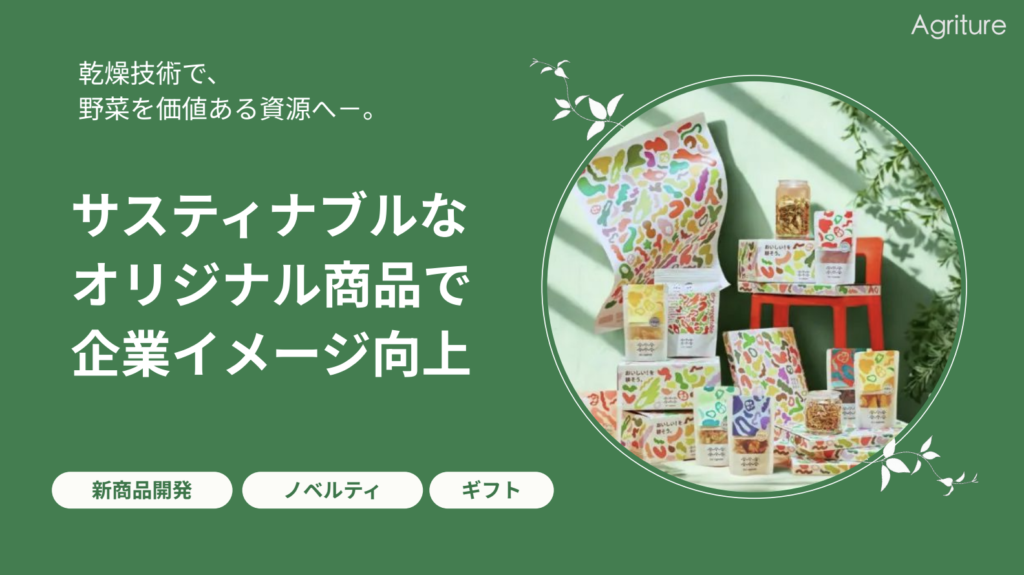
- SDGs-friendly products using non-standard vegetables
- Delivery possible in as short as two weeks
- Small lots from 500 bags
TOC
FOODEX JAPAN at a Glance
The upcoming edition is the 52nd, to be held at Tokyo Big Sight in March 2027. It is a long-established trade show held every March since 1976, and admission is by advance registration for industry professionals. In 2026, 3,238 companies from more than 76 countries exhibited, and registered visitors reached 73,842. The strength of this show is its scale, attracting both overseas and domestic buyers.
| Item | 52nd edition (2027) | 53rd edition (2028) |
|---|---|---|
| Dates | March 9 (Tue) – 12 (Fri), 2027 | Not yet announced |
| Venue | Tokyo Big Sight | Not yet announced (check the official website) |
| Admission | Advance visitor registration required (for industry professionals) | Not yet announced |
| Organizer | Japan Management Association and others | — |
FOODEX JAPAN was once held at Makuhari Messe, but recent editions have taken place at Tokyo Big Sight. The venue and dates may shift from edition to edition, so always check the latest information on the official website when planning to attend or exhibit. Since the show is held every March, starting preparations at the beginning of the year with next fiscal year's business meetings in mind gives you time to arrange business cards and samples.
What companies and products does it attract?
Food categories eligible for exhibiting
A wide range of food items is exhibited, from primary products such as fruit and vegetables, meat and seafood to processed foods such as confectionery, seasonings, beverages, frozen foods, retort pouches and dried goods. There are also items that convey a "Japanese character," such as sake, tea and fruit juice, and themed zones such as organic, halal and plant-based, making it easy to find the products you are looking for. Processed foods that work for both overseas and domestic markets are an easy category to handle even for first-time exhibitors.
Fresh products often face barriers in freshness retention and shipping costs, whereas processed foods given a longer shelf life by drying, freezing or retort packing are easier to handle in transactions with distant buyers. Items that tend to come in small lots when a single growing region exhibits alone can more easily meet the volumes buyers need when multiple producers exhibit together.
Who the Buyers Are
Visitors are mainly buyers from overseas importers, retailers and restaurant chains, along with buyers and PB developers from domestic supermarkets, convenience stores and department stores, and purchasing staff at restaurant and ready-meal companies. Because you can approach both overseas and domestic channels in the same venue, the show works well both for businesses aiming to export and for those aiming for domestic PB adoption.
Required specifications, package labeling and religious requirements differ by country and business partner, so being ready to make proposals while asking "where and in what form do you want to sell?" at the booth improves the quality of business meetings. Using the exhibitor search beforehand to understand which buyers are likely to attend and preparing a presentation tailored to your target market keeps you from wasting limited meeting time.
Themed Zones That Make Up FOODEX
FOODEX JAPAN consists of multiple themed zones and pavilions organized by item and theme. Country and regional pavilions from overseas, booths from Japanese prefectures and zones for certification themes such as organic and halal are lined up, so visitors can efficiently tour the areas they are interested in. While the entire venue is one huge trade show, the advantage of a comprehensive show is being able to explore it by purpose.
In trade, a deal only comes together when you match the specifications, labeling and volumes the other party needs, not just when the product itself is appealing. With its many zones side by side, this show can also be used to identify exhibitors close to your own items and zones where buyers from your target market gather. The zone lineup is updated each edition, so check the official website for details.
Highlights for visitors and exhibitors
Direct Business Meetings with Buyers from Japan and Abroad
The biggest highlight is the opportunity to talk directly with overseas and domestic buyers. In addition to tastings and brochures, being able to present price ranges, minimum order quantities and shipping periods on the spot makes it more likely to lead to quote requests later. Instead of stopping at exchanging business cards, record each buyer's interests and contact details so it is easier to follow up before the next edition.
Understanding Market Trends and Best Sellers
With foods from more than 76 countries in one place, you can quickly survey which flavors, packaging and concepts are gaining traction overseas. Many domestic PB and trending products are also exhibited, making it a useful place to gather ideas for your own product planning. Record exhibitors that catch your interest with photos and notes so they are easy to share at planning meetings after you return to the office.
Making Use of Seminars and Business Matching Support
During the show, seminars on market trends, exports and market development, as well as business matching support, are available. For businesses about to start dealing with overseas partners or major retailers, they are a chance to learn the key points of how to proceed in a short time. Popular topics can fill up, so reserve seats in advance for programs you are interested in.
For companies considering exhibiting
Exhibitors include food manufacturers, producers and joint exhibits by growing regions that want to expand overseas and domestic sales channels. Details on booth formats and booth fees can be confirmed with the organizer, the Japan Management Association, or through the inquiry desk on the official website. To make the most of limited meeting time, it is effective to narrow down your target market and prepare samples and brochures that match the labeling and specifications of those buyers.
Preparing product materials in English and a single sheet summarizing prices, lot sizes and shipping terms lets you start aligning terms on the spot. Making the samples you hand out small and long-lasting means buyers will pick them up again during internal reviews after returning to their offices. Preparing separate small portions for tasting and gifts to take home makes follow-up after meetings easier.
Visitor registration and how to participate
FOODEX JAPAN is a trade show for industry professionals, and admission requires advance registration on the official website. Registered visitors receive the information needed for entry and can avoid crowds at reception on the day. Checking the exhibitor list before the show and selecting the booths you want to meet in advance keeps your movements efficient on the day. The nearest stations are Tokyo Big Sight Station on the Yurikamome Line and Kokusai-Tenjijo Station on the Rinkai Line, with easy transfers from central Tokyo. Many buyers come from overseas and stay several days, and hotels in the area become hard to book during the show, so early reservations are recommended.
Tips for Turning FOODEX into Business Deals
Since FOODEX draws both overseas and domestic buyers, having items that can be shipped at room temperature and convey a Japanese character at a glance makes it easier to move either kind of meeting forward. Vegetables and fruit that are hard to handle fresh can be shipped in a light, less fragile and long-lasting state once dried or powdered. Agriture processes dried vegetables, vegetable powders, tea and dried fruit, and can help design "shippable forms" for both export and PB, starting from the raw material selection stage.
What buyers tell you at the booth provides hints for refining your next product. Take home requests such as "please reduce the sugar in this flavor" or "please split this packaging into smaller portions," prototype in small lots and then go into the next meeting to speed up planning. Specifications differ for overseas and domestic markets, so having a setup that can prototype with both in mind can sometimes lead a single exhibition to multiple sales channels.
"Japanese-Made Novelties That Ship at Room Temperature" to Hand Out at FOODEX
In the aisles of FOODEX, overseas importers and PB staff from domestic supermarkets and convenience stores walk the same floor. What appeals to each differs: overseas buyers focus on whether a product can be sent abroad at room temperature, while domestic buyers look at how it will appear on the shelf and its cost. In a venue with thousands of exhibitors, there is also the difficulty that handing over only a business card rarely makes a lasting impression on buyers.
One Pack You Can Hand to Both Overseas Buyers and Domestic PB Staff
With individually wrapped tea, dried pears made from Nijisseiki pears grown in Kyotango, or dried vegetables, you can hand the same sample on the spot to both buyers looking for exports and those looking for domestic PB, and let them check the taste. Because they can be sent abroad at room temperature and look good on a shelf, even a single item can capture reactions from both the export and PB directions at once. Even if different aspects appeal to different buyers, taste gives you common ground to keep the conversation going.
Using the March Timing to Meet New Fiscal Year Shelf Changes
Because FOODEX is held in March, the reactions gathered during the show can easily be reflected in shelf changes for the new fiscal year starting in April and in new spring and summer products. Even as buyers visit dozens of booths in a day, a sample that connects your company name with a taste when they open it back at the office stays with them. Agriture can prepare tea bags, dried Nijisseiki pears, and dried products and vegetable powders from off-spec vegetables in small lots from 50 bags, and can also help with packaging matched to the partner's labeling. Whether for export or domestic PB, the pack you hand over can become the entry point to commercialization.
We have materials available to help you understand vegetable-based novelties
Agriture OEM, flexibly handling everything from small lots to large lots
- SDGs-friendly products using non-standard vegetables
- Delivery possible in as short as two weeks
- Small lots from 500 bags
FAQ | FOODEX JAPAN
- Can the general public attend FOODEX JAPAN?
-
FOODEX JAPAN is a trade show for industry professionals and requires advance visitor registration. It is not a show for general consumers, so check the official website for eligibility requirements.
- When and where will the next edition be held?
-
The upcoming 52nd edition will be held March 9–12, 2027 at Tokyo Big Sight. The dates for the 53rd edition (2028) had not been announced at the time of writing, so check the official website for the latest information.
- Can I target both exports and domestic sales channels?
-
Yes. In addition to buyers from overseas importers and restaurant chains, buyers and PB developers from domestic supermarkets and convenience stores also attend, so you can pursue both exports and domestic market development in the same venue.
- What kind of novelties are good to hand out at business meetings?
-
Items that can be shipped at room temperature and convey a Japanese character, such as tea, dried fruit and dried vegetables, are well suited. They are compact and easy to carry home, and buyers can try the taste even in small amounts, so they work both as gifts for export buyers and as samples for domestic PB.
- Can novelties be made in small lots?
-
Yes. Tea bags, dried pears, dried vegetables, vegetable powders and more can be prepared in small lots from 50 bags, doubling as prototypes for export or PB products. Packaging design matched to the partner's labeling can also be discussed.
Summary | Expanding Domestic and Overseas Sales Channels at FOODEX JAPAN
FOODEX JAPAN is one of Asia's largest food trade shows, held March 9–12, 2027 at Tokyo Big Sight (dates for the 53rd edition in 2028 have not been announced). Because overseas importers and buyers from domestic supermarkets and convenience stores come to the same venue, the show's unique strength is that you can pursue both exports and domestic PB at once. Taking advantage of the March timing makes it easier to reflect the reactions you gather in shelf changes for the new fiscal year. Prepare a pack of tea, dried fruit or dried vegetables that ships at room temperature and conveys a Japanese character, and start by seeing which buyers respond to which flavors, moving your export and PB plans forward in parallel.
Official information: FOODEX JAPAN Official Website

Recommended reading
Commercial dried vegetables / Original vegetable novelties / JFEX Winter (7th International Food & Beverage Business Week) / International Food Logistics EXPO
Last updated: August 12, 2026
Download the novelty materials
We will send the materials to your email address based on the information you provide.