FOOMA JAPAN

"FOOMA JAPAN (International Food Machinery & Technology Exhibition)" is one of the world's largest comprehensive food manufacturing shows, bringing together machinery, plants and processing technologies for making, packing and transporting food. Visitors are mainly manufacturing, development and production engineering staff at food manufacturers, and the show is a place to compare lines with actual machines, from raw material processing to filling, packaging, inspection and hygiene management, and to find equipment and partners that solve their companies' challenges. This article covers the dates, venue and visitor registration and how companies considering exhibiting can prepare, as well as how to think about food novelties that lead to contract manufacturing (OEM) consultations.
We have materials available to help you understand vegetable-based novelties
Agriture OEM, flexibly handling everything from small lots to large lots
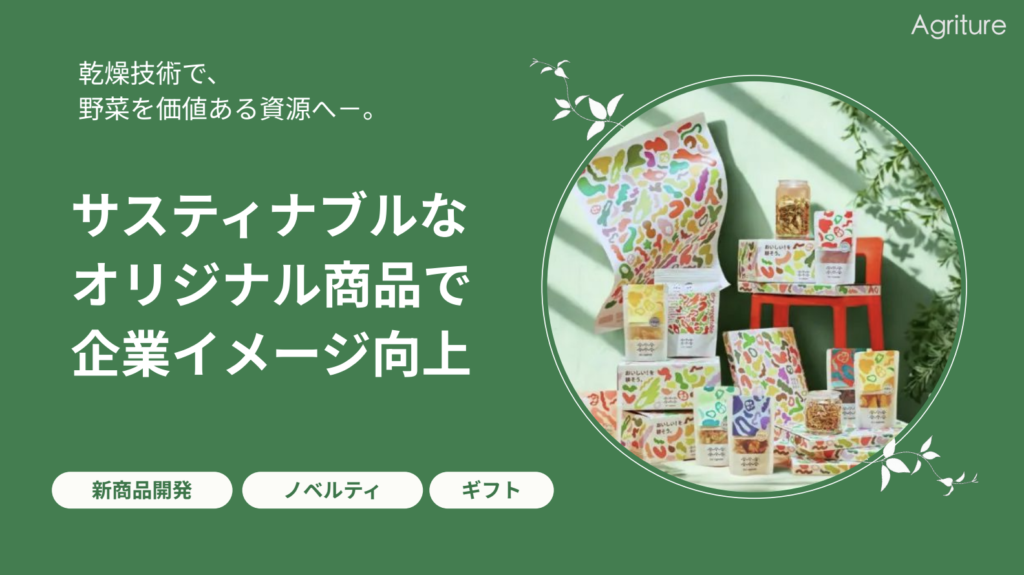
- SDGs-friendly products using non-standard vegetables
- Delivery possible in as short as two weeks
- Small lots from 500 bags
TOC
FOOMA JAPAN (International Food Machinery & Technology Exhibition) at a glance
The most recent edition was held in June 2026 at Tokyo Big Sight, with many companies exhibiting. FOOMA JAPAN 2027 is expected to continue the annual schedule, but the dates had not been announced at the time of writing, so please check the official website for confirmed dates. The dates, venue and admission are summarized below.
| Item | FOOMA JAPAN 2026 | FOOMA JAPAN 2027 |
|---|---|---|
| Dates | June 2 (Tue) to June 5 (Fri), 2026 | Not yet announced (check the official website) |
| Venue | Tokyo Big Sight West Halls 1–4 / East Halls 1–3, 7, 8 | Not yet announced |
| Opening hours | 10:00〜17:00 | Not yet announced |
| Admission | Advance visitor registration required | Not yet announced |
| Organizer | The Japan Food Machinery Manufacturers' Association | The Japan Food Machinery Manufacturers' Association |
FOOMA JAPAN is a show that the organizer, the Japan Food Machinery Manufacturers' Association, has held around June every year, and a large-scale layout spanning both the West and East Halls of Tokyo Big Sight has become standard. The 2026 theme was "The Shift is On.", and how to drive transformation on the manufacturing floor through labor saving, automation and data utilization was at the core of exhibits and programs. If you plan to visit or exhibit the following year, arranging accommodation and business travel early, as soon as the dates are announced, will make things easier.
What companies and products does it attract?
Machinery and technology categories for exhibitors
Exhibitors mainly offer raw material washing, cutting and grinding; heating, drying and freezing; forming; filling and packaging; weighing and inspection; and plant equipment and software that control entire factories. Recently, labor-saving robots, image inspection and systems that visualize production data have also become prominent, and more booths propose not just single machines but "how to solve challenges as a line." It is not a business meeting show for selling food itself but a show where the stars are the equipment and technology for making food safely and consistently.
In drying and powder processing as well, dryers that remove moisture from raw materials, grinding and granulating equipment, and filling machines for powders are on display. For staff wanting to add new processes to their lines, it is a valuable chance to see actual machines' processing speed and finish with their own eyes. Many companies, as a step before installing equipment, first make small prototypes through contract manufacturing and decide on machinery investment after getting a view on mass production.
Who Attends
Visitors are mainly manufacturing, production engineering, quality control and product development staff at food manufacturers, who come to gather information for updating plant equipment and mass-producing new products. The number of overseas visitors grows every year. Because buyers and suppliers gather at the same venue, many staff walk the floor not only to compare equipment but also to find contract processors and prototyping partners.
Development staff often come with specific challenges such as "We want to process this raw material this way," and they stop not only at machinery makers' booths but also at processors who can take on prototypes from small quantities. A characteristic of this show's visitors is that consultations easily arise from wanting to first confirm a product's form through contract manufacturing before buying entire sets of equipment.
Venue layout and highlight zones
FOOMA JAPAN uses both the West and East Halls, with zones divided by theme such as processing, packaging, measurement and hygiene. In 2026, an "Innovation Hub" was set up in the West Hall Atrium, offering a place to see new technologies and startup initiatives together. The startup zone had a record number of participating companies, presenting solutions from angles different from established large-scale equipment.
During the show, an Academic Plaza, various seminars and live demonstrations are also held, letting you see machines in action up close. The equipment you want to see is often split between the two halls, so checking booth locations in advance with the exhibitor search and planning your route keeps you from wasting limited time.
Highlights for visitors and exhibitors
Checking processing results through live machine demos
The biggest draw is seeing machines actually running and checking processing speed, finish and even the effort involved in changeovers. Staff can judge ease of use with their own eyes in ways catalog figures cannot show. For processes where differences in finish are easy to see, such as drying, grinding and filling, consulting in front of a demonstration gives you a sense of how far results can be reproduced with your own raw materials.
Gathering ideas for labor saving and automation
On manufacturing floors facing ongoing labor shortages, deciding which processes to hand over to machines or robots is a shared concern. The venue features equipment that automates weighing, inspection and case packing, as well as systems that visualize production data, providing material for weighing cost-effectiveness when applied to your own plant. Walking the venue also reveals the option of outsourcing some processes instead of building every process in-house.
Finding prototyping and contract manufacturing partners
At the product planning stage, first making small prototypes to settle flavor and form causes less rework than installing mass production equipment right away. At the venue, you can also consult processors who take on drying, powdering and other processing from small lots, and raise a product's level of completion before investing in equipment. The show's depth lies in serving both visitors choosing equipment and visitors looking for contract partners.
For companies considering exhibiting
Exhibitors include manufacturers of food machinery, plants, packaging materials and inspection equipment, as well as processing and contract manufacturing businesses. Details on exhibition formats and booth fees are available from the organizer, the Japan Food Machinery Manufacturers' Association, or the exhibitor information on the official website. Visitors walk the floor with specific challenges in mind, so presenting in a way that conveys in one line "which problem, in which process, your equipment or processing can solve" makes people more likely to stop.
At the booth, preparing demonstrations and samples that let visitors experience the finish works well. If you are promoting contract processing, being able to hand over samples of products you have actually processed makes meetings more concrete. Rather than ending with an exchange of business cards, ask about and record each visitor's raw materials and challenges, and create a flow that leads to prototype proposals later, so meetings continue after the show.
Visitor registration and how to participate
Admission requires advance registration on the official website. Registering lets you avoid crowds at reception on the day, and you can review the exhibitor list before the show and choose the booths you want to visit. Tokyo Big Sight is within walking distance of Kokusai-Tenjijo Station on the Rinkai Line or Tokyo Big Sight Station on the Yurikamome Line. Allow time for moving between the West and East Halls and plan a schedule with some margin so you can see everything. The show has continued to be held in June, and nearby hotels get crowded, so if you are coming from afar for several days, book early.
[For this show] How food manufacturers can make the most of it
FOOMA JAPAN is a place to choose equipment and also a place to gather information for "settling a product's form through prototypes before installing that equipment." If you are unsure whether to add drying or powdering processes in-house, watching machine demonstrations to get a picture of mass production while first confirming the finish through small contract prototypes reduces rework. Agriture dries and powders off-spec vegetables and can discuss everything from choosing raw materials to designing dried products and powders in small lots.
Ideas gained at the show, such as "We want to turn this raw material into powder" or "We want to make this vegetable into a dried soup," speed up internal decision-making if you give them shape through prototypes before considering mass production equipment. By proceeding in the order of contract prototypes first, mass production if the response is good, and equipment installation once volumes grow further, you can develop products while keeping wasted investment down.
"Actual samples of dried and powdered products" that lead to contract manufacturing consultations
FOOMA JAPAN is a place for choosing machines, but many staff are thinking about whether they can test a process through outsourcing before buying equipment. What works here is a real processed product, which speaks louder than any written explanation. With small pouches of dried vegetables, vegetable powder and dried vegetable soup, visitors can pick them up and check the results of drying and powdering on the spot. At this show, where manufacturing and development staff gather, such processed products become a direct gateway to contract manufacturing (OEM) consultations.
Let the finish show your technical capability
Visitors judge by the finish whether you are someone they can entrust a process to. The color and aroma of dried vegetables, the fineness of a powder and how a dried vegetable soup rehydrates come across faster when you hand over the real thing rather than a catalog. Agriture handles small-pouch filling and can prepare samples from small lots of 50 bags, so you can hand out small amounts at your booth while demonstrating drying and powder processing technology with real products. They are compact and can be taken home at room temperature, becoming a way for people to remember your company during internal reviews back at the office.
From actual samples to dried and powder OEM consultations
If someone at the booth asks whether this vegetable can be powdered or whether a soup can be made with this blend, you can make a small-lot prototype (from 50 bags) and bring it to your next meeting. By switching the samples you hand out among dried vegetables, powders and dried vegetable soups and asking each person which processes they want to outsource, you can figure out which direction to take contract manufacturing discussions. Let people experience the technology through novelties, then step up to prototypes and contract manufacturing, and you can develop products before committing to equipment investment.
We have materials available to help you understand vegetable-based novelties
Agriture OEM, flexibly handling everything from small lots to large lots
- SDGs-friendly products using non-standard vegetables
- Delivery possible in as short as two weeks
- Small lots from 500 bags
FAQ: FOOMA JAPAN (International Food Machinery & Technology Exhibition)
- When is FOOMA JAPAN 2027?
-
The 2027 dates had not been announced at the time of writing. The show has continued to be held at Tokyo Big Sight around June every year, but please check the official website for confirmed dates.
- Can I hold meetings to sell food products themselves?
-
FOOMA JAPAN is a show where machinery and technology for making food safely and consistently take center stage. Its purpose differs from business meeting shows for selling food itself, and it centers on comparing equipment and finding processing and contract manufacturing partners.
- Is advance registration required to attend?
-
Admission requires advance visitor registration on the official website. Registering lets you avoid crowds at reception on the day and choose which booths to visit from the exhibitor list before the show.
- Can we test with small quantities before installing equipment?
-
Yes. By outsourcing to processors who take on drying, powdering and other processing from small lots, you can settle the finish through prototypes before installing mass production equipment. Agriture handles drying and powder prototypes in small lots from 50 bags.
- What form of samples works best to hand out at a booth?
-
Small pouches of dried vegetables, vegetable powder and dried vegetable soup, which are easy to carry home at room temperature and convey the quality of processing, are well suited. They aren't bulky and become a way for people to remember you during internal reviews back at the office.
Summary: Using FOOMA JAPAN as a gateway to dried and powder OEM
FOOMA JAPAN (International Food Machinery & Technology Exhibition) is one of the world's largest comprehensive food manufacturing shows, bringing together machinery and technology for making, packing and transporting food. The most recent edition was held June 2–5, 2026, at Tokyo Big Sight; the 2027 dates have not been announced, so please check the official website. Visitors are mainly manufacturing and development staff, and the show can be used both to compare equipment and to find prototyping and contract manufacturing partners. If you are considering drying or powder processing, starting from actual samples of dried vegetables, vegetable powder and dried vegetable soup and developing products through small-lot prototypes lets you confirm the response before investing in equipment.
Official information: FOOMA JAPAN (International Food Machinery & Technology Exhibition) official website
Official information: FOOMA JAPAN (International Food Machinery & Technology Exhibition) official website

Recommended reading
Commercial dried vegetables / Original vegetable novelties / Food Factory Week 2026 / Food & Beverage OEM Expo
Last updated: August 12, 2026
Download the novelty materials
We will send the materials to your email address based on the information you provide.