
Japanese Food Export EXPO

Japan's Food Export Fair is a business-meeting trade show where Japanese agricultural, livestock and marine products, processed foods, beverages, seasonings and more can be pitched directly to overseas buyers and export trading companies. Held at Tokyo Big Sight as the core zone of JFEX, the comprehensive international food and beverage show, it has been held twice a year, in early summer and late autumn, since 2024. This article covers the dates, venue, exhibit categories and how to register as a visitor, as well as how food businesses aiming to export can prepare to gain an edge in business meetings and how to think about novelties that stay memorable.
We have materials available to help you understand vegetable-based novelties
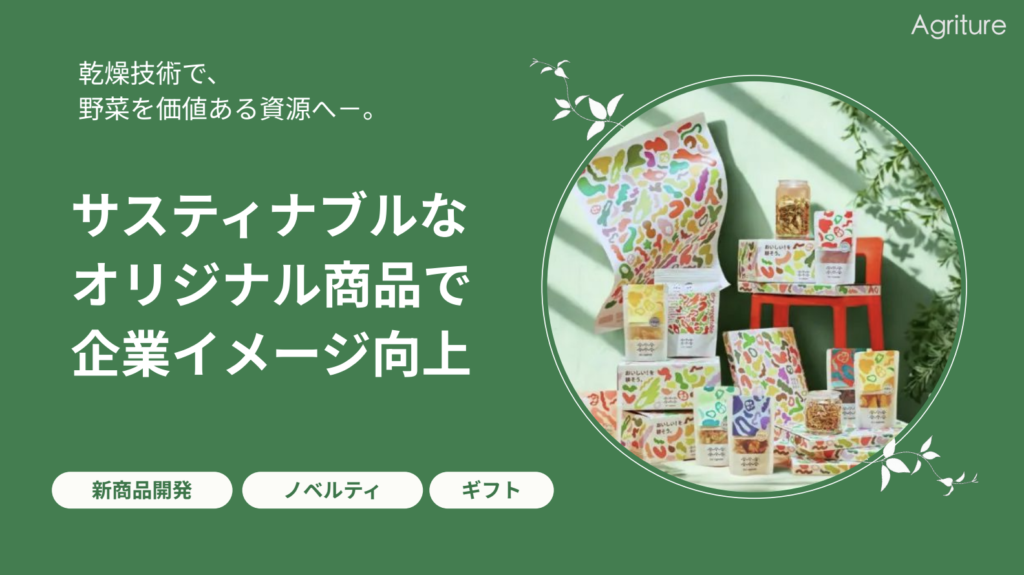
- SDGs-friendly products using non-standard vegetables
- Delivery possible in as short as two weeks
- Small lots from 500 bags
TOC
Japan's Food Export Fair: Basic Information
The next shows are the 13th edition in autumn 2026 and the 14th edition in early summer 2027. Both are held at Tokyo Big Sight, and admission is free with advance visitor registration. Because buyers attend from about 60 countries, a distinctive feature is that even businesses exporting for the first time can check reactions from several countries on the spot.
| Item | 13th | 14th |
|---|---|---|
| Dates | November 11 (Wed) – 13 (Fri), 2026 | June 30 (Wed) – July 2 (Fri), 2027 |
| Venue | Tokyo Big Sight | Tokyo Big Sight |
| Admission | Free (advance visitor registration required) | Free (advance visitor registration required) |
| Organizer | RX Japan LLC | RX Japan LLC |
With the show now held twice a year, it has become easier to use it continuously, such as meeting a buyer in autumn and meeting again in early summer to make the deal concrete. Whether exhibiting or visiting, preparing business cards and samples with the next show in mind keeps business going. Exports in particular are rarely decided in a single meeting and tend to build trust through repeated contact, so a twice-yearly schedule works in favor of businesses aiming to export.
What companies and products does it attract?
Food categories eligible for exhibiting
A wide range of products can be exhibited as long as they are Japanese, from primary products such as rice, fresh produce, meat and seafood to processed foods such as confectionery, seasonings, beverages, frozen foods, retort products and dried goods. Items that convey a Japanese character, such as sake, tea and fruit juice, and processed foods that withstand long-distance shipping at room temperature are categories well suited as a first step into exporting.
Fresh products often face barriers in keeping freshness and shipping costs, while processed foods made shelf-stable by drying, freezing or retort processing are easier to handle even for first-time exporters. Items that tend to come in small lots when a growing region exhibits alone can more easily meet the volumes buyers want when several producers exhibit together.
The Overseas Buyers and Trading Companies Who Attend
Visitors are mainly buyers from overseas import trading companies, retailers and restaurant chains, as well as domestic export trading companies and trade support organizations. Required specifications, package labeling and religious requirements differ by country and region, so having your booth ready to make proposals while asking which country buyers want to sell in and in what form improves the quality of meetings.
What resonates varies by buyer: buyers in Asia tend to value the safety and quality of Japanese products, while in Europe and North America angles such as organic and plant-based tend to spark interest. If you use the exhibitor search beforehand to understand which buyers are expected and prepare presentations suited to your target markets, you will not waste limited meeting time.
Specialist Shows Held Together as JFEX
Japan's Food Export Fair is held as part of JFEX, the comprehensive international food and beverage show. In the same venue, alongside business meeting shows for food and beverages themselves, specialist shows for food manufacturing, processing and packaging and for food logistics covering transport and storage are held at the same time. An advantage of attending a comprehensive show is being able to cover not only sourcing but also the making, packing and shipping required for exports in a single visit.
In exporting, a deal only comes together once you have put in place not just an appealing product but also packaging that meets the destination country's labeling and a transport system that maintains the right temperature range. With related specialist shows laid out side by side, this event can also be used as a place to find partners for the processes your company is missing, all at once.
Highlights for visitors and exhibitors
Direct Business Meetings with Overseas Buyers
The biggest highlight is the chance to talk directly with overseas buyers, with interpreters. Beyond tastings and materials, preparing to answer on the spot about price range, minimum lot and available shipping periods makes quote requests more likely later. Rather than ending with a card exchange, recording each buyer's interests and contact details makes follow-up easier before the next show.
Gathering Information on Import Regulations and Certifications by Country
In exporting, food regulations, additive rules, labeling and certifications such as halal in each destination country become barriers. Trade support organizations and logistics companies offer consultations at the venue, so you can resolve questions while preparing to export. Getting a sense during your visit of which countries your products can most easily enter makes planning easier.
Learning Export Know-How at Seminars
During the show, seminars are held on export success stories and market trends in various countries. For businesses about to start exporting, it is a place to learn from both successes and failures in a short time. Popular topics can fill up, so booking seminars you are interested in ahead of time is the surest option.
Items That Are Easy to Export and Items That Often Run into Trouble
Items that are easy to handle for first-time exporters
Products that keep for a long time at room temperature and are unlikely to break or spoil are easier to handle in exports that travel long distances. Tea, dried goods, dried vegetables, dried fruit and seasonings are typical examples. Items that are instantly recognizable as Japanese and let buyers experience the flavor from just a small amount are easy to hand out as samples at a first meeting, and they stay in buyers' memories.
Common stumbling points
Fresh and refrigerated products make it hard to balance freshness with shipping costs, which raises the bar for first-time exporters. And if ingredient labeling or allergen information does not meet the destination country's standards, a shipment can be held at customs even after negotiations have gone well. Processing or drying products into a shelf-stable form and adapting labels to the export market's requirements makes these stumbling blocks easier to avoid.
For companies considering exhibiting
Exhibitors include food manufacturers, producers and joint regional exhibitor groups looking to open overseas sales channels for their products. Details on booth space and fees are available from the organizer, RX Japan Ltd., or through the contact information on the official website. To make the most of limited meeting time, it helps to narrow down the countries you want to export to and prepare samples and brochures that match those countries' labeling rules and standards.
If you prepare English product materials and a one-page sheet summarizing prices, lot sizes and shipping terms, you can move straight into discussing terms on the spot. Samples handed out at the booth should be easy to carry home and shelf-stable, so buyers remember your company when they discuss options internally after returning home.
Visitor registration and how to participate
Registering on the official website before your visit gets you the data for your entry badge. Besides avoiding the crowds at reception on the day, you can review the exhibitor list before the show and choose the booths you want to meet. The nearest stations are Tokyo Big Sight Station on the Yurikamome Line and Kokusai-Tenjijo Station on the Rinkai Line, both easy to reach with transfers from central Tokyo. Hotels in the area fill up during the show as overseas buyers arrive in Japan, so if you are traveling from afar and staying overnight, book early.
How food exporters can make the most of the show
For export, products that can be shipped at room temperature over long periods and are instantly recognizable as Japanese are easier to work with. Vegetables and fruit that are difficult to ship fresh can be transported light, unbreakable and shelf-stable once processed into dried goods or powder. Agriture processes dried vegetables, vegetable powders, tea and dried fruit, and can help you design a "shippable form" for export, starting from raw material selection.
Buyer feedback gathered at the show becomes material for your next product. Take requests such as "Could you reduce the sugar in this flavor?" or "Could you split this packaging into smaller portions?" back with you, make small-lot prototypes, and go into your next meeting with them to speed up your export plans.
"Japanese tea and dried fruit novelties" to hand out at export meetings
Overseas buyers hold many short meetings a day through interpreters, so with only business cards and brochures, they often cannot recall your company name or your flavors once they are back home. Conveying flavor through verbal explanation alone is difficult, and whether you can leave "the taste of Japan" in their hands on the spot changes the likelihood of a follow-up.
Let buyers take the "taste" home from the meeting table
Hand over individually wrapped tea bags or dried pear made from Kyotango-grown Nijisseiki pears on the spot, and buyers can taste them with their purchasing staff and managers after returning home. Light and hard to break, several countries' worth can go into a paper bag or suitcase, so buyers can experience firsthand how well the products suit exports shipped at room temperature. Instead of getting lost in a stack of business cards, it becomes a pouch that brings back the memory of the meeting the moment it is opened.
Six-month prototype cycles using the twice-yearly shows
This show is held twice a year, in spring and autumn. Organize the reactions to the tea and dried fruit you handed out by country, refine the flavors and packaging in the six months before the next show, and you can update your proposal every half year. Agriture can supply tea bags, dried Nijisseiki pear, and dried products and vegetable powders made from off-spec vegetables in small lots from 50 bags, and can help with package design that meets the labeling rules of the importing country. Dried products and vegetable powders can also be proposed as candidate raw materials for overseas products. The pouch you hand out at the next show can serve as a prototype for the export project itself.
We have materials available to help you understand vegetable-based novelties
- SDGs-friendly products using non-standard vegetables
- Delivery possible in as short as two weeks
- Small lots from 500 bags
FAQ: Japan's Food Export Fair
- Is there an admission fee?
-
Admission is free with advance visitor registration. On-site registration without prior sign-up may be charged, so we recommend registering in advance on the official website.
- Can we exhibit or visit without any export experience?
-
Yes. Many visitors are businesses just starting to export, and you can consult trade support organizations and logistics companies from the preparation stage. Visiting first to see how buyers from different countries respond is also a worthwhile approach.
- How do the two annual shows differ?
-
Both are held at Tokyo Big Sight, in early summer and late autumn. Their basic purpose is the same, which makes it easy to use them in sequence, such as holding meetings at one and developing concrete plans at the other.
- Do I need an interpreter for meetings?
-
Interpreting support is available at the venue, but preparing materials that summarize the key points of your products in English helps you use limited meeting time effectively.
- Which products tend to get a good response in export meetings?
-
Products that can be shipped at room temperature and convey a sense of Japan, such as tea, dried vegetables, dried fruit and seasonings, are easy to work with. Buyers can try the flavor from a small amount, so they also suit first-time samples.
Summary: Expanding overseas sales channels at Japan's Food Export Fair
Japan's Food Export Fair is an export-focused trade show held twice a year at Tokyo Big Sight. You can meet importers and buyers from around the world face to face and expand your sales channels while checking the regulations of their countries and the flavors they want. Make use of the six-month rhythm of spring and autumn: take home the reactions to the room-temperature, lightweight tea and dried fruit you handed out, turn them into prototypes, and your proposal will be a step better by the next show. Start by preparing a pouch buyers will take home, then build your export plan by finding out which country's buyers responded to which flavors.
Official information: Japan's Food Export Fair official website

Recommended reading
Commercial dried vegetables / Original vegetable novelties / FOODEX JAPAN / JFEX Winter (7th International Food & Beverage Business Week)
Last updated: August 12, 2026
Download the novelty materials
We will send the materials to your email address based on the information you provide.