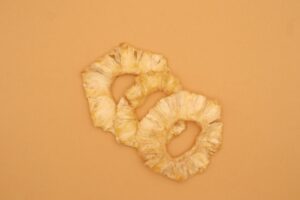
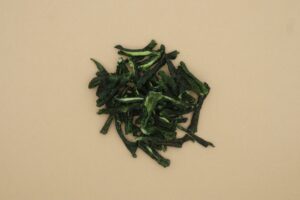
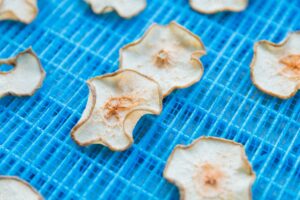
Dried yuzu

Domestic yuzu is carefully dried whole, peel and all, retaining its aroma and acidity as-is. The aroma resists fading even when heated, so it can be used in a wide range of foods such as confectionery and drinks. Adding just a little at the prep stage brings out yuzu's elegant, distinctive aroma, creating a natural finish that flavorings cannot replicate.
Three commitments behind our dried yuzu
Agriture's dried yuzu is thoroughly engineered for quality so it can be adopted as a commercial raw material. Here we introduce three points we consider particular strengths.
01 Kyoto-grown yuzu carefully processed peel and all
We wash domestic, Kyoto-grown yuzu right after harvest and process the peel and flesh together as one. Because it captures the aromatic compounds concentrated in the peel along with the acidity and bitterness of the flesh at once, you can design a flavor with real presence from just a small amount.
02 Low-temperature hot-air drying that locks in aroma
Because we use low-temperature hot-air drying with finely controlled temperature and airflow, the volatile aromatic compounds that are the heart of yuzu are retained. Even in drinks and confectionery, it reproduces a "natural finish that does not rely on flavorings."
03 Clean label with no additives or glucose
We use no preservatives, bleaching agents, or sugars, drying the ingredient itself. Because the ingredient list is simple, it can be adopted as-is in product development for natural and organic brands.
Product catalog showing the items we handle
Flexible support from small lots to large lots
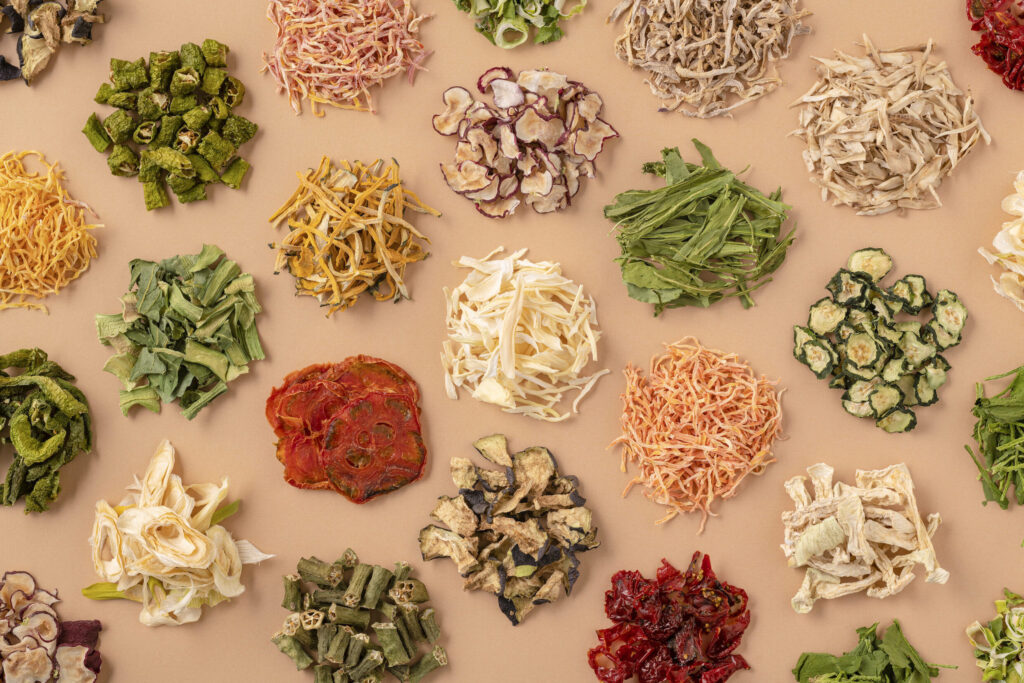
- Sold in small lots from 1 kg
- Handling heirloom vegetables from across Japan
- Dried fruits and herbs also supported
TOC
Characteristics as a commercial raw material
Here we summarize the advantages of choosing dried yuzu as an OEM raw material from six angles. Use it as a reference both for replacing existing ingredients and for developing new products.
A natural finish that flavorings cannot achieve
Because the yuzu aroma spreads even with a small amount, it suits products aiming to replace synthetic flavorings or go clean-label.
Flavor design that unifies peel and flesh
Because aroma (peel) and acidity and bitterness (flesh) can be expressed at once, its strength is that recipe design becomes simpler.
Aroma that resists fading even when heated
Because the aroma resists flying off even through the sterilization steps of baked goods and beverages, it raises the freedom of your production process.
A wider recipe range once milled into powder
Processed into powder, it can be developed into seasonings, furikake, drink mixes, and more, allowing a single ingredient to be commercialized into multiple SKUs.
Planned raw-material operations through long-term storage
A 6-month best-before date at room temperature. Since this seasonally limited citrus can be supplied stably year-round, it helps diversify sourcing risk.
One-stop from prototype to volume production
We handle everything from 2kg prototyping to 10kg full production. Because scale-up from prototype to mass production is completed within Agriture, we can respond quickly even when additional adjustments arise.
Product specifications (commercial)
The product's basic specs are as follows. Cut specifications and packaging specs can be individually adjusted on a contract basis, so please consult us to match your OEM requirements. We have organized raw-material origin, best-before date, production method, and minimum lot so they can be checked at a glance.
Item | Details |
|---|---|
Raw material | Yuzu (domestic, Kyoto-grown) |
Net content | 100g~ |
Production method | Low-temperature hot-air drying |
Best-before date | 6 months |
Annual supply volume | Made-to-order production |
Processing plant | Kyoto, Kyotango |
Shipping unit | 100g~ |
Minimum-lot OEM | Prototype 2kg / full production from 10kg |
Customization support
For each OEM project, we respond flexibly to changes in cut shape, powdering, small-lot prototyping, blending, and packaging specs. In addition to the response table below, please consult us about individual adjustments to match your requirements.
Item | Available | Details |
|---|---|---|
Size change | △ | Chip and milling available |
Powdering | ◎ | Fine-powder processing available |
Small-lot OEM prototyping | ◎ | Available from 2kg |
Mixed materials and blends | ◎ | Blending with other raw materials available |
Packaging changes | ◎ | Both commercial and individual packaging available |
POWDER
We also offer powder products
Agriture also handles powder processing of dried yuzu. You can check pairings with other ingredients and processing examples in our vegetable powder lineup.
Variety, grower, and origin information
Agriture stabilizes quality by sourcing dried yuzu from partner farms and contract growing regions. Please refer to this as well when you want to use origin information at the product planning stage.
BRAND
Variety: We select and use raw material with strong aroma and little harshness, centered on domestic, Kyoto-grown yuzu.
PRODUCER
Producer: Working with partner farms within Kyoto Prefecture, we minimize the lead time from harvest to primary processing, sending it to the drying step while keeping it fresh.
REGION
Growing region: A yuzu-growing region within Kyoto Prefecture. The temperature swings characteristic of mountainous areas contribute to the strength of its aroma.
CULTIVATION
Cultivation method: Conventional cultivation by partner farms. Harvest timing and specifications are adjusted on an annual contract basis.
Low-temperature drying to protect the ingredient's natural flavor
To protect the aroma, color, and umami of yuzu, Agriture uses low-temperature hot-air drying with finely controlled temperature and airflow. Our strength is retaining components easily lost in high-temperature drying, through process design tailored to the nature of the ingredient.
Because we take in the raw material at our own processing facility in Kyoto and manage the whole flow in one place—sorting, cutting, drying, and inspection—we can hold quality variation between lots to a minimum. Combining procurement from partner farmers and contracted regions, we can start the drying process while the raw material is still fresh, which ties directly to finished quality.
💡 TIPS | Drying-processing trivia
Limonene, the aromatic compound in yuzu, is highly volatile, and most of it flies off when processed at high temperature. Low-temperature hot-air drying can secure airflow while lowering the temperature, making it well suited to removing only moisture without losing aroma. By running the same process during milling as well, we can finish a powder that keeps its aroma to the end.
Commercial use cases
Because dried yuzu has ample aroma, texture, and umami on its own, a single ingredient can be developed into multi-purpose products. Here we introduce five representative use cases.
Confectionery and bakery ingredient
It is widely adopted as a knead-in ingredient for confections where you want to use yuzu aroma as an accent, such as pound cakes, cookies, madeleines, chocolate, and wagashi.
Drink & tea raw material
It can be used as a flavoring raw material for Japanese black tea, hojicha, herbal teas, and non-alcoholic cocktails. A distinctive feature is aroma that withstands hot-water extraction, and even in a tea bag it releases yuzu's refreshing fragrance. Being storable at room temperature and supplied stably year-round regardless of season, it is also valued by beverage makers.
Dressings & seasonings
It can be used as a flavoring raw material for yuzu ponzu, yuzu salt, dressings, and Japanese-style sauces. Milled into powder, it disperses evenly in salt and liquid seasonings, so it can also be repurposed as a base for commercial seasonings. Because the aroma derives mainly from the peel, you can design a refreshing aftertaste that fresh juice cannot provide.
Bath & cosmetics raw material
It has a track record as a raw material for aroma-focused bath amenities such as bath additives and body soaps. The natural aroma from the yuzu peel adds a sense of season to the bathing experience. It also pairs well with seasonal products and gifts inspired by yuzu-yu (yuzu baths).
Functional foods & health teas
As a citrus containing aromatic compounds, yuzu is valued in tea blends that appeal to relaxation and functionality. Its distinctive aroma makes it easy to pull a whole blend together with a small amount, so it can be used to differentiate health teas that feature Japanese ingredients.
Commercial usage and case examples
For commercial use, we handle everything from 2kg prototyping to full production of 10kg or more. It is adopted as an OEM raw material by tea makers, confectionery makers, and seasoning makers, and also as a raw material for private-brand products.
At Agriture, we provide end-to-end support on our own line in Kyoto, from raw-material selection and primary processing to cutting, powdering, blending, and small-portion packaging. Because we can adjust specifications to match an OEM client's spec sheet and design recipes for launching new brands, you can entrust everything with confidence from the prototype stage through volume production and ongoing supply.
We welcome first-time inquiries and considerations of switching from existing raw materials. For sample provision, quotes, and technical questions about the production process, feel free to reach out via the inquiry form.
Related case examples and reference articles:
- How to use yuzu peel | 10 practical ideas you can use instead of throwing it away
- Yuzu’s nutritional value thoroughly analyzed | Health effects and efficient ways to consume it
- The yuzu harvest season explained | How to tell green yuzu from yellow yuzu
Product catalog showing the items we handle
Flexible support from small lots to large lots
- Sold in small lots from 1 kg
- Handling heirloom vegetables from across Japan
- Dried fruits and herbs also supported
Frequently asked questions (OEM & commercial dried yuzu)
We have compiled the questions we most often receive about OEM and commercial dried yuzu. Please use it as a reference for your decision before contracting.
Q. About what are the minimum lot and unit price?
A. Prototyping starts from 2kg, and full production from 10kg as a guide. The unit price varies with the processing type (chip / powder) and packaging specifications, so we will provide it in an individual quote.
Q. When is the price / unit price determined?
A. It fluctuates each year depending on the harvest situation and market conditions. For annual contracts, the unit price at the time of contract serves as the basis; for spot transactions, we quote the market price at the time of order.
Q. About how long are the delivery time and lead time?
A. About 2 weeks for stock items, and 3 to 6 weeks when processing is involved, as a guide. If additional steps such as milling or blending are involved, we will provide a separate lead time.
Q. Can you provide raw-material origin certification or origin information?
A. We can provide origin information certifying that it is domestic, Kyoto-grown. It can also be used as-is as delivery documentation for your OEM clients. Please consult us in advance about detailed items.
Q. Can you handle HACCP and export requirements?
A. Our production line complies with HACCP. We also have a track record of preparing English-language documents and issuing hygiene certificates for export projects.
Q. What is the flow for an OEM consultation?
A. We proceed in the flow of (1) inquiry, (2) requirement hearing, (3) sample provision, (4) quote and contract, (5) prototype, (6) full production, and (7) delivery.
Recommended reading
- How to use yuzu peel | 10 practical ideas you can use instead of throwing it away
- Yuzu’s nutritional value thoroughly analyzed | Health effects and efficient ways to consume it
- The yuzu harvest season explained | How to tell green yuzu from yellow yuzu
- Yuzu powder (Kyoto-grown)
Download the product catalog
We will send the materials to your email address based on the information you provide.