
What are Kanagawa’s heirloom vegetables? Features, season, and ways to eat the 29 items explained

Kanagawa's heirloom vegetables are local varieties handed down amid the varied terrain of the Tanzawa Mountains, the Sagami River basin, and the Miura Peninsula, and its history as a vegetable-supply region near Edo. The Japan Traditional Vegetable Promotion Association The certification recognizes 29 items, including varieties well known in the metropolitan area such as Miura daikon, Tsukui native soybean, Manpukuji senko-otonaga carrot, and norabo-na.
This article organizes the 29 items in a single list and explains 7 representative items in detail. It introduces varieties emblematic of Kanagawa's food culture, including Kamakura daikon, a hama-daikon-lineage variety said to have relieved a Kamakura-era famine; Tsukui native soybean, revived from a "phantom soybean"; and Manpukuji senko-otonaga carrot, currently in a revival project.
TOC
The definition of "heirloom vegetable" and the scope of this article
There is no nationwide unified definition for "heirloom vegetable," and the criteria differ by certifying body. To help you understand this article's content accurately, we organize the criteria of major certifying bodies.
| Certifying body | Main criteria |
|---|---|
| Kyoto Prefecture "Kyoto Heirloom Vegetables" | Cultivated in Kyoto from before the Meiji era and unique to Kyoto |
| Osaka Prefecture "Naniwa Heirloom Vegetables" | Cultivated within Osaka Prefecture from roughly 100 or more years ago |
| Nara Prefecture "Yamato Heirloom Vegetables" | Items whose production in Nara Prefecture is confirmed from before the war |
| Akita Prefecture "Akita Heirloom Vegetables" | Cultivated within the prefecture from before the Showa 30s |
| Yamagata Prefecture "Yamagata Heirloom Vegetables" | There are regional systems for Murayama, Mogami, and Okitama, with cultivation since before 1945 as a common baseline |
| The Japan Traditional Vegetable Promotion Association | Independent certification criteria (broader) |
This article introduces 29 items using the Japan Heirloom Vegetable Promotion Association's certification as its main source. Kanagawa Prefecture has no official certification system of its own; the Kanagawa Prefecture Horticultural Seed and Seedling Council introduces them in booklets and elsewhere as "vegetables connected to Kanagawa." Of the 29 items, the main text focuses on 28, while "Ho-no-ni melon," a musk melon, is a Western-lineage variety that spread after the war and is introduced separately in the "Other regional specialty varieties" section at the end of the article.
What are Kanagawa's heirloom vegetables? The diverse landscapes of Tanzawa, Sagami, and Miura
Kanagawa Prefecture has diverse terrain and climate—the Tanzawa Mountains, the Sagami River basin plains, the Miura Peninsula, the Shonan coast, and the urban areas of Yokohama and Kawasaki. As a vegetable-supply region near Edo, modern agriculture developed early, and many local varieties were grown up to the 1955–65 period.
The five areas and the distribution of items
| Area | Representative items | Regional characteristics |
|---|---|---|
| Miura Peninsula | Miura daikon, Jogashima soramame, Jogashima shogatsu-na, Jogashima kusa-negi, Jogashima satoimo, Kamakura daikon | Mild maritime climate. Rich in early-harvest winter vegetables |
| Shonan (Hiratsuka, Fujisawa, Chigasaki) | Shonan negi, Kugenuma kabocha, norabo-na | The sandy soil of the Shonan coast and peri-urban agriculture |
| Central prefecture (Sagamihara, Isehara, Atsugi) | Kabu-negi, Oyama-na, Oyama togarashi, Hatano daikon | The cool climate at the foot of Tanzawa and its highland crops |
| Western prefecture (Odawara, Kaisei, Minamiashigara) | Kaisei Yaichi-imo, Sagami choju-imo, konnyaku-imo, ma-negi, Ashigara red shiso | The alluvial land of the Ashigara plain and the potato crops of the mountainous areas |
| Northern prefecture (Tsukui, Kawasaki, Yokohama) | Tsukui native soybean, Manpukuji senko-otonaga carrot, Sagami udo, Terao ninengo daikon, oku-negi, kurimasari | The inland climate on the north side of Tanzawa and the peri-urban agriculture of Kawasaki and Yokohama |
Even among the five areas, the item composition splits clearly by geography: the Miura Peninsula with early-harvest winter daikon and soramame, the central and northern prefecture with the root vegetables and beans of the Tanzawa foothills, and Shonan with peri-urban leafy greens. The sheer number—29 items—reflects Kanagawa's varied terrain and its history as a vegetable-supply region near Edo.
History and famine-relief crops—the legend of Kamakura daikon
- Kamakura daikon — a hama-daikon-lineage local variety said to have spread following the great famine of 1230 (Kanki 2), as recorded in the Sasuke Inari Shrine's "Daimyojin Engi" and the "Wakan Sansai Zue"
- Hatano daikon — a slender daikon with records of being grown as a tribute to the Tokugawa house in the Edo period
- Manpukuji senko-otonaga carrot — a red, long native carrot grown in the Manpukuji district of Asao Ward, Kawasaki. It lapsed once but is currently in a revival project
- Tsukui native soybean — widely grown within the prefecture before the war, it plummeted after the war and became a "phantom soybean." It was revived after receiving Kanagawa Brand certification in 2008
Kanagawa's heirloom vegetables are rich in historical episodes, such as famine-relief crops that saved lives and tributes to domain lords. Kamakura daikon is one of the oldest-tier local varieties, dating back roughly 800 years to the Kamakura period, and speaks to the depth of Kanagawa's food-culture history.
FOR BUSINESS
乾燥野菜を業務用でお探しですか
国産の野菜・果物を乾燥し、必要に応じて粉砕してお出ししています。扱っている品目は100種前後で、規格は 乾燥品の一覧・パウダーの一覧 に掲載しています。
少量でのご購入は、姉妹ブランドの通販サイト OYAOYA で承っています。
A full list of Kanagawa's 29 heirloom vegetables and a seasonal calendar
We have organized the 29 heirloom vegetables of Kanagawa Prefecture certified by the Japan Heirloom Vegetable Promotion Association by category. A notable feature is the wealth of staple-grade items: 4 daikon-type, 5 leek-type (including Jogashima kusa-negi), 5 potato/taro-type (including Jogashima satoimo), 4 bean-type, and 2 carrot-type.
Quick-reference table of 29 items
We organized the 29 items along with category and growing region. Since Ho-no-ni melon is covered in the specialty-varieties section at the end, the main text focuses on 28 items.
| # | Item | Category | Main growing region |
|---|---|---|---|
| 1 | Miura daikon | Daikon | Miura City, Yokosuka City |
| 2 | Ho-no-ni melon | Musk melon | Within Kanagawa Prefecture |
| 3 | Hatano daikon | Daikon | Hadano City |
| 4 | Kamakura daikon | Daikon (hama-daikon lineage) | Kamakura City |
| 5 | Terao ninengo daikon | Daikon | Terao district, Yokohama City |
| 6 | Sagami hanjiro fushinari | Cucumber | Hiratsuka City lineage |
| 7 | Manpukuji senko-otonaga carrot | Carrot | Manpukuji, Asao Ward, Kawasaki City |
| 8 | Koizumi fuyugoshi gosun | Carrot | Nogawa, Miyamae Ward, Kawasaki City |
| 9 | Kabu-negi | Negi | Sagamihara City |
| 10 | Shonan negi | Negi | Around Hiratsuka City |
| 11 | Oku-negi | Negi | Nishiya, Yokohama City |
| 12 | Ma-negi | Negi | Odawara City |
| 13 | Kaisei Yaichi-imo | Taro | Kaisei-machi, Ashigarakami District |
| 14 | Sagami choju-imo | Yamato-imo | Sagamihara, central prefecture |
| 15 | Kurimasari | Sweet potato | Wide area within the prefecture |
| 16 | Konnyaku-imo | Konnyaku potato | Ashigara and Tsukui areas |
| 17 | Iwaichan-mame | Kidney bean | Kurokawa district, Asao Ward, Kawasaki City |
| 18 | Tano-kuro-mame | Edamame | Akiya, Nagasawa, Koyasu in Yokosuka City; Hayama Town; Kamakura City |
| 19 | Tsukui native soybean | Oura district, Sosa City | Tsukui district, Sagamihara City |
| 20 | Jogashima soramame | Cauliflower | Jogashima, Miura City |
| 21 | Kugenuma kabocha | Squash | Kugenuma, Fujisawa City |
| 22 | Norabo-na | Leafy green | Wide area within the prefecture |
| 23 | Oyama-na | Leafy green | Isehara City |
| 24 | Oyama togarashi | Chili pepper | Oyama, Isehara City |
| 25 | Sagami udo | Udo (mountain vegetable) | Seya Ward, Yokohama City |
| 26 | Ashigara red shiso | Shiso | Shimonaka area of Odawara City, Aiwa area of Oi Town, Nakai Town |
| 27 | Jogashima shogatsu-na | Leafy green | Jogashima, Miura City |
| 28 | Jogashima kusa-negi | Leaf leek | Jogashima, Miura City |
| 29 | Jogashima satoimo | Taro | Jogashima, Miura City |
It is a lineup reflecting Kanagawa's geographical diversity: 4 daikon-type, 5 leek-type (including Jogashima kusa-negi), 5 potato/taro-type (including Jogashima satoimo), and 4 bean-type. It is also notable that Jogashima alone, on the Miura Peninsula, concentrates 4 items.
Seasonal calendar of main items
| Month | Main items coming into season |
|---|---|
| February to April | Norabo-na, Sagami udo (March–April), Terao ninengo daikon |
| Daisen City | Oku-negi, Jogashima soramame (May) |
| January–February | Kugenuma kabocha |
| June–August | Ashigara red shiso, ma-negi (from August) |
| August to September | Kurimasari (sweet potato), ma-negi |
| September–December | Kaisei Yaichi-imo, tano-kuro-mame, Tsukui native soybean, Oyama togarashi (October) |
| November–December | Miura daikon, Tsukui native soybean, Manpukuji senko-otonaga carrot, Koizumi fuyugoshi gosun, Sagami choju-imo, Shonan negi |
| December to the following February | Miura daikon, Oyama-na, Jogashima shogatsu-na, Shonan negi, kabu-negi (winter to spring) |
November–December is the peak seasonal concentration, when winter vegetables—daikon, carrots, and potatoes/taro—all come in at once. From March to May there are spring vegetables (norabo-na, Jogashima soramame, oku-negi), and in summer red shiso and ma-negi, making it a lineup where Kanagawa's local varieties are available year-round.
A product catalog that shows around 100 items we handle
Agriture, flexibly handling everything from small lots to large lots
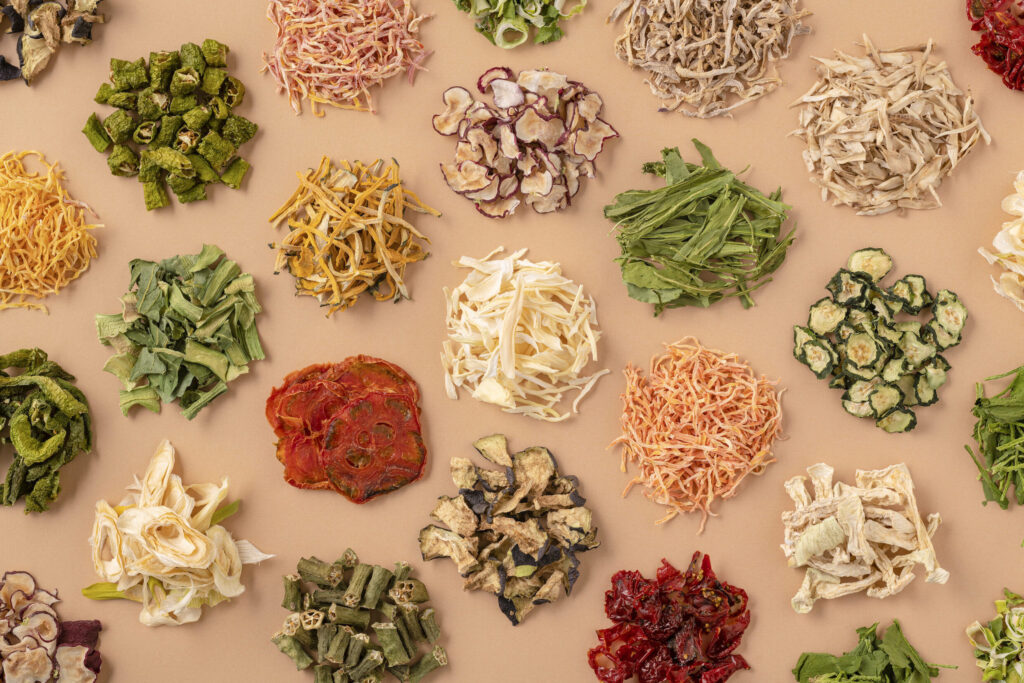
- Available for purchase in small lots from 1 kg
- We handle heirloom vegetables from across Japan
- Dried fruit and herbs also supported
The characteristics and preparation of 7 representative Kanagawa heirloom vegetables
From the 29 items, we selected 7 representative ones based on recognition, distribution volume, and influence on food culture.
Miura daikon — a nationally known daikon for simmered dishes and oden
| Season | November to the following February |
| Growing region | Miura Peninsula (Miura City, Yokosuka City) |
| Well-suited dishes | Oden, simmered dishes, namasu, furofuki daikon |
Miura daikon is a white-necked daikon with a thin neck and a middle-thickened shape, a large variety reaching 60 cm in length and 3–8 kg in weight. Grown on the sandy soil of the Miura Peninsula, exposed to a mild climate and sea breeze, it has a dense flesh that holds up well to simmering, making it ideal for simmered dishes and oden.
Its crisp bite and sweetness are its hallmarks, and it is often used as an ingredient in namasu. Green-necked daikon is the mainstream today, but Miura daikon still holds a presence in winter rites and festival foods and is cherished as the Miura Peninsula's "face of winter."
Tsukui native soybean — a Kanagawa Brand revived from a "phantom soybean"
| Season | Late October to November (dried soybeans year-round) |
| Growing region | Tsukui district, Sagamihara City |
| Well-suited dishes | Tofu, miso, soy milk, simmered beans, edamame |
Tsukui native soybean is a large-grained native soybean long grown in the Tsukui district on the north side of the Tanzawa Mountains. Many farmers in the prefecture grew it before the war, but with the spread of imported soybeans after the war, production once plummeted to the point that it was called a "phantom soybean."
Since receiving "Kanagawa Brand" certification in 2008, a revival project in partnership with local tofu, miso, and soy-sauce makers has advanced, and stable production continues today. It is strong in sweetness and umami, and when processed into tofu or miso it develops a deep flavor a cut above ordinary soybeans.
Norabo-na — an early-spring leafy green continuing since the Edo period
| Season | Late February to April |
| Growing region | Wide area within Kanagawa Prefecture (Shonan, northern prefecture, Sagamihara, etc.) |
| Well-suited dishes | Ohitashi, karashi-ae, tempura, pasta |
Norabo-na is an early-spring leafy green in which the budded stems of a Brassicaceae plant are eaten. Hiki norabo-na of Saitama It is of the same lineage and has a history as a famine-relief crop that saved residents during the Tenmei and Kansei famines of the Edo period.
With strong sweetness and a crisp texture, and very high nutritional value, it is appealing. Beyond the standard ohitashi and karashi-ae preparations, it is versatile enough for tempura and as a pasta ingredient. As a "Kanto early-spring vegetable" spanning Saitama, Tokyo, and Kanagawa, it is enjoyed across prefectural lines.
Manpukuji senko-otonaga carrot — a red carrot being revived in Asao Ward, Kawasaki City
| Season | December |
| Growing region | Manpukuji district, Asao Ward, Kawasaki City |
| Well-suited dishes | New Year namasu, simmered dishes, osechi, salads |
Manpukuji senko-otonaga carrot is a long-rooted red carrot, about 60–70 cm in length, grown in the Manpukuji district of Asao Ward, Kawasaki City. With its intense aroma and deep red color, it has been used in New Year osechi dishes and red-and-white namasu.
In the late Showa era, cultivation nearly lapsed as F1 Western carrots (short-rooted types) spread, but a revival project in partnership between local grower groups and the municipality is underway. Shipped in limited quantities to the metropolitan market during the New Year period, demand from restaurants is rising.
Jogashima soramame — a rich-flavored maritime broad bean
| Season | May |
| Growing region | Jogashima, Miura City |
| Well-suited dishes | Salt-boiled, tempura, grilled broad beans, takikomi gohan |
Jogashima soramame is a small native broad bean grown on Jogashima at the southern tip of the Miura Peninsula. It often has two beans per pod, and because the soil is rich in iron, it has a rich flavor.
Salt-boiling best brings out the beans' flavor, letting you savor their deep umami and sweetness. They appear at farm stands around Jogashima during the short May season, so timing a visit to the season is a sure way to get them.
Sagami udo — a mountain-vegetable heirloom of Seya Ward, Yokohama City
| Season | March to April |
| Growing region | Seya Ward, Yokohama City |
| Well-suited dishes | Sumiso-ae, tempura, kinpira, salad |
Sagami udo is a traditional udo grown in Seya Ward, Yokohama City. Blanched cultivation (a method of growing it in the dark to shut out light) makes the stalks white and tender. A distinctive aroma and a crisp texture are its hallmarks.
As a signature spring mountain-vegetable dish, it is used in sumiso-ae, tempura, and kinpira. That "such a notable udo-growing area exists in the metropolitan region" is surprisingly little known, and it is sold on a spring-only basis at farm stands within Yokohama City.
Kamakura daikon — the legendary hama-daikon that relieved the 1230 famine
| Season | Winter to early spring |
| Growing region | Around Kamakura City (coastal area) |
| Well-suited dishes | Namasu, pickles, condiment, oroshi-jiru |
Kamakura daikon is a hama-daikon-lineage local variety that grows wild in coastal sand, characterized by strong pungent compounds. It is an old heirloom vegetable emblematic of Kamakura's food culture, with a legend—recorded in the Sasuke Inari Shrine's "Daimyojin Engi" and the Edo-period "Wakan Sansai Zue"—that it spread following the Kamakura-era famine (the contemporaneous "Azuma Kagami" contains no record of this variety, so the legend should be treated with care).
As a pungent daikon it is often used for condiment purposes, and grated over soba or udon it releases a strong bite. Its growing area is now limited, making it a rare variety available only at farm stands around Kamakura City and at some restaurants.
How to buy Kanagawa's heirloom vegetables and tips for storing them
Kanagawa's heirloom vegetables can be bought at farm stands in growing regions, JA farm stands, and through hometown-tax donations, and some at department stores in Tokyo, Yokohama, and Kawasaki. Visiting the growing region in season is the sure route, but Tsukui native soybean, norabo-na, and Miura daikon are relatively easy to find even at metropolitan supermarkets.
In-prefecture direct-sales outlets / roadside stations
| Item | Main sources | Timing |
|---|---|---|
| Miura daikon | JA farm stands in Miura City, Michi-no-Eki Miura | November to February |
| Tsukui native soybean | Farm stands in the Tsukui area of Sagamihara City, Michi-no-Eki Doshi | October–November (edamame) / year-round (dried beans) |
| Norabo-na | Farm stands across the prefecture, metropolitan supermarkets | February to April |
| Manpukuji senko-otonaga carrot | Farm stands in Asao Ward, Kawasaki City (limited) | December |
| Jogashima soramame | Farm stands on Jogashima, Miura City | May |
| Sagami udo | Farm stands in Seya Ward, Yokohama City | March to April |
| Kamakura daikon | Farm stands in Kamakura City and some restaurants | Winter to early spring |
Mail order / hometown tax to outside the prefecture
- Tsukui native soybean — Sold year-round as dried beans. Also a Sagamihara City hometown-tax donation gift
- Miura daikon — Shipped nationwide from direct-from-farm EC on a winter-only basis
- Norabo-na — Shipped to Tokyo's upscale supermarkets and direct-from-farm EC on a spring-only basis
- Processed products — Tofu and miso from Tsukui native soybean, Miura daikon takuan, norabo-na pickles, and the like distributed year-round
Storage methods by item
| Item | Short-term storage | Long-term storage |
|---|---|---|
| Miura daikon | In newspaper in a cool, dark place for 2 weeks | Takuan, kiriboshi daikon (2–3 months) |
| Tsukui native soybean | Edamame keeps refrigerated for 2–3 days | Sealed and stored as dried soybeans (over 1 year) |
| Norabo-na | Moisten and keep 3 days in the vegetable compartment | Boil quickly and freeze (2 weeks) |
| Manpukuji senko-otonaga carrot | In newspaper in the vegetable compartment for 2 weeks | Shaved and frozen (1 month) |
| Jogashima soramame | In the pod, refrigerated for 2–3 days | Boil and then freeze (1 month) |
| Sagami udo | Dampen and refrigerate for 3–5 days | Boil and vinegar-pickle (1 week) |
| Kamakura daikon | In newspaper in a cool, dark place for 2 weeks | The pungent compounds fade, so early consumption is recommended |
A product catalog that shows around 100 items we handle
Agriture, flexibly handling everything from small lots to large lots
- Available for purchase in small lots from 1 kg
- We handle heirloom vegetables from across Japan
- Dried fruit and herbs also supported
Efforts to protect Kanagawa's heirloom vegetables
To sustain the 29 local varieties, activities in partnership among the Kanagawa Prefecture Horticultural Seed and Seedling Council, JA Kanagawa, and grower organizations are underway.
The "Vegetables Connected to Kanagawa" booklet and preservation activities
| Efforts | Details |
|---|---|
| The booklet "Vegetables Connected to Kanagawa" | The Kanagawa Prefecture Horticultural Seed and Seedling Council produces and distributes a booklet introducing the 29 items |
| Kanagawa Brand certification | The prefecture supports the branding of local varieties such as Tsukui native soybean |
| Revival Projects | Revival cultivation of lapsed varieties such as Manpukuji senko-otonaga carrot and Hatano daikon |
| Partnership with local restaurants | Restaurants in Yokohama and Kamakura actively put heirloom vegetables on their menus |
Even without an official certification system of the prefecture's own, the combination of the council's booklet publication and the "Kanagawa Brand" system supports the visibility and distribution of local varieties. It is also characteristic of Kanagawa that revival projects are bringing lapsed varieties back to market.
The revival story of Tsukui native soybean
| Timing | Event |
|---|---|
| Prewar | Widely grown in the Tsukui district. Many farmers in the prefecture saved their own seed |
| Postwar to the 1990s | Production plummeted with the spread of imported soybeans. Called a "phantom soybean" |
| 2008 | Certified as a "Kanagawa Brand." The revival project got into full swing |
| Present | Local tofu and miso makers adopted it as raw material. Stable production and expanded sales channels were achieved |
The revival of Tsukui native soybean is a fine example born of branding a local variety and partnering with processors. A cooperative relationship with tofu and miso makers able to make the most of the raw material's traits supports both the recovery of the growing area and the maintenance of quality.
FOR BUSINESS
乾燥野菜を業務用でお探しですか
国産の野菜・果物を乾燥し、必要に応じて粉砕してお出ししています。扱っている品目は100種前後で、規格は 乾燥品の一覧・パウダーの一覧 に掲載しています。
少量でのご購入は、姉妹ブランドの通販サイト OYAOYA で承っています。
FAQ
Other regional specialty varieties
It is included in the Japan Heirloom Vegetable Promotion Association's list, but because it is a Western-lineage variety that spread after the war, its positioning differs from a strict "heirloom vegetable (a pre-war local variety)," so we introduce it here separately as a "regional specialty variety."
| Item | Category | Growing region | Characteristics and standing |
|---|---|---|---|
| Ho-no-ni melon | Musk melon | Within Kanagawa Prefecture | A musk-melon-lineage regional specialty variety that spread after the war. Its historical background differs from the other 28 items (pre-war local varieties), but it is a Kanagawa regional brand melon included in the association's certification list |
Summary
Kanagawa's 29 heirloom vegetables are a group of local varieties handed down amid the varied terrain of the Tanzawa Mountains, the Sagami River basin, the Miura Peninsula, the Shonan coast, and Yokohama-Kawasaki. Items emblematic of the metropolitan food culture are abundant—Miura daikon, Tsukui native soybean, norabo-na, Manpukuji senko-otonaga carrot, and more.
Local varieties line up throughout the seasons: Miura daikon and Tsukui native soybean in winter; norabo-na, Sagami udo, and Jogashima soramame in spring; ma-negi and kurimasari from summer into autumn. Many growing regions are within a day-trip of the metropolitan area, so visiting the site in season lets you get Kanagawa's local varieties firsthand.
References / information sources
- Japan Heirloom Vegetable Promotion Association "Kanagawa Prefecture heirloom vegetables" — The certification list of 29 items and their characteristics
- JA Kanagawa "Vegetables of Kanagawa" — Information on prefectural agricultural products
- National Agriculture and Food Research Organization Genebank "Native Variety Database" — information on native varieties nationwide
Related articles
- Japan's Heirloom Vegetables: Precious Varieties Handed Down in Each Region
- Kyoto heirloom vegetables: Kyoto specialties with a long history
- Saitama's heirloom vegetables (including Hiki norabo-na)
- Chiba's heirloom vegetables
- Gunma’s heirloom vegetables
- Heirloom vegetables of Tochigi
- Heirloom vegetables of Naniwa
Download the product catalog
We will send the materials to your email address based on the information you provide.
- What are Chiba’s heirloom vegetables? Features, season, and ways to eat the 12 items explained
- What are Niigata’s heirloom vegetables? Features, season, and ways to eat the 33 items explained
Author of this article
Related articles
-
 Okinawa island vegetables: individualistic vegetables nurtured by a subtropical climate
 -
 Kaga vegetables: Kanazawa brand vegetables where tradition lives on
 -
 The appeal of Kansai heirloom vegetables | Specialties of Naniwa, Kyoto, and Yamato thoroughly explained
 -
 Kyoto heirloom vegetables: Kyoto specialties with a long history
 -
 A list of heirloom vegetables of the 8 prefectures of Kyushu and Okinawa|A thorough introduction to characteristics, growing regions, and seasons
 -
 Know the heirloom vegetables of Edo Tokyo | The city’s vanishing food culture
 -
 They'll make you smile! The fun names of heirloom vegetables and their origins
 -
 5 cases and strategies that succeeded in branding heirloom vegetables