
What are Niigata’s heirloom vegetables? Features, season, and ways to eat the 33 items explained

The heirloom vegetables of Niigata Prefecture are a group of native varieties handed down within the food culture of a heavy-snow region known as a representative rice-producing area. The Japan Traditional Vegetable Promotion Association The certification of covers 33 items, assembling distinctive items unfamiliar in other prefectures—Juzen nasu, Meike-na, Kurosaki chamame, Kagura nanban, kakinomoto (edible chrysanthemum), and more.
In this article, we organize the 33 items in a list and explain 7 representative items in detail. We introduce varieties that represent Niigata's snow-country food culture—the GI (geographical indication)-registered Kurosaki chamame, Osaki-na with roughly 300 years of history, and kakinomoto, which supports the unique culture of edible chrysanthemum.
TOC
The definition of "heirloom vegetable" and the scope of this article
There is no nationwide unified definition for "heirloom vegetable," and the criteria differ by certifying body. To help you understand this article's content accurately, we organize the criteria of major certifying bodies.
| Certifying body | Main criteria |
|---|---|
| Kyoto Prefecture "Kyoto Heirloom Vegetables" | Cultivated in Kyoto from before the Meiji era and unique to Kyoto |
| Osaka Prefecture "Naniwa Heirloom Vegetables" | Cultivated within Osaka Prefecture from roughly 100 or more years ago |
| Nara Prefecture "Yamato Heirloom Vegetables" | Items whose production within Nara Prefecture is confirmed from before the war |
| Akita Prefecture "Akita Heirloom Vegetables" | Cultivated within the prefecture from before the Showa 30s |
| Yamagata Prefecture "Yamagata Heirloom Vegetables" | Cultivated within the prefecture from before Showa 20 |
| The Japan Traditional Vegetable Promotion Association | Independent certification criteria (broader) |
In this article, using the certification of the Japan Traditional Vegetable Promotion Association as the main source, we introduce 33 items. There is no Niigata Prefecture-specific official certification system, and the main native varieties are introduced on the "Niigata Heirloom Vegetables" page of the Niigata Prefecture website. Of the 33 items, the main text centers on 30, and 3 items with relatively new times of selection or breeding are introduced separately in the "Other regional specialty varieties" section at the end of the article.
What are Niigata's heirloom vegetables? Diversity nurtured by snow-country food culture
Niigata Prefecture is diverse in topography and climate—the plains along the Sea of Japan, the Shinano River basin, the Uonuma Basin, Sado Island, and the Joetsu mountainous area. The climate difference of heavy winter snow and hot, humid summers produced distinctive items such as overwintering leafy greens, summer vegetables, and under-snow vegetables.
The 4 areas and item distribution
| Area | Representative items | Regional characteristics |
|---|---|---|
| Kaetsu (Niigata City, Shibata, Agano) | Juzen nasu, Meike-na, Kurosaki chamame, Enpitsu nasu, Yakinasu, Kubo nasu, Sasakami nasu, Echigo shiro nasu, Yorii kabu, Sone ninjin, Omine kaori | The alluvial land in the lower reaches of the Shinano and Agano rivers. Rural and near-urban agriculture |
| Chuetsu (Nagaoka, Uonuma, Kashiwazaki, Tokamachi) | Nashi nasu, Miyuki nasu, Nakajima kinchaku, Uonuma kinchaku, Nagaoka-na, Osaki-na, Jonogo-na, Yoita-na, Kariwa fushinari kyuri, Kashiwazaki midori nasu, edible chrysanthemum kakinomoto, Sennin-giku, Sakana-mame, Shindo-imo, Kurohime ninjin, Kagura nanban | The heavy-snow zone of Uonuma and the basin in the middle reaches of the Shinano River. The diversity of snow-country vegetables |
| Joetsu (Joetsu City, Myoko) | Takada shirouri, Banana kabocha, Hitokuchi makuwa, Ninowake shoga | The Takada Plain and the foot of Mount Myoko. The food culture of an old castle town |
| Sado | Aka kabu (Murakami), Yawata-imo (Sado) | The Sea of Japan island and the northern mountainous area. A preserved-food-centered food culture |
Among the 4 areas, the Chuetsu region has the most items, and highly unique items concentrate here—under-snow vegetables raised in the heavy-snow zone of Uonuma (Osaki-na, Jonogo-na), the eggplant types of Nagaoka and Kashiwazaki, and edible chrysanthemum. That 11 of the 33 items are eggplant types is a Niigata characteristic not seen in other prefectures.
Historical background—tribute vegetables and snow-country food culture
- Ninowake shoga — cultivated in the Ninowake district of Kubiki Ward, Joetsu City since Tenna 3 (1683), with a record of being used as tribute ginger to the lord of the Takada domain in the Edo period
- Osaki-na — a snow-country leafy green cultivated in the Osaki district of Minamiuonuma City from about 300 or more years ago. Grown slowly in greenhouses in a heavy-snow area
- Yorii kabu — a native variety of white turnip handed down in the Nishikanbara area of Niigata City
- Kurosaki chamame — a chamame-type edamame born when a person from the Kobiragata hamlet of Nishi Ward, Niigata City brought back chamame seeds from Tsuruoka City, Yamagata Prefecture in the late Meiji to Taisho period and it was selected in the Kurosaki district. Registered as No. 29 of the Ministry of Agriculture, Forestry and Fisheries' geographical indication (GI) on April 21, 2017
Niigata's heirloom vegetables have two axes—a culture of tribute to the lord of the Takada domain and a preserved-food culture of the heavy-snow zone. Ninowake shoga (cultivated from Tenna 3 / 1683, tribute ginger in the Meiji era) and Osaki-na (about 300 or more years) are representative items that show the history of Niigata's food culture.
FOR BUSINESS
乾燥野菜を業務用でお探しですか
国産の野菜・果物を乾燥し、必要に応じて粉砕してお出ししています。扱っている品目は100種前後で、規格は 乾燥品の一覧・パウダーの一覧 に掲載しています。
少量でのご購入は、姉妹ブランドの通販サイト OYAOYA で承っています。
A list of all 33 Niigata heirloom vegetables and a seasonal calendar
We organized the 33 Niigata Prefecture heirloom vegetables certified by the Japan Traditional Vegetable Promotion Association, by category. The category composition is distinctive and unseen in other prefectures—11 eggplant types, 5 greens types, 3 gourd types, and 2 edible chrysanthemums.
Main-text 30-item quick reference (of 33 items)
We organized the 33 items along with their category and growing region. Because Banana kabocha, Hitokuchi makuwa, and Omine kaori are covered in the specialty-varieties section at the end, the main text centers on 30 items.
| # | Item | Category | Main growing region |
|---|---|---|---|
| 1 | Juzen nasu | Eggplant | Shirone district, Minami Ward, Niigata City |
| 2 | Nashi nasu | Eggplant | Nagaoka City |
| 3 | Miyuki nasu | Eggplant | Uonuma City |
| 4 | Nakajima kinchaku | Eggplant | Nagaoka City |
| 5 | Uonuma kinchaku | Eggplant | Minamiuonuma City |
| 6 | Enpitsu nasu | Eggplant | Minami Ward, Niigata City |
| 7 | Yakinasu | Eggplant | Toyosaka-machi, Kita Ward, Niigata City |
| 8 | Kubo nasu | Eggplant | Kubo district, Shibata City |
| 9 | Sasakami nasu | Eggplant | Sasakami district, Agano City |
| 10 | Kashiwazaki midori nasu | Eggplant | Kashiwazaki City |
| 11 | Echigo shiro nasu | Eggplant | Nishikan Ward, Niigata City, and elsewhere |
| 12 | Meike-na | Leafy green (tona) | Meike / Toyano, Chuo Ward, Niigata City |
| 13 | Nagaoka-na | Leafy green | Nagaoka City, Sanjo City |
| 14 | Osaki-na | Leafy green (under-snow) | Osaki / Yamato district, Minamiuonuma City |
| 15 | Jonogo-na | Leafy green | Tokamachi City |
| 16 | Yoita-na | Leafy green (nozawana type) | Kashiwazaki City |
| 17 | Kariwa fushinari kyuri | Cucumber | Kashiwazaki City |
| 18 | Takada shirouri | Gourd (uri) | Takado-machi / Higashihon-machi, Joetsu City |
| 19 | Edible chrysanthemum kakinomoto | Edible chrysanthemum | Niigata City, Kashiwazaki City |
| 20 | Sennin-giku | Edible chrysanthemum | Kashiwazaki City |
| 21 | Kurosaki chamame | Edamame (GI) | Nishi Ward, Niigata City |
| 22 | Sakana-mame | Edamame | Nagaoka City |
| 23 | Aka kabu | Turnip | Murakami City |
| 24 | Yorii kabu | Turnip | Niigata City |
| 25 | Shindo-imo | Taro | Kashiwazaki City |
| 26 | Yawata-imo | Taro | Sado City |
| 27 | Sone ninjin | Carrot (long-root) | Sone district, Tagami Town |
| 28 | Kurohime ninjin | Carrot (long-root) | Kashiwazaki City |
| 29 | Kagura nanban | Chili pepper | Nagaoka, Uonuma, Joetsu, Ojiya |
| 30 | Ninowake shoga | Ginger | Ninowake, Kubiki Ward, Joetsu City |
The composition of 11 eggplant types, 5 greens types, 2 edamame, and 2 edible chrysanthemums reflects the diversity of Niigata's food culture. In particular, edible chrysanthemum is rooted in Niigata's food culture alongside Yamagata Prefecture (where "mottenohoka" is representative).
Seasonal calendar of main items
| Month | Main items coming into season |
|---|---|
| December–April | Meike-na, Osaki-na, Jonogo-na (January–March) |
| June–August | Juzen nasu, Nashi nasu, Yakinasu, Kubo nasu, Kariwa fushinari kyuri |
| July–August | Nakajima kinchaku, Uonuma kinchaku, Sasakami nasu, Echigo shiro nasu, Kurosaki chamame, Takada shirouri |
| July–October | Kashiwazaki midori nasu, Kagura nanban (July 15–late October), Miyuki nasu (through October), Enpitsu nasu |
| August–November | Edible chrysanthemum kakinomoto (mid-August–mid-December), Ninowake shoga (late August–late November) |
| September–October | Sakana-mame (about 10 days from late September to early October) |
| October–December | Aka kabu, Yorii kabu, Yawata-imo, Shindo-imo, Sennin-giku (late October–early November) |
| November | Nagaoka-na, Yoita-na |
A composition in which the season continues throughout the year, with summer eggplant types and autumn-to-winter greens and root vegetables. There are also several ultra-short-season items—Sakana-mame only for the 10 days from late September, and Sennin-giku only for about 2 weeks from late October.
A product catalog that shows around 100 items we handle
Agriture, flexibly handling everything from small lots to large lots
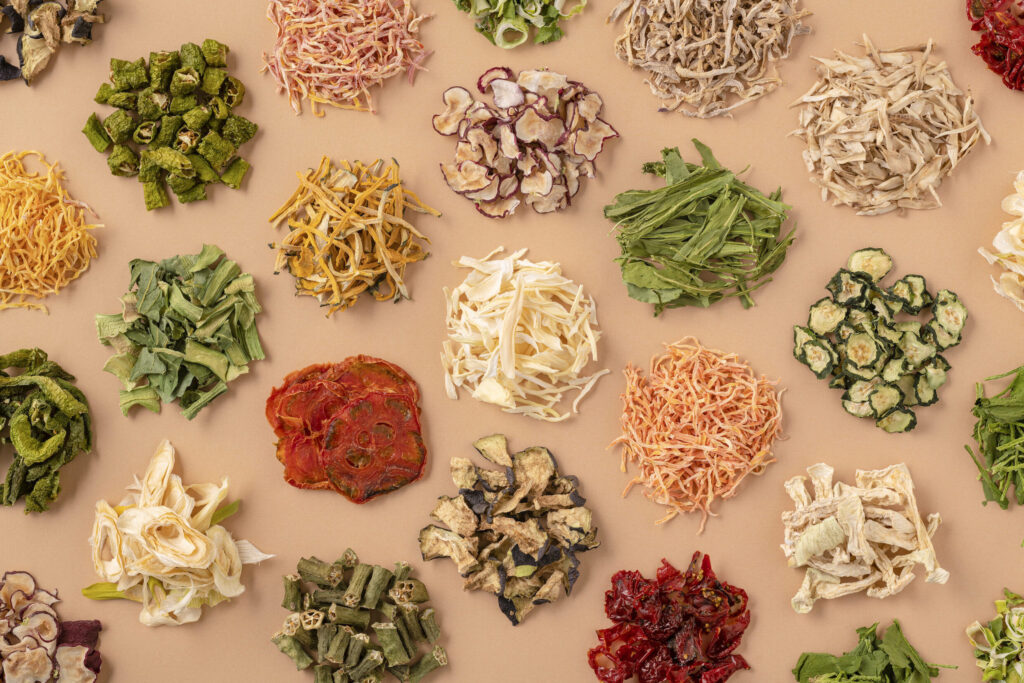
- Available for purchase in small lots from 1 kg
- We handle heirloom vegetables from across Japan
- Dried fruit and herbs also supported
The features and ways to eat 7 representative Niigata heirloom vegetables
From among the 33 items, we selected 7 representative items based on name recognition, distribution volume, and influence on food culture.
Juzen nasu — a round eggplant suited to light pickling, representative of Niigata Prefecture
| Season | Mid-June–late September |
| Growing region | Shirone district, Minami Ward, Niigata City |
| Well-suited dishes | Light pickles, mustard pickles, nibitashi, pickles |
Juzen nasu is said to have been born in the early Showa period in the former Juzen Village (present-day Gosen City) by crossing "Senshu mizunasu" with a native variety, and it later spread to the former Usui Village (present-day Shirone district, Minami Ward, Niigata City) on the left bank of the Shinano River, forming a main growing region. Its flesh is dense and tender, and when made into light pickles the skin tightens crisply while the inside becomes soft.
In Niigata, lightly pickled eggplant is a summer standard deli side, and Juzen nasu is its representative. At JA and direct-sales outlets, dedicated light-pickle packs line up only in summer, and because in-prefecture distribution volume is large, it is a frequently obtainable item even at Tokyo-metropolitan supermarkets.
Kurosaki chamame — a highly aromatic edamame with GI registration
| Season | Late July–early August |
| Growing region | Kurosaki district, Nishi Ward, Niigata City |
| Well-suited dishes | Salt-boiled, edamame rice, edamame tofu, zunda |
Kurosaki chamame is a chamame-type edamame that was selected and bred in the Kurosaki district after a person from the Kobiragata hamlet brought back chamame seeds from Tsuruoka City, Yamagata Prefecture in the late Meiji to Taisho period. It spread throughout the Kurosaki district in the Showa 40s. The beans, with downy pods and covered by a light-brown thin skin, release a distinctive sweet aroma and deep umami when boiled.
Registered on April 21, 2017 as No. 29 of the Ministry of Agriculture, Forestry and Fisheries' geographical indication (GI) protection system, only those grown in the registered production area of the Kurosaki district of Niigata City are distributed as "Kurosaki chamame." Niigata City ranks nationally among the top in annual edamame production, and it is an item that plays a central role in the food culture of "Niigata means chamame."
Meike-na — a winter leafy green that gains sweetness under the snow
| Season | Early December–late April |
| Growing region | Meike / Toyano district, Chuo Ward, Niigata City |
| Well-suited dishes | Ohitashi, mustard dressing, soups, light pickles |
Meike-na is a relative of komatsuna (tona type) cultivated in the Meike district of Chuo Ward, Niigata City since the Meiji era, also called "fuyuna" (winter greens). By overwintering under the snow, its sugar content increases, and its sweetness and tenderness stand out as a feature.
Its greatest appeal is the tenderness and faint sweetness of the bolting (base of the flower stalk) part, and made into ohitashi or mustard dressing, you can savor the deep, subtle flavor characteristic of snow-country vegetables. In season, it is widely distributed at supermarkets and direct-sales outlets within Niigata City, and it is a rare item with limited shipping outside the prefecture.
Kagura nanban — the round chili pepper of Nagaoka and Uonuma
| Season | July 15–late October |
| Growing region | Nagaoka City, Uonuma region, Joetsu City, Ojiya City |
| Well-suited dishes | Kagura nanban miso, stuffed with meat, stir-fries, tempura |
Kagura nanban is a heirloom chili pepper of the Chuetsu region, named for its round-to-bell-pepper-shaped, rugged appearance likened to a kagura mask. It is characterized by a contrast of bell-pepper-like thick flesh and strong heat around the seeds, and the pungency can be adjusted in cooking.
The most representative dish is "Kagura nanban miso," a Nagaoka and Uonuma standard deli side that combines it chopped with miso, sugar, sake, and bonito flakes. It's superb used as an accompaniment to rice or on grilled rice balls. Made into stuffed-with-meat or tempura, the heat softens and you can make Kagura nanban's flavor the star of the dish.
Edible chrysanthemum kakinomoto — Niigata's distinctive purplish-red edible chrysanthemum
| Season | Mid-August–mid-December |
| Growing region | Niigata City, Kashiwazaki City |
| Well-suited dishes | Ohitashi, vinegared dishes, tempura, coloring for soups |
Kakinomoto is an edible chrysanthemum whose vividly reddish-purple petals are eaten, and it is indispensable to Niigata's autumn table. One theory holds that the name derives from having been planted "at the base of a hedge" (kakine no moto), and alongside Yamagata's "mottenohoka,"it is a variety representative of the edible-chrysanthemum culture of the Tohoku-to-Niigata area.
Lightly boiled and made into vinegared dishes or ohitashi, its refreshing flavor and vivid color shine. It is an autumn standard menu at Niigata's deli shops and izakaya, and is popular with tourists from outside the prefecture too. Processed products distributed year-round as dried chrysanthemum are also increasing.
Osaki-na — a leafy green of snow-country Minamiuonuma with over 300 years of heavy-snow-area greenhouse cultivation
| Season | Late December–mid-April |
| Growing region | Osaki / Yamato district, Minamiuonuma City |
| Well-suited dishes | Ohitashi, mustard dressing, oil stir-fry, zoni |
Osaki-na is a leafy green unique to snow country, cultivated in the Osaki district of Minamiuonuma City from about 300 or more years ago. By overwintering under the snow, its sweetness and richness increase, and the ones that bolt all at once in early spring are considered the most delicious. Because tillering (side shoots) come out throughout the winter, it can also be shipped over a long period, which is a feature.
The environment of being covered by snow in the heavy-snow zone of Minamiuonuma creates a sweetness unlike any other. Locally it is a standard ingredient for zoni, and made into ohitashi you can feel the deep, subtle flavor characteristic of snow country. Distribution outside the prefecture is limited, centering on on-site visits and direct-from-producer EC.
Ninowake shoga — tribute ginger continuing since 1683
| Season | Late August–late November |
| Growing region | Ninowake district, Kubiki Ward, Joetsu City |
| Well-suited dishes | Sweet-vinegar pickle, ginger tea, condiment, tsukudani |
Ninowake shoga is a native ginger cultivated in the Ninowake district of Kubiki Ward, Joetsu City since Tenna 3 (1683), with a record of being used as tribute ginger to the lord of the Takada domain in the Meiji era. It is characterized by being stringless and tender, with a good balance of heat and aroma.
Made into a sweet-vinegar pickle (gari), its stringless, smooth mouthfeel stands out, and it is regarded as a high-quality item as an accompaniment to sushi. It handles a wide range of uses—ginger tea, tsukudani, condiment—and is sold at direct-sales outlets within Joetsu City only in autumn. The cultivation continuing over 340 years since 1683 and the history of tribute ginger in the Meiji period still serve as a benchmark for its quality.
How to purchase Niigata heirloom vegetables and tips for storage
Niigata's heirloom vegetables are mainly obtained via growing-region direct-sales outlets, JA direct-sales outlets, hometown tax, and in-prefecture supermarkets. Kurosaki chamame, Juzen nasu, and Kagura nanban miso are relatively easy to obtain in the Tokyo metropolitan area too, while for Meike-na, Osaki-na, and edible chrysanthemum, using direct-from-producer EC is realistic.
In-prefecture direct-sales outlets / roadside stations
| Item | Main sources | Timing |
|---|---|---|
| Juzen nasu | JA Niigata Mirai direct-sales outlets, roadside station in Minami Ward, Niigata City | June–September |
| Kurosaki chamame | JA Niigata Mirai direct-sales outlets, direct-sales outlets in Nishi Ward, Niigata City | Late July–early August |
| Meike-na | Direct-sales outlets in Chuo Ward, Niigata City, and the Toyano district | December–April |
| Kagura nanban | Michi-no-Eki Nagaoka Fireworks Museum, Uonuma-region JA direct-sales outlets | July–October |
| Edible chrysanthemum kakinomoto | Supermarkets within Niigata City, direct-sales outlets within Kashiwazaki City | August–December |
| Osaki-na | Direct-sales outlets in Osaki / Shiozawa, Minamiuonuma City | December–April |
| Ninowake shoga | Direct-sales outlets in Kubiki Ward, Joetsu City | Late August–November |
Mail order / hometown tax to outside the prefecture
- Kurosaki chamame — shipped nationwide as a Niigata City hometown tax return gift by refrigerated delivery in late July–early August
- Juzen nasu — shipped to the Kanto and Kansai regions from direct-from-producer EC in summer only
- Kagura nanban miso — distributed year-round as a processed product. Obtainable at product fairs and EC nationwide as a specialty of Nagaoka and Uonuma
- Edible chrysanthemum kakinomoto — fresh-flower state is limited; distributed year-round as dried chrysanthemum. Shipped to Tokyo-metropolitan high-end supermarkets as a vinegared-dish set
- Osaki-na — shipped in limited quantities to the Tokyo metropolitan area via direct-from-producer EC as an under-snow green in February–March
Storage methods by item
| Item | Short-term storage | Long-term storage |
|---|---|---|
| Juzen nasu | Wrap in newspaper and keep 3–5 days in the vegetable compartment | 1 week chilled as light pickles |
| Kurosaki chamame | Ideally within 2 days chilled without boiling | Boil and then freeze (1 month) |
| Meike-na | Moisten and keep 3 days in the vegetable compartment | Boil quickly and freeze (2 weeks) |
| Kagura nanban | Wrap in newspaper and keep 5 days in the vegetable compartment | Chop and make into a miso pickle (Kagura nanban miso, a few months) |
| Edible chrysanthemum kakinomoto | In damp newspaper, 2–3 days in the vegetable compartment | Boil and freeze (1 month); dried chrysanthemum (1 year) |
| Osaki-na | Moisten and keep 5 days in the vegetable compartment | Boil and freeze (1 month) |
| Ninowake shoga | In newspaper, 1 week in a cool, dark place | Sweet-vinegar pickle (1 month or more) |
A product catalog that shows around 100 items we handle
Agriture, flexibly handling everything from small lots to large lots
- Available for purchase in small lots from 1 kg
- We handle heirloom vegetables from across Japan
- Dried fruit and herbs also supported
Initiatives to protect Niigata's heirloom vegetables
To maintain the 33 native varieties, activities in which Niigata Prefecture, the JA group, and regional producer groups collaborate are advancing.
The prefectural website and the local-production-local-consumption movement
| Efforts | Details |
|---|---|
| Prefectural website "Niigata Heirloom Vegetables" | Introduces and disseminates information on the main native varieties on Niigata Prefecture's official site |
| Kurosaki chamame GI registration | Registered under the Ministry of Agriculture, Forestry and Fisheries' geographical indication protection system in 2017. Protects the growing region and quality |
| JA-group direct-sales outlets | Selling seasonal heirloom vegetables at farm stands in Niigata, Nagaoka, Minamiuonuma, and Joetsu |
| Food education tourism | Growing-region tours where visitors can experience Niigata's own native varieties such as edible chrysanthemum and snow-covered vegetables |
Although Niigata Prefecture has no official certification system of its own, information published on the prefectural website, protection of GI-registered items, and expanded distribution to urban areas through direct-from-farm e-commerce help sustain its 33 varieties.
The GI registration story of Kurosaki chamame edamame
| Timing | Event |
|---|---|
| Late Meiji to Taisho period | A resident of the Kohirakata settlement in the Kurosaki district brought back chamame seeds from Tsuruoka, Yamagata, and selective breeding began in the area |
| 1965 to 1974 | While carrying the seeds outside the district was restricted, cultivation spread within the Kurosaki district and developed into a recognized growing region under the name “Kurosaki chamame” |
| 2005 | The town of Kurosaki merged into Niigata City. Brand management was taken on by Niigata City, JA, and the Chamame Cooperative Council |
| April 2017 | Registered as No. 29 under the Ministry of Agriculture, Forestry and Fisheries' Geographical Indication (GI) protection system |
| Present | Produce from the registered growing region of the Kurosaki district in Niigata City is distributed as “Kurosaki chamame.” Shipments to the Tokyo metropolitan and Kansai areas are expanding |
The GI registration of Kurosaki chamame is a real-world example of quality protection and enhanced brand value through origin labeling. Behind its growth from local selection into a nationally known brand over more than a century lay the cooperation of Niigata City, JA, and local growers.
FOR BUSINESS
乾燥野菜を業務用でお探しですか
国産の野菜・果物を乾燥し、必要に応じて粉砕してお出ししています。扱っている品目は100種前後で、規格は 乾燥品の一覧・パウダーの一覧 に掲載しています。
少量でのご購入は、姉妹ブランドの通販サイト OYAOYA で承っています。
FAQ
Other regional specialty varieties
The following items are included in the Japan Heirloom Vegetable Promotion Association's list but, being varieties the association added and organized separately from Niigata Prefecture's official 30, differ in standing from strict “heirloom vegetables” (native varieties passed down from before the war); here they are introduced separately as “local specialty varieties.”
| Item | Category | Growing region | Characteristics and standing |
|---|---|---|---|
| Banana kabocha | Squash | Joetsu | An oblong-oval squash with skin the color of a banana. A locally limited selected variety with limited distribution |
| Hitokuchi makuwa | Makuwa melon | Joetsu | A small makuwa melon sized to be eaten in one bite. Cultivated as a local specialty |
| Omine-kaori | Edamame | Shibata | A selected-strain edamame with large pods and a strong aroma. A later selected variety, differing in length of history from Kurosaki chamame and sakana-mame |
Summary
Niigata's 33 heirloom vegetables are a group of native varieties passed down amid the varied landscapes of the Sea of Japan coastal plains, the Shinano River basin, the heavy-snow region of Uonuma, Sado Island, and the mountainous areas of Joetsu. It offers distinctive categories and items not found in other prefectures, such as juzen eggplant, Kurosaki chamame, kagura nanban, the edible chrysanthemum kakinomoto, Meike-na, and Osaki-na.
From juzen eggplant and Kurosaki chamame in summer, to kagura nanban and edible chrysanthemum in autumn, to Meike-na and Osaki-na in winter and spring, flavors unique to Niigata are available throughout the four seasons. By visiting the growing regions in season, or by using direct-from-farm e-commerce and hometown tax donations, you can bring native varieties raised by snow country to your family table.
References / information sources
- Japan Heirloom Vegetable Promotion Association, “Heirloom Vegetables of Niigata Prefecture” — Certified list of 33 items and their characteristics
- Niigata Prefecture, “Heirloom Vegetables of Niigata” — Official prefectural information on native varieties
- Niigata City, “Food and Flowers of Niigata” vegetables — Introduction to Niigata City produce such as Meike-na
- National Agriculture and Food Research Organization Genebank "Native Variety Database" — information on native varieties nationwide
Related articles
- Japan's Heirloom Vegetables: Precious Varieties Handed Down in Each Region
- Kyoto heirloom vegetables: Kyoto specialties with a long history
- Heirloom vegetables of Yamagata (including the edible chrysanthemum mottenohoka)
- Heirloom vegetables of Fukushima
- Gunma’s heirloom vegetables
- Heirloom vegetables of Kanagawa
- Heirloom vegetables of Naniwa
Download the product catalog
We will send the materials to your email address based on the information you provide.
- What are Kanagawa’s heirloom vegetables? Features, season, and ways to eat the 29 items explained
- What are Toyama’s heirloom vegetables? Features, season, and ways to eat the 21 items explained
Author of this article
Related articles
-
 Okinawa island vegetables: individualistic vegetables nurtured by a subtropical climate
 -
 Kaga vegetables: Kanazawa brand vegetables where tradition lives on
 -
 The appeal of Kansai heirloom vegetables | Specialties of Naniwa, Kyoto, and Yamato thoroughly explained
 -
 Kyoto heirloom vegetables: Kyoto specialties with a long history
 -
 A list of heirloom vegetables of the 8 prefectures of Kyushu and Okinawa|A thorough introduction to characteristics, growing regions, and seasons
 -
 Know the heirloom vegetables of Edo Tokyo | The city’s vanishing food culture
 -
 They'll make you smile! The fun names of heirloom vegetables and their origins
 -
 5 cases and strategies that succeeded in branding heirloom vegetables