
What are Toyama’s heirloom vegetables? Features, season, and ways to eat the 21 items explained

Toyama's heirloom vegetables are a group of varieties handed down amid terrain including the snowmelt water from the Tateyama Range, the alluvial fans of the Kurobe and Sho rivers, and the Toyama Bay coast. The Japan Traditional Vegetable Promotion Association recognizes 21 items, including Nyuzen jumbo watermelon, Gokayama kabu, Takaoka dokko, Kanaya negi, and makuro nasu — items that support Toyama's table.
This article organizes the 21 items in a list and gives a detailed look at 7 representatives. It introduces heirloom varieties nurtured by Toyama's terrain and water — the GI-registered Nyuzen jumbo watermelon, Gokayama's red turnip, Takaoka's giant cucumber "Takaoka dokko," and asatsuki served with firefly squid.
TOC
The definition of "heirloom vegetable" and the scope of this article
There is no nationwide unified definition for "heirloom vegetable," and the criteria differ by certifying body. To help you understand this article's content accurately, we organize the criteria of major certifying bodies.
| Certifying body | Main criteria |
|---|---|
| Kyoto Prefecture "Kyoto Heirloom Vegetables" | Cultivated in Kyoto from before the Meiji era and unique to Kyoto |
| Osaka Prefecture "Naniwa Heirloom Vegetables" | Cultivated within Osaka Prefecture from roughly 100 or more years ago |
| Nara Prefecture "Yamato Heirloom Vegetables" | A variety with a cultivation history of more than 40 years |
| Akita Prefecture "Akita Heirloom Vegetables" | Cultivated within the prefecture from before the Showa 30s |
| Yamagata Prefecture "Yamagata Heirloom Vegetables" | Cultivated within the prefecture from before Showa 20 |
| The Japan Traditional Vegetable Promotion Association | Independent certification criteria (broader) |
This article introduces 21 items using the certification of the Japan Heirloom Vegetable Promotion Association as its main source. Toyama Prefecture has no official certification system of its own, and the Toyama Prefectural Agricultural, Forestry and Fisheries Research Center and municipalities advance the preservation and spread of heirloom varieties as regional brands. Of the 21 items, the main text centers on 19 (with Yamato satoimo consolidated into one row covering the Kazumi and Nanto lineages), while "Gokayama bobera," whose branding is relatively new, and "hokigi (tonburi)," positioned as grain-like, are introduced separately in the "Other local specialty varieties" section at the end.
What are Toyama's heirloom vegetables? A food culture nurtured by Tateyama snowmelt water
Toyama Prefecture has diverse terrain — abundant groundwater from the snowmelt of the Tateyama Range, the alluvial fans of the Kurobe, Joganji, and Sho rivers, the Toyama Bay coast, and the mountainous areas of Gokayama and the upper Sho River. Heavy winter snow and hot, humid summers have nurtured both summer-and-autumn vegetables such as eggplant, cucumber, turnip, and taro, and crops for winter storage.
The three areas and the distribution of items
| Area | Representative items | Regional characteristics |
|---|---|---|
| Toyama city (the prefectural capital) | Zuiki, kukitachi, kamori, sengoku-mame, ginsen makuwa, rakkyo, Osanami myoga, asatsuki, Nakachiyama kabu | The Jinzu River alluvial fan and the mountainous areas of former Oyama and Osawano towns. A groundwater culture |
| Goto (Nyuzen, Asahi, Kamiichi) | Akazaya, Nyuzen jumbo watermelon, Yamato (satoimo) | The Kurobe River alluvial fan and the Niikawa plain. Large vegetables of the Sea of Japan coast |
| Gosei (Takaoka, Nanto, Imizu, Gokayama) | Yamato (satoimo), Takaoka dokko, Gokayama kabu, Hirano daikon, makuro nasu, mizubuki, Kanaya negi | The Sho River alluvial fan and the World Heritage mountain areas of Gokayama. Diverse climate zones |
Because climate and soil differ greatly across the three areas, the item makeup divides clearly as well. Goto has large vegetables of the Kurobe River alluvial fan, Toyama city has summer vegetables using groundwater, and Gosei has the cool-climate vegetables of the Sho River alluvial fan and the mountains of Gokayama — the item makeup changes by terrain.
Historical background: heirloom varieties of the Meiji–Taisho era and conservation in the mountains
- Nyuzen jumbo watermelon — A large watermelon whose cultivation began around 1887 (Meiji 20), which came to be called "Kurobe watermelon" in 1909 (Meiji 42) and boasted 96 hectares of planting in the Taisho era. Renamed "Nyuzen jumbo watermelon" in 1982 and registered as GI No. 53 by the Ministry of Agriculture, Forestry and Fisheries in December 2017
- Gokayama kabu — A red turnip carried on by each farmer through saved seed in World Heritage Gokayama (former Taira village, Nanto city). It has a diversity in which color and shape differ by farmer
- Takaoka dokko — A giant cucumber grown in Takaoka city since the Edo period. It reaches 20 cm in length and 800 g–1 kg in weight
- Kanaya negi — A leaf onion of Shokawacho, Tonami city, beloved locally for its distinctive sweetness and "melting texture"
Toyama's heirloom vegetables have two lineages: large-vegetable production of the Meiji–Taisho era, and heirloom varieties carried on in the mountainous areas of Gokayama and the upper Sho River. The Nyuzen jumbo watermelon, Toyama Prefecture's first GI-registered product, has nationwide recognition, while the Gokayama kabu supports the food culture of the World Heritage area.
FOR BUSINESS
乾燥野菜を業務用でお探しですか
国産の野菜・果物を乾燥し、必要に応じて粉砕してお出ししています。扱っている品目は100種前後で、規格は 乾燥品の一覧・パウダーの一覧 に掲載しています。
少量でのご購入は、姉妹ブランドの通販サイト OYAOYA で承っています。
Toyama's heirloom vegetables: full list of 21 items and seasonal calendar
Here we organize by category the 21 Toyama heirloom vegetables certified by the Japan Heirloom Vegetable Promotion Association. While eggplant, cucumber, and gourd types are well represented, it is also notable that many items — myoga, asatsuki, zuiki — are used as condiments and side dishes.
Main-text quick reference (of the 21 items, Yamato satoimo consolidated into one row)
We organized the 21 items with their category and growing region. Yamato satoimo is consolidated into one row covering the Kazumi lineage and the Nanto lineage, and Gokayama bobera and hokigi are treated in the specialty-varieties section at the end.
| # | Item | Category | Main growing region |
|---|---|---|---|
| 1 | Nyuzen jumbo watermelon | Watermelon (GI) | Nyuzen town, Shimoniikawa District |
| 2 | Ginsen makuwa | Makuwa melon | Toyama city, Tonami city |
| 3 | Kamori | Winter melon | Toyama city |
| 4 | Takaoka dokko | Cucumber | Fukuda district, Takaoka city |
| 5 | Makuro nasu | Eggplant (medium-long) | Fukuda district, Takaoka city |
| 6 | Sengoku mame | Hyacinth bean (climbing) | Iketa district, Toyama city |
| 7 | Akazaya | Kidney bean (pod eaten) | Birudani, Asahi town, Shimoniikawa District |
| 8 | Nakachiyama kabu | Turnip (red) | Nakachiyama, former Oyama town, Toyama city |
| 9 | Gokayama kabu | Kabu (crimson) | Former Taira village, Nanto city |
| 10 | Hirano daikon | Daikon (for takuan) | Hirano, former Kosugi town, Imizu city |
| 11 | Yamato (satoimo) | Taro | Kazumi, Kamiichi town, Nakaniikawa District / former Fukuno town and former Inami town, Nanto city |
| 12 | Zuiki | Taro stem | Mizuhashi town, Toyama city |
| 13 | Kukitachi | Leafy green (rape-blossom type) | Shimmei district, Toyama city |
| 14 | Mizubuki | Akita fuki | Former Shinminato city, Imizu city |
| 15 | Kanaya negi | Leaf leek | Shokawacho, Tonami city |
| 16 | Osanami myoga | Myoga | Former Oyama town, Toyama city / Gokayama, Nanto city |
| 17 | Asatsuki | Chives | Yamamuro, Toyama city |
| 18 | Rakkyo | Rakkyo | Former Hosoiri village and former Osawano town, Toyama city |
From large gourds like watermelon, makuwa melon, and winter melon, to eggplants, cucumbers, and beans of diverse shapes, to the condiments essential to Japanese cuisine (myoga, asatsuki, zuiki, rakkyo) — the heirloom varieties that support Toyama's table span across categories.
Seasonal calendar of main items
| Month | Main items coming into season |
|---|---|
| February to April | Mizubuki (butterbur sprouts February–March), asatsuki (late March–April) |
| January–February | Takaoka dokko (late May–early August), mizubuki (butterbur April–June) |
| June–July | Rakkyo, Nyuzen jumbo watermelon (late July–early August) |
| July–September | Zuiki, ginsen makuwa, kamori, sengoku-mame, kukitachi, makuro nasu |
| August to September | Osanami myoga, Nyuzen jumbo watermelon (through early August) |
| September to November | Kanaya negi, akazaya |
| October–November | Gokayama kabu, Hirano daikon, Nakachiyama kabu |
| August to the following February | Yamato (satoimo) |
Wild-vegetable types (mizubuki, asatsuki) in spring, gourds (Nyuzen jumbo watermelon, ginsen makuwa, kamori) in summer, and turnips, taro, and onions in autumn — Toyama's heirloom varieties can be enjoyed through the seasons. July to September in particular has the most items, with summer vegetables clustered together.
A product catalog that shows around 100 items we handle
Agriture, flexibly handling everything from small lots to large lots
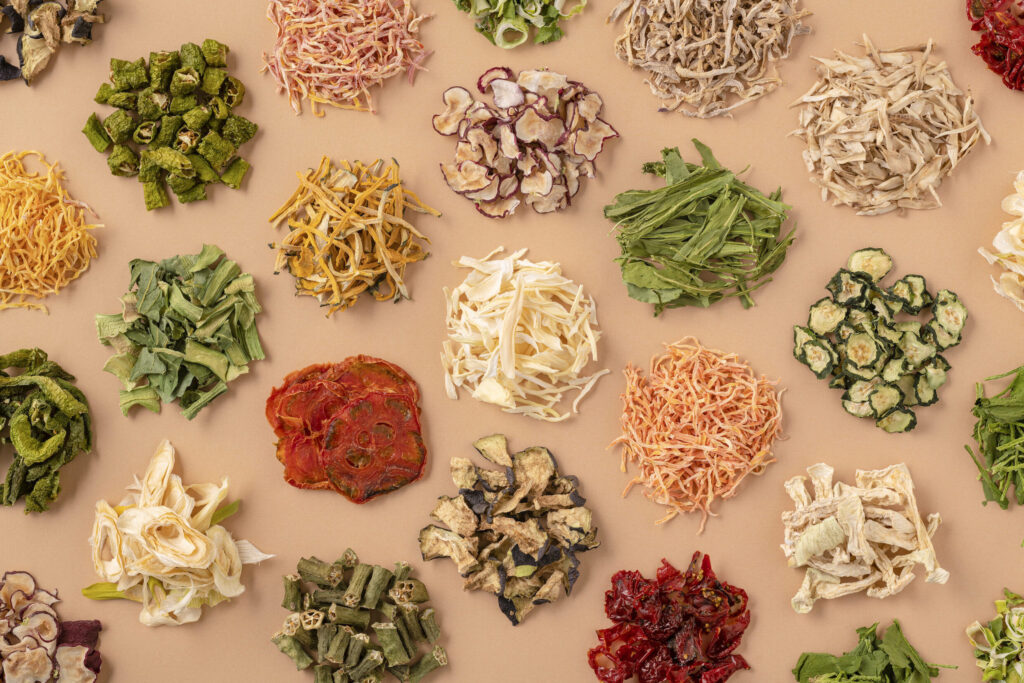
- Available for purchase in small lots from 1 kg
- We handle heirloom vegetables from across Japan
- Dried fruit and herbs also supported
Seven representative Toyama heirloom vegetables: characteristics and how to eat them
From among the 21 items, we selected 7 representatives based on recognition, distribution volume, and influence on food culture.
Nyuzen jumbo watermelon — Toyama Prefecture's first GI-registered product
| Season | Late July–early August |
| Growing region | Nyuzen town, Shimoniikawa District |
| Well-suited dishes | Fresh, sorbet, fruit salad, gifts |
Nyuzen jumbo watermelon is a large, rugby-ball-shaped watermelon of roughly 15–18 kg. Cultivation began around 1887 (Meiji 20), full-scale production began in Nyuzen town around 1897 (Meiji 30), it was renamed "Kurobe watermelon" in 1909 (Meiji 42), and in the Taisho era it grew into one of Japan's foremost producing areas with 96 hectares of planting. It was renamed to the current "Nyuzen jumbo watermelon" in 1982 and registered as GI No. 53 by the Ministry of Agriculture, Forestry and Fisheries in December 2017.
Grown in the abundant groundwater and sandy soil of the Kurobe River, it has a thick rind but draws out strongly sweet flesh and a crisp texture. In its season of late July to early August it lines farm stands in Nyuzen town and gift counters at urban department stores, popular as a summer gift.
Gokayama kabu — the red turnip of the World Heritage area
| Season | October–November |
| Growing region | Former Taira village, Nanto city (the World Heritage Gokayama district) |
| Well-suited dishes | Kabura-zushi, vinegar pickles, salt pickles, simmered dishes |
Gokayama kabu is a red turnip carried on by each farmer through saved seed in the Taira village district of Nanto city, known for the World Heritage "Gassho-style villages of Gokayama." Notable for a diversity in which the depth of color and the shape differ subtly by farmer, it is a variety with high storability for surviving the harsh mountain winter.
It is often used as the ingredient in Toyama's local dish "kabura-zushi," and its red color develops vividly when vinegar-pickled or salt-pickled. Buying it at a local farm stand while sightseeing in Gokayama is the surest bet — a precious item available only in autumn.
Takaoka dokko — a giant cucumber, thick and heavy
| Season | Late May–early August |
| Growing region | Fukuda district, Takaoka city, and elsewhere |
| Well-suited dishes | Vinegared dishes, simmered dishes, pickles, thin-sliced salad |
Takaoka dokko is a giant cucumber reaching 20 cm in length and 800 g–1 kg in weight. "Dokko" means "thick and short" in the Etchu dialect, and its appeal is thick, juicy flesh. A fixed variety carried on in Takaoka since the Edo period, it has a presence entirely different from today's slender cucumbers.
With the skin and seeds removed and cut into large pieces and simmered, it offers a soft texture like winter melon. In vinegared dishes and pickles a crisp bite remains, and locally it is beloved as a summer staple ingredient.
Kanaya negi — the leaf onion with melting sweetness
| Season | September to November |
| Growing region | Kanaya district, Shokawacho, Tonami city |
| Well-suited dishes | Grilled onion, hot pot, soup ingredient, condiment |
Kanaya negi is a leaf onion grown in the Kanaya district of Shokawacho, Tonami city, notable for a distinctive softness and sweetness that becomes a "melting texture" when cooked. The well-draining sandy loam of the Sho River alluvial fan and the cool climate grow a soft onion with fine fibers.
Grilled, its sweetness is drawn out to the fullest, and in hot pot it becomes soft as if melting. Handling is centered on farm stands in Kanaya, Shokawacho, Tonami city, and local restaurants — a rare item whose distribution to the Tokyo metropolitan area is limited.
Asatsuki — Toyama's spring taste served with firefly squid
| Season | Late March to April |
| Growing region | Yamamuro, Toyama city |
| Well-suited dishes | Firefly squid dressed in vinegar-miso, condiment, tempura |
Asatsuki is a perennial whose thin, onion-like leaves are eaten. In Toyama it is an essential condiment for the vinegar-miso dish served with seasonal firefly squid, an item essential to the springtime Toyama Bay table. Grown in the sandy soil of the Yamamuro district, its appeal is a thin, crisp texture.
Because its season overlaps with the peak of the firefly squid catch (late March–May), it is a combination that often appears as a set on Toyama's spring table. Besides condiment uses, it is also delicious in tempura and egg-bound dishes.
Makuro nasu — the fixed variety that became the prototype of the medium-long eggplant
| Season | July–September |
| Growing region | Fukuda district, Takaoka city, and elsewhere |
| Well-suited dishes | Grilled eggplant, dengaku, agebitashi, simmered dishes |
Makuro nasu is a lineage of heirloom eggplant grown nationwide since the Meiji era, one of Japan's representative fixed-variety eggplants. Carried on as a local heirloom in the Fukuda district of Takaoka city as well, it has deep purple-black skin and dense, soft flesh. Made into grilled eggplant, the skin peels easily, and the melting texture of the flesh stands out.
It has the genetic stability unique to a fixed variety and can be carried on through saved seed. In eggplant staples such as dengaku, agebitashi, and simmered dishes, it delivers its deep flavor. Farm stands and local restaurants in Takaoka city are the main places to obtain it.
Kukitachi — the spring rape blossom without bitterness
| Season | March to April |
| Growing region | Shimmei district, Toyama city |
| Well-suited dishes | Ohitashi, mustard dressing, miso soup, tempura |
Kukitachi is short for "kukitachi-na," a kind of rape blossom in the Brassica family. An heirloom variety grown in the Shimmei district of Toyama city, its greatest feature is soft leaves and almost none of the bitterness typical of ordinary rape blossoms. The early-spring bud-bearing stems are eaten.
Ohitashi and mustard dressing are the classics, and because it has no acridity it is a leafy green even children find easy to eat. As a miso-soup ingredient or in tempura, its sweetness stands out, adding color to Toyama's spring table. Because its season is the short period of March–April, it is an item you can meet only at farm stands during this time.
How to buy Toyama's heirloom vegetables and tips for storing them
The main routes for obtaining Toyama's heirloom vegetables are producing-area farm stands, JA farm stands, roadside stations, and hometown-tax programs. Nyuzen jumbo watermelon, Gokayama kabu, and Kanaya negi have high recognition as regional brands, and gift shipments to the Tokyo metropolitan area are also increasing.
In-prefecture direct-sales outlets / roadside stations
| Item | Main sources | Timing |
|---|---|---|
| Nyuzen jumbo watermelon | Michi-no-Eki Unazuki, JA farm stands in Nyuzen town | Late July–early August |
| Gokayama kabu | Michi-no-Eki Kamitaira, farm stands in Gokayama tourism | October–November |
| Takaoka dokko | JA Takaoka farm stands, roadside stations in Takaoka city | Late May–early August |
| Kanaya negi | Michi-no-Eki Shokawa, farm stands in Tonami city | September to November |
| Makuro nasu | JA Takaoka farm stands, farm stands in Takaoka city | July–September |
| Asatsuki | Supermarkets in Toyama city, JA farm stands | Late March to April |
| Kukitachi | Farm stands in the Shimmei district, Toyama city | March to April |
Mail order / hometown tax to outside the prefecture
- Nyuzen jumbo watermelon — Shipped nationwide, summer only, as a hometown-tax gift from Nyuzen town. Also popular as a department-store gift
- Gokayama kabu — Shipped autumn only via Nanto city hometown-tax and farm-direct e-commerce. Processed kabura-zushi distributed year-round
- Kanaya negi — Shipped autumn to winter only via Tonami city farm-direct e-commerce
- Processed products — Toyama Bay firefly squid and asatsuki vinegar-miso sets, kabura-zushi, vinegar-pickled zuiki, and the like distributed year-round
Storage methods by item
| Item | Short-term storage | Long-term storage |
|---|---|---|
| Nyuzen jumbo watermelon | Whole, in a cool dark place for one week | Cut and refrigerated 2–3 days; not freezable |
| Gokayama kabu | Wrap in newspaper and keep 1 week in the vegetable compartment | Over a month with vinegar or salt pickling |
| Takaoka dokko | Wrap in newspaper and keep 5 days in the vegetable compartment | One week with rice-bran or light pickling |
| Kanaya negi | Moisten and keep 5 days in the vegetable compartment | Chop and freeze (1 month) |
| Makuro nasu | Wrap in newspaper and keep 3–5 days in the vegetable compartment | As agebitashi, 3 days chilled, 1 month frozen |
| Asatsuki | Moisten and keep 3 days in the vegetable compartment | Chopped and frozen (2 weeks) |
| Kukitachi | Moisten and keep 3 days in the vegetable compartment | Boil quickly and freeze (2 weeks) |
A product catalog that shows around 100 items we handle
Agriture, flexibly handling everything from small lots to large lots
- Available for purchase in small lots from 1 kg
- We handle heirloom vegetables from across Japan
- Dried fruit and herbs also supported
Efforts to protect Toyama's heirloom vegetables
To sustain the 21 heirloom varieties, activities linking the Toyama Prefectural Agricultural, Forestry and Fisheries Research Center, municipalities, JA Toyama Chuo-kai, and grower groups are advancing.
Regional branding and GI registration
| Efforts | Details |
|---|---|
| GI registration of Nyuzen jumbo watermelon | Registered as Ministry of Agriculture, Forestry and Fisheries geographical indication No. 53 in December 2017. Toyama Prefecture's first GI product |
| Brand linkage with the Gassho-style villages of Gokayama | Linked with World Heritage tourism to brand Gokayama kabu, bobera, and others |
| Conservation activities of the Toyama Prefectural Agricultural, Forestry and Fisheries Research Center | Carries out heirloom-variety seed preservation and cultivation guidance |
| The JA farm-stand network | Sells and spreads local heirloom varieties at farm stands organized by former municipality |
Though Toyama Prefecture has no official certification system of its own, the GI registration of Nyuzen jumbo watermelon has spurred the branding of heirloom varieties. In the mountainous areas of Gokayama and the upper Sho River, intergenerational succession through saved seed still continues, and a culture of maintaining farmer-by-farmer diversity is alive.
The history of Nyuzen jumbo watermelon
| Timing | Event |
|---|---|
| Around 1887 (Meiji 20) | Cultivation of large watermelons began in the former Ikuji village of present-day Kurobe city |
| Around 1897 (Meiji 30) | Full-scale production began in Nyuzen town |
| 1909 (Meiji 42) | The name "Kurobe watermelon" became established |
| The Taisho era | Planting expanded to a maximum of 96 hectares, becoming one of Japan's foremost watermelon-producing areas |
| Showa (wartime to postwar) | Production scale shrank due to wartime crop conversion and the appearance of Yamato watermelon |
| 1971 (Showa 46) | The "Nyuzen Town Kurobe Watermelon Production Association" was formed. Toward reviving the producing area |
| 1982 (Showa 57) | Renamed "Nyuzen jumbo watermelon" |
| December 15, 2017 | Registered as No. 53 under the Ministry of Agriculture, Forestry and Fisheries' geographical indication (GI) protection system. Toyama Prefecture's first |
Nyuzen jumbo watermelon is a real example of a variety that, despite a history of once-shrinking production scale, grew into a nationwide brand through the formation of a production association in the late Showa era and GI registration. It has become a specialty product supported by the natural environment of the Kurobe River alluvial fan's groundwater and sandy soil, and by growers' intergenerational succession.
FOR BUSINESS
乾燥野菜を業務用でお探しですか
国産の野菜・果物を乾燥し、必要に応じて粉砕してお出ししています。扱っている品目は100種前後で、規格は 乾燥品の一覧・パウダーの一覧 に掲載しています。
少量でのご購入は、姉妹ブランドの通販サイト OYAOYA で承っています。
FAQ
Other regional specialty varieties
Though included in the Japan Heirloom Vegetable Promotion Association's list, we introduce separately here — as "local specialty varieties" — items whose branding is relatively new and items with a grain-like character.
| Item | Category | Growing region | Characteristics and standing |
|---|---|---|---|
| Gokayama bobera | Squash | Former Taira village, Nanto city | A rugby-ball-shaped squash of Gokayama with rich sweetness. A relatively new regional brand variety whose branding efforts began in 2017 |
| Hokigi | Seed (tonburi) | Former Inami town, Nanto city | Small green fruits 1–2 mm across are eaten. Positioned closer to grain or seed than vegetable, it is the same plant as Akita's tonburi |
Summary
Toyama's 21 heirloom vegetables are a group of varieties handed down amid the diverse land of the Tateyama Range snowmelt water, the alluvial fans of the Kurobe and Sho rivers, the mountains of Gokayama, and the Toyama Bay coast. They gather items rooted in the Hokuriku table — Nyuzen jumbo watermelon, Gokayama kabu, Takaoka dokko, Kanaya negi, makuro nasu, asatsuki, and more.
Nyuzen jumbo watermelon, Takaoka dokko, and zuiki in summer; Gokayama kabu, Kanaya negi, and Hirano daikon in autumn; asatsuki, kukitachi, and mizubuki in spring — Toyama's heirloom varieties line up through all four seasons. Visiting the producing areas in season, or using hometown-tax and farm-direct e-commerce, lets you bring Toyama's heirloom varieties to the family table.
References / information sources
- Japan Heirloom Vegetable Promotion Association, "Toyama's heirloom vegetables" — Certification list and features of the 21 items
- Ministry of Agriculture, Forestry and Fisheries GI Registration No. 53, "Nyuzen jumbo watermelon" — GI registration information
- Nyuzen town official, "Nyuzen jumbo watermelon" — Producing-area administrative information
- National Agriculture and Food Research Organization Genebank "Native Variety Database" — information on native varieties nationwide
Related articles
- Japan's Heirloom Vegetables: Precious Varieties Handed Down in Each Region
- Kyoto heirloom vegetables: Kyoto specialties with a long history
- Niigata's heirloom vegetables (including Kurosaki chamame and kagura nanban)
- Heirloom vegetables of Yamagata
- Heirloom vegetables of Fukushima
- Heirloom vegetables of Kanagawa
- Heirloom vegetables of Naniwa
Download the product catalog
We will send the materials to your email address based on the information you provide.
- What are Niigata’s heirloom vegetables? Features, season, and ways to eat the 33 items explained
- What are Fukui’s heirloom vegetables? Features, season, and ways to eat the 23 items explained
Author of this article
Related articles
-
 Okinawa island vegetables: individualistic vegetables nurtured by a subtropical climate
 -
 Kaga vegetables: Kanazawa brand vegetables where tradition lives on
 -
 The appeal of Kansai heirloom vegetables | Specialties of Naniwa, Kyoto, and Yamato thoroughly explained
 -
 Kyoto heirloom vegetables: Kyoto specialties with a long history
 -
 A list of heirloom vegetables of the 8 prefectures of Kyushu and Okinawa|A thorough introduction to characteristics, growing regions, and seasons
 -
 Know the heirloom vegetables of Edo Tokyo | The city’s vanishing food culture
 -
 They'll make you smile! The fun names of heirloom vegetables and their origins
 -
 5 cases and strategies that succeeded in branding heirloom vegetables