
What are Gunma’s heirloom vegetables? Features, season, and ways to eat the 22 items explained

Gunma Prefecture's heirloom vegetables are native varieties preserved amid northern Kanto's volcanic-ash soil, the cool climate of its mountainous areas, and complex terrain such as Mount Haruna, Mount Akagi, and Mount Myogi. The Japan Traditional Vegetable Promotion Association In the certification, there are 22 items, ranging from nationally known cultivars such as Shimonita negi, Kokufu hakusai, and kakina, to rare varieties limited to mountain hamlets like the Iriyama district's Takayama cucumber and Kyozuka kabu—a diverse lineup.
This article organizes the 22 items in a list and explains 7 representative items in detail. We introduce the world of native varieties tied to the negi, hakusai, and konjac culture typical of "sukiyaki kingdom" Gunma.
TOC
The definition of "heirloom vegetable" and the scope of this article
There is no nationwide unified definition of “heirloom vegetables,” and criteria differ by certifying body. To help you accurately understand this article's content, we first lay out the criteria of the main certifying bodies.
| Certifying body | Main criteria |
|---|---|
| Kyoto Prefecture "Kyoto Heirloom Vegetables" | Cultivated in Kyoto from before the Meiji era and unique to Kyoto |
| Osaka Prefecture "Naniwa Heirloom Vegetables" | Cultivated within Osaka Prefecture from roughly 100 or more years ago |
| Nara Prefecture "Yamato Heirloom Vegetables" | Items whose production in this prefecture is confirmed from before the war |
| Akita Prefecture "Akita Heirloom Vegetables" | Cultivated within the prefecture from before the Showa 30s |
| Yamagata Prefecture "Yamagata Heirloom Vegetables" | Cultivated within the prefecture from before Showa 20 |
| The Japan Traditional Vegetable Promotion Association | Independent certification criteria (broader) |
In this article, we introduce the 22 items with the certification of the Japan Heirloom Vegetable Promotion Association as the main source. Gunma Prefecture has no official certification system of its own, but preservation activities for each item are progressing as regional brands. Of the 22 items, Numasu negi is currently sold only as seedlings and its actual distribution is limited, so the main text centers on 21 items, and Numasu negi is detailed in the "Other regional specialty varieties" section at the end.
What are Gunma's heirloom vegetables? Native varieties nurtured by the Jomo Three Mountains and the Kanto Plain
Gunma Prefecture, centered on the "Jomo Three Mountains" of Mount Akagi, Mount Haruna, and Mount Myogi, is a prefecture with a large elevation difference from the northern mountainous zone to the southern Kanto Plain. Volcanic-ash soil, abundant groundwater, and a cool mountain climate have nurtured diverse native varieties—negi, hakusai, cucumber, kabu, and more.
Central Gunma, western Gunma, Agatsuma-Tone, eastern Gunma—the four areas and item distribution
| Area | Representative items | Regional characteristics |
|---|---|---|
| Central Gunma (Maebashi, Takasaki, Isesaki) | Ishikura fukabuka negi, Kokufu hakusai, Kamiizumi Riso daikon, Taguchi-na, Miyauchi-na, Shimoueki negi | Volcanic-ash soil at the foot of Mount Akagi. Suburban agriculture coexists with native varieties from the Edo period |
| Western Gunma (Kanra, Tomioka, Tano) | Shimonita negi, Miyazaki-na, aka-imo | The mountainous area of the Mount Myogi range. A cool climate and a negi culture strong in cooked dishes |
| Agatsuma-Tone (Nakanojo, Numata, Takayama) | Takayama cucumber, Iriyama cucumber, Kyozuka kabu, habahiro-ingen, Numasu negi | Unique varieties remain at the mountain-hamlet level. Many rare cucumber and kabu varieties |
| Eastern Gunma (Tatebayashi, Kiryu, Midori) | Kakina, neko-no-me ingen | The food-culture zone of the Ryomo region (the border with Tochigi). Centered on kakina and legumes |
The Agatsuma-Tone region in particular has a concentration of different native varieties by mountain hamlet, and a characteristic of Gunma is that unique varieties are preserved within narrow geographic ranges—Iriyama cucumber, Kyozuka kabu, and habahiro-ingen of the Iriyama district (Nakanojo), and Takayama cucumber of Takayama village.
Sukiyaki kingdom Gunma and native vegetables
- Shimonita negi — nationwide fame as a sukiyaki ingredient. A creamy texture when heated
- Kokufu hakusai — a thick hakusai originating in Takasaki. A staple of sukiyaki and hot pot
- Konjac — Gunma holds a share of over 90% of national production (*not included in this article's 22 items, but culturally important)
- Ishikura fukabuka negi — a native fukabuka negi of Maebashi. Suited to hot-pot dishes
Gunma is a prefecture that touts a "100% sukiyaki self-sufficiency rate," and native vegetables such as Shimonita negi and Kokufu hakusai are rolled out nationwide as sukiyaki ingredients. Whereas other prefectures' heirloom vegetables tie to pickles and preserved foods, Gunma's distinctive feature is its tie to "hot-pot and sukiyaki culture."
FOR BUSINESS
乾燥野菜を業務用でお探しですか
国産の野菜・果物を乾燥し、必要に応じて粉砕してお出ししています。扱っている品目は100種前後で、規格は 乾燥品の一覧・パウダーの一覧 に掲載しています。
少量でのご購入は、姉妹ブランドの通販サイト OYAOYA で承っています。
A list of all 22 Gunma heirloom vegetables and a seasonal calendar
We organized in a list the 22 Gunma Prefecture heirloom vegetables certified by the Japan Heirloom Vegetable Promotion Association. The diversity of item genres stands out—4 negi items (Ishikura fukabuka negi, Shimoueki negi, Shimonita negi, Numasu negi), 3 kidney-bean items, and 3 daikon items.
22-item quick-reference table
| # | Item | Category | Main growing region | Season |
|---|---|---|---|---|
| 1 | Shimonita negi | Negi | Shimonita, Kanra District / Tomioka | November to January |
| 2 | Ishikura fukabuka negi | Negi | Ishikura, Maebashi | October to March |
| 3 | Shimoueki negi | Negi | Shimoueki district, Isesaki | December to January |
| 4 | Numasu negi | Negi | Numata | Sold only as seedlings (*detailed under specialty varieties at the end) |
| 5 | Kokufu hakusai | Hakusai | Takasaki | November–March |
| 6 | Kamiizumi Riso daikon | Daikon | Kamiizumi, Maebashi | November–December |
| 7 | Jumonji daikon | Daikon | Jumonji, Takasaki | Mid-November to late December |
| 8 | Tokizawa daikon | Daikon | Tokizawa, Maebashi | Autumn to winter |
| 9 | Kokubu carrot | Carrot | Kokufu region, Takasaki | November–March |
| 10 | Kakina | Leafy vegetable (Brassicaceae) | Tatebayashi | December–April |
| 11 | Taguchi-na | Leafy green | Taguchi, Maebashi | Late February to mid-April |
| 12 | Miyauchi-na | Leafy green | Takasaki, Maebashi | February to March |
| 13 | Miyazaki-na | Pickling greens | Miyazaki, Tomioka | December to early March |
| 14 | Iriyama cucumber | Cucumber | Iriyama district, Nakanojo, Agatsuma District | July–September |
| 15 | Takayama cucumber | Cucumber | Takayama village, Agatsuma District | Mid-July to October |
| 16 | Kyozuka kabu | Turnip | Iriyama district, Nakanojo, Agatsuma District | October |
| 17 | Jinta myoga | Myoga | Kurabuchi, Takasaki | July–September |
| 18 | Aka-imo | Potato | Kanna, Tano District | Year-round |
| 19 | Habahiro-ingen | Kidney bean | Iriyama district, Nakanojo, Agatsuma District | July–early September |
| 20 | Neko-no-me ingen | Kidney bean | Kiryu, Azuma-cho, Midori | Summer–autumn |
| 21 | Benibana-ingen | Kidney bean | Mountainous parts of the prefecture | Late October to mid-November |
| 22 | Miyosawa azuki | Azuki bean | Miyagi district, Maebashi | August to early September |
The item composition is diverse—4 negi items (Shimonita, Ishikura, Shimoueki, Numasu), 4 legume items (3 kidney beans + azuki), and 5 leafy-vegetable items (kakina, Taguchi-na, Miyauchi-na, Miyazaki-na, and leaf types other than Tokizawa daikon). The abundance of negi reflects Gunma's sukiyaki culture, and the abundance of legumes reflects the mountainous areas' culture of self-consumption.
Seasonal calendar (by month)
| Month | Items coming into season |
|---|---|
| February to April | Taguchi-na, Miyauchi-na, kakina (final stretch) |
| July–September | Jinta myoga, Iriyama cucumber, Takayama cucumber, habahiro-ingen, neko-no-me ingen, Miyosawa azuki |
| October | Kyozuka kabu, benibana-ingen (start) |
| November–December | Shimonita negi, Kokufu hakusai, Kamiizumi Riso daikon, Jumonji daikon, Tokizawa daikon, Kokubu carrot, Shimoueki negi |
| The following January to March | Shimonita negi (through January), Ishikura fukabuka negi, Kokufu hakusai, Kokubu carrot, kakina, Miyazaki-na |
| Year-round | Aka-imo |
November to January is the peak concentration of the season, with sukiyaki vegetables centered on Shimonita negi and Kokufu hakusai. Summer centers on the mountainous areas' cucumbers and kidney beans, and the in-season item composition is clearly divided by region.
A product catalog that shows around 100 items we handle
Agriture, flexibly handling everything from small lots to large lots
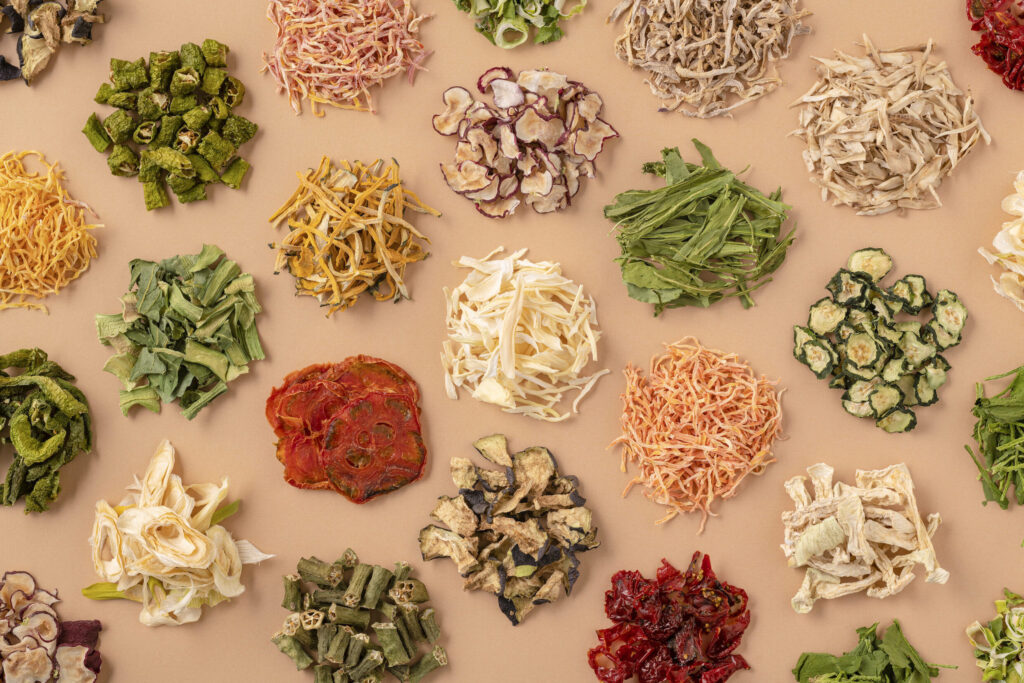
- Available for purchase in small lots from 1 kg
- We handle heirloom vegetables from across Japan
- Dried fruit and herbs also supported
Features and ways to eat representative Gunma heirloom vegetables
From among the 22 items, we selected representative items by the criteria of fame, distribution volume, and influence on food culture. Because Iriyama cucumber and Kyozuka kabu are preserved together in the same mountain hamlet of the Iriyama district, Agatsuma District, we introduce them together in one section.
Shimonita negi — a thick negi with a sweetness that turns creamy when heated
| Season | November to the following January |
| Growing region | Shimonita, Kanra District / Tomioka |
| Well-suited dishes | Sukiyaki, hot pot, kakiage, grilled negi |
Shimonita negi is a native negi characterized by a distinctive appearance—a thick, short white part. About 4–5cm in diameter and around 20cm long, it has the property of being very pungent when eaten raw yet turning into a melting, creamy sweetness when heated.
In the Edo period it was treated as a tribute to the lord, and it also has the alias "tono-sama negi" (lord's negi). Strong across cooked dishes—sukiyaki, hot pot, kakiage—it is a leading example of "cooked-type negi," alongside Sendai magari-negi of Miyagi・Fukushima's Akutsu magari negi.
Kokufu hakusai — the fine supporting player of sukiyaki, Takasaki's thick hakusai
| Season | November to the following March |
| Growing region | Kokufu region, Takasaki |
| Well-suited dishes | Sukiyaki, hot pot, cream stew, hakusai pickles |
Kokufu hakusai is a native hakusai grown in the Kokufu region of Takasaki. It is characterized by being heavy and dense, thick and strongly sweet, holding its shape well even when simmered and soaking up dashi well.
Unlike the light, many-leaved modern hakusai of F1 cultivars, it is a heavyweight of 3–5kg per head. Put in sukiyaki or hot pot, heat passes slowly through to the core, drawing out hakusai's inherent sweetness and richness.
Kokubu carrot — a long-root carrot 1m long
| Season | November to the following March |
| Growing region | Kokufu region, Takasaki |
| Well-suited dishes | Simmered dishes, New Year namasu, osechi, kinpira |
Kokubu carrot is a native long-root carrot reaching nearly 1m in length from leaf tip to root tip. The edible portion alone is around 60cm, an appearance completely different from ordinary carrots (15–20cm).
Because the flesh is soft and strongly sweet, it suits simmered dishes and New Year namasu. The "osechi red-and-white namasu" that makes use of its length is a staple of Takasaki's New Year cuisine, and using Kokubu carrot adds to the visual splendor. Harvest requires digging a dedicated deep trench, and the number of growing farms is on a declining trend.
Kakina — a winter stem vegetable of the Ryomo region
| Season | December to the following April |
| Growing region | The Ryomo region, including Tatebayashi |
| Well-suited dishes | Ohitashi, mustard dressing, stir-fries, mustard pickles |
Kakina is a native variety whose bud-bearing stems are "picked off" (kaki-toru) and eaten. It is commonly grown across the Ryomo region straddling Tatebayashi, Gunma, and Sano, Tochigi, and is the same line as Tochigi's Sano sodachi-na.
It can be harvested about three times from one plant, and its appeal is soft stems with a faint sweetness. Because sweetness increases when hit by winter frost, January to February is an especially delicious time. Ohitashi and mustard dressing are staples, and you can enjoy the harmony of faint bitterness and sweetness, like rapeseed flower.
Takayama cucumber — an extra-large cucumber 3–4 times ordinary size
| Season | Mid-July to October |
| Growing region | Takayama village, Agatsuma District |
| Well-suited dishes | Pickles, hiyajiru, salad, stir-fries |
Takayama cucumber is an extra-large variety that grows to 3–4 times the size of an ordinary cucumber. At 300–500g in weight and 25–30cm long, it is characterized by thick skin and firm flesh. It was once carefully preserved in Takayama village as a "summer preserved food."
Because it has high moisture content, thin-slicing and salt-massaging it makes a splendid salad. Being thick-fleshed, it keeps a firm bite even when pickled, suiting nuka-zuke and miso-zuke.
Iriyama cucumber and Kyozuka kabu — mountain native varieties of the Iriyama district, Agatsuma District
| Season | Iriyama cucumber: July–September / Kyozuka kabu: October |
| Growing region | Iriyama district, Nakanojo, Agatsuma District |
| Well-suited dishes | Iriyama cucumber: pickles, eaten whole / Kyozuka kabu: pickles, simmered dishes |
Iriyama cucumber is a short, thick Siberian native cucumber around 20cm long. Kyozuka kabu is a distinctive kabu that grows long and large, 10cm in diameter underground and 40cm above ground. Both have been preserved by several dozen farms in the narrow mountain hamlet of the Iriyama district in Nakanojo.
Both are hardly grown outside the hamlet and are drawing attention as "varieties that grow only in that land." Salt-pickled or nuka-zuke, Kyozuka kabu offers a distinctive crunchy texture.
Jinta myoga — high-quality myoga of Kurabuchi, Takasaki
| Season | July to September |
| Growing region | Kurabuchi, Takasaki |
| Well-suited dishes | Condiment, sweet-vinegar pickles, tempura, topping for chilled tofu |
Jinta myoga is a high-quality myoga grown in Kurabuchi, Takasaki. Its flower buds appear early, the plant grows tall, and it is characterized by a beautiful vivid-crimson color and a strong aroma.
With a stronger aroma than ordinary myoga, it packs a punch as a condiment for somen and chilled tofu. Made into sweet-vinegar pickles it keeps well and is prized as a summer standby dish.
Regional character—central Gunma, western Gunma, Agatsuma-Tone, eastern Gunma
Gunma's 22 items are distributed across four areas: central Gunma, western Gunma, Agatsuma-Tone, and eastern Gunma. Because Numasu negi is covered in the specialty-varieties section at the end, we introduce 21 items here.
Central Gunma area (Maebashi, Takasaki, Isesaki)
- Ishikura fukabuka negi (Ishikura, Maebashi) — a long-white-shank fukabuka-type negi. Suited to hot-pot dishes
- Shimoueki negi (Shimoueki district, Isesaki) — a thick, sweet winter negi
- Kokufu hakusai (Kokufu region, Takasaki) — the fine supporting player of sukiyaki
- Kokubu carrot (Kokufu region, Takasaki) — a long-root type nearly 1m long
- Kamiizumi Riso daikon (Kamiizumi, Maebashi) — a white, strongly sweet daikon
- Jumonji daikon (Jumonji, Takasaki) — for takuan pickling
- Tokizawa daikon (Tokizawa, Maebashi) — a pickling daikon from the Edo period
- Taguchi-na (Taguchi, Maebashi) — a cold-hardy leafy vegetable
- Miyauchi-na (Takasaki, Maebashi) — a leafy vegetable with vigorous regrowth
- Jinta myoga (Kurabuchi, Takasaki) — vivid-crimson high-quality myoga
- Miyosawa azuki (Miyagi district, Maebashi) — a native azuki for sekihan and wagashi
Western Gunma area (Shimonita, Tomioka, Tano)
- Shimonita negi (Shimonita, Tomioka) — a nationally known native negi also called tono-sama negi
- Miyazaki-na (Miyazaki, Tomioka) — a pickling greens with deeply indented leaves
- Aka-imo (Kanna, Tano District) — a small potato with reddish skin
Agatsuma-Tone area (Nakanojo, Takayama, Numata)
- Takayama cucumber (Takayama village, Agatsuma District) — an extra-large cucumber 3–4 times ordinary size
- Iriyama cucumber (Iriyama district, Nakanojo) — a short, thick Siberian type
- Kyozuka kabu (Iriyama district, Nakanojo) — a kabu large both above and below ground
- Habahiro-ingen (Iriyama district, Nakanojo) — a string-free, broad flat-pod kidney bean
- Benibana-ingen (mountainous area) — for cooked beans, large and good-looking
The Agatsuma-Tone area is a distinctive region with a concentration of native varieties in mountain hamlets. In particular, the three items of the Iriyama district in Nakanojo (Iriyama cucumber, Kyozuka kabu, habahiro-ingen) are a rare group of varieties preserved at a scale of several dozen farms.
Eastern Gunma area (Tatebayashi, Kiryu, Midori)
- Kakina (Tatebayashi) — a winter stem vegetable of the Ryomo region. A shared food-culture zone with Sano, Tochigi
- Neko-no-me ingen (Kiryu, Azuma-cho, Midori) — a glossy, beautiful bean
The eastern Gunma area is the Ryomo region adjacent to Sano, Tochigi, and kakina is closely related to Tochigi's Sano sodachi-na. It forms a food-culture zone crossing the prefectural border.
How to buy Gunma heirloom vegetables and tips for storage
While Shimonita negi, Kokufu hakusai, and kakina also appear in metropolitan supermarkets, the mountain-hamlet varieties of Agatsuma-Tone are rare items available only at growing-region farm stands. Visit the growing region in season, or make use of hometown tax and mail order.
In-prefecture direct-sales outlets / roadside stations
| Item | Main sources | Timing |
|---|---|---|
| Shimonita negi | Farm stands within Shimonita, Michi-no-Eki Shimonita | November to January |
| Kokufu hakusai | Farm stands within Takasaki, JA Takasaki farm stand | November–March |
| Kokubu carrot | Farm stands in the Kokufu region of Takasaki | November–March |
| Kakina | Farm stands in the Ryomo region of Tatebayashi and Sano | December–April |
| Takayama cucumber | Farm stands within Takayama village, Agatsuma District | July–October |
| Iriyama cucumber, Kyozuka kabu | Farm stands in the Iriyama district of Nakanojo (limited quantity) | July–October |
| Jinta myoga | Farm stands in Kurabuchi, Takasaki | July–September |
Mail order / hometown tax to outside the prefecture
- Shimonita negi — shipped nationwide as a hometown-tax return gift of Shimonita. Limited to November–January
- Kokufu hakusai, Kokubu carrot — available via Takasaki's hometown tax and JA direct sales
- Kakina — sold seasonally in winter via Tatebayashi's hometown tax and farm-direct EC
- Benibana-ingen — available year-round as dried beans. Distributed as a premium item for cooked beans
- Processed products — processed products such as soy-sauce-pickled Shimonita negi and Kokufu hakusai pickles are available year-round
Storage methods by item
| Item | Short-term storage | Long-term storage |
|---|---|---|
| Shimonita negi | Wrapped in newspaper, one week in the vegetable compartment | Chop and freeze (1 month) |
| Kokufu hakusai | Store whole, standing upright in newspaper, in a cool, dark place for 2 weeks | Salt pickles / hakusai pickles (1–2 months) |
| Kokubu carrot | In newspaper in the vegetable compartment for 2 weeks | Shaved and frozen (1 month) |
| Kakina | In moist newspaper in the vegetable compartment for 3 days | Boil quickly and freeze (2 weeks) |
| Takayama cucumber | In plastic wrap in the vegetable compartment for 5–7 days | Nuka-zuke / miso-zuke (1 month) |
| Jinta myoga | In plastic wrap in the vegetable compartment for 1 week | Sweet-vinegar pickles (2–3 months) |
| Benibana-ingen | Store dried beans sealed at room temperature | As dried beans, over 1 year |
Gunma's native vegetables show their power most in "cooked dishes" and "pickle processing." Taking the trouble to heat or pickle them, rather than eating them raw, makes the difference from ordinary cultivars stand out.
A product catalog that shows around 100 items we handle
Agriture, flexibly handling everything from small lots to large lots
- Available for purchase in small lots from 1 kg
- We handle heirloom vegetables from across Japan
- Dried fruit and herbs also supported
Efforts to preserve Gunma's heirloom vegetables
To maintain the 22 native varieties, activities in which municipalities, JA, and local organizations coordinate continue.
Branding of Shimonita negi
| Timing | Event |
|---|---|
| Edo period | Grown as a tribute to the lord. Also called "tono-sama negi" |
| Postwar | The shift to general distribution progresses, but cultivation difficulty is high and production volume is limited |
| Heisei era onward | Shimonita promotes branding. Nationally recognized as a sukiyaki ingredient |
| Present | Producer associations of Shimonita and Tomioka manage seeds and protect the brand |
Shimonita negi is positioned such that "products grown in Shimonita, Tomioka, Kanra, Shinto, and elsewhere that meet the 7 conditions of the town-certified 'Shimonita Negi Association' are the genuine article," and the producer associations carry out strict quality management and variety protection. The "protection of the name" by a local organization is a good example of preserving a native variety.
Preserving rare varieties in mountain hamlets
- Iriyama district, Nakanojo — preserving the three varieties of Iriyama cucumber, Kyozuka kabu, and habahiro-ingen at the hamlet level
- Takayama village — passing down Takayama cucumber seeds through self-seed-saving
- Kanna, Tano District — centered on farms that continue the traditional cultivation of aka-imo
- JA Group Gunma — supporting the expansion of sales channels and the development of processed products for native varieties
The survival of mountain hamlets' native varieties is becoming difficult due to the aging of farmers. The combination of local organizations, municipalities, and consumer demand makes passing them on to the next generation possible.
FOR BUSINESS
乾燥野菜を業務用でお探しですか
国産の野菜・果物を乾燥し、必要に応じて粉砕してお出ししています。扱っている品目は100種前後で、規格は 乾燥品の一覧・パウダーの一覧 に掲載しています。
少量でのご購入は、姉妹ブランドの通販サイト OYAOYA で承っています。
FAQ
Other regional specialty varieties
Here we separately introduce, as "regional specialty varieties," items that are included in the Japan Heirloom Vegetable Promotion Association's list but are currently sold only as seedlings and whose actual distribution is limited.
| Item | Category | Growing region | Characteristics and standing |
|---|---|---|---|
| Numasu negi | Negi | Numata | A cold-hardy native negi with long, pointed leaves and a long white part. Because the number of growing farms has now declined and it is sold only as seedlings, it is hard to obtain on the general distribution market. A rare variety whose revival and succession are a challenge |
Summary
Gunma's 22 heirloom vegetables are a group of native varieties with a wide range of character, from leading sukiyaki ingredients such as Shimonita negi, Kokufu hakusai, and Kokubu carrot, to the mountain-hamlet varieties of the Iriyama district in Nakanojo. The climatic diversity created by the Jomo Three Mountains and the Kanto Plain supports this rich item composition.
In the November–January sukiyaki season, Shimonita negi and Kokufu hakusai; from July to October, the mountainous areas' Takayama cucumber and Iriyama cucumber; from winter to spring, the leafy kakina, Taguchi-na, and Miyauchi-na—being able to enjoy different items by season is Gunma's appeal. While making use of hometown tax and farm-direct EC, a trip to visit the growing region in season is also recommended.
References / information sources
- Japan Heirloom Vegetable Promotion Association, "Heirloom Vegetables of Gunma Prefecture" — the list of 22 certified items and their features
- Maebashi City, "Heirloom Vegetables of Maebashi" — details of central Gunma native varieties
- Gunma Prefecture, "On Vegetable Production" — the overall picture of the prefecture's agricultural products
Related articles
- Japan's Heirloom Vegetables: Precious Varieties Handed Down in Each Region
- Kyoto heirloom vegetables: Kyoto specialties with a long history
- Heirloom vegetables of Ibaraki
- Heirloom vegetables of Tochigi
- Heirloom vegetables of Fukushima (including Akutsu magari negi)
- Heirloom vegetables of Miyagi (including Sendai magari negi)
- Heirloom vegetables of Naniwa
Download the product catalog
We will send the materials to your email address based on the information you provide.
- What are Tochigi’s heirloom vegetables? Features, season, and ways to eat the 14 items explained
- What are Saitama’s heirloom vegetables? Features, season, and ways to eat the 18 items explained
Author of this article
Related articles
-
 Okinawa island vegetables: individualistic vegetables nurtured by a subtropical climate
 -
 Kaga vegetables: Kanazawa brand vegetables where tradition lives on
 -
 The appeal of Kansai heirloom vegetables | Specialties of Naniwa, Kyoto, and Yamato thoroughly explained
 -
 Kyoto heirloom vegetables: Kyoto specialties with a long history
 -
 A list of heirloom vegetables of the 8 prefectures of Kyushu and Okinawa|A thorough introduction to characteristics, growing regions, and seasons
 -
 Know the heirloom vegetables of Edo Tokyo | The city’s vanishing food culture
 -
 They'll make you smile! The fun names of heirloom vegetables and their origins
 -
 5 cases and strategies that succeeded in branding heirloom vegetables