Dried Chamomile

Dried chamomile is a commercial ingredient made from the flowers of chamomile, an herb of the Asteraceae family. The contrast of white petals and a yellow center is charming, and it features a sweet, refreshing aroma reminiscent of apple, with that color and aroma sealed in through low-temperature drying. At Agriture, we develop it in parallel with chamomile powder (made-to-order), made by finely milling the same chamomile, proposing a division where dried chamomile is for applications where you want to keep the flower's shape and color, and powder for blending into dough and powders.
Compared with other dried flowers and herbs, chamomile can differentiate on its "lovely white-and-yellow appearance," its "apple-like, approachable sweet aroma," and its "breadth of use spreading from tea to sundries." It is an ingredient we are often consulted about for prototyping as a raw material for blended herb tea, potpourri, sachets, bath additives (bath herbs), confectionery coloring, and craft materials.
TOC
Agriture's dried chamomile: three points of commitment
1. Low-temperature drying that makes the most of the aroma
Chamomile's appeal is the sweet, refreshing aroma reminiscent of apple. At Agriture, we suppress the drying temperature and design it to remove moisture in a short time, retaining the aroma in the finish as much as possible. The aroma rising when the bag is opened becomes a factor that governs the finish of herb tea, potpourri, and sachets.
2. Careful drying that keeps the flower's shape
Chamomile is dried under conditions that break up the flower as little as possible. When the white petals and yellow center remain, the appearance is enhanced when used in blended-tea leaves, potpourri, or confectionery decoration. Whether to use it flower-as-is or to sift out the fine parts can be adjusted to match the application.
3. Turning it into raw material by selecting on aroma and appearance
At Agriture, we turn chamomile into raw material by discerning the way the aroma rises, the flower's color, and the uniformity of the flowers. By turning it into raw material after confirming aroma and appearance for each lot, we aim for an ingredient easy to handle in prototyping by herb-tea, sundries, and confectionery makers.
Product catalog showing the items we handle
Flexible support from small lots to large lots
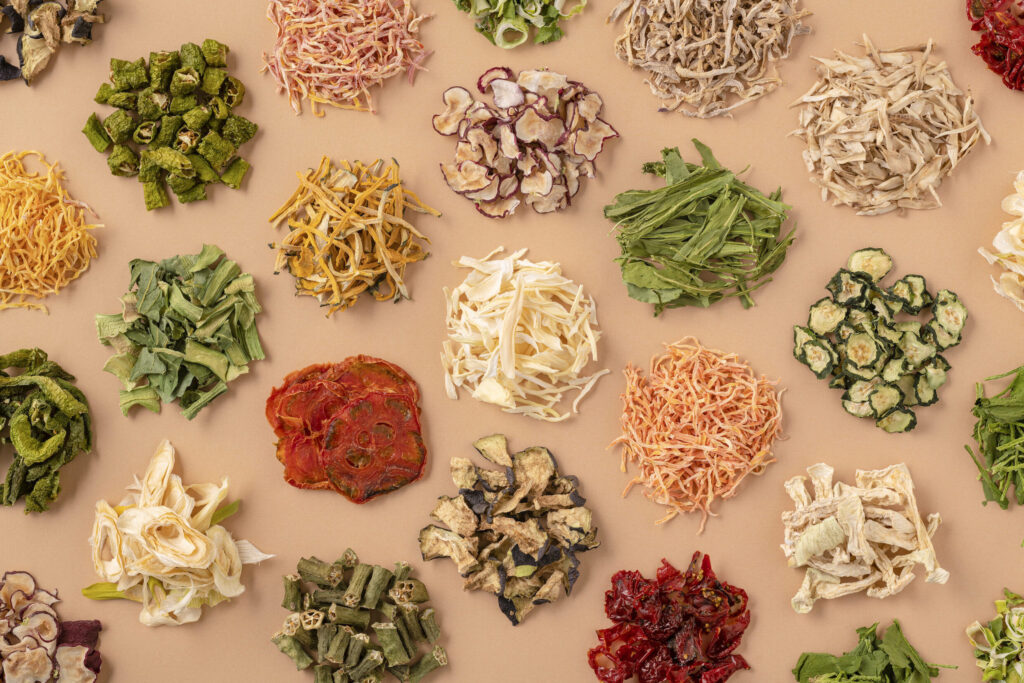
- Sold in small lots from 1 kg
- Handling heirloom vegetables from across Japan
- Dried fruits and herbs also supported
Features of commercial dried chamomile
Even among dried-flower and herb-type dried raw materials, chamomile is an ingredient holding a unique position on aroma, appearance, and breadth of use. We organize its strengths as a flower ingredient from six perspectives.
An apple-like sweet aroma
Chamomile's forte is a sweet, refreshing aroma reminiscent of apple. It suits product designs with aroma as the star — herb tea, potpourri, sachets, and the like.
A lovely white-and-yellow appearance
The contrast of white petals and a yellow center is charming, and used in blended-tea leaves, potpourri, or confectionery decoration, gaiety is added to the appearance.
A standard in tea
Chamomile is a flower ingredient long familiar as a standard herb tea. With a dried product that can be stored at room temperature, you can incorporate it into finished products — blended teas and beverages — regardless of season.
Development power into sundries and crafts
It is a flower ingredient that can be developed widely into craft and sundries uses beyond tea as well — potpourri, sachets, bath additives (bath herbs), decoration for candles and soap, and the like.
Suitability as a confectionery and decoration ingredient
Making use of the white and yellow flowers, it can be used as a coloring ingredient for confectionery — toppings for baked goods, jelly, chocolate, and the like. It suits as an accent in product designs that push the flower's appearance.
Use in combination with powder
Used together with finely milled chamomile powder (made-to-order), you can design recipes and products that balance the flower's appearance (dried flower) and blending into dough and powders (powder).
Product specifications (commercial)
Basic specifications at the prototype stage are as follows. Purchase lot, lead time, and packaging format are worked out through individual consultation.
| Item | Details |
|---|---|
| Product name | Dried Chamomile |
| Raw material | Chamomile (flower) |
| Shape | Dried flower. Flower-as-is / sifting adjusted to match the application |
| Appearance | Dried flower with white petals and a yellow center |
| Aroma | A sweet, refreshing aroma reminiscent of apple |
| Net content | Individual quote according to use and lot |
| Best-before date | About 6 months from the shipping date |
| Storage method | Avoid high temperature, high humidity, and direct sunlight; after opening, seal and store in a cool, dark place |
| Minimum prototype lot | Inquire |
Customization support
You can consult us from the prototype stage on shape, packaging, and through to finished-product formation. Because we refine the specification while keeping records, it is a system where the specification is unlikely to drift between prototype and mass production.
| Item | Available | Details |
|---|---|---|
| Shape adjustment | Flower-as-is / sifting | Select whether to keep the flower's shape or separate the fine parts to match the application |
| Powdering | Fine powder (made to order) | For confectionery, doughs, and powder blends |
| Blend design | Combining with other herbs and floral ingredients | Designing blend materials for herbal teas and potpourri |
| Packaging form | Commercial bulk / small bag / individual wrapping | From bulk for tea-bag material to packs for craft goods |
| OEM productization | End-to-end support through the finished product | From concept to production for blended teas, potpourri, sachets, and bath herbs |
For those considering the fine-powder type
For applications where you want to spread chamomile's aroma evenly, such as confectionery, doughs, and powder blends, our finely milled Chamomile Powder (made to order) is well suited. Please also see the list of powder raw materials.
Commitments to variety, grower, and growing region
Chamomile is a herb in the Asteraceae family, long loved for its white petals, yellow center, and sweet, apple-like fragrance. At Agriture, we base our raw-material design on varietal traits, the condition of the flowers, and how the aroma comes through.
BRAND | Where chamomile fits as a raw material
Chamomile is a floral material long enjoyed for its aroma and appearance in herbal teas, potpourri, sachets, bath products, and confectionery garnishes. At Agriture, we translate this fragrance and delicate look into a commercial raw material that works across a wide range of finished products, from blended teas to craft goods and confectionery.
PRODUCER | Basic policy for sourcing and coordination
We select lots together with our suppliers, checking how the aroma comes through, the color of the flowers, and the uniformity of the blooms. At the prototype stage we order small quantities at a time, evaluating how well the aroma survives drying and how well the flowers hold their shape, then build the supply line for volume lots.
REGION | Assessing the raw material
Chamomile is a herb grown all over the world. Rather than limiting ourselves to a specific growing region, Agriture assesses lots for aroma and flower condition suited to drying, and turns them into raw material. We select easy-to-handle material while discussing specifications to match your application.
CULTIVATION | Variety and aroma
Chamomile comes in German and Roman types, and German chamomile, with its sweet, easy-drinking aroma, is the one most often used for herbal tea. At Agriture, we select flowers with good aroma and condition to match the application and turn them into raw material.
Low-temperature drying technology and quality control
Prompt drying after harvest
Chamomile flowers dull in color and lose their aroma over time. By moving quickly into drying once the raw material arrives, we finish the product under conditions that preserve both the white-and-yellow appearance and the sweet aroma.
Retaining aroma through low-temperature drying
High-heat drying dulls the flowers' color and lets the sweet aroma escape. By drawing out the moisture slowly at low temperatures, we finish the product so the aroma remains when you open the bag. Our aim is a raw material that conveys chamomile's characteristic aroma and appearance for use in herbal teas and potpourri. For tea, steeping in hot water brings out the aroma; for potpourri and sachets, bagging the flowers with their shape intact lets you enjoy the look as well.
Use cases
We organize the applications customers bring to us for prototyping into six categories. All are examples of product design that make the most of chamomile's aroma, white-and-yellow appearance, and flower shape.
1. Blended herbal teas and beverages
Usable as a raw material for single-ingredient chamomile herbal tea or blended teas combined with other herbs. Mixing white-and-yellow flowers into the tea leaves adds visual appeal, and it can be developed into tea bags, loose leaf, or bottled beverages. It can be held as room-temperature stock, supporting a stable raw-material supply.
2. Potpourri and sachets
Usable as a material for potpourri, packing the dried flowers straight into jars or bags, or for sachets tucked into cloth pouches. Its apple-like sweet aroma and delicate look make it well suited to fragrance goods blended with other herbs and flowers. It can also be developed as a material for gifts and seasonal goods.
3. Bath products and bath herbs
Usable as bath herbs packed into non-woven or tea packs, or as a color accent for bath products. The white-and-yellow flowers floating in the water and the sweet aroma make an accent for bath-time products. It can also be developed into bath-product formulations blended with other herbs.
4. Confectionery and garnishes
Usable as a confectionery garnish, such as toppings for baked goods, jellies, chocolate, and drinks. The white and yellow flowers can be used to give confectionery and cafe products an edible-flower-style splash of color. Material that keeps the flower shape intact is easy to use as a visual accent.
5. Candles, soap, and crafts
Can be incorporated as a craft material for botanical candles, herbal soaps, resin accessories, and more. The white-and-yellow color of the dried flowers enhances the look of botanical-themed craft goods. It also suits material design combined with other dried flowers and herbs.
6. Novelty and gift materials
Made into tea bags, potpourri, sachets, and the like, it can also be developed as a material for novelties and gifts. Chamomile's approachable aroma and delicate look suit accents for seasonal products and promotional goods. Combined with powder, it enables product designs that pair the look of the flowers with blending into doughs.
Commercial uses and handling
Handling basics by application
- For tea: pour hot water and steep for about 3 to 5 minutes to bring out the aroma. It can also be blended with other herbs
- For potpourri and sachets: pack into jars or bags with the flower shape intact. Use with essential oil if you want to reinforce the aroma
- For bath products: pack into non-woven or tea packs to make bath herbs
- For confectionery: keep the flower shape intact and use as a topping for baked goods, jellies, and drinks
Thinking on formulation
- Blended tea: adjust the ratio with other herbs depending on whether the aroma plays a lead or supporting role
- Potpourri and sachets: use whole flowers when you want to keep the flower's look, or add sifting when you want an even aroma
- Confectionery toppings: use a small amount of material with the flower shape intact as a color accent
- When using it alongside powder, design the roles separately: flowers for appearance, powder for blending
How to store
- Before opening: store in a cool, dark place at room temperature, away from heat, humidity, and direct sunlight
- After opening: transfer to a zip bag or airtight container and use up within 1 to 2 months
- The best-before date is about 6 months from the shipping date. Note that light and moisture absorption change the flowers' color and aroma
- To preserve the aroma, seal after opening and store in a cool, dark place
Related cases and articles
- Dried Edible Rose – a material that showcases the flower
- Dried Mugwort – a herbal material that showcases aroma
- Dried Moringa – a herbal material that showcases the leaf
- List of dried raw materials
- Consult us on food OEM and raw material supply
Product catalog showing the items we handle
Flexible support from small lots to large lots
- Sold in small lots from 1 kg
- Handling heirloom vegetables from across Japan
- Dried fruits and herbs also supported
Frequently asked questions
What is its aroma and appearance like?
Chamomile is a herb in the Asteraceae family, a floral material with a lovely contrast between white petals and a yellow center. Its aroma is sweet and refreshing, reminiscent of apples, and comes through when used in herbal teas, potpourri, and sachets. Used as dried flowers, it keeps its white-and-yellow appearance intact.
What is the difference between German and Roman chamomile?
Chamomile comes in German and Roman types; both are in the Asteraceae family but belong to different genera. German chamomile, with its sweet, easy-drinking aroma, is the one most often used for herbal tea. We select flowers with good aroma and condition to match the application and turn them into raw material. Please consult us if you have specific requirements.
Can it be used for purposes other than tea?
This is a frequent question. Besides blended herbal tea, dried chamomile can be used across a wide range of applications, from potpourri, sachets, bath products (bath herbs), and confectionery garnishes to decoration for candles and soaps, and other craft and goods uses. It can be put to work in product designs that make the most of the flower's appearance and aroma.
How do I choose between it and chamomile powder?
The division is that dried chamomile suits "uses where you want to keep the flower's appearance and aroma," while powder suits "blending into confectionery, doughs, and powders." Blended teas, potpourri, and confectionery garnishes call for dried flowers; blending into doughs calls for powder. Using both together enables product designs that pair the flower's appearance with even blending.
What is the minimum prototype lot?
The minimum prototype lot is available on request. You can run prototypes in parallel across multiple conditions, such as comparing whole flowers versus sifted material, or tea specifications versus confectionery specifications. After hearing the specifications, lot, and schedule for your intended finished product, we propose individual quotes and delivery times. You can consult us all the way through to OEM finished-product development.
Please tell me the best-before date and how to store it.
The best-before date is about 6 months from the shipping date. Unopened, store in a cool, dark place at room temperature, away from heat, humidity, and direct sunlight. Because light and moisture absorption easily change chamomile's flower color and aroma, we recommend transferring it to a zip-lock bag or airtight container after opening and using it up within 1 to 2 months as a guide. To preserve the aroma, seal and store in a cool, dark place.
Recommended reading
- Dried edible rose – floral ingredient
- Dried Mugwort – herbal material
- Dried Moringa – herbal material
- List of dried ingredients
- List of powders
Download the product catalog
We will send the materials to your email address based on the information you provide.