Dried mulberry leaf

Dried mulberry leaf is a commercial material made from the leaves of the mulberry (Morus, family Moraceae). Long grown as food for silkworms, mulberry leaves have been familiar as an ingredient for mulberry-leaf tea and aojiru green juice, and we seal in their vivid green color and simple flavor through low-temperature drying. At Agriture, we develop it in parallel with mulberry-leaf powder (made to order) that powders the same mulberry leaves, proposing dried mulberry leaf for uses where you want to keep the leaf shape as tea leaves or cut material, and the powder for blending into beverages, doughs, and dry mixes.
Compared with other green-leaf materials such as ashitaba, moringa, and kale, mulberry leaf can differentiate on its "history of being enjoyed as tea," its "simple flavor with little peculiarity," and its "green color reminiscent of matcha." It is a material for which we receive many prototyping inquiries as an ingredient for health teas, blend teas, aojiru, coloring for confectionery, and green-leaf beverages.
TOC
Three Commitments Behind Agriture's Dried Mulberry Leaf
1. Low-temperature drying that makes use of the green color
The appeal of mulberry leaf is its vivid green color. At Agriture, we hold down the drying temperature and design the process to remove moisture in a short time, keeping as much green as possible in the finish. It becomes a factor that governs the liquor color when brewed as tea and the color development when blended into confectionery.
2. Leaf shape arranged to suit the use
Mulberry leaf is arranged into a shape suited to the use, from a cut for tea leaves to pre-grinding raw material, before drying. You can select an extraction-friendly cut for health teas and blend teas, or material meant for powdering for aojiru and confectionery, matched to your final product.
3. Choosing Japanese-grown mulberry leaves for the raw material
At Agriture, we use domestic-origin mulberry leaves, assessing the depth of green, leaf condition, and harvest timing to turn them into raw material. Material with visible origin makes traceability easy to design, and is one reason it is chosen in prototyping by health-tea, aojiru, and confectionery makers.
Product catalog showing the items we handle
Flexible support from small lots to large lots
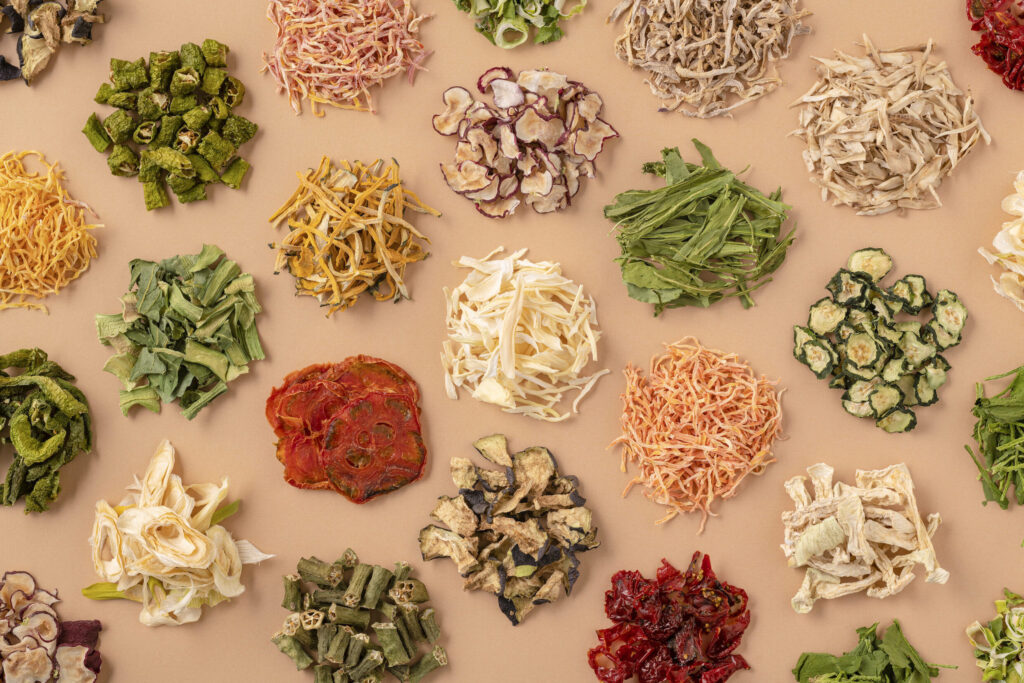
- Sold in small lots from 1 kg
- Handling heirloom vegetables from across Japan
- Dried fruits and herbs also supported
Features of Commercial Dried Mulberry Leaf
Even among green-leaf dried materials, mulberry leaf is a material with a unique position for its approachability as tea, its flavor with little peculiarity, and its green color. We organize its strengths as a tea-leaf and powder material from six perspectives.
Vivid green color
When mulberry leaf keeps its green through low-temperature drying, it finishes to a calm green. This comes alive in tea liquor color and in the color development when blended into confectionery or beverages, becoming an accent for product designs that emphasize green.
A material long enjoyed as tea
Mulberry leaf is a material long familiar as mulberry-leaf tea. As an ingredient for health teas and blend teas, you can use the reassurance of a familiar leaf in your product's promotion.
A simple flavor with little peculiarity
Among aojiru materials, mulberry leaf has little bitterness or peculiarity, with a simple, easy-to-drink flavor as its selling point. It is a material easy to use as a base, whether as a tea on its own or blended with other tea leaves and herbs.
Easy to design blends
Because its character is gentle, it is easy to blend with hojicha, rooibos, black soybean, adlay, and the like. It suits designs that use it as a green-leaf base and build the aroma and flavor with other materials.
Suitability as an aojiru and powder material
Once powdered, it can be used as a green-leaf material for aojiru, smoothies, and powdered beverages. Because it has little peculiarity, it also suits as a base for aojiru designs combining it with other green-leaf materials such as kale and young barley grass.
Use in combination with powder
Using it together with powdered mulberry-leaf powder (made to order) lets you design recipes that combine leaf presence as tea leaves (cut material) with blending into beverages and doughs (powder).
Product specifications (commercial)
Basic specifications at the prototype stage are as follows. Purchase lot, lead time, and packaging format are worked out through individual consultation.
| Item | Details |
|---|---|
| Product name | Dried mulberry leaf |
| Raw material | Mulberry leaf (domestically grown) |
| Shape | Cut. Adjusted to the use, such as tea-leaf use or pre-grinding raw material |
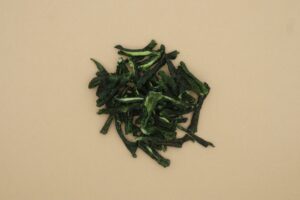
| Appearance | Green cut leaves |
| Aroma | A simple, gentle aroma akin to green tea |
| Net content | Individual quote according to use and lot |
| Best-before date | About 6 months from the shipping date |
| Storage method | Avoid high temperature, high humidity, and direct sunlight; after opening, seal and store in a cool, dark place |
| Minimum prototype lot | From 1 kg of raw material |
Customization support
You can consult us from the prototype stage about shape, cut size, packaging, and final commercialization. Because we nail down the recipe while keeping records, it is a setup where specifications don't drift between prototype and mass production.
| Item | Available | Details |
|---|---|---|
| Shape adjustment | Tea-leaf cut / pre-grinding raw material | Designed to match the final product, from an extraction-friendly cut to pre-powdering raw material |
| Powdering | Fine powder (made to order) | For green-leaf material and powder blending in aojiru, smoothies, confectionery, and beverages |
| Blend design | Combined with other tea leaves and green-leaf materials | Blend teas and aojiru mixes with hojicha, rooibos, black soybean, kale, and the like |
| Packaging form | Commercial bulk / small bag / individual wrapping | Handled from tea-leaf bulk to packs for tea bags and powder raw material |
| OEM productization | End-to-end support through the finished product | From planning to production of health teas, blend teas, aojiru, and confectionery ingredients |
For those considering the fine-powder type
For uses where you want to spread mulberry leaf's green color and flavor evenly, such as blending into aojiru, smoothies, and beverages or coloring confectionery, the powdered mulberry-leaf powder (made to order) is well suited. For details, please see the mulberry-leaf powder page.
Commitments to variety, grower, and growing region
Mulberry is a deciduous tree of the family Moraceae, long grown as food for silkworms, and its leaves have been familiar as an ingredient for tea and aojiru. At Agriture, we make everything from origin and harvest timing to depth of green the axis of our raw-material design.
BRAND | The positioning of mulberry-leaf raw material
Mulberry leaf has been enjoyed as tea and health tea in forms such as mulberry-leaf tea, aojiru, and blend teas. At Agriture, we translate this approachability and green color into a commercial raw material, providing it as an ingredient usable in a wide range of final products from health teas and aojiru to confectionery.
PRODUCER | Basic policy for sourcing and coordination
We select lots with consistent depth of green, leaf condition, and harvest timing, coordinating directly with the growing region. At the prototyping stage, we obtain small quantities from multiple suppliers, evaluate them for green retention and flavor after drying, and then build the supply line for mass-production lots.
REGION | Characteristics of the main growing region
Mulberry is a Moraceae plant that grows wild and is cultivated across the country, and leaf production making use of mulberry groves has long been carried out in various places, centered on areas where sericulture flourished. At Agriture, centered on Japanese-grown mulberry leaves, we assess lots with the green and leaf condition suited to drying and turn them into raw material.
CULTIVATION | Harvest timing and green color
The softer the leaves and the deeper the green, the better mulberry leaf suits as a tea or aojiru raw material. At Agriture, we select leaves with good green color and condition to turn into raw material.
Low-temperature drying technology and quality control
Prompt drying after harvest
Mulberry leaf tends to dull in color as time passes after harvest. By moving promptly from harvest to drying, we finish it under conditions that achieve both green color and flavor.
Retention of green color through low-temperature drying
High-temperature drying dulls the green color and also drives off the gentle aroma easily. By removing moisture slowly in a low-temperature range, we achieve a finish that keeps the green. We aim for a raw material that conveys the mulberry-leaf character in the tea liquor color when brewed and in the color development when blended into confectionery. When used as a health tea, the cut leaves are extracted as-is; for blend teas, they are combined with other tea leaves. For aojiru and confectionery, the powdered form is blended into beverages or doughs.
Use cases
We organize into six categories the uses for which we receive prototyping inquiries at Agriture. Each is an example of recipe design that makes the most of mulberry leaf's green color, simple flavor, and approachability as tea.
1. Health tea and mulberry-leaf tea
It can be used as a mulberry-leaf tea or a single-ingredient health tea. The cut leaves can be extracted as-is, and a simple flavor akin to green tea is its selling point. As tea bags or leaf tea, it suits product designs that promote mulberry leaf as a leaf long enjoyed as tea.
2. Blended tea
It can be used as an ingredient for blend teas with hojicha, rooibos, black soybean, adlay, and the like. Because its character is gentle, it suits designs that blend it as a green-leaf base and build the aroma and flavor with other materials. It can be developed as a base for tea-bag products.
3. Aojiru and powdered beverages
Powdered, it can be used as a green-leaf material for aojiru, smoothies, and powdered beverages. Because it has little peculiarity, it suits as a base for aojiru designs combining it with other green-leaf materials such as kale and young barley grass. It can also be developed into stick-packaged powdered beverages.
4. Confectionery and bakery
Made into powder, it can be used as coloring and an ingredient for baked goods, steamed sweets, and bread. Making the most of the green, it can be developed into confectionery and bakery products that promote vegetable-derived color, such as green cookies, steamed buns, and pound cakes.
5. Kneading into noodles and dough
Kneading the powder into noodles or dough lets you develop noodles, pasta, udon, and the like that make the most of the green. Adding a simple green-leaf flavor and color development, it can be used to differentiate green-promoting noodle products and dough-based items.
6. Furikake and toppings
Made into powder or a fine cut, it can be used as a base for furikake, toppings, and seasonings. Making the most of the green color and simple flavor, it can be built into color toppings for rice, prepared dishes, and confectionery, or into green-leaf furikake products.
Commercial usage and rehydration
Basics of use
- For health tea: extract the cut leaves in a kyusu or teapot. Adjust strength with water temperature and steeping time
- For blend tea: blend with other tea leaves or herbs and make into tea bags or leaf-tea products
- For aojiru and powdered beverages: dissolve the powdered form in water or soy milk to use
- For confectionery and dough: knead the powder into dough to add green color and flavor
Blending guide
- Health tea: about 2–3 g of cut leaves per 200 ml of hot water as a guide
- Blend tea: mulberry leaf at about 30–50% of the whole as a guide
- Aojiru and powdered beverages: dissolve about 2–4 g of powder per cup (100–150 ml) as a guide
- Confectionery and dough: about 3–8 g of powder per 100 g of dry ingredients as a guide
How to store
- Before opening: store in a cool, dark place at room temperature, away from heat, humidity, and direct sunlight
- After opening: transfer to a zip bag or airtight container and use up within 1 to 2 months
- The best-before date is about 6 months from the shipping date. Note that the green color changes with light and moisture absorption
- Refrigerated storage is possible. Because condensation forms right after taking it out, return it to room temperature before opening
Related cases and articles
- Dried Ashitaba – a green-leaf material
- Dried Moringa – a green-leaf material
- Dried Kale – a green-leaf material for aojiru
- List of dried vegetable raw materials
- Consult us on food OEM and raw material supply
Product catalog showing the items we handle
Flexible support from small lots to large lots
- Sold in small lots from 1 kg
- Handling heirloom vegetables from across Japan
- Dried fruits and herbs also supported
Frequently asked questions
What kind of plant is mulberry leaf?
Mulberry leaf is the leaf of the mulberry (Morus, family Moraceae). Long grown as food for silkworms, its leaves have been familiar as an ingredient for mulberry-leaf tea and aojiru. Its simple flavor akin to green tea and its lack of peculiarity are its selling points, and it can be used as a wide-ranging ingredient from health teas and blend teas to aojiru and confectionery.
How much of the green color remains?
By moving promptly from harvest to low-temperature drying, we achieve a finish that keeps the green. The green comes alive in the tea liquor color when brewed and in the color development when blended into confectionery or beverages. Because color fades easily under high-heat cooking or prolonged storage and moisture absorption, take care with the heating conditions and storage design of your finished product.
Can it be used in health teas and blend teas?
This is one of the uses we are asked about most. Besides being usable as a mulberry-leaf tea by extracting the cut leaves as-is, it can also be blended with hojicha, rooibos, black soybean, adlay, and the like to make tea-bag products. Because its character is gentle, it is a material easy to blend as a green-leaf base.
How does it differ from mulberry-leaf powder?
Dried mulberry leaf suits uses where you want to keep the leaf shape as tea leaves or cut material, while the powder suits blending into aojiru, beverages, and confectionery or powdering. Health teas and blend teas call for the cut material; aojiru, powdered beverages, and coloring for confectionery call for the powder. Using both together lets you design recipes that combine leaf presence with even blending.
What is the minimum prototype lot?
Prototyping starts from 1 kg of raw material. You can run multiple conditions in parallel, such as comparing tea-leaf cut versus pre-grinding raw material or comparing blend formulations. Full production is from 10 kg, and we can support you through OEM finished-product development. After hearing the specifications, lot size, and schedule of your intended finished product, we will provide an individual quote and lead time.
Please tell me the best-before date and how to store it.
The best-before period is roughly six months from the shipping date. While unopened, avoid heat, humidity, and direct sunlight, and store in a cool, dark place at room temperature. Because mulberry leaf fades in green easily under light and moisture absorption, we recommend transferring to a zip bag or light-blocking container after opening and using it up within one to two months. Refrigerated storage is also possible, but watch for condensation right after removal, and let it return to room temperature before opening.
Recommended reading
- Dried Ashitaba – a green-leaf material
- Dried Moringa – a green-leaf material
- Dried Kale – a green-leaf material for aojiru
- List of dried vegetables
- List of powders
Download the product catalog
We will send the materials to your email address based on the information you provide.