Dried summer orange peel

Natsumikan peel is an ingredient that converts, through drying, the thick peel that has been discarded after squeezing the strongly acidic juice into a raw material for diverse uses such as confectionery, tea, furikake, and bath additives. It seals in, while controlling heat and humidity, the slight bitterness and refreshing aroma of the white pith (albedo) remaining inside the peel and the citrus essential oil contained in the outer peel (flavedo). At Agriture, through repeated prototyping at the production site, we use two shapes, diced (fine cubes) and slice (fine strips), differently, advancing commercialization as an ingredient that can be developed for a wide range of uses such as kneading into confectionery, marmalade raw material, Japanese blended tea, seasoning, and medicinal-cuisine ingredients.
Unlike the gorgeousness of yuzu and the sharp acidity of sudachi, natsumikan's strengths are slight bitterness and the sense of volume of a thick peel. Because the peel is thick, the yield as a powder, peel, or blend raw material is also good, and we receive prototyping consultations from food manufacturers, cafés, and medicinal-cuisine brands wanting to add a Japanese-style slight bitterness to dishes and sweets.
TOC
Three commitments of dried natsumikan peel
Natsumikan peel has long been an unused resource as a by-product after squeezing the juice. At Agriture, we turn this thick peel into raw material through a drying process that does not lose aroma, color, or texture, offering it in shapes matched to the application.
1. Low-temperature drying that preserves essential-oil components
The citrus essential oils of the limonene and citral types contained in natsumikan peel volatilize the longer they are exposed to heat and air, and the aroma escapes. At Agriture, through low-temperature drying that removes the peel's moisture in stages, we maintain the refreshing aroma right after squeezing as much as possible. We use as a guide a level where, the moment you take the finished raw material out of the bag, the slight bitterness unique to natsumikan and the coolness of the peel emerge.
2. Two-shape development matched to the application
3. Proposals for using it differently from yuzu and sudachi
At Agriture, we also develop Dried yuzu and Dried sudachi at the same time. With yuzu holding the position of a gorgeous, round aroma, sudachi a sharp, cool acidity, and natsumikan the slight bitterness and heaviness of a thick peel, even for the same citrus raw material we change our proposal according to the intent of the recipe design. In confectionery and Japanese blended teas, there is much recipe development that adjusts the balance of slight bitterness, acidity, and gorgeousness through the blend ratio of these three kinds.
Product catalog showing the items we handle
Flexible support from small lots to large lots
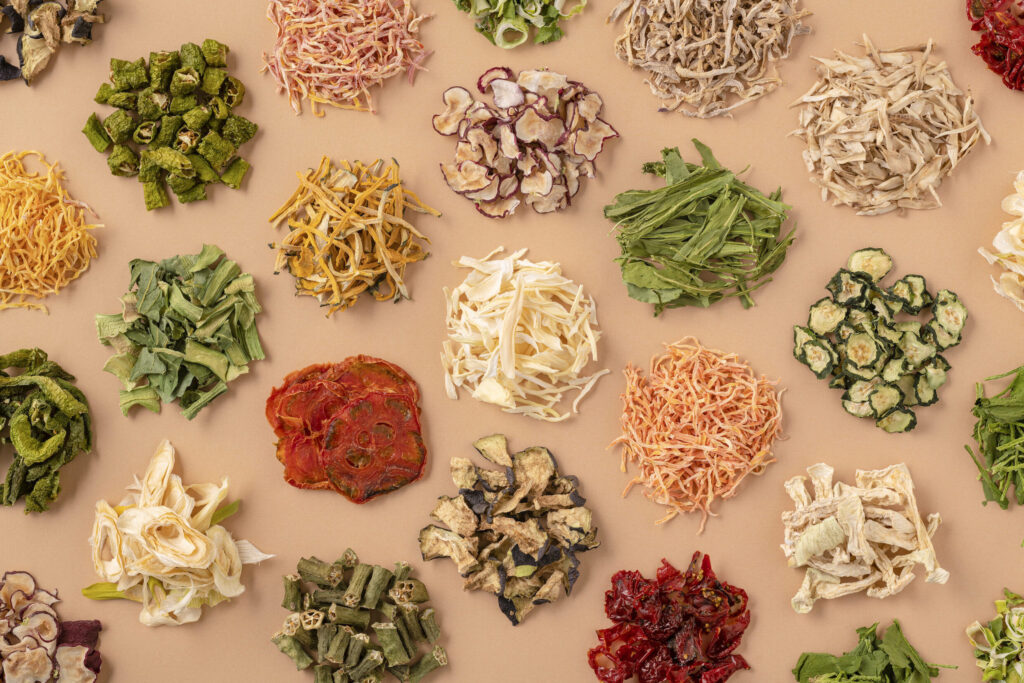
- Sold in small lots from 1 kg
- Handling heirloom vegetables from across Japan
- Dried fruits and herbs also supported
Features of commercial dried natsumikan peel
Among Japanese citrus raw materials alongside yuzu and sudachi, here we organize the strengths unique to natsumikan peel from six perspectives.
A thick peel with lingering slight bitterness
Among citrus, natsumikan has a thick peel, characterized by slight bitterness derived from the albedo (white pith). Combined with sweetness in marmalade or peel, it works as a bitterness with depth.
A refreshing aroma derived from limonene
The aroma components of the limonene and citral types contained in the peel oil are abundant, and a cool citrus aroma remains even after drying. It suits the aroma design of tea blends, craft gin, and bath additives.
Using two shapes differently is possible
Diced (cubed) suits confectionery, granola, and tea blends, while slice (fine strips) suits marmalade raw material, bath additives, and medicinal-cuisine decoctions. You can choose according to the application.
A position unique to Japanese citrus
A Japanese-style slight bitterness and heaviness different from orange peel or chinpi. It allows aroma design that fits easily into Japanese confectionery, Japanese tea, and medicinal-cuisine recipes.
Effective use of a by-product
It turns into raw material the peel that has been discarded as a by-product of juice processing. Through collaboration with growing regions that have a juicing process, it is an ingredient that can achieve both stable supply and regional circulation.
Handling of powder processing
In addition to diced and slice, we also develop finely milled Natsumikan peel powder. It suits uses where you want the aroma to emerge evenly in dressings, beverages, and seasonings.
Product specifications
The basic specifications at the prototype stage are as follows. Because mass-production and OEM handling is at a stage about to fully begin, please consult us individually about purchase lots, delivery times, and packaging.
| Item | Details |
|---|---|
| Product name | Dried summer orange peel |
| Raw material | Natsumikan peel (domestically grown) |
| Shape | Two-shape development of diced (fine cubes) / slice (fine strips) |
| Appearance | Diced: white pith and brown outer peel intermixed / slice: fine strips of brown-to-orange peel |
| Aroma | A limonene-derived citrus aroma; a peel aroma accompanied by slight bitterness |
| Net content | Individual quote according to use and lot |
| Best-before date | About 6 months from the shipping date |
| Storage method | Avoid high temperature, high humidity, and direct sunlight; after opening, seal and store in a cool, dark place |
| Processing plant | Our own processing plant within Kyoto Prefecture |
| Minimum prototype lot | From 1 kg of raw fruit |
Customization support
| Item | What we support |
|---|---|
| Shape adjustment | Choose from diced (cubed) / slice (fine strips) / powder / coarsely crushed to match the application |
| Proportion adjustment | Adjusting the ratio of white pith (albedo) and outer peel (flavedo); blending with other citrus |
| Blend design | Blending of Japanese blended tea and furikake raw material combined with yuzu, sudachi, and chinpi |
| Packaging form | Commercial bulk, small pouches (tea-bag raw material, bath-additive raw material), canned and bottled, and more |
| OEM productization | Integrated handling all the way to final products such as marmalade, tea, furikake, bath additives, and peel confectionery |
| Raw material supply | In addition to our own raw material, we also handle contract drying with a designated growing region and designated variety |
For those looking for a finely milled type
For cases where you want the aroma to emerge evenly in dressings, beverages, seasonings, and so on, finely milled Natsumikan peel powder is suitable. It is ideal for uses that make the most of dispersibility into liquids and powders, such as kneading into bakery dough, blending with matcha or green tea, and flavoring Japanese-style spice blends.
Varieties and growing regions of natsumikan
Natsumikan is a citrus of the Rutaceae family native to Japan, and Hagi City in Yamaguchi Prefecture is known as its place of origin. It is in season around April to June, when the acidity comes off after harvest and storage, and a major difference from juice-type citrus is its thick, aromatic peel.
Main growing region
| Growing region | Features |
|---|---|
| Yamaguchi Prefecture (Hagi City, etc.) | The birthplace of natsumikan. Many specimens have a thick, aromatic peel |
| Wakayama Prefecture | Stable production in a warm climate. A region that also produces amanatsu |
| Ehime Prefecture | A citrus kingdom. The peel colors up well, with an established reputation as marmalade raw material |
| Kumamoto Prefecture | A growing region including the amanatsu lineage. Characterized by the balance of acidity and aroma |
Variety variations
The lineage generally called natsumikan includes, besides the strongly acidic native natsumikan, variations such as amanatsu (Kawano natsudaidai) with restrained acidity, shin-amanatsu, and beni-amanatsu. When used as a peel raw material, the amanatsu lineage tends to have stable peel thickness and coloring, while native natsumikan makes the most of strong aroma and traditional flavor. At Agriture, we make prototyping proposals using these lineages differently according to the application.
Technology and quality control
Because citrus peel has high water content and the surface oil volatilizes easily, the design of drying conditions greatly affects quality. At Agriture, we record temperature, airflow, and drying time from the prototype stage, putting in place a system that suppresses quality differences between lots.
Design of the drying process
Because the inside of the peel (albedo) and the outside (flavedo) differ in water retention, drying at a constant temperature can leave the outer peel dried out first with the pith remaining half-dry. We adjust the temperature in stages, controlling it so that the peel thickness finishes uniformly. Keeping to this procedure achieves a state where moisture re-absorption and sticking are unlikely even after bagging.
Maintaining aroma and color
Because citrus essential oil is weak to heat and light, we make it a basic rule not to set the drying temperature higher than necessary and to move it promptly to light-blocking packaging in the finishing process. Because the slice shape in particular has a large surface area and the aroma escapes easily, we perform sensory evaluation on each lot, checking to what degree the freshness right after squeezing remains. All are examples of use in the food and household-goods fields wanting to make the most of the peel's slight bitterness and citrus aroma.
1. Confectionery (marmalade, baked goods, peel)
- A slight-bitter accent in madeleines, pound cakes, and scones that knead diced into the dough
- Japanese-citrus peel like orangette, made by soaking slices in syrup
- Japanese-style marmalade made by simmering diced plus slice (for bread, yogurt, and Japanese confectionery)
- Topping for cookies, granola, and crumble
2. Tea and drinks
- Japanese-citrus tea blended with sencha, hojicha, and genmaicha
- Caffeine-free chinpi-style tea using slices
- Combinations with herbal teas (chamomile, rooibos, mint)
- Flavoring for craft gin, craft beer, and homemade lemonade
- An accent for flavored water and cold-brew tea
3. Furikake, seasoning, and condiments
- Japanese-style furikake combined with sesame, salt, and nori (for rice and onigiri)
- Japanese-citrus spice blended with shichimi togarashi and sansho
- Seasoning dusted onto sautéed chicken and white fish
- Aroma-adding raw material for Japanese-style dressings and ponzu
4. Bath additives and household goods
- Citrus bath, made by packing slices into a nonwoven pack (a position close to the yuzu bath of the winter solstice)
- Use as raw material for sachets (scent bags) and potpourri
- Decorative material for aroma crafts and candles
- A sub-ingredient for room fragrances and reed diffusers
5. Medicinal-cuisine and health-food ingredients
- Medicinal-cuisine decoction in a position close to chinpi (warming care, circulation care)
- Japanese-citrus hot water, drunk by steeping it in warm plain hot water
- Medicinal-cuisine tea blended with ginger, jujube, and goji berries
- Raw material for health-oriented Japanese-style granola and cereal bars
These uses Dried yuzu and Dried sudachi also overlap with , but natsumikan can be differentiated in areas where the slight bitterness and the presence unique to a thick peel come alive. Medicinal-cuisine blends also connect to Yasai Yakuzen recipe design at .
How to use and store
Basics of use
- When using it in confectionery: lightly rehydrating diced with syrup or spirits before mixing it into the dough lets the peel's slight bitterness blend in softly
- When using it in tea: soak slices in hot water for 1-2 minutes to draw out the aroma. When combining with tea leaves, a guideline is about 5 parts tea leaves to 1 part natsumikan peel
- Furikake and seasoning: finely crush diced and combine with sesame and salt. Or use finely milled natsumikan peel powder as is
- Bath additive: pack 10-20 g of slices into a nonwoven pack and float it in the bathtub
How to store
- Before opening: store in a cool, dark place at room temperature, away from heat, humidity, and direct sunlight
- After opening: transfer to a zip bag or airtight container and store avoiding moisture. Refrigerated storage is also possible
- The best-before date is roughly 6 months from the shipping date. After opening, use it up within 1–2 months as a guide
- Because the aroma and texture decline if it absorbs moisture, watch for condensation right after taking it out of the refrigerator
Related articles and other citrus raw materials
At Agriture, we also handle Japanese-citrus raw materials other than natsumikan. Please use them for differentiating uses in recipe design.
- Dried yuzu: A sweet, gorgeous aroma. Suits Japanese confectionery, Japanese tea, and jam
- Dried sudachi: Sharp acidity and coolness. Suits grilled fish, udon, and cocktails
- yuzu powder: For even flavoring of beverages, confectionery, and dressings
- Sudachi powder: A single shake adds acidity and aroma to dishes and drinks
- Natsumikan peel powder: The slight bitterness of a thick peel finely milled. For bakery and seasoning use
Product catalog showing the items we handle
Flexible support from small lots to large lots
- Sold in small lots from 1 kg
- Handling heirloom vegetables from across Japan
- Dried fruits and herbs also supported
FAQ
How should I use diced and slice differently?
Diced is fine cubes with white pith and brown outer peel intermixed, suited to uses where you want to express the peel's presence in granules, such as kneading into confectionery, granola, tea blends, and furikake. Slice is fine strips of brown-to-orange peel, suited to uses where you want to make the most of the peel's texture or aroma extraction, such as marmalade raw material, tea decoction, bath additives, and Japanese-style furikake bases. A design using both shapes in one lot is also possible.
What is the difference from yuzu and sudachi?
Yuzu is characterized by a sweet, gorgeous aroma and suits Japanese confectionery, Japanese tea, and jam. Sudachi's strengths are sharp acidity and coolness, and it is used for grilled fish, udon, and cocktails. Natsumikan is characterized by a thick peel and the slight bitterness and heaviness derived from the albedo, suiting marmalade, peel, Japanese blended tea, and medicinal-cuisine ingredients. There are also cases of blending the three kinds for recipe design of Japanese-citrus tea and furikake.
What is the minimum prototype lot?
We accept prototyping from 1 kg of raw fruit. We also handle using shapes including diced, slice, and powder differently, as well as blend prototyping with other citrus. Because mass-production and OEM is at a stage about to fully roll out, after hearing the specifications, lot sizes, and schedule you envision for the final product, we propose an individual quotation and delivery time.
Please tell me the best-before date and how to store it.
The best-before date is about six months from the shipping date. While unopened, avoid high temperature, high humidity, and direct sunlight, and store in a cool, dark place at room temperature. After opening, transfer it to a zip bag or airtight container to avoid moisture, and we recommend using it up within one to two months as a guide. Refrigerated storage is also possible, but watch for condensation right after taking it out.
Which growing region and variety are used as the raw material?
Natsumikan is a citrus native to Japan, and Yamaguchi, Wakayama, Ehime, and Kumamoto prefectures are the main growing regions. Lineages include the strongly acidic native natsumikan, amanatsu (Kawano natsudaidai) with restrained acidity, shin-amanatsu, and beni-amanatsu. At Agriture, we use these lineages differently according to the application, selecting raw material to match the peel thickness and aroma intensity. We also handle contract drying with a designated growing region and designated variety.
Is it an ingredient that can be used for things other than marmalade?
Its uses are wide-ranging. It has been prototyped in confectionery (madeleines, pound cakes, scones, peel), tea (Japanese blended tea, chinpi-style decoctions), furikake and seasoning (Japanese-style spice, dressings), beverages (craft gin, lemonade, flavored water), bath additives and sachets, medicinal-cuisine blends, and more. It can be utilized across areas wanting to make the most of the peel's slight bitterness and citrus aroma.
Is there a finely milled type?
We also develop finely milled natsumikan peel powder. It suits uses that make the most of dispersibility into liquids and powders, such as dressings, beverages, kneading into bakery dough, and seasoning. For details, Natsumikan peel powder please see the page for . Use proposals combining diced and slice with powder are also possible.
Recommended reading
- Dried yuzu – a Japanese-citrus raw material with a gorgeous aroma
- Dried sudachi – a Japanese-citrus raw material with sharp acidity
- Natsumikan peel powder – finely milled type
- yuzu powder
- Sudachi powder
Download the product catalog
We will send the materials to your email address based on the information you provide.