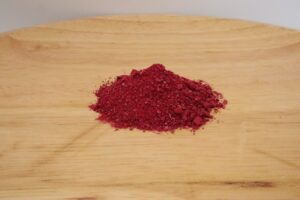
Natsumikan peel powder

Natsumikan peel powder is a raw material made by drying the thick peel and finely milling it, intended to spread aroma uniformly through dressings, confectionery dough, beverages, and seasonings. The peel's slight bitterness and the refreshing aroma derived from citrus essential oils are finished into a size that disperses easily in liquids and powders. At Agriture, Dried summer orange peel (dice / slice, two forms) — we use the same raw material and add a fine-milling step to powder it.
Placed alongside the same Japanese citrus, yuzu powder and Sudachi powder the slight bitterness and richness characteristic of natsumikan add depth to recipes. Specifications can be refined from small quantities in prototyping for confectionery, bakery, drinks, and seasonings.
TOC
Three points of commitment for natsumikan peel powder
1. A drying→milling flow that does not let the aroma escape
Because citrus essential oils volatilize readily with heat and air, we finish the raw material at low temperature from the drying stage and operate the milling step under conditions that suppress heat generation. Losing aroma to heat during milling is a common failure with citrus powders, so from the prototype stage we adjust the combination of temperature, milling time, and lot size. Our guide for the finished powder is a level where the aroma of natsumikan peel rises the moment the bag is opened. With a formulation of natsumikan's slight bitterness + yuzu's brightness + sudachi's sharp acidity, prototyping of Japanese-style spice blends and Japanese-citrus drinks is possible.
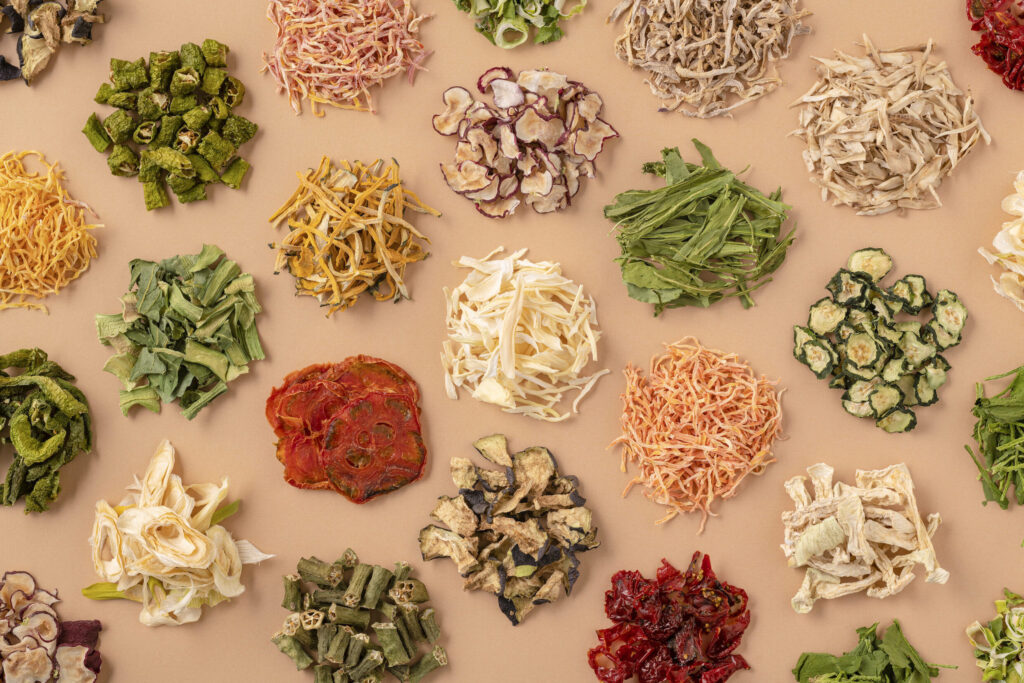
Product catalog showing the items we handle
Flexible support from small lots to large lots
- Sold in small lots from 1 kg
- Handling heirloom vegetables from across Japan
- Dried fruits and herbs also supported
Features of commercial natsumikan peel powder
Fine milling opens up application areas that the raw-material forms (dice, slice) cannot reach. We organize the strengths unique to natsumikan peel powder from six perspectives.
Dispersibility in liquids and powders
Even mixed into dressings or soups, the graininess is hard to notice, and it disperses uniformly in dough and powder mixes. You get a smooth rise of aroma that the raw-material forms cannot deliver.
Balancing slight bitterness and brightness
The slight bitterness derived from the albedo and the limonene-type aroma contained in the flavedo's citrus essential oils are concentrated in a single powder. It gives depth to recipes across Japanese sweets, bakery, and both Japanese and Western dishes. From fine powder for drinks, medium grain for kneading into dough, to coarse powder for seasonings, you can choose to match the finished product.
Easy to build Japanese-citrus blends
Combined with yuzu powder and sudachi powder, you can design a three-Japanese-citrus blend seasoning or drink mix from a single raw-material supplier.
Accommodates small-lot prototyping
Prototyping is accepted from 1 kg of raw fruit. Because everything from raw-material drying through milling is done in-house at our processing facility, a strength is that flavor differences between prototype and mass production are unlikely to appear.
Use together with the ingredient-shape version
Used together with the dice/slice Dried summer orange peel you can design recipes that balance the rise of aroma (powder) with texture (raw-material form).
Product specifications
The basic specifications at the prototype stage are as follows. Because mass production and OEM are still at the stage of getting into full swing, the purchase lot, delivery timeline, and packaging form are refined through individual consultation.
| Item | Details |
|---|---|
| Product name | Natsumikan peel powder |
| Raw material | Natsumikan peel (domestically grown) |
| Shape | Fine powder (peel dried and milled) |
| Appearance | Pale orange to cream-colored fine powder |
| Aroma | A limonene-derived citrus aroma; a peel aroma accompanied by slight bitterness |
| Net content | Individual quote according to use and lot |
| Best-before date | About 6 months from the shipping date |
| Storage method | Avoid high temperature, high humidity, and direct sunlight; after opening, seal and store in a cool, dark place |
| Processing plant | Our own processing plant within Kyoto Prefecture |
| Minimum prototype lot | From 1 kg of raw fruit |
Customization support
| Item | What we support |
|---|---|
| Proportion adjustment | More albedo (white pith) for a bitterness focus / more flavedo (outer peel) for an aroma focus |
| Blend design | Blend prototyping with yuzu powder, sudachi powder, chinpi, sansho, shichimi, and the like |
| Packaging form | Blend prototypes with yuzu powder, sudachi powder, salt, herbs, and the like |
| OEM productization | End-to-end handling through to finished products such as seasonings, dressings, baked goods, and drink mixes |
| Raw material supply | In addition to our own raw material, we also handle contract drying and grinding with a specified growing region and specified variety |
For those looking for raw-material forms (dice, slice)
For tea blend ingredients, marmalade, bath additives, furikake bases, and the like, applications that make use of the peel's shape are best served by raw material available in two forms: dice (fine cubes) / slice (fine strips). Dice suits kneading into confectionery and granola, while slice suits marmalade raw material and Japanese-style blended tea.
Varieties and growing regions of natsumikan
The natsumikan that becomes the raw material for the powder is a Rutaceae citrus native to Japan. It is in season around April to June, when the acidity mellows through post-harvest storage, and its thick peel makes it easy to use as a peel raw material.
Main growing region
| Growing region | Features |
|---|---|
| Yamaguchi Prefecture (Hagi City, etc.) | The birthplace of natsumikan. Thick peel with a strong aroma |
| Wakayama Prefecture | Stable production in a warm climate. A region also producing amanatsu |
| Ehime Prefecture | A citrus kingdom. Good peel color development, giving vivid color when finished into powder |
| Kumamoto Prefecture | A growing region that includes the amanatsu lineage. Easy to balance acidity and aroma |
Using lineages by purpose
Heirloom natsumikan has strong acidity and aroma, suited to applications where a traditional Japanese-citrus flavor is preferred. Amanatsu (Kawano natsudaidai) has gentle acidity and stable peel color development, giving excellent balance of color and aroma when powdered. Including lineages such as shin-amanatsu and beni-amanatsu, we propose using them by purpose according to the application.
Technology and quality control
Temperature management of the grinding process
If limonene and citral-type essential oils volatilize from the frictional heat during milling, it finishes into a "thin powder" with no aroma. We adjust the milling lot size, rotation speed, and rest time, selecting conditions where the powder does not become too hot. Because we record conditions from the prototype stage, the same flavor can be reproduced in mass production. Commercial bulk uses light-blocking bags, while small bags and sticks use light-blocking film — a specification we propose with in-store and warehouse storage in mind.
TIPS: Formulations that make the most of natsumikan peel powder
When using it in dressing, adding 1–2% powder relative to olive oil and white-wine vinegar gently brings up slight bitterness and aroma. In bakery dough, adding 0.5–1% relative to the flour as a guide leaves the aroma of natsumikan in the baked result. When using it as a Japanese-style spice blend, with a formulation of shichimi togarashi, sansho, and salt, roughly 20–30% natsumikan powder of the total makes the aroma the star.
Uses for natsumikan peel powder
Because the powder disperses uniformly in liquids and powders, it opens up applications that the raw-material forms cannot reach. We organize the categories we are often consulted about for prototyping into five.
1. Dressings and sauces
- A citrus accent for Japanese-style dressings (soy-sauce, sesame-oil based)
- Western-style dressings based on olive oil and white-wine vinegar
- Flavoring for ponzu and marinade liquid
- Japanese-citrus mayo made by adding a small amount to mayonnaise or tartar sauce
2. Confectionery and bakery
- Kneading into madeleine, pound cake, and scone dough
- Flavoring for cookies, biscuits, and shortbread
- Blending into bread dough (shokupan, focaccia, brioche)
- Mixing into fresh cream, ganache, and icing
- A flavor accent for Japanese sweets (yokan, anko, gyuhi)
3. Beverages and drink mixes
- Flavoring lemonade and sparkling drinks
- A shake into matcha latte or hojicha latte
- Flavoring for stick beverages (dissolve-in-hot-water type)
- Blending into protein drinks and smoothies
- A raw material for craft cola and craft gin
4. Seasonings and spices
- A Japanese-style seasoning blended with salt, pepper, and chili
- A Japanese-citrus spice mix combined with sansho, shichimi, and chinpi
- Marinade powder for chicken, white-fleshed fish, and pork
- A flavor powder for popcorn and nuts
5. Powder mixes and instant foods
- A flavor ingredient for clear soup, soup, and miso soup
- Blending into rice mixes (chirashi-zushi, mixed rice)
- Flavoring cereal and granola
- Blending into health foods and green-juice mixes
For blend design with yuzu powder and sudachi powder, please also refer to the yuzu powder・Sudachi powder respective pages. In the medicinal-diet and health-food area, Yasai Yakuzen it is an ingredient that also pairs well with the recipes of
How to use and store
Basics of use
- Dressing: sprinkle 1–2 g per 100 g of oil + vinegar and mix well
- Bakery dough: blend 0.5–1 g per 100 g of wheat flour
- Beverage: dissolve 0.3–0.5 g per 200 ml as a guide
- Seasoning: blend with salt and pepper, and use as a marinade or finishing seasoning for meat and fish
- Tea: when blending with tea leaf, prototype starting from roughly 10 parts tea leaf : 1 part powder
How to store
- Before opening: store in a cool, dark place at room temperature, away from heat, humidity, and direct sunlight
- After opening: because it readily absorbs moisture, transfer it to a resealable bag or airtight container; refrigerated storage is also fine
- The best-before date is roughly 6 months from the shipping date. After opening, use it up within 1–2 months as a guide
- If lumps form, sift through a tea strainer before use to disperse it evenly
Related articles and other citrus raw materials
These are the Japanese-citrus powders and related raw materials handled by Agriture. Please use them for combinations in recipe design.
- Dried summer orange peel: Two-form line-up of dice / slice
- Dried yuzu: A Japanese-citrus raw material with a sweet, bright aroma
- Dried sudachi: A Japanese-citrus raw material with sharp acidity
- yuzu powder: Fine powder for beverages, confectionery, and dressings
- Sudachi powder: Acidity and aroma for cooking and drinks
Product catalog showing the items we handle
Flexible support from small lots to large lots
- Sold in small lots from 1 kg
- Handling heirloom vegetables from across Japan
- Dried fruits and herbs also supported
FAQ
What is the difference between the raw-material forms (dice, slice) and the powder?
Dice and slice are raw material that keeps the peel's shape, suited to applications where you want to make the most of the peel's presence — tea blends, marmalade, bath additives, furikake bases, and so on. The powder, being finely milled, suits applications where you want it to disperse uniformly in liquids and powders — dressings, beverages, bakery dough, seasonings, and the like. In some cases both are used together in the same recipe to balance the rise of aroma and texture. Agriture also handles yuzu powder and sudachi powder, so you can design a three-Japanese-citrus blend seasoning or drink mix from a single raw-material supplier. With the combination of natsumikan's slight bitterness, yuzu's brightness, and sudachi's sharp acidity, prototyping is done for Japanese-style spices, Japanese-citrus drinks, Japanese-sweet fillings, and more.
What is the minimum prototype lot?
Prototyping is accepted from 1 kg of raw fruit. Because mass production and OEM are still at the stage of full-scale rollout, after hearing the specifications, formulation, lot, and schedule of your intended finished product, we propose a quote and delivery timeline individually. Beyond supplying the powder on its own, you can consult us all the way through to finished products such as dressings, seasonings, and baked goods.
Please tell me the best-before date and how to store it.
The best-before date is roughly six months from the shipping date. Before opening, store it in a cool, dark place at room temperature, away from high heat, humidity, and direct sunlight. Because powder absorbs moisture easily, after opening transfer it to a zip bag or sealed container and use it up within a guide of 1–2 months. Refrigerated storage is also possible, but watch for condensation right after taking it out.
What are the common uses?
It is prototyped in dressings and sauces, confectionery and bakery, beverages and drink mixes, seasonings and spices, powder mixes, and more. Because dispersibility in liquids and powders is high, a strength is that it easily extends into applications the raw-material forms cannot reach. Many cases start prototyping from a blend of roughly 0.3–1% in dressings and beverages, and 0.5–1% in bakery dough.
How do you use yuzu, sudachi, and natsumikan differently?
You use them by their positioning: yuzu for a sweet, bright aroma, sudachi for sharp acidity and a refreshing quality, and natsumikan for slight bitterness and the weighty character derived from its thick peel. When used as powder, in bakery and seasonings natsumikan's slight bitterness gives depth to the whole dish, and in drinks, blending with yuzu or sudachi creates an aroma design where the citrus layers are clearly felt. We can also propose blend ratios to match the application.