Dried kale

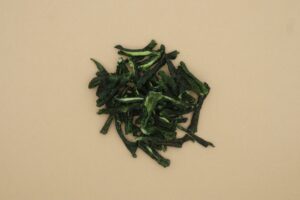
Kale is a leafy vegetable of the Brassicaceae family, drawing worldwide attention as a superfood rich in vitamin K, vitamin C, beta-carotene, and dietary fiber. Dried kale carefully low-temperature-dries domestic fresh produce, a commercial raw material that retains a deep green and nutritional value in dried-leaf form. It's an ingredient frequently consulted about in health-conscious food development—green-drink raw material, smoothie mixes, a base for green powder, salad toppings, and more. For consultations on dried vegetable and powder OEM here and let us know your intended use and desired cut form.
TOC
Three points of care in Agriture's dried kale
01 Low-temperature drying maximally retains nutritional value and green color
The vitamin C and beta-carotene in kale are heat-sensitive, and high-temperature drying causes large nutritional losses. Agriture dries it slowly by a low-temperature hot-air method, with a process design that maintains a nutritional value close to fresh leaf and a deep green. By curbing chlorophyll fading, it also retains visual appeal as a product.
02 Green-drink-grade quality control
Agriture's dried kale is quality-controlled at a grade usable as a raw material for health foods and green drinks. From raw material intake to shipping, we operate in line with hygiene management standards and also handle issuing microbial test reports. A system that can meet the quality documentation health-food manufacturers require.
03 Integrated support from small-lot prototyping to mass production
Agriture handles small-lot prototyping from 1kg units, and simultaneous prototyping of multiple shapes—coarse-ground, crush, powder—is also possible. For green-drink development, we've built a system that lets you nail down the balance of bitterness and drinkability at the prototyping stage.
Product catalog showing the items we handle
Flexible support from small lots to large lots
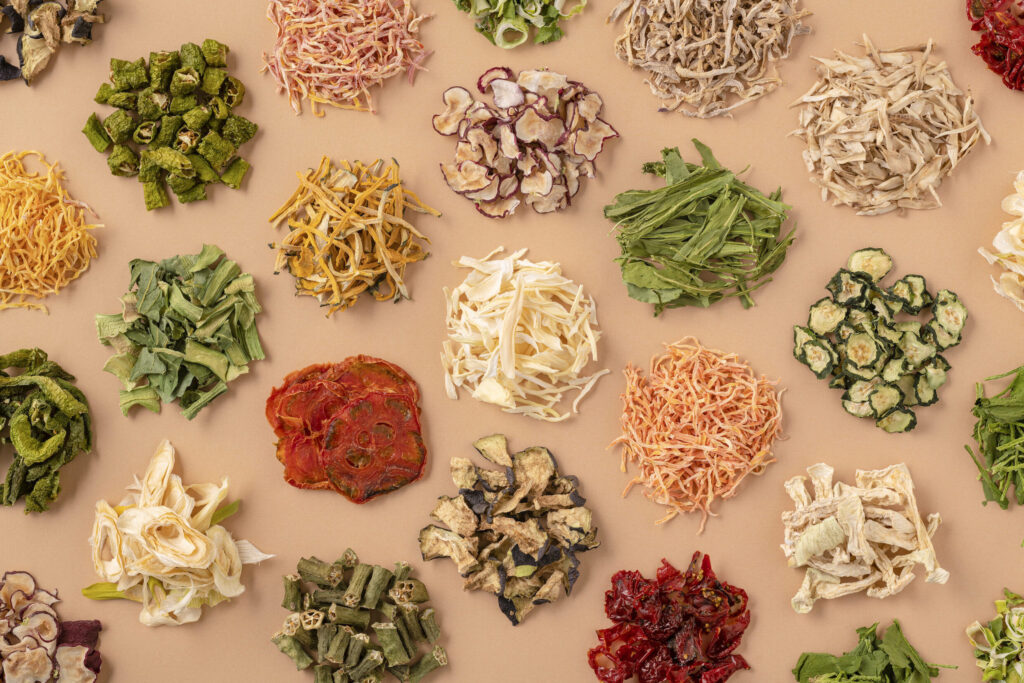
- Sold in small lots from 1 kg
- Handling heirloom vegetables from across Japan
- Dried fruits and herbs also supported
Characteristics of commercial dried kale
A superfood's nutritional value
Kale is a leafy vegetable rich in vitamin K, vitamin C, beta-carotene, calcium, and dietary fiber. Thanks also to the concentration effect of drying, it's valued as a raw material that lets you take in nutrients efficiently in small amounts.
Deep green coloring
Low-temperature drying curbs chlorophyll fading, maintaining kale's characteristic deep green. As a raw material for green smoothies and green drinks, it's an ingredient that gives a visually "healthy" impression too.
Green-drink-grade quality
We perform hygiene and quality control at a grade usable as a raw material for health foods and green drinks. We also handle issuing specification sheets and microbial test reports, meeting health-food manufacturers' quality requirements.
Year-round supply with room-temperature storage
Fresh kale is perishable with a short storage period, but the dried product stores about 6 months at room temperature, enabling stable year-round supply. It streamlines raw-material inventory management for health-food manufacturers.
Additive-free, domestic ingredients
Using no coloring, preservatives, or flavorings, it's finished with kale leaves only. As a raw material for green drinks and health foods promoting "100% domestic kale," clean-label support is possible.
Powder development also accommodated
We also offer "kale powder," made by grinding dried kale. It suits uses requiring a powder-form formulation—green drinks, smoothies, green powder.
Product specifications (commercial)
Item | Details |
|---|---|
Raw material | Kale (domestic) |
Shape | Dried leaf (choose from whole / coarsely crushed / crushed) |
Production method | Low-temperature hot-air drying |
Best-before date | About 6 months from the shipping date |
Processing plant | Our own processing plant within Kyoto Prefecture |
Shipping unit | 100g〜 |
Minimum-lot OEM | Prototype from 1kg / full production from 10kg |
Customization support
Item | Available | Details |
|---|---|---|
Cut form changes | ◎ | Selectable from whole leaf, coarsely crushed, and crushed |
Powdering | ◎ | Supports fine-powder processing into kale powder |
Small-lot OEM prototyping | ◎ | Prototyping available from 1kg |
Mixed materials and blends | ◎ | Blending with other dried vegetables and superfood ingredients supported |
Packaging changes | ◎ | Both commercial and small-portion individual packaging are available |
POWDER
A powder type is also available
We also carry "kale powder," made by further fine-powdering dried kale. Ideal for uses requiring a powder-form formulation—green drinks, smoothies, green powder.
Commitments to variety, grower, and growing region
The raw material used in dried kale is domestic kale sourced directly from partner farms in Japan. Kale is a vegetable close to the wild species of cabbage and broccoli, grown in Japan mainly as a raw material for green drinks and smoothies. Because leaf shape and bitterness intensity differ by cultivar, cultivar selection to match the use governs the finished quality.
BRAND
Variety: Kale (Brassica of the Brassicaceae family). A superfood rich in vitamin K, vitamin C, beta-carotene, calcium, and dietary fiber. Close to the wild species of cabbage and broccoli, it's a nutrient-dense leafy vegetable.
PRODUCER
Producer: Partnering with domestic kale-growing farmers, we source from producers who can ensure green-drink-grade quality. Because freshness deterioration after harvest directly affects quality, we shorten the lead time from harvest to processing.
REGION
Growing region: We procure raw material from producing regions with climate conditions suited to kale cultivation, centered on Japan's warm areas.
CULTIVATION
Cultivation method: With managed cultivation that limits pesticide use, we've built a record-keeping system that can also meet the raw material origin certification health-food manufacturers require.
Low-temperature drying technology and quality control
The vitamin C and beta-carotene in kale are heat-sensitive, and high-temperature drying causes large nutritional losses. Chlorophyll also breaks down easily with heat, so high-temperature processing browns kale's characteristic deep green. Agriture uses a low-temperature hot-air method with finely controlled temperature and airflow, running a drying program that maximally retains both nutritional value and color.
Manufacturing is managed consistently at our own processing facility in Kyoto Prefecture, ensuring traceability from raw material intake to shipping. We standardize a process of packing after a foreign-matter removal step, and also handle issuing the specification sheets and microbial test reports health-food manufacturers require.
TIPS | kale-drying know-how
Kale's bitterness differs greatly by cultivar and maturity. Curly kale is on the more bitter side, while Tuscan kale (lacinato kale) is relatively mild. Agriture can select the cultivar to match the use and fine-tune how the bitterness comes out via drying temperature. For green-drink uses, the balance with drinkability is the key to development.
Use cases and adoption examples
Raw material for green drinks and green juices
Dried kale is a use frequently consulted about as the main raw material for green drinks and green juices. 100%-domestic-kale green drinks are positioned as premium products in the market, and there's demand from health-food manufacturers as a raw material that can appeal to "domestic raw material" and "additive-free."
Blending ingredient for smoothies and protein drinks
Blending kale into the base of green smoothies or protein drinks adds nutritional value and green visual appeal. Combining it with sweet fruit like banana or apple makes an easy-to-drink green smoothie.
An accent ingredient for salads and toppings
The crush type of dried kale, as a salad topping, becomes a crisp-textured, deep-green accent. It can also be eaten as is as kale chips, usable as a health-conscious snack ingredient too.
Knead-in ingredient for confectionery and bakery
Kneading kale powder into bread or cookie dough adds natural green color and nutritional value. In health-conscious bakery products promoting "kale-infused," natural coloring without using colorings is possible.
Raw material for pet food and animal supplements
Kale is drawing attention as a vegetable raw material for handmade dog food and pet supplements too. The dried product is easy to measure and store, a form easy to incorporate into pet-food production lines.
Blend development with other dried vegetables
You can develop an original superfood mix by combining it with green ingredients like young barley grass, moringa, and ashitaba, or with dried fruit. List of dried vegetables We can propose combinations with other ingredients from .
Commercial usage and rehydration
Dried kale is used differently by purpose. When using it as a raw material for green drinks or smoothies, dissolve the powder form directly in water or milk. For salad toppings, just scatter the crush type as is. When using it as a soup ingredient, adding it directly to boiling water rehydrates it in 2–3 minutes.
For storage, airtight storage away from light, heat, and humidity is best. Chlorophyll fades easily under light in particular, so we recommend storing it in light-blocking packaging. After opening, use it up promptly, or reduce air contact with a zip bag to keep quality longer.
Related cases and articles
- Kale powder (powder-version product page)
- List of dried-vegetable and herb products
- For consultations on dried vegetable and powder OEM here
Product catalog showing the items we handle
Flexible support from small lots to large lots
- Sold in small lots from 1 kg
- Handling heirloom vegetables from across Japan
- Dried fruits and herbs also supported
Frequently asked questions
Q. What is the minimum lot and prototype handling?
A. Prototyping is from 1kg, and main production from 10kg. Simultaneous prototyping of multiple shapes—leaf, crush, powder—is also possible. For green-drink uses, we can prepare samples with adjusted bitterness balance.
Q. Can I choose the kale cultivar?
A. Depending on procurement conditions, you can also discuss specifying a cultivar such as curly kale or Tuscan kale. Because bitterness intensity and leaf thickness differ by cultivar, we can propose to match your use.
Q. What is the lead time?
A. In-stock items can ship 1–2 weeks after order. New custom-spec processing takes about 1–2 weeks for prototyping and 3–4 weeks for main production as a guideline. Since it's an ingredient that can be cultivated year-round, a relatively stable supply is expected.
Q. Can you issue a raw-material origin certificate?
A. A raw material origin certificate proving it's domestic kale can be issued. Microbial test reports are also proceeded with on a case-by-case basis.
Q. Is a spec with reduced bitterness possible?
A. By selecting the cultivar and adjusting drying temperature, bitterness intensity can be controlled to some degree. For green-drink uses prioritizing drinkability, we can propose selecting a mild cultivar and a drying profile that curbs how the bitter components come out.
Q. Can it be blended with other green ingredients?
A. We support pre-blending with green ingredients like young barley grass, moringa, ashitaba, and spinach. We can also discuss formulation design for superfood mixes and green powder blends.
Q. Please tell me the OEM consultation flow
A. The flow is: consult via the inquiry form → concept interview → sample shipment → paid prototype → spec finalization → main production. Because health-food raw materials have detailed quality-documentation requirements, we run alongside you including document handling from the early development stage.
Recommended reading
- Kale powder (details of the powder version)
- List of dried-vegetable and herb products
- For consultations on dried vegetable and powder OEM here
- We prototyped “dried kale” using domestic kale
Download the product catalog
We will send the materials to your email address based on the information you provide.