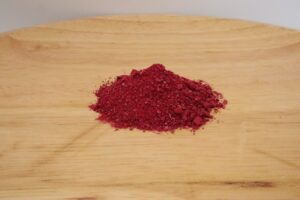
Kale powder

Domestic kale powder is a commercial powder raw material made by low-temperature drying kale—a superfood rich in vitamin K, vitamin C, beta-carotene, and dietary fiber—and processing it through grinding in-house within Kyoto Prefecture. Without glucose, coloring, or antioxidants, it concentrates kale's inherent nutritional value and deep green into a powder. It's a raw material frequently consulted about for food development that wants to appeal to both nutritional value and color at once—green drinks, green smoothies, health foods, green powder blends. We also handle prototyping from 1kg of fresh leaf. For consultations on dried vegetable and powder OEM here Please let us know your intended use and desired specifications from
TOC
Three points of care in Agriture's kale powder
01 Low-temperature drying concentrates nutritional value and green into a powder
Because the vitamin C and beta-carotene in kale are heat-sensitive, high-temperature drying causes large nutritional losses. Agriture uses hot-air drying that keeps product temperature in a low-temperature range, with a process design that retains a nutritional profile close to fresh leaf and a deep green even after grinding. Vegetable & herb powder list You can also consult us about blending with other materials from
02 100% domestic kale, additive-free ingredient design
The raw material uses only domestic kale from partner farms in Japan, finished with no glucose coating, coloring, or antioxidants added. As a raw material for green drinks and health foods promoting "100% domestic kale" and "additive-free," clean-label support is possible. The nutritional value and benefits of vegetable powder.
03 Small-lot prototyping from 1kg of fresh leaf, and bitterness adjustment
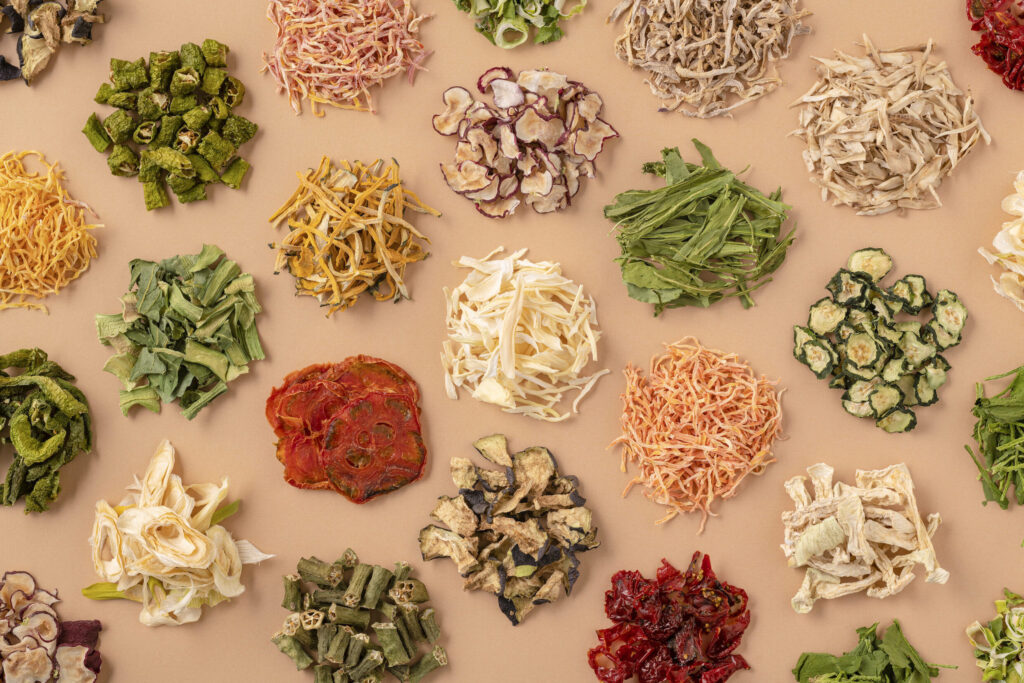
Product catalog showing the items we handle
Flexible support from small lots to large lots
- Sold in small lots from 1 kg
- Handling heirloom vegetables from across Japan
- Dried fruits and herbs also supported
Characteristics of commercial kale powder
Concentrating a superfood's nutritional value
Kale is rich in vitamin K, vitamin C, beta-carotene, calcium, and dietary fiber. Thanks to the concentration effect of powdering, it's a raw material that lets you take in nutrients efficiently in small amounts.
A deep green color
Low-temperature drying and short-time grinding suppress chlorophyll fading, maintaining kale's distinctive deep green even after powdering. It visually conveys the "healthy look" of green drinks and smoothies.
Green-drink-grade quality control
We perform hygiene management at a grade usable as a raw material for health foods and green drinks. We also handle issuing specification sheets and microbial test reports, meeting the quality requirements of health-food manufacturers.
Zero additives, no coloring
Glucose, dextrin, antioxidants, and coloring are all unused. A spec that pairs well with PB development of green drinks promoting "100% domestic kale."
Flexible for blend design too
We also handle pre-blending with young barley grass, moringa, ashitaba, dried fruit powder, and the like. We can also discuss raw material design for superfood mixes and green powder blends.
Product specifications (commercial)
|
Item |
Details |
|---|---|
|
Raw material |
Kale (domestic) |
|
Best-before date |
About 6 months from the shipping date |
|
Processing plant |
Our own processing plant within Kyoto Prefecture |
|
Shipping unit |
Choose from 500 g bag, 1 kg bag, or 5 kg commercial bag |
|
Minimum-lot OEM |
Prototype from 1 kg of raw leaves / main production from 10 kg of raw leaves |
*Prototype consultations are possible from 1 kg of raw leaf.
Customization support
|
Item |
Available |
Details |
|---|---|---|
|
Blend design |
◎ |
Pre-blending with young barley grass, moringa, fruit powder, etc., supported |
|
OEM small-lot prototyping |
◎ |
Multiple versions can be prototyped in parallel from 1 kg of raw leaf |
|
Packaging changes |
◎ |
500 g, 1 kg, and 5 kg bags can be sorted out |
|
Quality document issuance |
◯ |
Specification sheet, raw-material origin certification, microbiological test report (discussed per project) |
POWDER
A dried-leaf type is also available
Beyond powder, we also offer whole-leaf and crush-type dried kale. For uses where you want to leverage texture and appearance, such as kale chips or salad toppings, the leaf type is suitable.
Commitments to variety, grower, and growing region
The raw material used in Agriture's kale powder is domestic kale sourced directly from partner farms in Japan. Because bitterness intensity and nutritional profile differ by cultivar, cultivar selection to match the use is the key to quality.
BRAND
Variety: Kale (Brassica of the Brassicaceae family). A superfood rich in vitamin K, vitamin C, beta-carotene, calcium, and dietary fiber. Flavor varies by cultivar—curly kale (stronger bitterness) or Tuscan kale (milder), for example.
PRODUCER
Producer: Partnering with domestic kale-growing farmers, we source from producers who can ensure green-drink-grade quality.
REGION
Growing region: We procure raw material from producing regions with climate conditions suited to kale cultivation, centered on Japan's warm areas.
CULTIVATION
Cultivation method: With managed cultivation that limits pesticide use, we've built a record-keeping system that can also meet the raw material origin certification health-food manufacturers require.
Low-temperature drying technology and quality control
Kale's nutritional value and pigment components are heat-sensitive, and high-temperature drying advances both vitamin C loss and chlorophyll browning at once. Agriture uses hot-air drying that keeps product temperature in a low-temperature range, designed to let out only moisture while retaining both nutritional value and green. Grinding is done immediately after drying to minimize oxidation.
Manufacturing is done at our own processing plant in Kyoto Prefecture, with integrated management from raw-material acceptance inspection to shipment. It is filled after passing through a foreign-matter removal process, and for OEM projects we issue necessary documents such as specification sheets, raw-material origin certificates, and microbiological test reports, upon consultation for each project.
TIPS | Kale powder know-how
Kale's bitterness varies greatly with cultivar and maturity. When prioritizing ease of drinking as a green drink, select a mild cultivar; when foregrounding health benefits, choose a cultivar that includes the bitter components. Agriture can prepare multiple samples with differing bitterness at the prototyping stage.
Use cases and adoption examples
Main ingredient for green drinks and green juices
Kale powder is a use frequently consulted about as the main ingredient for powdered green drinks and green juices. Its ease—simply dissolving in water or milk to drink—and the appeal of "100% domestic kale" are valued in the health-food market.
- Suitable products: Powdered green drinks, green-drink sticks, green-juice bases
- Blending guide: 3–5g per serving
- Points to note in development: Adjust the balance of bitterness and drinkability via prototyping
Blending ingredient for smoothies and protein drinks
Blending kale powder into the base of green smoothies or protein drinks adds nutritional value and green visual appeal. We can also propose mixes that mask bitterness by blending with fruit powder.
- Suitable products: Green smoothie powder, protein drink mix, breakfast superfood blend
- Blending guide: 10–30% of the whole mix
- Points to note in development: Mask bitterness with the sweetness of banana, apple, etc.
Knead-in ingredient for confectionery and bakery
Kneading kale powder into bread or cookie dough adds natural green color and nutritional value. There's demand in health-conscious bakery products promoting "kale-infused."
- Suitable products: Kale bread, green cookies, vegetable muffins
- Blending guide: 5–15 g per 1 kg of flour
- Points to note in development: Adjust baking conditions, as color may fade with heat
Raw material for health foods and supplements
A use of filling kale powder as a raw material for capsule- or tablet-type supplements. Being in powder form, it's easy to measure and fill, and easy to incorporate into health-food production lines.
- Suitable products: Kale supplements, green capsules—usable as a natural coloring ingredient that uses no synthetic coloring, in natural-oriented seasoning products.
- Suitable products: Green dressing, vegetable sauce, vegetable dip
- Blending guide: 1–3% of total sauce weight
- Points to note in development: Check the blend ratio via prototyping so bitterness doesn't come out too strong
- Suitable products: Superfood mix, green powder blend, multi-vegetable supplement
- Blending guide: 20–50% of the whole blend
- Points to note in development: Adjust the bitterness balance through combinations with other ingredients
- Dried kale (Leaf-version product page)
- Vegetable & herb powder list
- The nutritional value and benefits of vegetable powder
- Sold in small lots from 1 kg
- Handling heirloom vegetables from across Japan
- Dried fruits and herbs also supported
- Dried kale (Leaf-version details)
- Vegetable & herb powder list
- For consultations on dried vegetable and powder OEM here
Blending with other vegetable powders
You can develop an original superfood mix by blending with green ingredients like young barley grass, moringa, ashitaba, and spinach powder, or combining with fruit powder. Vegetable powder list We can propose it in combination with
Points on commercial use and storage
Kale powder needs no rehydration—use it as is, dissolved in water, milk, or a smoothie. When drinking it as a green drink, shaking it in a shaker or blending it makes the mouthfeel smooth. When kneading it into dough, dry-blend it with the flour ingredients in advance before adding water for even mixing.
For storage, airtight storage away from light, heat, and humidity is best. Chlorophyll fades easily under light in particular, so we recommend storing it in light-blocking packaging. After opening, use it up promptly, or reduce air contact with nitrogen flushing or a zip bag to keep color and nutritional value longer.
Related cases and articles
Product catalog showing the items we handle
Flexible support from small lots to large lots
Frequently asked questions
Q. What is the minimum lot and prototype handling?
Q. Is a spec with reduced bitterness possible?
A. By selecting the cultivar and adjusting drying temperature, bitterness intensity can be controlled to some degree. We can select a mild cultivar and let you confirm drinkability at the prototyping stage.
Q. What is the price guideline?
A. It varies with the packaging specification and lot count. For an accurate quotation, please consult us via the inquiry form.
Q. What is the lead time?
A. When in stock, shipment is possible in about 2–3 weeks after order. For projects involving new processing, please plan for a lead time of 4–8 weeks.
Q. Can you issue a certificate of raw material origin and an analysis table?
A. We proceed with issuing both a raw material origin certificate proving it's domestic kale and a microbial test report, on a case-by-case basis.
Q. Can it be blended with other green ingredients?
A. Yes. We support pre-blending with young barley grass, moringa, ashitaba, spinach powder, and the like.
Q. Please tell me the flow of an OEM consultation
A. We proceed as follows: consult via the inquiry form → concept interview → sample shipment → paid prototype (from 1kg of fresh leaf) → spec finalization → main production. Because health-food raw materials involve detailed quality documentation, we accompany you including document handling from the early development stage.