Dried Vegetable (Sun-Dried Vegetable) Onigiri Project | Held Every Tuesday in Kikukawa, Tokyo

Summary of this article
The Dried-Vegetable Rice Ball Project is a Kyoto-born initiative held every Tuesday from 11:00 to 15:00 at a shared dining space in Kikukawa, Tokyo. OYAOYA dries and processes off-spec vegetables sourced from contract farms in Kyoto, offering obanzai rice balls that use six ingredients—Kujo green onion, dried tomato, root vegetables, and more—along with additive-free miso soup. It contributes to reducing food loss and building local community.

Every Tuesday, at a shared dining space in Kikukawa, Tokyo, we hold “Kyoto-Grown Dried-Vegetable Rice Balls and Soup,” a rice-ball shop using dried vegetables. Based on obanzai that make the most of dried vegetables, we propose a new form of rice ball. Valuing local ingredients, we use dried vegetables made from off-spec produce to offer heartwarming obanzai in rice-ball form.
This article covers, in detail, the thinking behind the rice-ball project’s aim of reducing food loss, the appeal of menus that only dried vegetables make possible, and even the actual shop information.
TOC
The Background Behind the Birth of the Rice Ball Project
“Kyoto-Grown Dried-Vegetable Rice Balls and Soup” is a project run by OYAOYA, a Kyoto-born dried-vegetable brand. It dries and processes off-spec vegetables sourced from Kyoto farms and turns obanzai made from those dried vegetables into rice-ball fillings—an initiative that seems obvious but hadn’t existed before.
Contributing to Food-Loss Reduction by Using Off-Spec Vegetables
The vegetables used in this project are ones that don’t reach the market because of irregular shape or size Non-standard vegetables. By drying vegetables that would otherwise likely be discarded, they are given new life as long-storing ingredients. The everyday act of eating a rice ball becomes a way to take part in reducing food loss.
The Significance of Sharing Kyoto’s Obanzai Culture in Tokyo
Obanzai is Kyoto home cooking—a food culture full of wisdom for not wasting ingredients. The spirit of obanzai, using seasonal ingredients fully and skillfully drawing on preserved foods, resonates with today’s idea of sustainability. This project creates a place to experience Kyoto’s obanzai culture in Tokyo, generating regional exchange through food.
Creating a Place to Make Dried Vegetables Feel More Familiar
Dried vegetables tend to carry a “preserved food” image, but they’re actually an ingredient that enriches the everyday table. By letting people encounter dried vegetables in the approachable form of a rice-ball shop, the wish to deliver the new discovery of “dried vegetables can be this delicious” is the driving force of the project.

The Appeal of Obanzai That Only Dried Vegetables Make Possible
Being able to enjoy a wide variety of vegetables regardless of season is a major feature of this project, thanks to using dried vegetables. Highly storable and with concentrated umami, dried vegetables keep their flavor even over time and last well, making them ideal as rice-ball fillings, too.
The Concentrated-Umami Trait of Dried Vegetables
When vegetables are dried, moisture escapes and umami components concentrate. Being able to enjoy a deeper flavor than cooking fresh vegetables as-is is a hallmark of dried vegetables. When used as rice-ball fillings, a small amount produces enough flavor, so they pair wonderfully with rice.
A Stable Ingredient Supply Unaffected by Season
Fresh produce can become hard to obtain depending on weather and season, but Dried vegetables can be stored long-term at room temperature. Being able to offer consistently high-quality rice balls year-round is a strength unique to dried vegetables.
FOR BUSINESS
乾燥野菜を業務用でお探しですか
国産の野菜・果物を乾燥し、必要に応じて粉砕してお出ししています。扱っている品目は100種前後で、規格は 乾燥品の一覧・パウダーの一覧 に掲載しています。
少量でのご購入は、姉妹ブランドの通販サイト OYAOYA で承っています。
A Simple Cooking Method That Doesn’t Rely on Additives
The miso soup served alongside the rice balls is characterized by a gentle flavor generously using dried vegetables and tofu. To draw out the umami of the ingredients themselves, it’s made with a simple cooking method that uses no additives or chemical seasonings. Because dried vegetables have strong umami, they can produce plenty of flavor without adding extra seasonings.
The Menu and Its Distinctive Points
The rice balls offered are a rich and varied lineup, using obanzai made with six kinds of dried vegetables as fillings.
Variety of Rice Ball Fillings
The fillings range widely, from Kujo green onion and dried tomato meat Heirloom vegetables to new ingredients, letting you enjoy differences in flavor and texture. Rice balls made with distinctly Kyoto ingredients offer an original taste you won’t find elsewhere.
Dried-Vegetable Miso Soup
The miso soup that comes with the rice-ball set is made by combining several kinds of dried vegetables. The seasoning is simply the broth from the dried vegetables and miso, but the power of the ingredients gives it a deep flavor. A bowl that warms you from the core is a comfort during a busy lunchtime.
List of Rice Balls and Dried-Vegetable Menu Items
| Menu | Dried vegetables used | Features |
|---|---|---|
| Kujo Green Onion Rice Ball | Dried Kujo green onion | A flavorful item using Kyoto’s heirloom vegetable |
| Dried Tomato Meat Rice Ball | Dried tomato | A combination of concentrated tomato umami and meat |
| Root-Vegetable Obanzai Rice Ball | Dried daikon, dried carrot | A Japanese-style rice ball packed with dietary fiber |
| Seasonal Vegetable Rice Ball | Seasonal dried vegetables | A limited-time menu capturing the flavors of the season |
| Dried-Vegetable Miso Soup | Several kinds of dried vegetables, tofu | A gentle, additive-free flavor |


A Sustainable Initiative Connecting Communities and Ingredients
The Dried-Vegetable Rice Ball Project is not only about making effective use of ingredients—it’s also an initiative that carries local traditional food culture into the future.
Sustainable Ingredient Sourcing Realized Through Partnership with Farmers
The dried vegetables used in this project are sourced directly from contract farms in Kyoto. By partnering with local farmers and buying up unused vegetables at a fair price to dry and process them, it contributes both to improving farmers’ income and to reducing food loss. A sustainable food initiative starts from a single rice ball.
Building Local Community Through Food
By holding it every Tuesday, it has become a place where people working or living nearby can easily drop by at lunchtime. Through rice balls, conversations about dried vegetables and off-spec produce arise, and interest in food loss and agriculture naturally spreads. Building this kind of local community is another important outcome of the project.
Shop Overview and Access Information
Rice balls and miso soup that fuse storability and umami—something only dried vegetables make possible. This project, which makes use of off-spec vegetables and carries local food culture into the future, can be enjoyed every Tuesday in Kikukawa, Tokyo. If you’re in the area, do stop by.
Business Days, Hours, and Location
Date and time: Every Tuesday, 11:00–15:00 (weekend pop-ups about twice a month)
Place: 1F “Ora Neuvono,” Neuvono Kikukawa 2, 4-7-9 Tatekawa, Sumida-ku, Tokyo, along Mitsume-dori @hola_neuvono」
Access: 3-minute walk from Kikukawa Station on the Toei Shinjuku Line. It’s along the large road (Mitsume-dori) leading to Skytree.
Agriture's dried-vegetable products If you’re interested in Dried vegetable OEM, or if you’re a business considering , please feel free to get in touch. Kyoto vegetables Why not experience the appeal of dried vegetables made from
Recommended reading
Sustainable initiatives / Commercial dried vegetables / Product lineup / A complete corporate disaster-stockpile list | Required amounts per person and selection criteria / 10 Ways to Solve Vegetable Shortage That Even Busy People Can Practice
We have materials available to help you understand dried processing OEM
Agriture OEM, flexibly handling everything from small lots to large lots
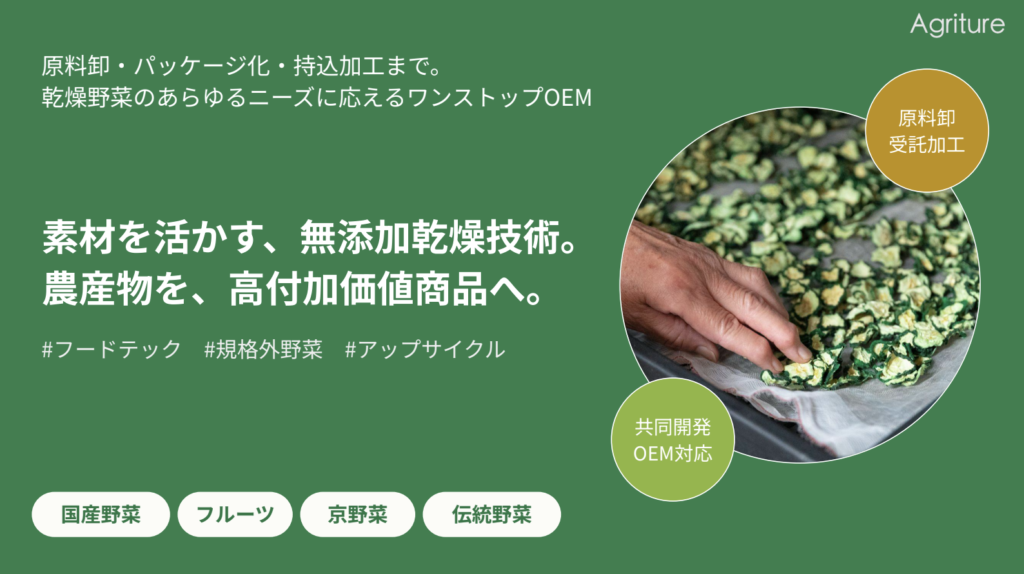
- OEM available from small lots of 10 kg
- Drying of brought-in raw materials also possible
- Support from processing to filling in one place
FOR BUSINESS
乾燥野菜を業務用でお探しですか
国産の野菜・果物を乾燥し、必要に応じて粉砕してお出ししています。扱っている品目は100種前後で、規格は 乾燥品の一覧・パウダーの一覧 に掲載しています。
少量でのご購入は、姉妹ブランドの通販サイト OYAOYA で承っています。
FAQ
Related articles
Download the OEM contract processing materials
We will send the materials to your email address based on the information you provide.
- What is the sustainable food culture that vegetarians are spreading?
- The Path to a Michelin Green Star, Led by Dried Vegetables