How to Rehydrate and Use Dried Maitake: Popular Recipes for Takikomi Gohan and Tempura

Summary of this article
We explain how to rehydrate and use dried maitake (dried hen-of-the-woods). We’ve compiled tips for cooking it into rice without rehydrating, why the soaking liquid turns dark, popular recipes for takikomi rice, okowa, tempura, and pasta, and how to store it.
Dried maitake (dried hen-of-the-woods) adds aroma and umami to takikomi rice and miso soup. It keeps better than fresh maitake, and even a small amount deepens a dish’s flavor considerably. At the same time, it’s an ingredient with plenty of moments of doubt—“Should I rehydrate it?” “The soaking liquid turns darkish, is that okay?” “Can I make tempura with it?”
On this page, we compile how to rehydrate dried maitake and tips for using it without rehydrating, popular recipes like takikomi rice, okowa, and tempura, and storage and shelf life. We focus on the points unique to maitake, such as the color of the soaking liquid and how easily the aroma escapes.
TOC
What Is Dried Maitake (Dried Hen-of-the-Woods)?
Dried maitake is dried fresh maitake, a preserved food. Drying raises storability and concentrates maitake’s characteristic aroma and umami. With the moisture drawn out, you can transfer flavor to a dish with less of it than fresh maitake. Besides takikomi rice and soups, it can also be rehydrated and used in stir-fries.
The Difference Between Whole, Loosened, and Powdered
Dried maitake comes in a whole type dried as a cluster, a loosened type broken into small pieces, and a finely ground powder. The loosened type rehydrates fast and is easy to put straight into takikomi rice and miso soup. The powder lets you add maitake’s aroma to miso soup, pasta, and seasoning bases without the trouble of rehydrating. Choosing the form to match the dish makes it easier to use.
| Shape | Features | Suitable use |
|---|---|---|
| Whole (cluster) | Aroma tends to remain | Takikomi rice, okowa, simmered dishes |
| Loosened | Rehydrates fast and easy to use | Miso soup, soup, stir-fries |
| Powder | Add aroma without rehydrating | Miso soup, pasta, seasoning base |
For domestic dried maitake, see the dried maitake product page, and for the powder type, Maitake powder. For using mushrooms other than maitake in different ways, see Dried mushroom usage guide is also a helpful reference.
How to Rehydrate Dried Maitake and Tips for Using It Without Rehydrating
With dried maitake, you can use “rehydrated” or “not rehydrated” depending on the dish. For stir-fries and simmered dishes, rehydrate it first; for takikomi rice and soups, adding it without rehydrating is the easy way.
A Rehydration Guide and How to Use the Soaking Liquid
To rehydrate, soak it in plenty of water for about 10–30 minutes. The loosened type rehydrates in a short time, while the whole type takes a little longer. The soaking liquid also carries maitake’s aroma and umami, so you can use it in the dish rather than discarding it. Soaking too long softens the texture, so once rehydrated, lift it out early—that’s the tip. For how to rehydrate dried vegetables in general, see A guide to rehydrating dried vegetables is also a helpful reference.
The Soaking Liquid Turning Dark Is a Property of Maitake
Maitake’s soaking liquid turns darker than that of other mushrooms. This comes from a pigment in maitake and doesn’t mean there’s a quality problem. In dishes where you don’t want the color to show, use the upper clear portion, or add it directly to the takikomi rice without rehydrating—that makes it less noticeable. In takikomi rice or okowa where you want to make the most of aroma over color, using the whole soaking liquid boosts the umami.
- For stir-fries and simmered dishes rehydrate first; for takikomi rice and soups add it without rehydrating
- The soaking liquid carries umami, so don’t discard it—use it in the dish
- The dark color of the soaking liquid comes from maitake’s pigment
- Over-rehydrating drops the texture, so lift it out early once rehydrated
A product catalog that shows around 100 items we handle
Agriture, flexibly handling everything from small lots to large lots
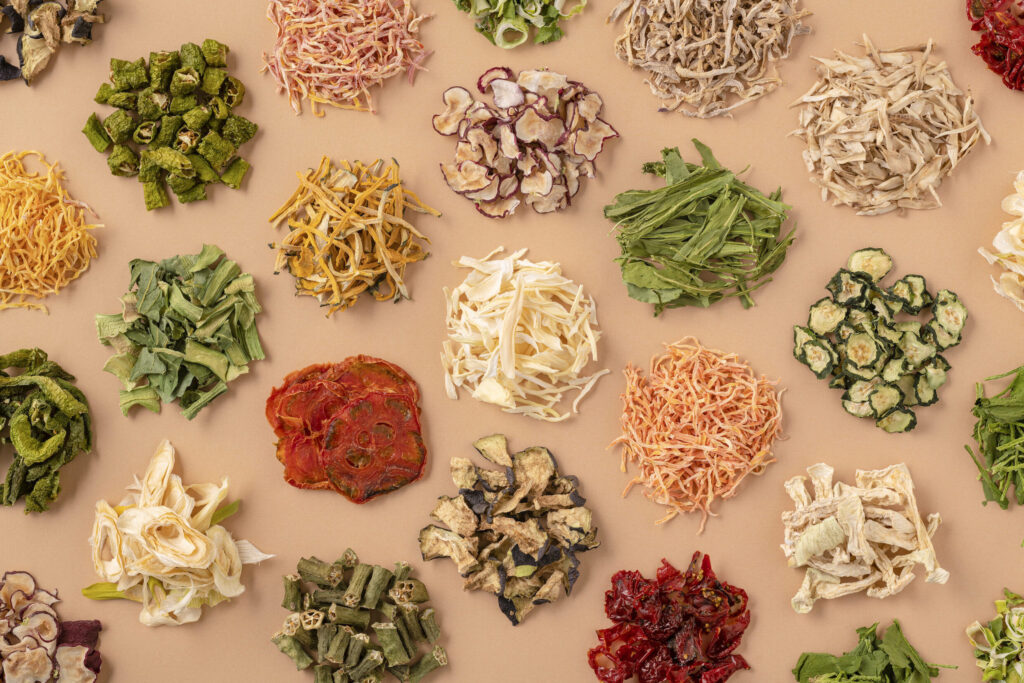
- Available for purchase in small lots from 1 kg
- We handle heirloom vegetables from across Japan
- Dried fruit and herbs also supported
FOR BUSINESS
乾燥舞茸を、原料としてお探しですか
国産の舞茸を乾燥・粉砕してお出ししています。カット形状や粒度の指定、継続してのお取引もご相談ください。規格は Dried Maitake・Maitake powder に掲載しています。
舞茸の少量販売は姉妹ブランドの OYAOYA では取り扱いがありません。ほかの品目はカタログをご覧ください。
How to Use Dried Maitake, with Popular Recipes
Dried maitake can be used in a wide range of dishes, making the most of its aroma and umami. Here are popular uses, from Japanese classics to Western-style arrangements.
The Classic Takikomi Rice and Okowa
The most popular use for dried maitake is takikomi rice and okowa. Cook it together with the rice without rehydrating, and maitake’s aroma and umami spread through all the rice. Combined with fried tofu or chicken, it makes a satisfying dish. Using the soaking liquid as part of the cooking water gives a deeper flavor.
Miso Soup, Tempura, and Pasta
The loosened type, added to miso soup or soup without rehydrating, doubles as both an ingredient and umami. Rehydrated maitake, well drained and coated in batter, can also be made into tempura. The powder type, sprinkled into pasta or soup, lets you enjoy maitake’s aroma with ease. For recipes combining it with other dried vegetables, see 10 selected dried vegetable recipes is also a helpful reference.
| Dish | Rehydrate / Don’t Rehydrate | Point |
|---|---|---|
| Takikomi rice and okowa | Don’t rehydrate | Cook with rice to transfer aroma |
| Miso soup / soup | Don’t rehydrate | Doubles as ingredient and umami |
| Tempura | Rehydrate | Drain and coat in batter |
| Pasta | Powder | Sprinkle in to add aroma |
Storage Method and Shelf Life
Dried maitake is a highly storable preserved food, but it’s also an ingredient whose aroma escapes easily. Since the shelf life of the flavor changes with how you store it, keep the following in mind.
Storage Tips Before and After Opening
Unopened dried maitake can be stored at room temperature away from moisture and direct sunlight. After opening, close the bag tightly or transfer it to an airtight container, and store it with a desiccant if possible. Since aroma is maitake’s lifeblood, keep it away from strong-smelling items. When you won’t use it for a while, storing it in the fridge or freezer helps keep the flavor. For detailed tips on storing dried vegetables, see how to store dried vegetables and their best-before date.
- Unopened: store at room temperature away from moisture and direct sunlight
- After opening: seal it and store with a desiccant for peace of mind
- To prevent aroma transfer, store it apart from strong-smelling items
- Once rehydrated, refrigerate and use it up the same day
How to Tell When It’s Past Its Best-Before Date
The best-before date is a guide for eating it at its best, so give priority to the product’s label. If it has taken on moisture and softened, has mold or discoloration, or the aroma has largely escaped, refrain from using it. Moisture is the greatest enemy of dried foods, so using it up early after opening gives peace of mind.
Using Dried Maitake for Commercial Use or OEM
There are times you want to use it beyond the household scale—using a large amount at a restaurant, or making it an ingredient in your own product. In that case, commercial use and OEM / contract processing are options.
Using It Commercially or as an Ingredient
If you use a large amount at a restaurant or facility, sourcing in commercial quantities is efficient. Since the powder type lets you add maitake’s aroma without the trouble of rehydrating, one approach is to use it as a Maitake powder in seasoning design. When you want to make your own brand product using maitake or other mushrooms, contract processing that handles everything from drying to grinding the raw material is handy. For commercial mushroom OEM, see the Commercial Mushroom OEM Guide, and for contract processing of dried vegetables in general, see Dried vegetable OEM and contract processing. You can inquire about domestic ingredients from small lots.
FOR BUSINESS
乾燥舞茸を、原料としてお探しですか
国産の舞茸を乾燥・粉砕してお出ししています。カット形状や粒度の指定、継続してのお取引もご相談ください。規格は Dried Maitake・Maitake powder に掲載しています。
舞茸の少量販売は姉妹ブランドの OYAOYA では取り扱いがありません。ほかの品目はカタログをご覧ください。
Frequently asked questions
Summary: Cooking Dried Maitake into Rice Without Rehydrating Is the Easy Way
For takikomi rice and miso soup add dried maitake without rehydrating, and for stir-fries and tempura rehydrate it first, and you can make the most of the aroma and umami with nothing wasted. The dark color of the soaking liquid is a property of maitake, so use it to suit the dish. For storage, avoid moisture and aroma transfer, and using it up early after opening keeps the aroma lasting.
If you want to use it commercially at a restaurant, or as an ingredient in your own product, consider contract processing of domestic ingredients too. Choose the form—dried, loosened, or powdered—and inquire from small lots.
Download the product catalog
We will send the materials to your email address based on the information you provide.