Dried myoga


TOC
Product Overview of Dried Myoga
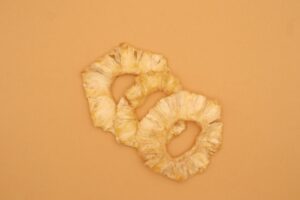
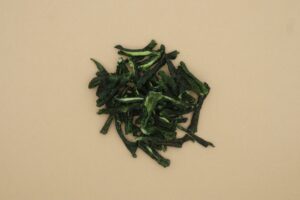
Made with Kyoto-grown myoga, this dried myoga draws out its characteristic refreshing aroma and faint pungency. By drying it slowly at low temperature, it keeps its vivid color while its flavor is concentrated. A crisp texture can be enjoyed even after rehydration, and it can be used in a variety of preparations such as condiments, dressed dishes, and prepared foods. Because it can be stored long-term in dried form, it offers excellent cost performance for commercial use.
As a condiment for ramen or chilled udon, or an accent for Japanese-style pasta and prepared dishes, it is an ingredient whose distinctive aroma pulls the whole dish together.
Three commitments Agriture values
01 Kyoto-grown myoga cultivated by partner farmers
We use as raw material aromatic myoga harvested by partner farmers within Kyoto to match the summer season. After harvest, it is promptly brought into the processing facility and dried in a way that keeps its aroma, pungency, and color from escaping.
02 Low-temperature drying that preserves vivid color
The pale-crimson gradation and refreshing aroma characteristic of myoga are lost right away in high-temperature processing. At Agriture, with a proprietary drying process that removes moisture slowly at low temperature, we achieve a finish where aroma and color revive even after rehydration.
03 No additives, no glucose
We use no preservatives or glucose coating whatsoever. It is a primary-processed material that keeps the individuality of myoga as a condiment and aromatic vegetable to the maximum while also being usable in clean-label-oriented product development.
Product catalog showing the items we handle
Flexible support from small lots to large lots
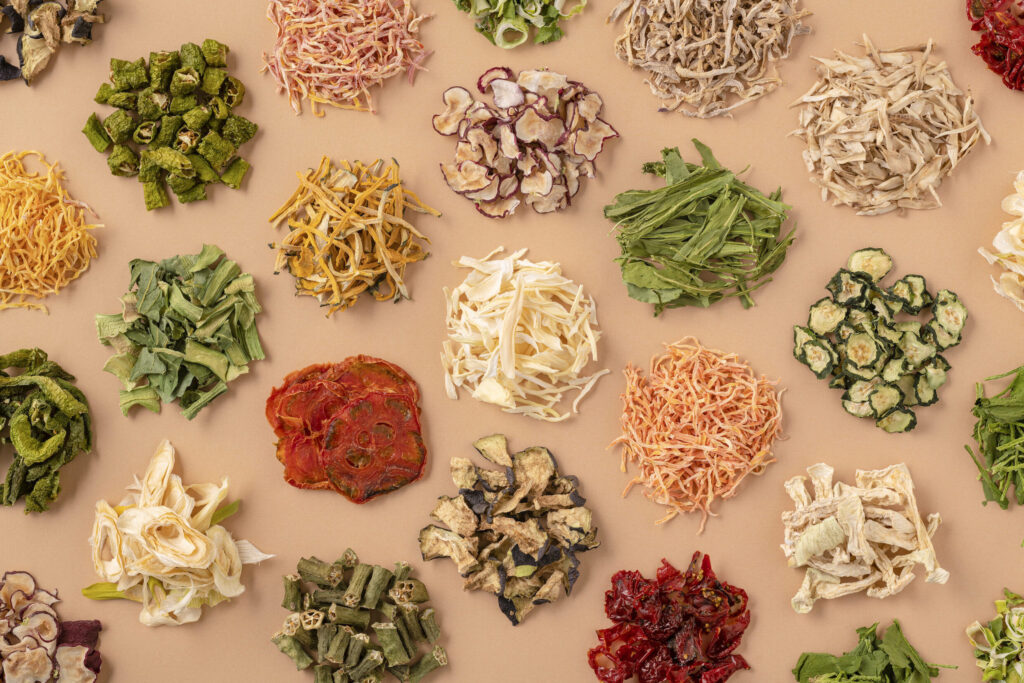
- Sold in small lots from 1 kg
- Handling heirloom vegetables from across Japan
- Dried fruits and herbs also supported
Characteristics as a commercial raw material
Aromatic Japanese-grown myoga for commercial use
Agriture's strength lies in reliably securing myoga, whose domestic distribution volume is small, in commercial lots. It underpins restaurant menu development and OEM product planning.
Fluffy texture revives with rehydration
Just a few minutes of rehydrating in hot water or dashi brings back a raw-like fluffiness and refreshing aroma. Its usability as a condiment is top-class even among dried products.
Applicable broadly from Japanese to Western cuisine
Beyond a condiment for miso soup and chilled udon, it works as a flavor accent in a wide range of genres, including Japanese-style pasta, carpaccio, and salads.
Operation that curbs disposal loss
Fresh myoga has a short shelf life and concentrates in a brief summer season, making disposal loss a frequent concern. With the dried product, you can stock it year-round and use only what you need, keeping loss down.
Affinity with OEM and PB products
It can be adopted broadly as a primary ingredient for original products that make the most of myoga, such as condiments, furikake, powder, and dressings. It contributes to building a brand's distinctiveness.
Prototyping possible from small lots
We handle small-lot prototyping from 100 g units and 10 bags, an ingredient scale easy to use even at the early stages of OEM or new menu items. For mass production, lot size can also be adjusted flexibly.
Product specifications
Item | Details |
|---|---|
Raw material growing region | Kyoto-grown |
Specification | Rough cut |
Storage method | Room temperature (store away from high heat and humidity) |
Best-before date | 6 months from the shipping date |
Minimum lot | From 10 bags / 100 g |
Powder | Available |
Manufacturing period | Summer (July–September) |
Customization and OEM support
Through cooperation with partner farmers and our own processing facilities, Agriture achieves stable raw material supply and high-quality manufacturing. We can flexibly accommodate OEM manufacturing and also handle consultations on specification changes and packaging.
- Custom-size support (cut-thickness changes, shape adjustments): consultation available for orders of 10 kg or more
- OEM support: available (from small-lot prototyping to mass production)
- Large-lot manufacturing: available (consultation required 3 months before the manufacturing period)
POWDER
We also offer powder products
Agriture offers not only dried vegetables but also a wide range of commercial vegetable powders. If you want to use them as an ingredient for dressings, sauces, or bakery products, please also see the powder product list.
Commitments to variety, producer, growing region, and cultivation
BRAND
Variety:Myoga. An aromatic vegetable of the ginger family, characterized by pale-crimson flower buds, a distinctive refreshing aroma, and faint pungency. It has long been an essential ingredient in Japanese cuisine as a condiment and aromatic vegetable.
PRODUCER
Producer:Partner farmers within Kyoto. On a cultivation schedule timed to the summer season, they ship aromatic myoga on a planned basis.
REGION
Growing region:Kyoto-grown. A climate with a good balance of humidity and temperature swings brings out myoga's aroma and color.
CULTIVATION
Cultivation method:In line with myoga's preference for a semi-shaded environment, it is grown in open-field and semi-open-field cultivation. After harvest, it is brought into the processing facility the same day and advanced to the drying process while keeping its freshness.
*Reference: OYAOYA product page
Low-temperature drying that preserves the ingredient's character
At Agriture, to make the most of myoga's flavor, color, and texture, we use a drying method that removes moisture slowly over time at low temperature. High-temperature hot-air drying can remove moisture in a short time, but it has the drawback of easily damaging aroma compounds, pigments, and heat-sensitive vitamins. Low-temperature drying retains as much of these components as possible while improving the material's shelf stability, and is characterized by the way the ingredient's inherent flavor rises when rehydrated.
💡 TIPS | Drying-processing trivia
Myoga's refreshing aroma comes from volatile aromatic compounds such as α-pinene. Because it is easily lost under high-heat, prolonged cooking, at Agriture we use low-temperature, time-taking drying to keep a state where the aroma revives upon rehydration.
Scenarios for Using Dried Myoga
The dried form of myoga is a raw material able to handle a wide range of menu development that makes the most of its individuality as a condiment and aromatic vegetable. You can expand your repertoire from summer staples to seasonings usable year-round.
Condiment for miso soup, chilled udon, and somen
Just rehydrating in hot water or dashi brings back myoga's presence as an aromatic vegetable. As a condiment for miso soup, chilled udon, and somen, it can be used year-round without worrying about the seasonal concentration or freshness decline of fresh myoga. Easy to measure in chopped form, it is a material easy to build into commercial operations.
Accent for Japanese-style pasta and carpaccio
Combined with olive oil or citrus, it adds myoga's refreshing aroma to Japanese-style pasta and carpaccio. Because the aroma stands out in small amounts, it is a popular use as a differentiating accent for creative Japanese cuisine and Italian dishes.
Material for dressed dishes, vinegared dishes, and namul
Combined with salt, vinegar, and sesame oil, it easily finishes into dressed dishes and vinegared dishes with a lively aroma. Usable without prep and slow to release moisture, it is also a raw material easy to handle as a side-dish material at delis and bento shops.
Ingredient for furikake and mixed rice
Finely chopped and used as an ingredient for furikake or mixed rice, it makes products with a summery aroma drifting through. Because it stores at room temperature and is easy to blend, it also suits OEM development of local brands that promote a regional origin or seasonal feel.
Seasoning and dressing ingredient via powder processing
Ground and blended with other dried vegetables or spices, it can be developed into an original seasoning or dressing material. Because myoga's aroma is strongly individual and effective in small amounts, it can add distinctiveness to seasonings prone to being ordinary.
About commercial and OEM consultations
At Agriture, working with partner farmers within Kyoto, we dry and deliver myoga harvested in summer. We can provide integrated support from OEM ingredients as a condiment and aromatic vegetable through to powder processing.
Past initiatives and adoption projects can also be seen on the following pages.
- Past initiative case studies are here
- Commercial dried vegetable OEM here
- Commercial vegetable powder here
Product catalog showing the items we handle
Flexible support from small lots to large lots
- Sold in small lots from 1 kg
- Handling heirloom vegetables from across Japan
- Dried fruits and herbs also supported
Frequently Asked Questions About Dried Myoga
Q. What is the minimum lot for dried myoga, and the volume per bag?
A. For commercial use, we can do business from a minimum of 10 bags at 100 g per bag. We can accommodate small lots even at the prototyping and test-adoption stage, and for mass production you can consult with us on package specifications and lot quantities.
Q. What is the commercial price range?
A. The price varies with the raw material market, specifications, lot size, and cut specifications. When you inquire, we will propose a quote to match your desired specifications and lot, so first let us know your required conditions.
Q. What is the lead time from order to delivery?
A. Stocked items can be shipped in about a few days to a week. For made-to-order or custom specifications, there are cases where we ask for a lead time of about two weeks to a month, including raw material preparation and the drying process. Consulting early provides reassurance.
Q. Can you obtain a certificate of origin for the raw material?
A. Depending on the client's request, we can prepare a certificate of origin for the raw material. Since there are cases where we can provide it together with the cultivation information of partner farmers, please let us know the documents you need in advance.
Q. Can you handle food-sanitation and HACCP compliance and export-oriented support?
A. Agriture's processing carries out hygiene management in line with the HACCP approach, and you can consult us on dried vegetable raw materials for export as well. Please also consult us on confirming requirements by destination country and label support when you inquire.
Q. For an OEM request, in what flow should I consult?
A. First, let us know your product image, lot quantity, and desired delivery date via the inquiry form. After a hearing, we propose prototyping, a quote, and a production plan, and once you approve, we schedule mass production—this is the general flow.
Q. Can you handle custom specification changes such as cut size and shape?
RETAIL
For those looking to purchase in small packs
For those who want to try myoga's aroma from a small quantity, our partner brand OYAOYA also handles retail packs of dried myoga. It can be used by those who want to stock it as a condiment for home use, or for test sales at store shelves.
Yakuzen properties (for fresh myoga)
Myoga has long been familiar in the world of yakuzen as an aromatic vegetable that promotes perspiration. As an ingredient that regulates the body from within during the muggy season, it is a material that serves as a reference for summer menu development.
In yakuzen, myoga is considered to have an action that promotes perspiration and regulates the circulation of qi. Taken in during the muggy season, it is an ingredient expected to have a refreshing effect on the body. Used as a condiment for chilled tofu or chilled somen, its aroma stands out, making it a dish to reach for when you feel summer fatigue. Added to stir-fries or dressed dishes, its distinctive aroma comes alive too, making it a material well suited to summer menu development.
💡 TIPS | Yakuzen trivia
Making the most of vegetables including myoga in a yakuzen way is fundamentally about adjusting to constitution and season. Because dried vegetables can be stored at room temperature, they are a material easy to build into yakuzen recipe prototyping and product development.
Because dried myoga can be used in yakuzen recipes just by rehydrating, its appeal also lies in being able to build it into product development with a yakuzen angle regardless of season. You can make menus that make the most of myoga's individuality year-round.
YAKUZEN
For those who want to know more about myoga from a yakuzen view
At Yasai Yakuzen, we explain the yakuzen properties of myoga and seasonal ways to eat it in an easy-to-understand way. It is a page that serves as a reference for those who want to plan summer menus from a yakuzen angle.
Download the product catalog
We will send the materials to your email address based on the information you provide.