Dried green lemon

Dried green lemon is a commercial material made by turning domestically grown lemons—harvested while still green, before they ripen yellow—into raw material in round slices. It has a higher-rising aroma than yellow lemons and a clean, refreshing tartness, and, being easy to use with the peel on thanks to thin skin and little bitterness, that quality is sealed in by low-temperature drying. At Agriture, we run it alongside green lemon powder made by finely milling the same green lemon (made to order), proposing a division of use: dried green lemon for applications where you want to keep the round-slice shape and appearance, and powder for flavoring drinks, confectionery, and powders.
Compared with ordinary yellow lemons or imported lemons, green lemon differentiates itself by its "high aroma unique to the pre-ripe stage," "the reassurance of domestic and usable with the peel on," and "clean, refreshing tartness." It is a material we get many prototype inquiries for, as a raw material for black tea, flavored tea, carbonated-drink decoration, baked goods, flavoring dishes, and dressings.
TOC
Agriture's dried green lemon: three points of care
1. Low-temperature drying that makes the most of the aroma
Green lemon's appeal is the refreshing aroma that rises, unique to the pre-ripe stage. At Agriture, we hold down the drying temperature and design the process to remove moisture in a short time, keeping the aroma and greenish tint in the finished product as much as possible. Having the aroma rise when put into hot water or a drink is a factor that shapes the appearance and flavor of black tea, flavored tea, and drinks.
2. A round-slice shape usable with the peel on
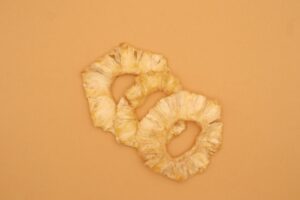
Green lemon is shaped into rounds and slices before drying. Because the skin is thin and has little bitterness, it is easy to use with the peel on, and it is a shape where flavor emerges readily in hot water or drinks. It can be floated straight in black tea, herbal tea, or carbonated drinks, and you can enjoy the look of the cross-section too. Thickness can be adjusted to match the application, so you can select to match the finished product's appearance and how the flavor comes out.
3. Selecting domestic (Ehime-grown) green lemon for the raw material
At Agriture, we use green lemon from domestic growing regions, led by Ehime, assessing aroma height, tartness, and size to make the raw material. Raw material with visible origin makes traceability easy to design, and is one reason it is chosen in prototypes by tea, confectionery, and drink makers.
Product catalog showing the items we handle
Flexible support from small lots to large lots
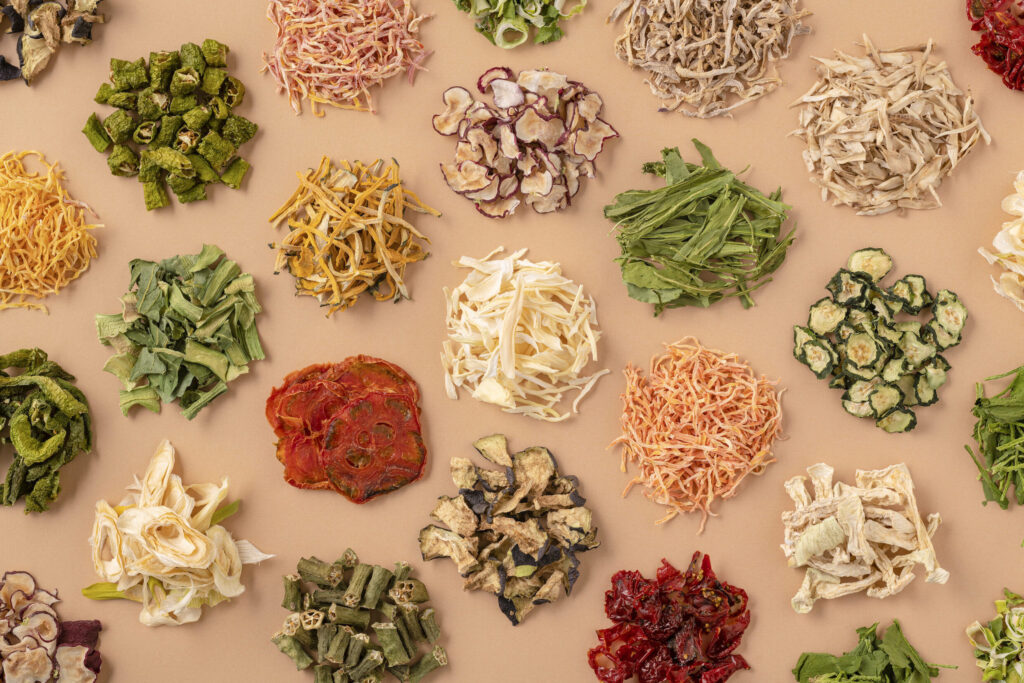
- Sold in small lots from 1 kg
- Handling heirloom vegetables from across Japan
- Dried fruits and herbs also supported
Features of commercial dried green lemon
Even among citrus dried raw materials, green lemon holds a unique position with its aroma, refreshing tartness, and being usable with the peel on. We organize, from six perspectives, its strengths that assume a round-slice shape.
High aroma unique to the pre-ripe stage
Green lemon, harvested while still green, has a higher-rising aroma than yellow lemons. When put into hot water or a drink, a refreshing aroma spreads, giving an accent to the flavor of black tea, flavored tea, and drinks.
A round-slice shape usable with the peel on
Because the skin is thin and has little bitterness, it is a shape easy to use with the peel on. It can be used straight in black tea, carbonated drinks, and dishes, and you can enjoy the color of the cross-section too.
Clean, refreshing tartness
Green lemon's forte is a soft, refreshing tartness. It suits recipe designs that want to make the most of refreshment and aroma—teas, drinks, dressings, confectionery, and more.
Domestic lemon usable with the peel on
Because green lemon has thin skin and little bitterness, it is a material easy to use with the peel on. It suits product designs that make the most of the peel's aroma.
Suitability as a drink-decoration and confectionery material
Making the most of the greenish cross-section, it can be used as decoration for teas, cocktails, and carbonated drinks, or as a flavoring material for baked goods and pound cakes. It suits accents for product designs that highlight refreshment.
Use in combination with powder
Used together with finely milled green lemon powder (made to order), it enables recipe designs that balance appearance (round slices) with flavoring drinks and doughs (powder).
Product specifications (commercial)
Basic specifications at the prototype stage are as follows. Purchase lot, lead time, and packaging format are worked out through individual consultation.
| Item | Details |
|---|---|
| Product name | Dried green lemon |
| Raw material | The basic specifications at the prototype stage are as follows. The sourcing lot, lead time, and packaging form are finalized in individual consultation to match the intended final product. |
| Shape | Round slices / slices. Thickness adjusted to match the application |
| Appearance | Round slices of greenish peel |
| Aroma | A refreshing, rising lemon aroma |
| Net content | Individual quote according to use and lot |
| Best-before date | About 6 months from the shipping date |
| Storage method | Avoid high temperature, high humidity, and direct sunlight; after opening, seal and store in a cool, dark place |
| Minimum prototype lot | From 1 kg of raw material |
Customization support
You can consult us from the prototype stage about shape, cut size, packaging, and final commercialization. Because we nail down the recipe while keeping records, it is a setup where specifications don't drift between prototype and mass production.
| Item | Available | Details |
|---|---|---|
| Shape adjustment | Round slice / slice / dice | Design thickness and size to match the finished product's look and how the flavor comes out |
| Powdering | Fine powder (made to order) | For flavoring confectionery, drinks, and seasonings, and powder blending |
| Blend design | Combined with other citrus and herbs | Tea mix with mandarin, natsumikan, and herbs |
| Packaging form | Commercial bulk / small bag / individual wrapping | From bulk for tea to packs for confectionery material |
| OEM productization | End-to-end support through the finished product | From concept to production for flavored tea, drinks, and confectionery raw materials |
For those considering the fine-powder type
For applications where you want to spread green lemon's aroma and refreshment evenly, such as flavoring confectionery, drinks, and seasonings, or powder blending, our finely milled Green Lemon Powder (made to order) is well suited. For details, please see the green lemon powder page.
Commitments to variety, grower, and growing region
Green lemon is a citrus in the Rutaceae family, referring to lemons harvested while still green, before they ripen yellow. At Agriture, we base our raw-material design on origin, harvest timing, and aroma height.
BRAND | Where green lemon fits as a raw material
Green lemon is a citrus long used in applications that make the most of a refreshing aroma—black tea, flavored tea, carbonated drinks, confectionery, and flavoring dishes. At Agriture, we translate this aroma and refreshing tartness into a commercial raw material that works across a wide range of finished products, from teas and drinks to confectionery.
PRODUCER | Basic policy for sourcing and coordination
We select lots directly with growing regions, matching on aroma height, tartness, and uniform shape. At the prototype stage we order small quantities from multiple suppliers, evaluating aroma retention during drying and the look of the cross-section, then build the supply line for volume lots.
REGION | Characteristics of the main growing region
Domestic lemons come mainly from warm regions such as Hiroshima, Ehime, and Wakayama, accounting for much of domestic distribution. Green lemon appears in the autumn harvest season, and as the season advances the same fruit turns yellow. At Agriture, centered on Ehime-grown, we assess lots with aroma and tartness suited to drying and turn them into raw material.
CULTIVATION | Harvest timing and aroma
Green lemon reaches its harvest season in autumn (around September to November) and is picked and shipped while still green. Those that are green before full ripeness tend to have higher-rising aroma and standout refreshing tartness. At Agriture, we select fruit in the harvest season carrying aroma and tartness and turn it into raw material.
Low-temperature drying technology and quality control
Prompt drying after cutting
After green lemon is round-sliced, the cross-section oxidizes over time, dulling in color and letting the aroma escape easily. By moving promptly from cutting to drying, we finish it under conditions that balance aroma and greenish tint.
Retaining aroma through low-temperature drying
High-heat drying lets the refreshing aroma escape and tends to dull the color. By drawing out moisture slowly at low temperatures, we finish it so the aroma rises even when put into hot water or a drink. As a material for black tea, flavored tea, and drinks, we aim for a raw material whose green-lemon character comes through in appearance. For tea, floating a round slice as-is to steep transfers the aroma and refreshment to the water. For drink decoration, garnishing with it to make the most of the greenish cross-section conveys a refreshing impression.
Use cases
We organize the applications customers bring to us for prototyping into six categories. All are examples of recipe design that make the most of green lemon's aroma, refreshing tartness, and round-slice shape.
1. Black tea and flavored tea
Usable as a material for black tea, herbal tea, and flavored tea. Floating a round slice as-is to steep transfers aroma and refreshment to the water, and it can be developed into blends with tea bags and loose leaf. It can be held as room-temperature stock, and being able to bring green lemon's aroma into a product regardless of season is also valued in commercial use.
2. Carbonated drinks and drink decoration
Usable for decorating and flavoring carbonated drinks, cocktails, sodas, and cold-brew drinks. Garnishing with it to make the most of the greenish cross-section makes the look refreshing, becoming an accent for the drink menu. Being usable with the peel on, transferring even the peel's aroma into the drink is also a feature.
3. Confectionery and bakery
Usable for flavoring and decorating baked goods, pound cakes, and breads. Making the most of the aroma and refreshing tartness, it can be developed into confectionery and bakery products that highlight citrus aroma, such as lemon cakes, scones, and muffins. Using a round slice as a topping makes the cross-section's look an accent as well.
4. Dishes and dressings
Usable for flavoring meat and fish dishes, or as a material for dressings and marinades. The refreshing tartness and peel aroma cleanly tie together the heaviness of oils and proteins. Rehydrated and chopped, it can also be developed into flavoring for sauces, tare, and dressed dishes.
5. Retort, frozen foods, and seasonings
Can be built into retort and frozen foods and meal kits as a flavoring material. It can be stably secured as room-temperature stock, and being pre-prepped cuts production-line man-hours. It also suits raw materials for seasonings where you want citrus aroma to work, such as ponzu, tare, and sauces.
6. Gifts and assortment products
Usable as a material for gift products such as tea sets, drink kits, and baked-goods assortments. The greenish round-slice look and the domestic angle suit adding value to gifts. Combined with powder, it can balance appearance with flavoring.
Commercial usage and rehydration
Rehydration basics
- For tea: float a round slice straight in hot water and steep for 2 to 4 minutes. Aroma and refreshment transfer to the water
- For drink decoration: garnish as-is, or lightly rehydrate in cold water or carbonation to make the most of the cross-section's look
- For dishes and dressings: rehydrate in water or hot water for 4 to 6 minutes, then chop and use
- Because the rehydrating liquid carries green lemon's aroma and tartness, it is good to use it straight in drinks and sauces
Blending guide
- Tea: add 1 to 2 round slices per 200ml of hot water as a guide
- Carbonated drink: 1 round slice per glass (200ml) for decoration and flavoring
- Confectionery: chop and blend 3 to 6g of dried per 100g of dough
- Dressing: rehydrate and use 2 to 4g of dried per 100ml
How to store
- Before opening: store in a cool, dark place at room temperature, away from heat, humidity, and direct sunlight
- After opening: transfer to a zip bag or airtight container and use up within 1 to 2 months
- The best-before date is about 6 months from the shipping date. Note that light and moisture absorption change the aroma and color
- Refrigerated storage is possible. Because condensation forms right after taking it out, return it to room temperature before opening
Related cases and articles
- Dried Lemon – a raw material of yellow, ripened lemon
- Dried Mandarin – a citrus dried-fruit raw material
- Dried Natsumikan Peel – a citrus-peel raw material
- Dried Vegetables and Dried Fruit Raw-Materials List
- Consult us on food OEM and raw material supply
Product catalog showing the items we handle
Flexible support from small lots to large lots
- Sold in small lots from 1 kg
- Handling heirloom vegetables from across Japan
- Dried fruits and herbs also supported
Frequently asked questions
What is the difference from yellow lemon?
Green lemon is a lemon harvested while still green, before it ripens yellow. Compared with yellow lemon, it has a higher aroma and a clean, refreshing tartness, and differs in that its thin skin and little bitterness make it easy to use with the peel on. For applications where you want to make the most of a refreshing aroma—teas, drinks, confectionery—you can use it separately from dried lemon (yellow) by aroma and usage.
How much of the aroma remains?
By moving promptly from cutting to low-temperature drying, we give a finish that keeps the aroma. You can confirm the refreshing aroma rising when put into hot water or a drink. Because the aroma escapes easily with high-heat cooking or long-term storage and moisture absorption, care is needed with the finished product's heating conditions and storage design.
Can it be used with the peel on?
This is one of the applications we get many inquiries about. Because green lemon has thin skin and little bitterness, it is a material easy to use with the peel on. It can be used broadly in products where you want to make the most of even the peel's aroma—black tea, carbonated drinks, confectionery, and more.
How do I choose between it and green lemon powder?
The division is that dried green lemon suits "applications where you want to keep the round-slice appearance and decoration," while powder suits "flavoring confectionery, drinks, and seasonings, and powder blending." Tea steeping and drink decoration call for the dried product; flavoring baked goods, sauces, and powder blends calls for powder. Using both together enables recipe designs that balance appearance with even flavoring.
What is the minimum prototype lot?
Prototypes are accepted from 1kg of raw material. You can run prototypes in parallel across multiple conditions, such as comparing round-slice thickness, or tea versus drink-decoration specifications. Full production is from 10kg and up, and you can consult us all the way through to OEM finished-product development. After hearing the specifications, lot, and schedule for your intended finished product, we propose individual quotes and delivery times.
Please tell me the best-before date and how to store it.
The best-before date is about 6 months from the shipping date. Unopened, store in a cool, dark place at room temperature, away from heat, humidity, and direct sunlight. Because green lemon's aroma and color change easily with light and moisture absorption, we recommend transferring it to a zip-lock bag or light-blocking container after opening and using it up within 1 to 2 months as a guide. Refrigerated storage is also possible, but beware of condensation right after removing it—let it return to room temperature before opening.
Recommended reading
- Dried lemon – a raw material of ripe lemon
- Dried Mandarin – a citrus dried fruit
- Dried Natsumikan Peel – a citrus-peel raw material
- Dried Vegetables and Dried Fruit List
- List of powders
Download the product catalog
We will send the materials to your email address based on the information you provide.