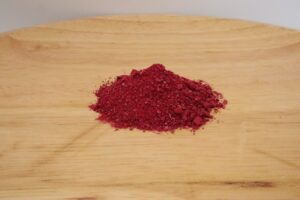
Kujo green onion powder


Product overview of dried Kujo negi powder
Kujo negi is a heirloom vegetable representative of Kyoto, characterized by its gentle sweetness and rich aroma. It has particular brand strength as a Kyoto vegetable, and its refined flavor can be used in a wide range of dishes, both Japanese and Western. Dried Kujo negi powder concentrates the aroma and sweetness by carefully drying and grinding fresh Kujo negi. It can be used as a versatile seasoning that gives dishes a natural richness and flavor.
Making it into a dried powder dramatically improves shelf life compared with fresh Kujo negi, allowing management at room temperature. It is characterized by an aroma that spreads softly when reconstituted with water, and it excels not only as a condiment or seasoning but also as an accent for noodles, soups, and Japanese-style sauces.
Commercial-use dried Kujo negi is here
Features of commercial-use Kujo negi powder
Produced in Kyotango, Kyoto (contract farmers): uses open-field-cultivated Kujo negi
Rich aroma and natural sweetness: drying concentrates the umami and enhances dishes.
Easy to use in powder form: mixes uniformly with ease and is highly versatile as a seasoning.
No glucose added: additive-free processing that makes the most of the ingredient's own flavor.
Main applications (commercial / B2B)
For processed-food makers:
Noodles (udon, soba, ramen): used as a condiment powder to add rich flavor.
Seasonings (Japanese-style dressing, ponzu): the sweetness unique to Kujo negi becomes an accent.
Retort foods (hot-pot soup, Japanese-style pasta sauce): the aroma stands out, creating a homey taste.
Kneaded products (negi miso, negi gyoza): blended in as a powder to bring out the negi flavor.
For the foodservice industry:
Ramen shops / izakaya: used as a soup base or topping.
Japanese-food restaurants: adding it to hot pots and soups adds aroma.
School and company cafeterias: easily adds the aroma of Kujo negi to improve the flavor of dishes.
Cafés and creative cuisine: combined with dip sauce or mayonnaise for a flavorful dip.
OEM applications:
Seasoning makers: commercialized as a spice mix or condiment.
Commercial-use food wholesalers: can be supplied in bulk to restaurants.
Powder-drink makers: used as garnish (kayaku) for negi-shio soup or miso soup.
Instant foods: mixed in as garnish (kayaku) to bring out the flavor.
Product specifications
Item | Details |
|---|---|
Raw material growing region | Kyoto Prefecture (contract farmers) |
Specification | Powder |
Storage method | Room temperature (store away from high heat and humidity) |
Best-before date | 6 months from the shipping date |
Minimum lot | From 10 bags / 100 g |
Powder | Available |
Manufacturing period | Year-round (depending on dried-material inventory levels) |
Processing and supply system
At Agriture, through collaboration with contract farmers and our own processing facilities, we achieve stable raw material supply and high-quality manufacturing. We can also flexibly handle OEM manufacturing and welcome consultations on specification changes and packaging.
OEM support: available
Manufacturing in large lots: available (advance consultation required three months before the manufacturing period)
Samples and inquiries
We can also prepare trial samples first. For the initial transaction, samples are supplied for a fee. Please feel free to contact us for consultations on OEM development and stable supply as well.