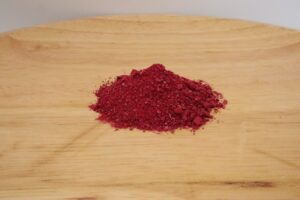
Green Onion Powder

Green onion powder is a raw material made by drying the green leaves of green onions (leaf onions) and then micro-pulverizing them. In uses such as soups, furikake, seasonings, and seasoning bases, it aims to spread the distinctive aroma and color of green onion evenly. Fresh green onions vary in shelf life and dispersion even when chopped, but micro-pulverizing makes it easier to keep the blend ratio constant and raises the aroma reproducibility of each product. At Agriture, Dried Green Onion and makes it into powder by adding a pulverizing process.
Green onions are leaf onions of a different lineage from white onions (deep-rooted onions), which are grown by lengthening the white part; they are a type eaten mainly for the green leaves. Kujo onions and all-purpose onions are also included in the green-onion family and have long been used as a garnish, for color, and for adding aroma. Combined with the compatible aromatic Onion powder and Garlic powder, you can design the powder blends for ramen soup, Japanese-style dashi, and seasonings all together. Specifications can be finalized from small quantities.
TOC
Agriture's green onion powder: three points of care
1. A drying design that preserves the onion's aroma and green color
Green onions' strong suits are aroma and green color, and how the aroma rises and how the color remains change with the drying conditions. At Agriture we set the temperature range and operate under conditions where the distinctive onion aroma and green color remain. We also control the frictional heat during grinding, aiming for a finish where the powder doesn't get too hot. Our basic policy is a finish suited to uses that want to leverage both aroma and color, such as soups, furikake, and seasonings.
2. Fine pulverization with selectable particle size
Depending on the use, we make prototypes by aligning the grain-size direction, from a coarse grind that leaves the graininess of the leaves to a micro-powder that disperses evenly in soups and seasonings. The suitable grain size differs between uses that want to keep visible color, like furikake, and uses that want it fully dissolved, like soup. Share which appearance and mouthfeel you're aiming for in the final product, and we'll refine the grain size in that direction.
3. Selecting domestic green onions as the raw material
We select domestic green onions as the raw material, judging by the balance of leaf-green color and aroma. Because green onions have soft leaves and high moisture content, we accept them while checking the raw material's condition, using this to reproduce aroma and color tone in mass production. We can also handle blend prototypes that span use-case genres.
Product catalog showing the items we handle
Flexible support from small lots to large lots
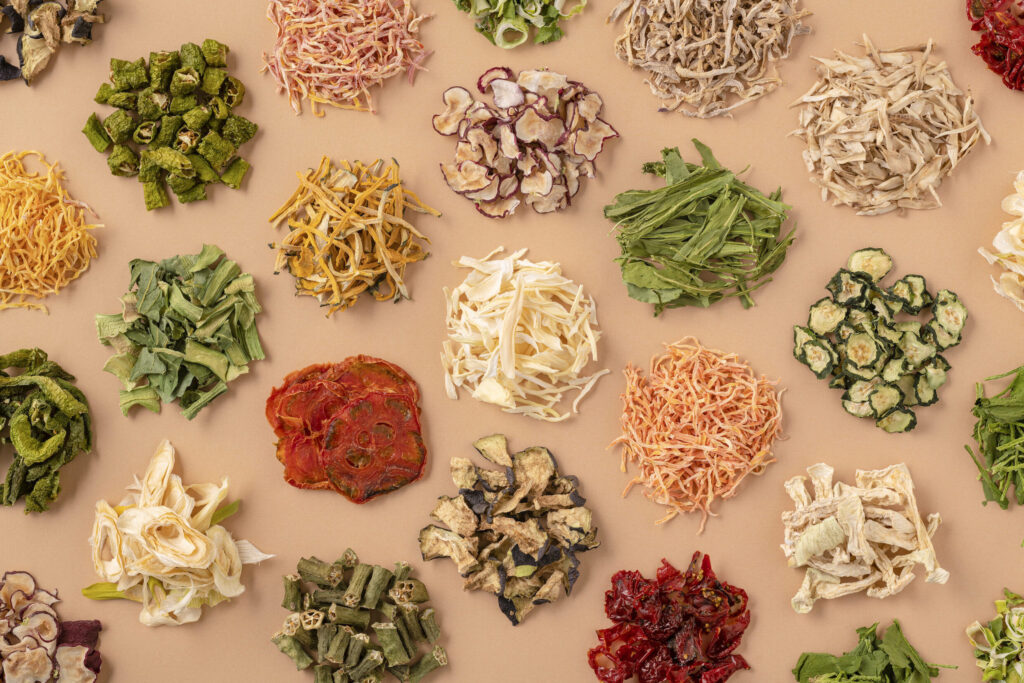
- Sold in small lots from 1 kg
- Handling heirloom vegetables from across Japan
- Dried fruits and herbs also supported
Features of commercial green onion powder
Micro-pulverizing lets it expand into the use areas of "even blending into soups and seasonings" and "turning aroma into seasoning" that chopped onion can't reach. We organize the strengths unique to green onion powder from six perspectives.
Blends the onion aroma evenly
By transferring green onion aroma into powder, you can add an onion-like flavor to soups, seasonings, and seasoning mixes with a small dose. Unlike chopped onion, the amount and distribution are less prone to unevenness, making it a material that keeps the aroma strength consistent across products.
Leverages the green color
Leveraging green onion's green color, you can use it for the color of furikake, toppings, and packaging. Adjusting the grain size makes it a material easy to design to match how you present it—from a type that keeps the graininess of the leaves to one that spreads color evenly.
Handles Japanese, Chinese, and Western blends
By pre-blending with onion-, garlic-, and ginger-based powders, you can design ramen soup, Japanese-style dashi, Chinese seasonings, and Western soup bases from a single raw-material supplier. You can put together aromatic powder blends all at once.
Easy storage and measuring
Drying and powdering make it easy to handle at room temperature, and reduce unevenness in measuring and blending compared with fresh chopped onion. It's also a shape that's easy to deploy for filling into sticks and small bags, or blending into powdered seasonings.
Use together with the ingredient-shape version
For uses that want to keep the leaves' texture or appearance, use Dried Green Onion (cut); for uses that want to spread aroma and color evenly, use powder. You can achieve both an ingredient feel and a base aroma in the same recipe.
Turning garnish uses into seasoning
By powdering green onion, long used as a garnish, you can deploy it into uses that put the garnish aroma straight into products—furikake, topping seasonings, the attached seasoning of instant noodles, and more.
Product specifications (commercial)
The basic specifications at the prototype stage are as follows. Procurement lots, delivery dates, and packaging forms for mass production and OEM are settled through individual consultation.
| Item | Details |
|---|---|
| Product name | Green Onion Powder |
| Raw material | Green scallion (domestic) |
| Shape | Micro-powder (leaves dried and ground / grain size adjustable) |
| Appearance | Green to pale-green micro-powder |
| Aroma | The refreshing aroma distinctive to green onion |
| Net content | Individual quote according to use and lot |
| Best-before date | About 6 months from the shipping date |
| Storage method | Avoid high temperature, high humidity, and direct sunlight; after opening, seal and store in a cool, dark place |
| Minimum prototype lot | 100g〜 |
| Main production lot | On consultation |
Customization support
| Item | Available | Details |
|---|---|---|
| Particle-size adjustment | Coarse powder to micro-powder | From a type that keeps the leaves' graininess to a micro-powder that disperses evenly in soup |
| Blend design | Pre-blending of vegetable / aromatic powders | Specified-ratio blending with onion-, garlic-, and ginger-based powders |
| Packaging form | From commercial bulk to small bags | Light-blocking aluminum bags, sticks and small bags, individual wrapping, and the like |
| OEM productization | End-to-end handling through the final product | Green-onion-salt sauce, ramen soup, furikake, seasonings, etc. |
| Raw material supply | Own raw materials + contract processing | We also handle contract drying and grinding at a specified growing region |
For those who want to make use of texture and shape (ingredient-shape version)
For soup garnishes, toppings, garnishes, and other uses that keep the texture and appearance of green onion, dried green onion (cut) is suitable. The graininess and presence of green onion that powder can't provide come alive in the recipe.
Commitments to variety, grower, and growing region
Green onions are vegetables of the Allium genus in the Amaryllidaceae family, and the term collectively refers to the leaf-onion group eaten mainly for the green leaves. Kujo onions, a heirloom vegetable of Kyoto, and all-purpose onions—young-harvested Kujo-fine onions—are also included in the green-onion family, and differ from white onions (deep-rooted onions), grown by lengthening the white part, in both cultivation method and the part eaten. As a powder raw material, we select by the balance of leaf-green color and aroma.
BRAND
At Agriture, using domestic green onions as the raw material, we manage everything from drying through grinding and packaging in-house. Our basic policy is a finish that keeps an onion-like aroma and green color.
PRODUCER
Partnering with contract growing regions, we accept raw material after sharing guidelines for variety, harvest timing, and leaf condition. We record the raw-material lots and use them to reproduce aroma and color tone in mass production.
REGION
Green onions are grown nationwide, centered on the Kansai region, with the peak season differing by growing area. Through a growing-region relay, we can also handle stable year-round raw-material supply.
CULTIVATION
We source raw material from both open-field and greenhouse cultivation to prepare for seasonal variation. We accept based on leaf-green color and aroma as guidelines, and ensure reproducibility in the powdering process.
Powdering technology and quality control
Preserving aroma and green color
Green onions' strong suits are aroma and green color, materials whose aroma and color change easily during drying. We set the temperature range and operate under conditions that remove moisture while keeping the distinctive onion aroma. We also control the frictional heat during grinding, aiming for a finish where the powder doesn't get too hot. For commercial bulk we use light-blocking aluminum bags, and for small bags and sticks moisture-proof, light-blocking film, proposing specifications that assume storage at the store or warehouse.
Controlling grain size and dispersibility
The suitable grain size differs between uses that want it dissolved into soup and uses that want to keep graininess, like furikake. We adjust the grinding conditions to align the grain-size direction and prototype to match the mouthfeel, dispersibility, and appearance you're aiming for in the final product. For blending into powdered seasonings, we finish it aiming for dispersibility that resists clumping.
TIPS: Guidelines for blends that make the most of green onion powder
For ramen soup or Japanese-style dashi, a blend of 2–4% of the powdered seasoning lets the onion aroma settle naturally into the base. For green-onion-salt sauce, around 3–5% of the total is a guide. For furikake, 5–10% is a usable range, doubling as visible color. In the attached seasoning of instant noodles, adjusting the blend ratio while balancing the aroma against onion- and garlic-based ingredients makes the onion-like aroma rise more easily.
Use cases
Because powder disperses evenly into liquids and powders, it expands into uses chopped onion can't reach. We organize the uses we're most often asked about.
Soup / dashi bases
Blend it into the base of ramen soup, Japanese-style dashi, Chinese soup, or Western soup to add onion aroma to the foundation. Because it's a powder, it's easy to keep the aroma strength consistent, raising reproducibility across products.
Furikake and toppings
Use it in furikake or as a topping seasoning for rice bowls and noodle dishes to add onion aroma and green color at the same time. Adjust the grain size and you can also achieve an appearance that keeps the leaves' graininess.
Seasonings / powdered seasonings
Blend it into seasonings for snacks, potatoes, and fried chicken, or into green-onion-salt-type powdered seasonings. Combined with onion- and garlic-based ingredients, it's a material that makes aromatic-mix design easy.
Sauces / dressings
As a powdered ingredient for green-onion-salt sauce, yakiniku sauce, and dressings, it blends onion aroma evenly. We align the grain size to the dispersibility in the liquid.
Attachments for instant noodles / cup soups
As the aromatic component of the attached seasoning or garnish in instant noodles and cup soups, it adds onion aroma and color. We also handle packaging consultations premised on filling into small bags and sticks.
Blend ingredients / OEM
We also handle pre-blending with onion-, garlic-, and ginger-based powders, and consistent support through to the final product. Share the blend you're aiming for, and we'll mix and bag it at that ratio.
Commercial usage and blending points
Blending basics
- Blend it directly into powdered seasonings or soup bases to add onion aroma
- Since the aroma rises even in small amounts, first check the aroma strength at a lower blend ratio
- When combining with onion- and garlic-based ingredients, decide the ratio by looking at the overall aromatic balance
How to choose the particle size
- For uses that dissolve it in, such as soups and sauces, choose an easily dispersed micro-powder
- For uses that show off color, such as furikake and toppings, choose a coarser grind that keeps the leaves' graininess
- When uses are mixed, prototype with the grain size separated per product
How to store
- Store in a cool, dark place at room temperature, avoiding high heat, humidity, and direct sunlight
- After opening, transfer to an airtight container, avoid moisture, and use up quickly
- Take the best-before date as roughly six months from the shipping date
Related ingredients and articles
- Dried Green Onion: raw material that keeps a cut shape
- Onion powder: adds richness to soups and seasonings
- Garlic powder: a partner for the aromatic base
- Vegetable powder list: powder raw materials we handle
- About commercial and OEM offerings: a contact point for sourcing and OEM inquiries
Product catalog showing the items we handle
Flexible support from small lots to large lots
- Sold in small lots from 1 kg
- Handling heirloom vegetables from across Japan
- Dried fruits and herbs also supported
Frequently asked questions
How do you use dried green onion (with shape) versus the powder?
Dried green onion is a type that keeps a cut shape, suited to uses that leverage texture and appearance, such as soup garnishes, toppings, and garnishes. The powder, being micro-fine, suits uses that want to spread onion aroma and color evenly, such as soups, furikake, seasonings, and powdered seasonings. Using them together achieves both an ingredient feel and a base aroma.
Can the particle size be chosen?
Depending on the use, we prototype by aligning the grain-size direction, from a coarse grind that keeps the leaves' graininess to a micro-powder that disperses evenly in soups and seasonings. Because the suitable grain size differs between uses that want to keep color, like furikake, and uses that want it dissolved, like soup, share the appearance and mouthfeel you're aiming for in the final product and we'll refine it in that direction.
What happens to color and aroma?
Green onion's green color and aroma are its strong suits, but they change somewhat in the drying and grinding process. At Agriture we set the temperature range and operate under conditions that keep an onion-like aroma and green color. It's a finish suited to uses that leverage aroma and color, such as soups, furikake, and seasonings.
Can it be pre-blended with other vegetable powders?
Yes. We handle pre-blending with compatible aromatic vegetable powders such as onion, garlic, and ginger. Share the blend you're aiming for in the final product—ramen soup, green-onion-salt sauce, seasonings, and so on—and we'll mix and bag it at that ratio.
What is the minimum prototype lot?
We accept prototypes from 100 g. For mass production and OEM, we propose quotes and lead times individually. You can consult us through to finished products such as green-onion-salt sauce, ramen soup, furikake, and seasonings.
Please tell me the best-before date and how to store it.
The best-before date is roughly six months from the shipping date. Because green onion powder absorbs moisture easily, before opening, store it in a cool, dark place at room temperature, away from high heat, humidity, and direct sunlight. After opening, transfer it to a sealed container, avoid moisture, and use it up promptly.
Recommended reading
- Dried green onion – cut-shape raw material
- Onion powder – richness for soups and seasonings
- Garlic powder – a partner for the aromatic base
- Vegetable powder list – raw materials we handle
Download the product catalog
We will send the materials to your email address based on the information you provide.