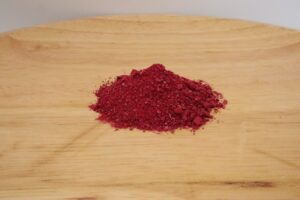
Thinned melon powder

Thinned-melon powder is a raw material made by finely pulverizing, after drying, the immature fruit (thinned melon) removed during the melon cultivation process. Thinned melon belongs to the genus Cucumis, family Cucurbitaceae, and unlike a sweet, ripe melon, its appeal is a fresh flavor close to cucumber with a green note and a pleasant grassy aroma. Because it has little off-flavor, it can be evenly blended for uses such as confectionery, beverages, and dressings as a fresh green aroma or as an accent of color. Agriture uses the same raw material as its dried thinned melon and makes it into powder by adding a pulverizing process.
Thinned melon is normally unused fruit that is thinned out at the cultivation-management stage and discarded as is. By drying and powdering it, you can achieve both reducing food loss and the value of a “fresh green aroma ingredient.” Combined with same-family Cucurbitaceae ingredients usable in flavor design, such as Zucchini powder you can design a fresh, green-noted powder blend all at once. Specification refinement is possible from small quantities.
TOC
Three commitments in Agriture's thinned-melon powder
1. A drying design that preserves the fresh green aroma of thinned melon
Thinned melon has high moisture content, and how the green aroma comes through changes with drying conditions. Agriture adjusts the temperature range and operates under conditions that preserve the fresh, grassy quality characteristic of thinned melon. The color finishes as a fine powder ranging from pale green to pale yellow, a color tone that makes it easy to add a green nuance to confectionery, beverages, and dressings. Blend prototyping across use-case genres is possible.
2. Fine pulverization with selectable particle size
The required particle size differs between uses where you want even dispersion into liquid, as with beverages and dressings, and uses where you want to leave a green graininess in confectionery batter or toppings. Because thinned-melon powder lets you choose the mesh after pulverizing, you can adjust mouthfeel, dispersibility, and visible graininess to the use.
3. Material design that makes use of thinned fruit, an unused resource
Thinned melon is immature fruit thinned out in melon cultivation, and until now much of it has been discarded as is. Agriture accepts this unused fruit as a raw material and, by drying and powdering it, supplies it as a material with a food-loss-reduction story. It is a raw material easy to match with confectionery and beverage projects that want to feature “use of unused fruit” as a product background.
Product catalog showing the items we handle
Flexible support from small lots to large lots
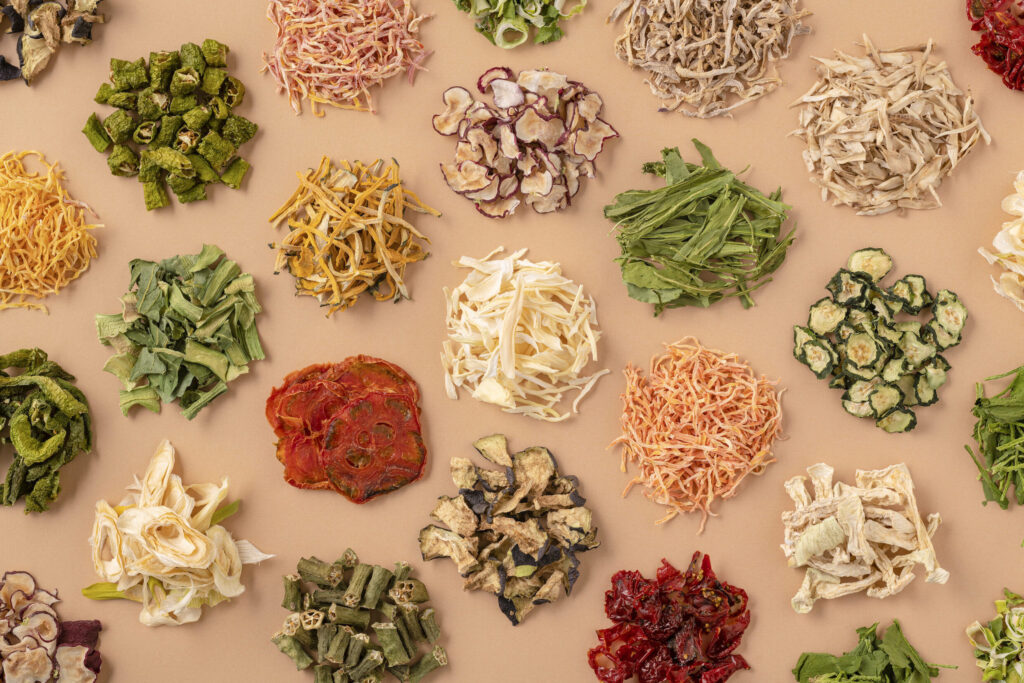
- Sold in small lots from 1 kg
- Handling heirloom vegetables from across Japan
- Dried fruits and herbs also supported
Features of commercial thinned-melon powder
By fine pulverization, it can be developed into the use area of “even blending into beverages, sauces, and batter” that slices and dice cannot reach. We organize the strengths unique to thinned-melon powder by perspective.
A fresh, grassy green aroma
Thinned melon's appeal is a green note close to cucumber and freshness. With a small blend amount, you can add a fresh green aroma nuance to refreshing drinks, jellies, and dressings. It can be used as a green-aroma ingredient with a direction different from the aroma of sweet, ripe melon.
Making use of a pale green color
The finish is a fine powder from pale green to pale yellow. You can give a faint green nuance to baked-confection batter, jelly, and dressings. For uses where you want to bring out color strongly, use it together with other green-based ingredients; it suits a natural, green-noted color-tone design.
Selectable particle size to match the use
You can choose a fine, highly dispersible particle size for beverages and dressings, and a particle size that leaves graininess for batter and toppings. Because you can control mouthfeel and visible graininess with the same raw material, it is a material easy to design to match a product concept.
A material story that makes use of unused fruit
Thinned melon is immature fruit thinned out during cultivation. As a background for products working on food-loss reduction, it can achieve both a fresh green aroma and the story of “use of unused fruit.” It is a raw material easy to match with sustainable projects.
Use together with the ingredient-shape version
For uses where you want to leave texture, dried thinned melon (slice, dice), and for uses where you want to spread aroma and color evenly, powder—use them for different purposes. You can achieve both a chunky feel and base flavoring in the same recipe.
Product specifications (commercial)
The basic specifications at the prototype stage are as follows. Procurement lots, delivery dates, and packaging forms for mass production and OEM are settled through individual consultation.
| Item | Details |
|---|---|
| Product name | Thinned melon powder |
| Raw material | Thinned melon (grown in Kyoto Prefecture) |
| Shape | Fine powder (flesh and skin dried and pulverized) |
| Appearance | Fine powder from pale green to pale yellow |
| Aroma | Fresh, grassy aroma (a green note close to cucumber) |
| Net content | Individual quote according to use and lot |
| Best-before date | About 6 months from the shipping date |
| Storage method | Avoid high temperature, high humidity, and direct sunlight; after opening, seal and store in a cool, dark place |
| Minimum prototype lot | 100g〜 |
Customization support
| Item | Available | Details |
|---|---|---|
| Particle-size adjustment | Mesh specification | From a fine particle size for beverages and dressings to a particle size that leaves graininess for batter and toppings |
| Blend design | Pre-mixing of vegetable powders | Mixing at a specified ratio with green-noted ingredients such as zucchini |
| Packaging form | From commercial bulk to small bags | Light-blocking aluminum bags, sticks and small bags, individual wrapping, and the like |
| OEM productization | End-to-end handling through the final product | Baked confections, jelly, soft drinks, dressings, and the like |
For those who want to make use of texture and shape (ingredient-shape version)
For pickles, salad toppings, simmered-dish ingredients, and the like—uses that leave the texture and appearance of thinned melon—dried thinned melon (slice, dice) is suitable. A bite and presence not obtainable with powder come alive in the recipe.
Commitments to variety, grower, and growing region
Melon is a vining plant of the genus Cucumis, family Cucurbitaceae. In cultivation, “thinning”—removing fruit while young in order to narrow to 2 to 4 fruits per plant—is done. The immature fruit thinned out at this time is thinned melon; because it is before ripening sweet, it has a fresh flavor close to cucumber with a green note. As a powder raw material, it is selected by looking at the strength of the green aroma and the balance of skin and flesh.
BRAND
Agriture manages the entire process—drying, pulverizing, and packaging—using Kyoto-grown thinned melon as its raw material. The basic policy is a finish that preserves the fresh green aroma characteristic of thinned melon.
PRODUCER
We partner with melon growing regions and accept the raw material after sharing guidelines for thinning timing, fruit size, and moisture content. We record the raw-material lots and use them to reproduce flavor and color tone in mass production.
REGION
The raw material is centered on Kyoto-grown thinned melon. In line with early summer, when melon thinning is concentrated, we intensively accept the unused fruit.
CULTIVATION
Thinning is cultivation management to enlarge the fruit and secure quality. By accepting the immature fruit produced in that process, we achieve both food-loss reduction and raw-material use. We accept it in line with the concentration of the thinning season and ensure reproducibility in the powdering process.
Powdering technology and quality control
Moisture control and aroma retention
Thinned melon has high moisture content and is an ingredient whose green aroma changes easily during drying. We adjust the temperature range and operate under conditions that remove moisture while preserving the fresh, grassy quality. We also control frictional heat during pulverizing, aiming for a finish where the powder does not gain too much heat. We adopt light-blocking aluminum bags for commercial bulk and moisture-proof, light-blocking film for small bags and sticks, and propose specifications that assume storage in stores and warehouses.
Stabilizing the particle size
For uses where you want even dispersion into liquid, as with beverages and dressings, you can choose a fine particle size, and for uses where you want to leave graininess, as with batter and toppings, a coarser particle size. After pulverizing, we pass it through a mesh to even the particle size and curb lot-to-lot variation, ensuring reproducibility of mouthfeel and dispersibility when blended.
TIPS: A guide to blends that make use of thinned-melon powder
When used in soft drinks and jelly, a blend of 0.5 to 1% of the liquid weight makes a fresh green aroma come through faintly. In baked-confection batter, an allocation of 3 to 5% of the total powder is a guide, adding a green nuance and a pale green color. In dressings, an allocation of 1 to 3% of the total is easy to use, and a freshness close to cucumber blends into the sauce. When you want aroma to be the star, tilt toward a finer particle size; when you want to show visible graininess, tilt coarser—that is an easy range to design in.
Use cases
Because powder disperses evenly into liquids and powders, it extends to uses that slices and dice cannot reach. We organize the uses often consulted about.
Confectionery and baked confections
Knead it into batter for cookies, pound cake, muffins, and the like to add a fresh green aroma and a pale green nuance. The green note unique to thinned melon suits flavoring summer-oriented baked confections and seasonal limited items.
Beverages and drinks
Blend a trace amount into soft drinks, smoothies, and mixers to bring up a fresh green aroma close to cucumber. If you choose a highly dispersible particle size, it mixes evenly with good mouthfeel. It has good affinity with drinks that emphasize summer freshness.
Jelly and frozen desserts
Blend it into jelly, agar, and frozen desserts to add a fresh green aroma and a pale green color. A clean aroma direction, different from sweet, ripe melon, suits cold desserts.
Dressings and sauces
Blend it into salad dressings and chilled sauces to add a cucumber-like fresh green quality. Because you can choose a particle size that blends evenly into oil and vinegar, it is a use that makes it easy to spread the aroma while curbing sauce separation.
Seasoning and powdered seasoning
As seasoning for snacks and prepared foods, and as powdered seasoning for dressed dishes, add a fresh flavor with a green note. Pre-blended with other vegetable powders, it can be developed into a seasoning design centered on greenness.
Product planning that appeals to food-loss reduction
Thinned melon is unused fruit thinned out in cultivation. As a raw material for confectionery and beverage product planning that puts “use of unused fruit” front and center, it can achieve both a fresh green aroma and a sustainable story.
Commercial usage and thinking on blending
Blending basics
- For beverages and jelly, start from 0.5 to 1% of the liquid weight and adjust while watching how the aroma comes through
- For baked confections, aim for 3 to 5% of the total powder and balance the batter's color and aroma
- For dressings, at 1 to 3% of the total, choose a particle size that blends into the sauce
How to choose the particle size
- Choose a fine particle size for beverages and sauces where you want even dispersion
- Choose a coarser particle size for batter and toppings where you want to leave visible graininess
- Finer when aroma is the star, coarser when showing texture, as a guide
How to store
- Unopened, avoid high temperature, high humidity, and direct sunlight, and store in a cool, dark place
- After opening, transfer to an airtight container, avoid moisture, and use up quickly
- For commercial bulk, assume storage in light-blocking aluminum bags
Related ingredients and articles
- dried thinned melon: a raw material that leaves the slice and dice shapes
- Zucchini powder: a green-noted, summer-vegetable partner
- Vegetable powder list: the various powders we handle
- Consultations for commercial and OEM use: the contact point for raw-material supply and OEM
Product catalog showing the items we handle
Flexible support from small lots to large lots
- Sold in small lots from 1 kg
- Handling heirloom vegetables from across Japan
- Dried fruits and herbs also supported
Frequently asked questions
What is thinned melon?
Thinned melon is immature fruit thinned out during the melon cultivation process. To enlarge the fruit and secure quality, melon undergoes “thinning,” narrowing to 2 to 4 fruits per plant while the fruit is young. The fruit thinned out at this time is thinned melon; because it is before ripening sweet, it has a fresh flavor close to cucumber with a green note. Since it is unused fruit that would normally be discarded, using it leads to food-loss reduction.
Does it have a sweet aroma like ripe melon?
Because thinned melon is immature fruit before ripening sweet, its direction differs from the sweet aroma of ripe melon. Its appeal is a grassy quality and freshness close to cucumber, and it is a material used for a green aroma or as an accent of freshness. It is basically not suited to uses aiming for a sweet melon aroma.
Can the particle size be chosen?
Yes. For uses where you want even dispersion into liquid, as with beverages and dressings, you can specify a fine particle size, and for uses where you want to leave graininess, as with batter and toppings, a coarser particle size. We adjust the mesh after pulverizing to match the desired mouthfeel, dispersibility, and appearance.
How do I use dried thinned melon (with shape) and powder differently?
Dried thinned melon is a type that leaves the slice and dice shapes, suited to uses that make use of texture and appearance, such as pickles, salad toppings, and simmered-dish ingredients. Powder, being a fine powder, suits uses where you want to spread a fresh green aroma and color evenly, such as confectionery, beverages, and dressings. Using them together achieves both a chunky feel and flavoring.
Can it be pre-blended with other vegetable powders?
Yes. We can handle pre-blending with vegetable powders of good affinity in the green-noted, summer-vegetable line, such as zucchini. If you share the blend you aim for in the final product, we will mix and bag it at that ratio.
Please tell me the best-before date and how to store it.
The best-before date is about 6 months from the shipping date. Because thinned-melon powder absorbs moisture easily, when unopened, avoid high temperature, high humidity, and direct sunlight, and store in a cool, dark place at room temperature. After opening, transfer it to an airtight container and we recommend using it up within 1 to 2 months as a guide.
What is the minimum prototype lot?
We accept prototypes from 100 g. For mass production and OEM, we propose a quote and delivery date individually. You can consult us end-to-end through to the final product, such as baked confections, beverages, and dressings.
Recommended reading
- Dried thinned melon – a slice- and dice-shape raw material
- Zucchini powder – a green-noted, summer-vegetable partner
- Vegetable powder list – the various powders we handle
- Consultations for commercial and OEM use – the contact point for raw-material supply
Download the product catalog
We will send the materials to your email address based on the information you provide.