FOOD Exhibition 2026

The FOOD Show is a combined trade show for food businesses covering institutional meals and large-scale cooking, food factory improvement, food logistics, food safety, and prepared and ready-made meals all at once. At Tokyo Big Sight, staff from institutional meal, ready-made meal and prepared food manufacturers, food factories, and logistics and wholesale businesses gather to look for equipment, supplies and services that solve on-site challenges. This article covers dates, venue, component shows and visitor registration, along with ideas for novelties that help companies considering exhibiting or visiting be remembered in negotiations. Show details are based on announcements by the organizers and secretariat, and dates for years not yet confirmed are treated as unannounced.
We have materials available to help you understand vegetable-based novelties
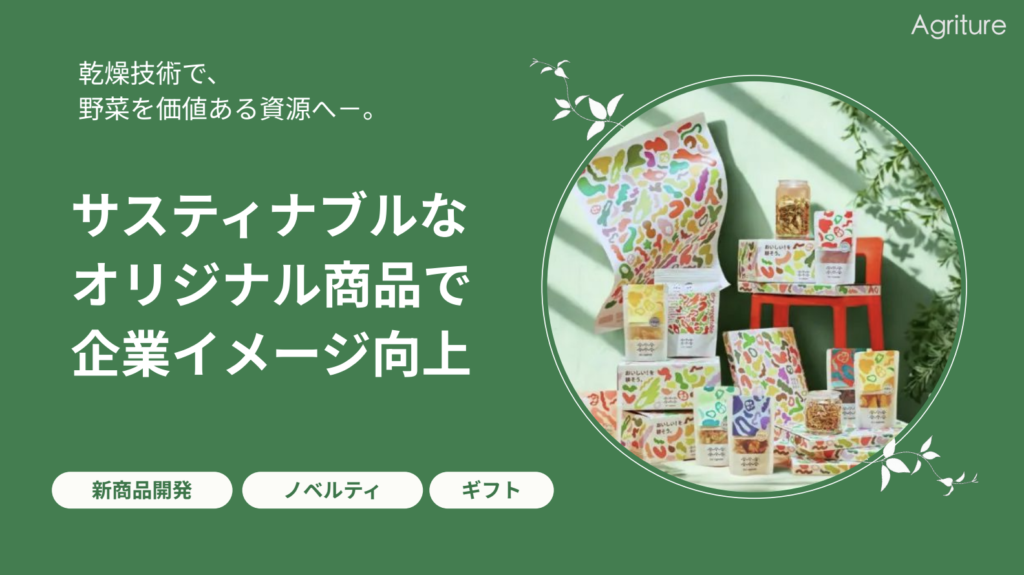
- SDGs-friendly products using non-standard vegetables
- Delivery possible in as short as two weeks
- Small lots from 500 bags
TOC
Basic information on the FOOD Show
The most recent show runs November 11-13, 2026, at Tokyo Big Sight, East Halls. It is a combined show bundling five specialized shows, aimed at a wide range of businesses involved in making, packing, transporting, protecting and selling food. The dates for 2027 need to be checked once posted on the official website and had not been announced at the time of writing.
| Item | FOOD Exhibition 2026 | FOOD Show 2027 |
|---|---|---|
| Dates | November 11 (Wed) - 13 (Fri), 2026, 10:00-17:00 | Not yet announced (check the official website) |
| Venue | Tokyo Big Sight, East Halls | Not yet announced |
| Component shows | Food System Solution / Food Safety Japan / Food Factory / Food Distribution / Sozai Delica JAPAN | Not yet announced |
| Admission | Online advance visitor registration | Not yet announced |
| Secretariat | Atex Co., Ltd. | Atex Co., Ltd. |
Because the FOOD Show combines several specialized shows rather than a single theme, visitors can cover procurement, manufacturing, logistics, hygiene and product development in a single visit. For companies with food production or processing operations, it is a place to look for partners and supplies for the processes they lack, all at once, while moving between floors.
What companies and products does it attract?
Eligible categories
Exhibits center on equipment, supplies and services that support food businesses' operations. On display are equipment for institutional meals and large-scale cooking, labor-saving and automated lines for food factories, hygiene management and inspection systems, temperature control and storage technologies for food logistics, and manufacturing solutions for prepared and ready-made meals. Rather than a show about food ingredients themselves, it is characterized by many exhibits supporting the processes of making, packing, transporting and selling food safely.
Among these, raw materials that keep at room temperature and reduce preparation labor are a good match for institutional meal, prepared food and ready-made meal operations, and some food ingredient manufacturers also exhibit. Raw materials that are easy to store and whose yield is predictable, such as dried vegetables and vegetable powders, align with the interests of visitors considering large-scale cooking or product development. In kitchens with limited staff, raw materials that eliminate steps such as washing, cutting and parboiling lighten the workload, so many visitors stop to look at such processed ingredients.
Businesses and staff who attend
Visitors are mainly operators of institutional meal and large-scale cooking facilities, product development and manufacturing staff at prepared food and ready-made meal manufacturers, production management and quality assurance staff at food factories, and food logistics and wholesale staff. They come with concrete challenges from daily operations, such as wanting to reduce labor, lower hygiene risks or broaden their menus and product ranges, so they respond quickly to solutions they can use right away and ingredients they can try.
Checking the exhibitors in each component show before your visit and starting with the themes closest to your challenges keeps you from wasting limited time. If you are in product development, focusing on booths for raw materials and prototyping while also visiting hygiene and logistics booths lets you map out the path from planning to mass production in one go.
The five specialized shows that make up the FOOD Show
The FOOD Show consists of the following five specialized shows. Because you can choose which floors to visit according to your purpose, it helps to sort out beforehand which show your challenges fit.
| Component shows | Theme |
|---|---|
| Food System Solution | Institutional meals and large-scale cooking |
| Food Safety Japan | Food safety and hygiene measures |
| Food Factory | Food factory improvement |
| Food Distribution | Food logistics improvement |
| Sozai Delica JAPAN | Prepared food and ready-made meal industry |
In addition, cross-cutting special features, FOOD-DX, FOOD-COLD TECH and FOOD-ECOX, are also set up. They let you compare themes spanning multiple component shows in one place, such as digitalization, temperature control including cooling and freezing, and environment and sustainability, providing an easy route for visitors who have already decided which direction they want to focus on. The content and exhibitor slots of the special features change from year to year, so check the official website for details.
The strength of having several specialized shows side by side at the same venue is that you can connect processes, which tend to be handled by different staff, in a single day. If several people from your company split up, with product developers looking at raw materials and prototyping, production managers visiting factory improvement and hygiene booths, and logistics staff visiting temperature control and storage booths, you can advance discussions from planning through mass production and shipping in one visit. Sharing the purpose of each component show beforehand helps you use the limited show period efficiently.
Highlights for visitors and exhibitors
Compare products that solve on-site challenges
The biggest highlight is being able to compare equipment, supplies and raw materials used in institutional meal, prepared food and factory operations while seeing the real thing. You can check size, usability and how faithfully flavors are reproduced on the spot, which is hard to judge from catalogs alone. If there is equipment you are considering introducing, asking about price, delivery and maintenance terms all at once lets internal discussions move straight ahead.
Consult on hygiene, logistics and product development together
In the food business, stable supply is only possible once not just the product contents but also hygiene management and temperature-controlled logistics are in place. Because related specialized shows are side by side at the same venue, you can consult across the processes your company lacks. Staff planning a new product can, for example, discuss prototypes at a raw material booth and then go straight to hygiene or logistics booths to check conditions for mass production.
Learn the latest trends at seminars
During the show, seminars cover food safety, labor-saving, ready-made meal market trends and more. Many topics are directly relevant to day-to-day operations, making them a chance to learn about other companies' initiatives in a short time. Sessions on operational improvement tend to draw large audiences, so secure a place in advance for topics you want to hear.
For companies considering exhibiting
Eligible exhibitors are companies that want to provide equipment, supplies, services or raw materials to food businesses' operations. Which component show to exhibit in, booth size and fees can be confirmed through the secretariat, Atex Co., Ltd., or the contact point on the official website. Visitors tour the show with concrete challenges, so making it clear at a glance which operation's problems your booth can solve makes people more likely to stop.
If you are exhibiting raw materials or food products, preparing so visitors can experience taste and usability on the spot is effective. Having tasting samples and a one-page summary of storage conditions, lots and prices ready lets you move into aligning terms on the spot. Samples that are easy to carry and keep well help visitors remember your company during internal reviews back at the office.
Visitor registration and how to participate
Attendance requires online pre-registration. Registering in advance lets you avoid congestion at reception on the day and check exhibitors before the show to choose the booths you want to visit. Kokusai-tenjijo Station on the Rinkai Line or Tokyo Big Sight Station on the Yurikamome are convenient, both a short walk from the venue. If you plan to attend over several days, nearby accommodation gets crowded during the show, so securing both transport and lodging early is advisable. Entry procedures and registration opening dates change from year to year, so check the official website for the latest information.
Tips for choosing raw materials to make the most of the FOOD Show
In institutional meal, prepared food and ready-made meal operations, raw materials that keep at room temperature and reduce preparation labor are easier to work with. Fresh vegetables tend to pose challenges in storage space and unpredictable yield, but once processed into dried vegetables or vegetable powders they can be stored at room temperature for a long time and used in just the amount needed. Agriture processes dried off-spec vegetables, vegetable powders, dried vegetable soups, tea and dried fruit, and you can consult us from the raw material selection stage on designing formats that are easy to use on site.
Operational requests you see and hear at the show become material for your next product. If you take home comments such as "make these vegetables rehydrate more easily" or "make this soup lower in salt," produce small-lot prototypes and then go into the next meeting, you can commercialize faster. Many prepared food and ready-made meal operations change menus seasonally, so keeping raw materials that are easy to stock, such as dried vegetables and powders, makes it easier to respond to sudden menu changes.
Novelties to hand out in negotiations: dried vegetables, tea and dried fruit that can be distributed at room temperature
At a show like the FOOD Show, where visitors tour many booths in a single day, what stays in their hands is small food items they can take home and try later. Dried vegetables, tea and dried fruit, which are compact, portable at room temperature and let people check the taste on the spot, are well suited as novelties to hand out at this show. Handing them over at your booth gives visitors a way to remember your company when reviewing back at the office.
Why dried vegetables, tea and dried fruit at the FOOD Show?
FOOD Show visitors are mainly businesses with food operations such as institutional meals, prepared foods, ready-made meals and factories. Dried vegetables, which keep at room temperature and need no pretreatment, overlap directly with the interests of those operations. If you hand out small bags of dried vegetables, tea bags or dried pears made from Kyotango-grown Nijisseiki pears as samples, visitors can check the taste while picturing how they would use them in their own kitchens or factories. Individual packaging makes them hygienic to hand out, and lets people experience the quality even in small amounts. Agriture can prepare such samples in small lots (from 50 bags).
From samples to PB, OEM and your own brand prototypes
Samples of dried vegetables, tea and dried fruit made for a trade show can double as prototypes for PB products, OEM or your own brand. Because they can be made in small lots (from 50 bags), you can also prepare several flavors, formulations and packages to see which ones visitors respond to. If you take home the requests you received at the booth, you can move on to discussing commercialization with the samples as a base. Taking it step by step from samples to prototypes to mass production can sometimes let you advance new product plans without overreaching.
We have materials available to help you understand vegetable-based novelties
- SDGs-friendly products using non-standard vegetables
- Delivery possible in as short as two weeks
- Small lots from 500 bags
FAQ: FOOD Show
- When and where is the FOOD Show held?
-
In 2026 it will be held November 11 (Wed) - 13 (Fri) at Tokyo Big Sight, East Halls. The 2027 dates had not been announced at the time of writing, so please check the official website for the latest information.
- What kind of trade show is the FOOD Show?
-
A combined trade show made up of five specialist exhibitions: school and institutional meals / large-scale cooking, food safety and hygiene, food factory improvement, food logistics, and ready-made meals / takeout foods. It brings together the equipment, materials, services and raw materials that support day-to-day operations at food businesses.
- Is there an admission fee?
-
Visitors must pre-register online. Entry procedures and fees can change from year to year, so check the official website before you go.
- Who attends the show?
-
Visitors are mainly operators of institutional meal and large-scale cooking facilities, product development and production staff at ready-made meal and takeout food manufacturers, production control and quality assurance staff at food factories, and people working in food logistics and wholesale.
- Can booth novelties be made in small lots?
-
Agriture can prepare samples of dried vegetables, tea and dried fruit from 50 bags. The samples can be turned directly into prototypes for PB, OEM or your own brand, so visitor reactions can feed into your next product plan.
Summary: Moving On-Site Challenges and Product Development Forward at FOOD Expo
FOOD Expo is a combined trade show held at Tokyo Big Sight East Halls from November 11 to 13, 2026, covering everything from institutional meals and large-scale cooking to food safety, factory improvement, logistics, and ready-made meals and takeout foods. Across its five specialist exhibitions, you can compare equipment, materials, services and raw materials that solve on-site challenges all in one place. The 2027 dates have not been announced, so check the official website for the latest information. Whether visiting or exhibiting, planning is easier if you start with dried vegetables, tea and dried fruit that can be handed out at room temperature, and move step by step from samples to prototypes and then to commercialization.
Official information: FOOD Expo official website

Recommended reading
Commercial dried vegetables / Original vegetable novelties / FABEX 2026 / FABEX Tokyo
Last updated: August 12, 2026
Download the novelty materials
We will send the materials to your email address based on the information you provide.