Dried Ooba

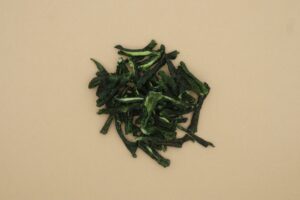
Dried oba is a commercial material made from the leaves of green shiso (oba) turned into raw material. Its strengths are a vivid green and a refreshing aroma characteristic of the Lamiaceae shiso, and that color and aroma are sealed in by low-temperature drying. Agriture also deploys, alongside it, oba powder (made to order), made by finely powdering the same green shiso, proposing a division of use: dried oba for uses where you want to retain the leaf shape and how the aroma rises, and oba powder for furikake, seasonings, and kneading into dough.
Even among shiso, it is a material separate from red shiso, which is used for coloring umeboshi and shiso juice; dried oba refers to green shiso that is green in color. Compared with dried basil or dried parsley and other aromatic leaves, oba can differentiate on the refreshing aroma as a Japanese condiment and compatibility with Japanese and Japanese-style menus. It is a material we are often consulted about prototyping for, as a raw material for final products where you want to make use of the aroma and green — furikake, Japanese-style pasta, Japanese-style dressing, Japanese-style seasonings, condiment paste, and color for rice balls and prepared dishes.
TOC
Three points of care behind Agriture's dried oba
1. Low-temperature drying that makes use of the aroma and green
The appeal of oba is the refreshing aroma characteristic of the Lamiaceae shiso and its vivid green. Agriture keeps the drying temperature down and designs it to remove moisture in a short time, retaining the aroma and green color in the finish as much as possible. The aroma rising in the finish is an element that determines the flavor of furikake, Japanese-style seasonings, and condiment paste.
2. Shapes you can select to suit the application
Dried oba is proposed in shapes matched to the use, such as chopped, flake, and coarse-crushed. Chopped suits condiments and toppings, flake suits furikake and dressed dishes, and coarse-crushed is an easy-to-use shape for kneading and as a seasoning base. You can select it to match the appearance and texture of the final product and how the aroma emerges.
3. Choosing domestic green shiso and turning it into raw material
Agriture uses green shiso from domestic growing regions, discerning the depth of green, how the aroma rises, and the state of the leaves to turn it into raw material. Raw material with a visible origin makes traceability easy to design, and it is one reason it is chosen in the prototyping of furikake, Japanese-style seasoning, and prepared-food manufacturers.
Product catalog showing the items we handle
Flexible support from small lots to large lots
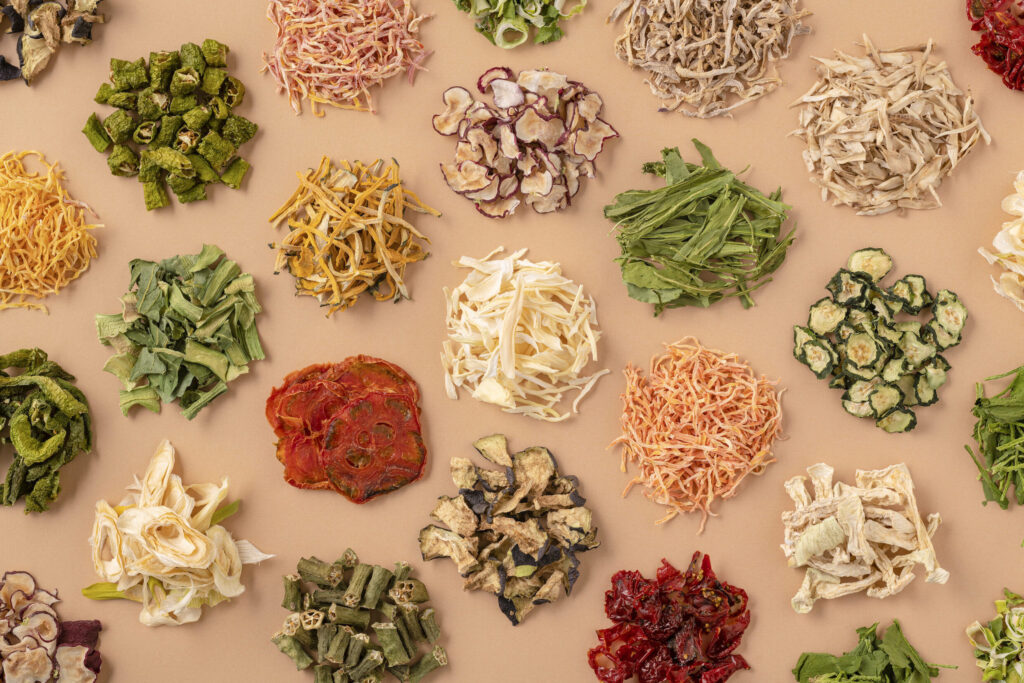
- Sold in small lots from 1 kg
- Handling heirloom vegetables from across Japan
- Dried fruits and herbs also supported
Features of commercial dried oba
Even among dried raw materials of aromatic leaves, oba is a material with a unique position for its refreshing aroma, its presence as a Japanese condiment, and its green color. We organize its strengths, premised on ease of use as chopped or flake, from six perspectives.
A refreshing aroma characteristic of the Lamiaceae shiso
Oba's aroma involves perillaldehyde, an aromatic component characteristic of shiso. With a refreshing aroma befitting a Japanese condiment, it gives an effective accent to the flavoring of furikake, Japanese-style seasonings, and condiment paste.
Chopped or flake, selectable by use
It can be provided in shapes matched to the use, such as chopped, flake, and coarse-crushed. From a condiment topping to furikake and kneading, you can choose to match the appearance of the final product and how the aroma emerges.
Its staple status in Japanese and Japanese-style menus
For tempura, pasta, rice balls, dressed dishes, condiments, and more, it is a material that has been used for flavoring Japanese and Japanese-style menus. With a dried product that can be stored at room temperature, you can bring oba's aroma into the final product regardless of season.
Green shiso, separate from red shiso
It is a material separate from red shiso, used for coloring umeboshi and shiso juice; dried oba refers to green shiso that is green in color. It suits Japanese-style flavor design that makes use of the refreshing aroma of a fresh condiment.
Its suitability as a green color material
Making use of its refreshing green, it can be used as a color material for furikake, Japanese-style pasta, dressed dishes, and rice balls. It suits an accent in product designs that highlight a Japanese aromatic quality.
Use in combination with powder
By using it together with oba powder (made to order), made into a fine powder, you can design recipes that achieve both a leafy feel (chopped, flake) and kneading into dough and seasonings (powder).
Product specifications (commercial)
Basic specifications at the prototype stage are as follows. Purchase lot, lead time, and packaging format are worked out through individual consultation.
| Item | Details |
|---|---|
| Product name | Dried Ooba |
| Raw material | Green shiso (domestic) |
| Shape | Chopped, flake, coarse-crushed. The size is adjusted to the use |
| Appearance | Refreshing green chopped/flake |
| Aroma | A refreshing aroma characteristic of shiso |
| Net content | Individual quote according to use and lot |
| Best-before date | About 6 months from the shipping date |
| Storage method | Avoid high temperature, high humidity, and direct sunlight; after opening, seal and store in a cool, dark place |
| Minimum prototype lot | 5kg〜 |
Customization support
You can consult us from the prototype stage about shape, cut size, packaging, and final commercialization. Because we nail down the recipe while keeping records, it is a setup where specifications don't drift between prototype and mass production.
| Item | Available | Details |
|---|---|---|
| Shape adjustment | Chopped / flake / coarse-crushed | Design the size to match the appearance and texture of the final product and how the aroma emerges |
| Powdering | Fine powder (made to order) | For furikake, seasonings, kneading into dough, and powder blending |
| Blend design | Combination with other aromatic vegetables and condiments | A Japanese-style mix with sesame, chopped nori, and other condiments |
| Packaging form | Commercial bulk / small bag / individual wrapping | Handling from bulk for seasonings to packs for furikake raw material |
| OEM productization | End-to-end support through the finished product | From planning to production of furikake, Japanese-style seasonings, and condiment paste |
For those considering the fine-powder type
For uses where you want to spread oba's aroma and green evenly — furikake, seasonings, kneading into dough, and the like —oba powder (made to order) is suitable. For details, please see the oba powder page.
Commitments to variety, grower, and growing region
Oba is the leaf of green shiso, of the family Lamiaceae, genus Perilla, an aromatic vegetable beloved as a condiment in Japanese cuisine. Agriture makes the origin, harvest timing, and how the aroma rises the axes of its raw-material design.
BRAND | The position of oba raw material
Green shiso that has been used for flavoring Japanese cuisine — tempura, sashimi garnish, dressed dishes, condiments, rice balls, and more — is oba. Agriture distills this aroma and green into a commercial raw material, providing it as a material usable in a wide range of final products, from furikake and Japanese-style seasonings to condiment paste and prepared dishes.
PRODUCER | Basic policy for sourcing and coordination
We select lots with even green depth, how the aroma rises, and leaf state by aligning directly with the growing region. At the prototype stage, we obtain small amounts from several suppliers, evaluate aroma retention on drying and how the green remains, and then set up the supply line for mass-production lots.
REGION | Characteristics of the main growing region
Oba (green shiso) is known with Aichi Prefecture as a representative growing region, shipped year-round in facility cultivation. It is cultivated in various places, and open-field ones appear in large numbers in summer. Agriture discerns lots with aroma and green suited to drying from among domestic growing regions and turns them into raw material.
CULTIVATION | Harvest timing and aroma
Open-field green shiso comes into season in summer (around June–September). In facility cultivation it appears year-round, but open-field ones tend to have the aroma rise more easily. Agriture selects ones with aroma and green and turns them into raw material.
Low-temperature drying technology and quality control
Prompt drying after cutting
After oba is chopped, over time the aroma flies off from the cut surface and the green easily dulls. By promptly moving from cutting to drying, we finish it under conditions that achieve both aroma and green.
Retention of aroma and green through low-temperature drying
High-temperature drying flies off the aroma and easily dulls the green too. By slowly removing moisture in a low-temperature range, we finish it so that a refreshing aroma remains even when used in furikake or Japanese-style seasonings. As a flavoring for Japanese and Japanese-style menus, we aim for a raw material whose oba-like quality comes across. When used in furikake, combining the flake with sesame or chopped nori makes the aroma and green stand out. When used in Japanese-style pasta, sprinkling the chopped on the finish keeps the aroma from flying off with heat and leaves the freshness.
Use cases
We organize the uses we are consulted about for prototyping at Agriture into six categories. All are examples of recipe design that makes use of oba's refreshing aroma, green, and chopped or flake shape.
1. Furikake, ochazuke
It can be used as an aromatic raw material for furikake, ochazuke bases, and mixed-rice bases. Combining the flake with sesame, chopped nori, salt, and the like makes oba's refreshing aroma and green stand out. It can be secured as room-temperature stock and deployed widely in dried foods where you want to add a Japanese aromatic quality.
2. Japanese-style pasta, noodles
It can be used as a finishing flavoring for noodles such as Japanese-style pasta, chilled noodles, and yakisoba. Sprinkling the chopped on the finish keeps the aroma from flying off with heat and leaves the freshness. Kneaded into Japanese-style sauces or seasonings, it can also spread oba's aroma throughout.
3. Japanese-style dressing, seasonings
It can be used as an aromatic raw material for Japanese-style dressings, sauces, condiment paste, and Japanese-style seasonings. Combining the coarse-crushed or flake with an oil or soy-sauce base lets you design oba's refreshing aroma. Because it is pre-prepped, it also leads to reduced labor hours in seasoning manufacturing.
4. Tempura, prepared dishes
It can be used for flavoring tempura batter or as color for Japanese prepared dishes and dressed dishes. Mixing the chopped into batter or dressing adds oba's aroma and green. A pre-prepped dried product lets you add a Japanese aromatic quality while keeping prep labor hours down in prepared-food manufacturing.
5. Rice balls, processed-rice products
It can be used as color and flavoring for rice balls, mixed rice, and processed-rice products. Mixing the flake into rice adds oba's green and refreshing aroma. It can also be deployed as an instant mixed-rice base or a rice-ball ingredient, suiting products that highlight a Japanese aromatic quality.
6. Retort, frozen foods
It can be built in as an aromatic vegetable for retort and frozen prepared dishes and meal kits. It can be stably secured as room-temperature stock, and being pre-prepped, it reduces labor hours on the production line. It is also suited to products where you want to add aroma on the finish, such as Japanese-style pasta, dressed dishes, and condiment garnishes.
Commercial usage and rehydration
Basics of use
- For furikake and toppings: sprinkle the flakes or chopped pieces on directly, without rehydrating
- For seasonings and pastes: mix into oil, soy sauce, or dressings to spread the aroma throughout
- For noodles and pasta: adding chopped pieces as a finishing touch helps the aroma survive cooking heat
- When rehydrating, restore lightly with water or dashi and use in dressed dishes or as a garnish
Blending guide
- Furikake: blend in about 5–10 g of dried shiso per 100 g of finished product
- Japanese-style dressing: add about 2–4 g of dried shiso per 100 ml
- Mixed rice: stir in about 3–6 g of dried shiso per 2 go (approx. 300 g) of rice
- Dressed dishes: use about 2–4 g of dried shiso as a topping per 100 g of finished product
How to store
- Before opening: store in a cool, dark place at room temperature, away from heat, humidity, and direct sunlight
- After opening: transfer to a zip bag or airtight container and use up within 1 to 2 months
- Best-before date is roughly 6 months from the shipping date. Note that light and moisture absorption alter the aroma and green color
- Refrigerated storage is possible. Because condensation forms right after taking it out, return it to room temperature before opening
Related cases and articles
- Dried red shiso – red shiso raw material for umeboshi and shiso juice
- List of dried vegetable raw materials
- List of powder raw materials
- Consult us on food OEM and raw material supply
Product catalog showing the items we handle
Flexible support from small lots to large lots
- Sold in small lots from 1 kg
- Handling heirloom vegetables from across Japan
- Dried fruits and herbs also supported
Frequently asked questions
What is the difference between oba (green shiso) and red shiso?
Oba is the name used when green shiso is treated as an ingredient, and it has long been used fresh as a garnish or aromatic in Japanese cuisine for its refreshing scent. Red shiso is a separate material with a strong astringency that is rubbed with salt or simmered before being used to color umeboshi or make shiso juice. Dried oba is made from green shiso and suits Japanese-style aromatic seasoning.
How much of the aroma remains?
By moving quickly from cutting to low-temperature drying, we produce a result that retains the refreshing shiso-like aroma. You can confirm the aroma when it is used in furikake, Japanese-style seasonings, or aromatic pastes. The aroma compound perillaldehyde tends to dissipate with high-temperature cooking or prolonged storage and moisture absorption, so care is needed in the heating conditions and storage design of the final product.
Can it be used in furikake or seasonings?
This is one of the most frequently requested applications. The flakes and chopped pieces can be combined with sesame or shredded nori for furikake, or mixed into an oil or soy sauce base for Japanese-style seasonings and aromatic pastes—they can be used in a wide range of ways. Because it is a dried product, it can be held as room-temperature stock, making it an easy material to deploy in dried foods and seasonings where you want to add a Japanese-style aroma.
How should it be used differently from oba powder?
Dried oba is for “applications where you want to retain the leaf texture and aroma of chopped pieces or flakes,” while powder is for “furikake, seasonings, kneading into dough, or powder blending.” Dried product suits toppings and dressed dishes, while powder suits kneading into noodle dough, sauces, and steamed buns. Using both together makes it possible to design recipes that combine leaf texture with uniform aroma.
What is the minimum prototype lot?
We accept prototype orders from 5 kg. You can run multiple conditions in parallel, such as comparing chopped and flake forms, or comparing specifications for furikake versus seasoning use. You are welcome to consult with us all the way through to production lots and OEM final products. After hearing the specifications, lot size, and schedule you have in mind for the intended final product, we will propose an individual quote and lead time.
Please tell me the best-before date and how to store it.
The best-before date is roughly 6 months from the shipping date. While unopened, store in a cool, dark place at room temperature, away from high heat, humidity, and direct sunlight. Because oba readily changes in aroma and green color with light and moisture absorption, after opening we recommend transferring it to a zip bag or light-blocking container and using it up within 1–2 months. Refrigerated storage is also possible, but be careful of condensation right after taking it out—let it return to room temperature before opening.
Recommended reading
- Dried red shiso – red shiso raw material for umeboshi and shiso juice
- List of dried vegetable raw materials
- List of powder raw materials
- Consult us on food OEM and raw material supply
Download the product catalog
We will send the materials to your email address based on the information you provide.