Dried Green Onion

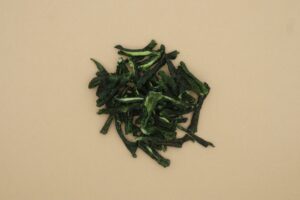
Dried green scallion is a commercial material made mainly from the green leaf portion of leaf scallions (the all-purpose scallion type), cut into rounds and turned into raw material. Whereas white scallion (deep-rooted scallion) is eaten for its white blanched portion, green scallion is a scallion whose green leaves are used as they are for condiment and color, and its vivid green and scallion-like aroma are sealed in by low-temperature drying. Agriture deploys it alongside green scallion powder (made to order), made by finely powdering the same green scallion, proposing a division of use: dried green scallion for uses where you want to retain the round shape and grainy feel, and powder for furikake, soup, and kneading into dough.
Compared with Kujo scallion or white scallion, green scallion can differentiate on "a condiment/topping material starring green leaves," "the convenience of settling the color just by scattering rounds," and "compatibility with ramen, udon, and instant noodles." It is a material we are often consulted about prototyping for, as a topping for ramen, udon, soba, takoyaki, okonomiyaki, instant noodles, and cup noodles, and as a condiment/color raw material.
TOC
Three points of care behind Agriture's dried green scallion
1. Low-temperature drying that makes use of the green color
The appeal of green scallion is the vivid green of its leaves. Agriture keeps the drying temperature down and designs it to remove moisture in a short time, retaining the green color in the finish as much as possible. The green rising up when it rehydrates over hot water or on top of ingredients is an element that determines the appearance of ramen, udon, instant noodles, and okonomiyaki.
2. A round shape easy to scatter
Green scallion is trimmed into rounds and then dried. Rounds have a large surface area and rehydrate easily in hot broth or steam, so they can be scattered directly onto ramen, udon, or soup. The width of the rounds can be adjusted to the use, and you can select it to match the appearance of the final product, from a use scattering it finely as a condiment to a use where you want a hearty-ingredient feel.
3. Choosing domestic green scallion and turning it into raw material
Agriture uses green scallion from domestic growing regions, discerning the depth of green, aroma, and thickness of the leaves to turn it into raw material. Raw material with a visible origin makes traceability easy to design, and it is one reason it is chosen in the prototyping of instant-noodle, soup, and prepared-food manufacturers.
Product catalog showing the items we handle
Flexible support from small lots to large lots
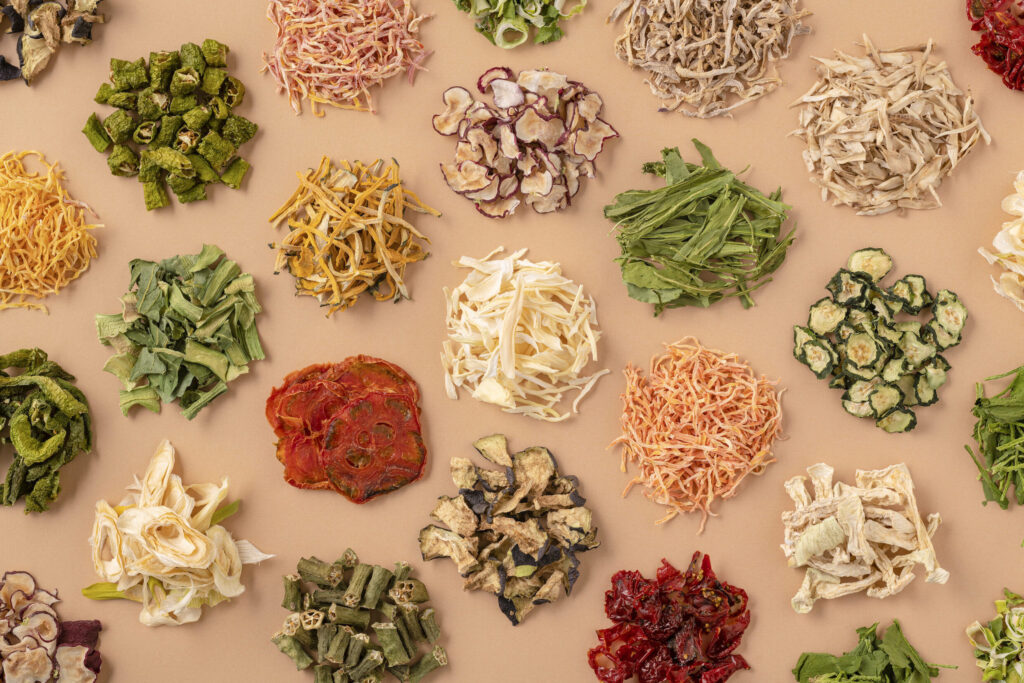
- Sold in small lots from 1 kg
- Handling heirloom vegetables from across Japan
- Dried fruits and herbs also supported
Features of commercial dried green scallion
Even among scallion-family dried raw materials, green scallion is a material with a unique position for its green color, aroma, and convenience as a condiment. We organize its strengths, premised on the round shape, from six perspectives.
Green color settled just by scattering
Green scallion's green tightens up the appearance of a dish just by scattering it on the finish of ramen, udon, rice bowls, or okonomiyaki. Unlike white scallion, the point of being able to make use of the leaf green as color as-is is its strength as a condiment raw material.
An easy-to-rehydrate round shape
Rounds have a large surface area, a shape that rehydrates easily in hot broth or steam. They can be scattered directly onto ramen, udon, or soup and used without waiting for rehydration time. It is also a shape easy to handle as an ingredient for instant noodles and cup noodles.
Its staple status as a condiment/topping
For ramen, soba, udon, hiyayakko, takoyaki, okonomiyaki, and more, green scallion is a material that has been widely used as a condiment and topping. With a dried product that can be stored at room temperature, you can bring green scallion's color into the final product regardless of season.
A scallion-like aroma
Green scallion's strength is the refreshing aroma characteristic of leaf scallions. It suits recipe designs where you want to add an accent with scallion aroma — soups, noodles, flour-based dishes, egg dishes, and the like.
Compatibility with instant noodles and soups
Making use of the green color, it can be used as an ingredient for instant noodles, cup noodles, and freeze-dried-style soups. Rounds that rehydrate just by pouring hot water suit the design of condiment-included products.
Use in combination with powder
By using it together with green scallion powder (made to order), you can design recipes that achieve both a condiment's grainy feel (rounds) and kneading into furikake and dough (powder).
Product specifications (commercial)
Basic specifications at the prototype stage are as follows. Purchase lot, lead time, and packaging format are worked out through individual consultation.
| Item | Details |
|---|---|
| Product name | Dried Green Onion |
| Raw material | Green scallion (domestic) |
| Shape | Rounds. The width is adjusted to the use |
| Appearance | Vivid green rounds |
| Aroma | A refreshing aroma characteristic of leaf scallions |
| Net content | Individual quote according to use and lot |
| Best-before date | About 6 months from the shipping date |
| Storage method | Avoid high temperature, high humidity, and direct sunlight; after opening, seal and store in a cool, dark place |
| Minimum prototype lot | 5kg〜 |
Customization support
You can consult us from the prototype stage about shape, cut size, packaging, and final commercialization. Because we nail down the recipe while keeping records, it is a setup where specifications don't drift between prototype and mass production.
| Item | Available | Details |
|---|---|---|
| Shape adjustment | Rounds (different widths) / minced | Design the width of the rounds to match the appearance of the final product, such as for condiment use or ingredient use |
| Powdering | Fine powder (made to order) | For furikake, soup, kneading into dough, and powder blending |
| Blend design | Combination with other condiments and vegetables | A condiment mix with dried wakame, sesame, and other scallions |
| Packaging form | Commercial bulk / small bag / individual wrapping | Handling from bulk for noodles to condiment packs for instant noodles |
| OEM productization | End-to-end support through the finished product | From planning to production of instant-noodle condiments, furikake, and soup bases |
For those considering the fine-powder type
For uses where you want to spread green scallion's green color and aroma evenly — furikake, soup, kneading into dough, and powder blending —green scallion powder (made to order) is suitable. For details, please see the green scallion powder page.
Commitments to variety, grower, and growing region
Green scallion is a leaf scallion of the family Amaryllidaceae, a "leaf scallion"-type scallion eaten mainly for its green leaves. All-purpose scallion and thin scallion belong to this group too, beloved as a condiment and color. Agriture makes the origin, the depth of leaf green, and the aroma the axes of its raw-material design.
BRAND | The position of green scallion raw material
Leaf scallions that have been used as a condiment and color — for ramen, udon, soba, hiyayakko, takoyaki, okonomiyaki, and more — are green scallions. Agriture distills this green color and aroma into a commercial raw material, providing it as a material usable in a wide range of final products, from instant noodles and soups to prepared dishes and flour-based dishes.
PRODUCER | Basic policy for sourcing and coordination
We select lots with even green depth, aroma, and thickness by aligning directly with the growing region. At the prototype stage, we obtain small amounts from several suppliers, evaluate green retention on drying and rehydration quality, and then set up the supply line for mass-production lots.
REGION | Characteristics of the main growing region
Green scallion (leaf scallion) is cultivated in various places, including Mie Prefecture and Saitama Prefecture, and is stably available year-round for condiment use. Agriture discerns lots with green color and aroma suited to drying from among domestic growing regions and turns them into raw material.
CULTIVATION | Leaf green and aroma
Green scallion is a scallion that stars its green leaves, and the taut leaves and depth of green are the quality guide. Agriture selects ones with aroma and green color and turns them into raw material.
Low-temperature drying technology and quality control
Prompt drying after cutting
After green scallion is cut into rounds, over time moisture comes out from the cut surface and the color easily dulls. By promptly moving from cutting to drying, we finish it under conditions that achieve both green color and aroma.
Retention of green color through low-temperature drying
High-temperature drying dulls the green color and easily lets the refreshing aroma fly off. By slowly removing moisture in a low-temperature range, we finish it so that the green remains even when rehydrated in hot water. As a condiment for ramen and instant noodles, we aim for a raw material whose green-scallion-like quality comes across in appearance. When used in instant noodles, it rehydrates just by pouring hot water, making it easy to handle as an ingredient for condiment-included products. When scattering into soup, adding it just before serving makes the green color and aroma rise up more easily.
Use cases
We organize the uses we are consulted about for prototyping at Agriture into six categories. All are examples of recipe design that makes use of green scallion's green color, aroma, and round shape.
1. Topping for ramen and noodles
It can be used as a condiment/topping for ramen, udon, soba, and tsukemen. Because it rehydrates over hot broth and the green rises up, it tightens up the appearance of rice bowls. It is also valued in commercial use for being securable as room-temperature stock and saving the trouble of chopping.
2. Ingredient for instant noodles and cup noodles
It can be used as an ingredient for instant noodles, cup noodles, and freeze-dried-style products. Because rounds rehydrate just by pouring hot water, they can be built directly into condiment-included instant products. It is a shape that keeps well at room temperature and is easy to weigh and bag in small portions.
3. Flour-based dishes, okonomiyaki, takoyaki
It can be used for the dough of flour-based dishes such as okonomiyaki, takoyaki, and chijimi, or for color in the finish. You can use it by purpose — mixing it into the dough to spread scallion aroma throughout, or scattering it on the finish to add a green accent.
4. Soup, miso soup, broth dishes
It can be used as color for miso soup, soup, clear soup, and Chinese-style soup. Scattering it just before serving makes the green color and aroma rise and tightens up the appearance of broth dishes. It can also be deployed as a dried-soup base or a cup-soup ingredient.
5. Furikake, condiment mixes
It can be used as a material for furikake, condiment mixes, and topping seasonings. Blended with dried wakame, sesame, and other condiments, it can be deployed in products sprinkled over rice, noodles, and hiyayakko. Combined with the powder, it achieves both a grainy feel and even aroma.
6. Egg dishes, prepared dishes, frozen foods
It can be built in as a color vegetable for dashimaki, tamagoyaki, fried rice, and frozen prepared dishes. Because it can be stably secured as room-temperature stock and saves the trouble of chopping, it reduces labor hours on the production line. It can be used widely in prepared dishes and frozen foods where you want to add a green accent.
Commercial usage and rehydration
Rehydration basics
- For condiment/topping use: scattered over hot broth or soup, it rehydrates as-is and the green rises up
- For instant noodles: because it rehydrates just by pouring hot water, it can be used as-is as a condiment-included ingredient
- For kneading into dough: rehydrate in water for 2–4 minutes and then mix into the dough, and the aroma reaches throughout
- Because over-rehydrating weakens the color and aroma, adding it just before serving gives a better finish
Blending guide
- Condiment for ramen and noodles: scatter 0.5–1 g of dried per bowl
- Miso soup, soup: scatter 0.3–0.8 g of dried per bowl (200 ml)
- Okonomiyaki, takoyaki dough: knead in 2–4 g of dried per 100 g of flour as a guide
- Furikake, condiment mixes: blend with other materials according to the blend ratio
How to store
- Before opening: store in a cool, dark place at room temperature, away from heat, humidity, and direct sunlight
- After opening: transfer to a zip bag or airtight container and use up within 1 to 2 months
- The best-before date is about 6 months from the shipping date. Note that the green color changes with light and moisture absorption
- Refrigerated storage is possible. Because condensation forms right after taking it out, return it to room temperature before opening
Related cases and articles
- Dried Kujo scallion – a Kyoto-vegetable scallion raw material
- Dried white scallion – a deep-rooted scallion raw material
- Dried onion – an onion raw material
- List of dried vegetable raw materials
- Consult us on food OEM and raw material supply
Product catalog showing the items we handle
Flexible support from small lots to large lots
- Sold in small lots from 1 kg
- Handling heirloom vegetables from across Japan
- Dried fruits and herbs also supported
Frequently asked questions
What is the difference from white scallion?
Green scallion is a leaf-scallion-type scallion, whose green leaf portion is used mainly as a condiment and color. On the other hand, white scallion (deep-rooted scallion) is a scallion eaten for its white blanched portion grown by mounding soil. You can use them by purpose by color and usage: green scallion as a condiment/topping scattered in rounds, and white scallion for uses that make use of sweetness through heating. We prepare it as a separate raw material from dried white scallion.
Is it different from Kujo scallion?
Kujo scallion is a heirloom vegetable cultivated mainly in the Kujo district of Kyoto City, characterized by soft leaves and rich aroma. Green scallion (leaf scallion) is a general term for its group, but this dried green scallion uses as raw material a general leaf scallion intended for condiment/topping use. If you want to use the Kyoto vegetable Kujo scallion, we prepare dried Kujo scallion separately.
Can it be used as an ingredient for instant noodles and cup noodles?
It is one of the uses we are often consulted about. Because rounds rehydrate just by pouring hot water, they can be built directly into instant noodles and cup noodles as a condiment-included ingredient. Because it keeps well at room temperature and is a shape easy to weigh and bag in small portions, it suits the design of condiment-included products.
How do I use it differently from green scallion powder?
The division is: dried green scallion for "condiment/topping uses where you want to retain the grainy feel and color of rounds," and powder for "furikake, soup, kneading into dough, and powder blending." For condiments for ramen and udon, rounds suit; for kneading into dough and soup bases, powder suits. Using them together enables recipe design that achieves both a grainy feel and even aroma. We handle green scallion powder to order upon consultation.
What is the minimum prototype lot?
We accept prototyping from 5 kg of raw material. You can prototype multiple conditions in parallel, such as comparing round widths, or comparing specifications for condiment use versus ingredient use. You can consult us including through to OEM final commercialization. After hearing the specifications, lot, and schedule of the intended final product, we propose a quotation and delivery time individually.
Please tell me the best-before date and how to store it.
The best-before date is about 6 months from the shipping date. When unopened, store it in a cool, dark place at room temperature away from high heat, humidity, and direct sunlight. Because green scallion easily changes color with light and moisture absorption, after opening we recommend transferring it to a zip bag or light-blocking container and using it up within 1–2 months as a guide. Refrigerated storage is also possible, but beware of condensation right after taking it out, and open it after returning it to room temperature.
Recommended reading
- Dried Kujo scallion – a Kyoto-vegetable scallion
- Dried white scallion – a deep-rooted scallion
- Dried onion
- List of dried vegetables
- List of powders
Download the product catalog
We will send the materials to your email address based on the information you provide.