
What is sansho used for besides eel? It circulates four times a year, changing form

Summary of this article
Sansho is a crop that comes to market four times a year, changing form each time: the leaf buds of spring, the sansho flowers of April, the green berries of May, and the ripe berries of autumn. We cover how to use each, when to add ground sansho, why it suits fatty dishes, what it doesn't pair with, how much to add, how to handle dried berries, the fact that only female trees bear fruit, and that domestic production is 461.8 tons a year with 76.9% of shipments going to processing.
A small jar of ground sansho sits in the kitchen, never opened except when eating eel. It's a common story.
Here is the conclusion first. Sansho is a crop that comes to market four times a year in different forms. The leaf buds of spring, the sansho flowers of April, the green berries of May, and the ripe berries of autumn. Each suits a different dish. If you think “sansho = the powder for eel,” you are using only a quarter of it.
In this article, drawing on how the Forestry Agency and the Ministry of Agriculture, Forestry and Fisheries organize the uses by part, we lay out what you can do with the powder, the berries, the leaves, and the flowers. From the standpoint of drying domestically grown sansho and supplying it for commercial use, we also write about how much to add and when.
For the differences between types and varieties, see an explanation of the types of sansho; for the preparation of mi-zansho, see Preparation and bitterness removal of mi-zansho.
TOC
What can sansho be used for besides eel
Here is a list of uses first.
| Form | Period in circulation | Suitable use |
|---|---|---|
| Leaf buds (young leaves) | Spring | Kinome-ae dressing, clear soups, as a garnish for grilled dishes |
| Sansho flowers (flowers) | April | Tsukudani, clear soups, sukiyaki |
| Green sansho berries (unripe fruit) | May–June | Chirimen sansho, tsukudani, simmered fish, soy-sauce pickling |
| Dried berries | Year-round | Stews, infusing oil with aroma, mapo tofu |
| Powdered sansho | Year-round | Sprinkled as a finish: eel, soups, yakitori, mapo tofu |
| Pestle (trunk) | ― | As a cooking tool |
The Forestry Agency's Kinki-Chugoku Regional Forest Office sums up the uses of sansho as follows.
The young leaves are used as a condiment called “kinome,” the young fruit is called green sansho and made into tsukudani, the ripe fruit is ground into ground sansho, the peel serves as a fragrance in shichimi togarashi, and the wood (trunk) is used for pestles. With such high utility value, it is a tree often grown in home gardens and fields.
Forestry Agency, Kinki-Chugoku Regional Forest Office, Shiga Forest Management Office
The leaves, the flowers, the berries, and the trunk are all used. a tree with almost nothing to throw away can be read even from a national agency's account.
If you're going to open that ground sansho for now
For those who want to use up the ground sansho at home today, here they are in order of least effort.
- A shake into miso soup. The aroma comes through even in a soup that isn't fatty
- Yakitori, karaage, braised pork belly. It pairs well with fatty dishes
- Mapo tofu, dan dan noodles. When you want to add a tingling kick
- Egg over rice, ochazuke, rice balls
- As a finish for simmered dishes like kinpira and chikuzen-ni
- Potato salad, chilled tofu, avocado
What they share is sprinkling it on as a finish. Ground sansho loses its aroma easily, so if you add it early in cooking the aroma won't last.
Sansho comes to market four times a year in different forms
This is the most interesting thing about sansho. From the same tree, something different is harvested in each season.
Leaf buds in spring, flowers in April, berries in May, ripe fruit in autumn
The Ministry of Agriculture, Forestry and Fisheries' “Our Local Cuisine” describes how the seasons progress for Kyoto sansho.
In spring it sprouts, and these young sprouts, called “kinome,” are used in simmered and grilled dishes, kinome miso, and vinegared dishes to enjoy the aroma. Kinome is an ingredient that signals the arrival of spring. In April it puts out small yellow flowers. Known as “sansho flowers,” they are picked together with the leaves, not just the flowers.
Ministry of Agriculture, Forestry and Fisheries, “Our Local Cuisine,” Tsukudani of Sansho Leaves, Kyoto Prefecture
The same page goes on to write, “In May, the vivid pale-green ‘green sansho’ comes to market,” and “Then, in autumn, ‘wari-zansho’ begins to appear in stores.”From spring to autumn, it keeps appearing while changing form.
| Timing | What comes to market | State |
|---|---|---|
| March to April | Kinome | Young leaves |
| April | Flower sansho | Small yellow flowers |
| Mid to late May | Mi-zansho (berry) | Pale-green unripe fruit |
| July–August | Berries for drying | Mature fruit whose color has turned dark green |
| Autumn | Wari-zansho | Fully ripened, split-open berries |
Fresh green sansho can be bought for only about ten days a year
That the green-sansho season is short is written plainly in the growing region's materials. An article in which the Ministry of Agriculture, Forestry and Fisheries' Kinki Regional Agricultural Administration Office covered Aridagawa Town states that “Because the ideal harvest window for fresh sansho is short, about ten days, it becomes work for the whole family”.
A Wakayama University research report also puts the ideal harvest window for fresh fruit at “about ten days between mid-May and early June.”If you spot fresh green sansho at the supermarket, there won't be another chance that year, so you're better off buying it then.
If you prep it and freeze it the day you buy it, it will keep for a year. For the steps, see Preparation and bitterness removal of mi-zansho for a summary.
The growing regions harvest twice a year
The official site of Aridagawa, Wakayama describes the budo sansho harvest like this. “There are two harvests: green sansho berries in mid-to-late May, and dried sansho in July–August.”。
They are harvested fresh in May, and the remaining berries are left to ripen from July to August before being harvested for drying. Two different products are taken from the same tree twice— that is what it means. The latter becomes powdered sansho.
FOR BUSINESS
Looking for dried sansho as a raw material?
We dry and grind domestically grown sansho and supply it. Please also consult us about cut-shape and particle-size specifications and ongoing transactions. For specifications, Dried Japanese pepper (sansho)・Sansho Powder listed at.
Small-quantity sales of sansho are not available at our sister brand OYAOYA. For other items, please see the catalog.
How to use powdered sansho
The easiest to get hold of, and the least used, is powdered sansho.
Add it last. Too early and the aroma disappears
Powdered sansho is sprinkled on after the heat is off, or after plating. Add it partway through simmering and the aroma is gone by the time the dish is done.
When we grind sansho into powder, we are careful to keep heat down and to shorten the time between grinding and packaging. The aroma begins to fade the moment it is ground into powder. At home too, it is best to use it up soon after opening the seal.
Works with fatty dishes
Sansho goes well with fatty, rich dishes. Grilled eel (unagi kabayaki) is the classic example, but the same pairing works with the following as well.
- Yakitori, kara-age, braised pork belly, chicken wings
- Curry, hayashi rice
- Simmered fatty fish, buri daikon (yellowtail with daikon)
- Ramen, dan dan noodles
- Dishes made with butter, cream sauce
Rather than cutting the fat, the aroma rises behind the weight of the fat— that is the effect. A small amount is enough; add too much and only the aroma comes forward.
Surprisingly good partners
- Eggs: egg over rice, dashimaki omelet, omelette
- Dairy: cream cheese, vanilla ice cream
- Potato: potato salad, french fries
- Fruit: grapefruit, strawberries
- Chocolate: just a little on a chocolate bar
Sprinkling it on ice cream or chocolate is surprising if you are not used to it, but sweets and sansho go together. Just a little is enough.
How much to add
| Dish | Powdered sansho guide | When to add |
|---|---|---|
| Eel / yakitori | One shake (a few grains) | Just before eating |
| Miso soup (1 bowl) | One shake | After serving into the bowl |
| Mapo tofu (2 servings) | From 1/4 teaspoon | After turning off the heat |
| Simmered dish (4 servings) | From 1/4 teaspoon | To finish |
| Ice cream / chocolate | A very small amount | Just before eating |
You can add more if it is not enough, but you cannot take back too much. Starting at about half the amounts in the table is just right.
How to use mi-zansho
This is for when you get fresh sansho berries. Prepare them before use.
Chirimen sansho and tsukudani

The most commonly made is chirimen sansho, cooked together with chirimen-jako (dried young sardines). Simmer prepared sansho berries and chirimen-jako in soy sauce, mirin, and sake until the liquid is gone.
Cooked with kombu it becomes sansho kombu; combined with shirasu it becomes tsukudani. All can be made ahead and keep for about two weeks refrigerated。
Add to simmered fish and meat dishes
Adding sansho berries to simmered sardines or saury takes the edge off the fishy smell. It also goes well with braised pork belly and simmered chicken.
When using it in a simmered dish, add it partway through is the trick. Added from the start, the aroma escapes; added at the end, it does not blend in. Add it around when the flavor is roughly set.
Keep a supply as soy-sauce pickle and salt pickle
- Drain the prepared sansho berries
- Put them in a clean jar and pour in soy sauce until just covered
- Leave in the refrigerator for about a week
- Both the berries and the soy sauce can be used — on chilled tofu, egg over rice, and dressed dishes
For a salt pickle, coat the berries with salt equal to about 20% of their weight and pack into a jar. Both keep for about six months refrigerated。
Frozen, they last a year
Prepared sansho berries, divided into portions and frozen, will keep until the next year's harvest. You can add them to the pot straight from frozen, so there is no need to thaw them each time.
Securing a year's supply of something you can only buy for ten days a year. This is how to work with fresh sansho berries.
How to use dried sansho berries
Many people search for “how to use dried sansho berries,” so here we cover the whole dried product rather than the powder.
Infuse the aroma into oil
Dried sansho berries release their aroma when heated with oil. Put them into cold oil, then set over low heat and warm slowly. Put into hot oil, they burn in seconds。
Once the aroma rises, remove the berries and stir-fry with that oil. It is the same idea as making mapo tofu or chili oil.
Add them whole to simmered dishes
Dropping just a few grains into curry, braised pork, or soup transfers the aroma. Since you can take them out, you can pull them out once it gets too strong— that is the advantage.
Unlike fresh sansho berries, they need no preparation. There is no need to rehydrate them; they go straight into the pot.
Grind them into powder yourself
Grinding dried berries in a mill or mortar makes powdered sansho. It has a stronger aroma than store-bought powder because it is freshly ground, contained in burdock and cocoa.
Before grinding, remove the black seeds. The part used for powdered sansho is the pericarp. The Japanese Pharmacopoeia defines sansho as a crude drug as “the pericarp of the ripe fruit,” with the seeds separated from the pericarp removed as much as possible.
Grind only as much as you can use up in one to two months. Storing the rest as whole berries keeps the aroma longer.
How to use kinome and hana-zansho
These parts are available only for two to three months in spring.
Clap kinome in your palm first

Kinome are the young leaves of sansho. Just before use, place it on your palm and lightly clap it with the other hand and the aroma rises. If you clap it in advance, the aroma is gone by the time you serve it.
- Bamboo shoots dressed with kinome (kinome-ae): the most popular dish in spring
- Kinome miso: mix chopped kinome into white miso. For dengaku and grilled dishes
- As a garnish on clear soup or simmered dishes: it releases its aroma the moment you open the bowl
- Serve alongside grilled fish, eel, or tofu
- Chop and mix into rice
It spoils easily, so wrap it in damp kitchen paper, refrigerate, and use within two to three days. If you get a lot, chopping it and mixing it into miso makes it keep longer.
Hana-zansho is April only
Hana-zansho are the flowers of sansho. As stated in Ministry of Agriculture, Forestry and Fisheries materials, in April it bears small yellow flowers, and not only the flowers but the leaves are picked together。
Making it into tsukudani is common, but it can also be scattered over sukiyaki, floated in clear soup, or made into tempura. It is on the market only briefly and in small amounts, so it is the sort of thing you buy when you spot it.
Note that in growing regions, male plants are sometimes called “hana-sansho.” The Gifu Prefectural Forest Research Institute writes, “In the field, female plants are generally called mi-sansho and male plants hana-sansho.”The “hana-zansho” in shops and the “hana-sansho” of growing regions can refer to different things in some cases.
Different from Chinese huajiao
It is confusing, but hana-zansho and huajiao are different things. Hana-zansho is the flower of Japanese sansho; huajiao is the pericarp of Chinese prickly ash (kahoku-zansho), native to China. They are different species to begin with. The difference is covered in the explanation of the difference between huajiao and sansho for a summary.
A product catalog that shows around 100 items we handle
Agriture, flexibly handling everything from small lots to large lots
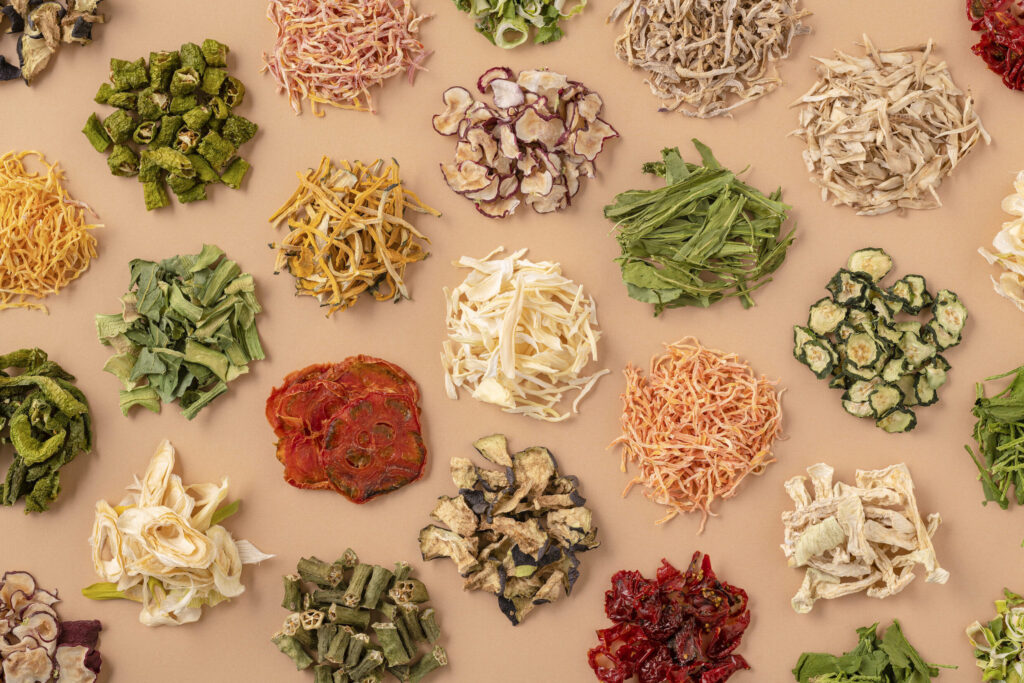
- Available for purchase in small lots from 1 kg
- We handle heirloom vegetables from across Japan
- Dried fruit and herbs also supported
Make it into a seasoning in advance
Rather than using it as is, turning it into a seasoning gives it more occasions to be used.
Sansho oil
Steep dried sansho berries or powdered sansho in oil, or warm it to infuse the aroma. Then just drizzle it over pasta, stir-fries, chilled tofu, or grilled vegetables.
- To steep sansho berries in oil: put them in cold oil and leave for a few days
- To draw out the aroma faster: warm over low heat, let cool, then transfer to a jar
- To use the powder: rather than dissolving it in oil, mixing it in just before use keeps more aroma
- Store refrigerated and use up within two to three weeks
Sansho miso
Mix powdered sansho or chopped sansho berries into miso and work in mirin and sugar. It goes with dengaku, grilled rice balls, vegetable sticks, and grilled meat.
As a guide, start from 1/4 teaspoon of powdered sansho to 3 tablespoons of miso. It keeps for about a month refrigerated.
Blend your own shichimi
Sansho is one of the ingredients of shichimi togarashi. Forestry Agency materials also state that “the pericarp is a spice for shichimi togarashi.”
Chili powder, powdered sansho, sesame, chenpi (dried mandarin peel), hemp seeds, aonori, and poppy seeds. You can blend from whatever you have on hand. Just raising the proportion of sansho makes it clearly different from store-bought blends. For how to choose chili peppers, see the explanation of ichimi togarashi.
Partners sansho does not suit
Having written only about good matches, here are the ones it does not suit well.
Do not add it to delicately flavored dishes
- Clear soup where you want the dashi aroma to shine: sansho takes over
- White-fish sashimi: the delicate flavor is hidden
- Mixing it into dashimaki omelet: the aroma escapes with heat, so it is better served alongside
- Long-simmered soup: even adding powder leaves no aroma
Sansho has a strong aroma, so it is particular about its partners. In dishes meant to savor the aroma of the ingredients, it is better to serve it only alongside, or leave it out.
Assume some people dislike it
It is a spice with a tingling sensation, so some people dislike it. When serving family or guests, set it on the table and let each person sprinkle their own is the safer bet. Once mixed into the dish, it cannot be removed.
It is also best to avoid mixing it into dishes served to small children. They sense the stimulation differently from adults.
Only female plants bear fruit
We often hear that someone planted sansho in the garden but it bears no fruit. The reason is clear.
Sansho is dioecious
Sansho has separate female and male trees — a dioecious plant. The same is stated both in the Forestry Agency's tree guide and in Kumamoto University's medicinal-plant database.
The official site of Aridagawa, Wakayama describes concretely what growers do.
Sansho is a dioecious plant, and fruit sets only when the flowers of the female tree (megi) are pollinated by pollen from the flowers of the male tree (ogi). For this reason, one male tree is planted for every ten female trees for pollination. Pollen is carried by insects such as honeybees, and if good weather does not continue during the flowering period, the insects become less active, which affects the harvest.
Aridagawa “Budo Sansho Official Site,” Cultivation Techniques and Quality Control
One male tree for every ten female trees. Growing regions plant at this ratio. This is why a single garden tree sometimes bears no fruit.
Half of seedlings bear no fruit
The Gifu Prefectural Forest Research Institute writes this about growing from seed: “From seedlings, about half turn out to be male plants that bear no fruit, and they cannot be told apart.”
Grown from seed, half become trees that bear no fruit— that is what it means. If you want berries, buying a seedling known to be female is the sure bet.
For kinome alone, male plants work too
Leaves grow on both female and male plants. If you only want to use kinome, a male plant is fine. Growing regions call male plants “hana-sansho” because the flowers are used.
Domestic sansho amounts to only 461 tons a year
When you try to widen its uses, the next wall you hit is that there simply is not much of it.
Three-quarters of shipments go to processing
According to the Ministry of Agriculture, Forestry and Fisheries' Survey of Production Trends for Specialty Fruit Trees, the 2023 (Reiwa 5) sansho crop had a harvest of 461.8 tons and shipments of 447.9 tons. Of that, 344.3 tons went to processing, which is 76.9%.
Domestic sansho is hard to find in shops because most of what is grown goes to processing as raw material for shichimi togarashi, tsukudani, and spices. For the breakdown by growing region and the trend of the harvest nearly halving over five years, see the article on the difference between huajiao and sansho for more.
Do not waste what you get
It is a scarce crop, so you want to use up whatever you can buy.
- Fresh sansho berries: prepare and freeze. Lasts a year
- Dried berries: seal and keep in a cool, dark place. Grind only what you will use
- Powdered sansho: use up a small jar quickly. Do not buy large bags
- Kinome: chopping it and mixing into miso makes it keep
- Hana-zansho: make into tsukudani and refrigerate
When using sansho as a raw material
This is for those looking for sansho for product development.
To secure volume, start before planting
Of the 447.9 tons shipped domestically, 76.9% already goes to processing. Securing several tons anew is not easy. It presupposes an arrangement made with growers before planting.
Particle size and grinding method change the result
When grinding to powder, the aroma drops unless heat is kept down. Ground coarse, the grains hit when you bite; ground fine, it spreads throughout. Which is better depends on the product, so deciding the particle size at the prototype stage avoids hesitation in mass production.
We accept drying and grinding of domestic sansho. For specifications, see Dried Japanese pepper (sansho) and Sansho Powder listed at.
FOR BUSINESS
Looking for dried sansho as a raw material?
We dry and grind domestically grown sansho and supply it. Please also consult us about cut-shape and particle-size specifications and ongoing transactions. For specifications, Dried Japanese pepper (sansho)・Sansho Powder listed at.
Small-quantity sales of sansho are not available at our sister brand OYAOYA. For other items, please see the catalog.
Frequently asked questions
What can sansho be used for besides eel?
It goes broadly with fatty, rich dishes: yakitori, kara-age, braised pork belly, curry, mapo tofu, dan dan noodles, miso soup, and as a finish on simmered dishes. It can also be used on egg over rice and ochazuke. Surprisingly, sprinkling a little on vanilla ice cream or chocolate works too. In all cases, the trick is to sprinkle it on at the finish.
When is the best time to add powdered sansho?
Sprinkle it on after turning off the heat, or after serving into the bowl. Powdered sansho loses its aroma easily, so adding it early in cooking leaves no aroma by the time the dish is done. Start with a small amount and add more if needed. You cannot take back too much.
How do you use dried sansho berries?
Either warm them with oil over low heat to infuse the aroma, or add them whole to simmered dishes. The trick is to put them in cold oil before heating; put into hot oil, they burn in seconds. Ground in a mill or mortar they become powdered sansho, but in that case remove the black seeds and grind only the pericarp.
When can you buy fresh sansho berries?
Fresh sansho berries are on the market from mid-May to early June. An article by the Ministry of Agriculture, Forestry and Fisheries' Kinki Regional Agricultural Administration Office states that the ideal harvest window in growing regions is short, about ten days. If you spot them, buy them assuming there will be no more that year; prepared and frozen, they last a year.
How do you bring out the aroma of kinome?
Just before use, place it on your palm and lightly clap it with the other hand. If you clap it in advance, the aroma is gone by the time you serve it. It spoils easily, so wrap it in damp kitchen paper, refrigerate, and use within two to three days.
Are hana-zansho and huajiao the same thing?
They are different. Hana-zansho is the flower of Japanese sansho, on the market around April. Huajiao is the pericarp of Chinese prickly ash (kahoku-zansho), native to China, and a different species. Note that growing regions sometimes call male plants “hana-sansho,” which can refer to something different from the “hana-zansho” in shops.
My garden sansho bears no fruit
Sansho is dioecious, and only female plants bear fruit. In growing regions, one male tree is planted for every ten female trees for pollination. The Gifu Prefectural Forest Research Institute reports that when grown from seed, about half turn out to be male plants that bear no fruit. Leaves grow on both sexes, so if your aim is to use kinome, a male plant is fine.
How much sansho should you add?
One shake for eel or yakitori; from 1/4 teaspoon for 2 to 4 servings of mapo tofu or simmered dishes. The strength of sansho's aroma varies by variety and harvest year, so start small and adjust. Some people dislike it, so when serving guests it is safer to set it on the table and let each person sprinkle their own.
Download the product catalog
We will send the materials to your email address based on the information you provide.
Summary
- Sansho appears on the market four times a year in changing forms: kinome, hana-zansho, green berries, and fully ripe berries
- Sprinkle powdered sansho on after the heat is off. Add it early and no aroma remains
- Goes with fatty, rich dishes. Besides eel: yakitori, braised pork, curry, mapo tofu
- Also pairs with sweets. A small amount on ice cream or chocolate
- Fresh green sansho berries are only available for about 10 days from mid-May to early June. Frozen, they keep for a year
- Infuse the dried berries into oil, or add them whole to stews. To grind, remove the seeds and use only the husks
- Clap kinome leaves just before using. Clapping them ahead of time lets the aroma escape
- Hana-sansho and Chinese huajiao are different things
- Only female plants bear fruit. Growing regions plant one male tree for every ten female trees
- Domestic sansho totals 461.8 tons a year. 76.9% of shipments go to processing
Try reaching for the ground sansho in your kitchen for more than just eel. Starting with a shake into miso soup is enough, contained in burdock and cocoa.
Recommended reading
- What are the types of sansho? A list of the differences between mi-zansho, kona-zansho, and ao-zansho
- Prepping and Removing Bitterness from Green Sansho: Boiling Time, Freezing, and Salt-Curing Tips
- What is huajiao? How huajiao differs from sansho
- What is ichimi togarashi? How it differs from shichimi, its ingredients, uses, and how to choose
- What is huajiao? We have sorted out the difference between huajiao, hojiao, and sansho
- What is yakuzen? Its meaning, the difference from kampo, and the basics of starting with familiar ingredients explained
Author of this article
Related articles
-
 Preventing vegetable shortfall while dieting | Add dietary fiber with dried vegetables
-
 Aojiru vs. vegetable juice vs. dried vegetables, thoroughly compared | Which method truly works for beating vegetable deficiency?
-
 What is yakuzen? Its meaning, the difference from kampo, and the basics of starting with familiar ingredients explained
-
 What's the Difference Between Yakuzen and Kampo? A Gentle Look at Food vs. Crude Drugs, Purpose, and Philosophy
-
 Assembling domestically grown yakuzen ingredients: the difference between familiar vegetables and imported crude drugs
-
 Complete guide to using dried mugwort | From rehydrating to popular recipes and storage tips
-
 We checked how to make and use yuzu shichimi against long-established makers' blend charts and ingredient labels
-
How to make yomogi mochi with dried mugwort | Ingredients, amounts, and foolproof tips explained