
We checked how to make and use yuzu shichimi against long-established makers' blend charts and ingredient labels

Summary of this article
We verified the contents of yuzu shichimi from the publicly disclosed ingredients of three long-established shops and from the ingredient labels of commercial products. There is no official definition of what goes into shichimi, and the only ingredients common to all three shops are chili pepper and sansho. We also cover home blending ratios, grinding methods, suggested amounts and timing for shaking it on by dish, and the difference from yuzu kosho.
Yagenbori in Asakusa, Tokyo; Shichimiya Honpo in Kiyomizu, Kyoto; and Yawataya Isogoro at Zenkoji in Shinshu. When you line up the shichimi ingredients that the three shops disclose, the only two that all three include are chili pepper and sansho. All three use sesame, but they split over white or black. Some shops use chinpi (dried citrus peel), while others put in aonori and green shiso instead.
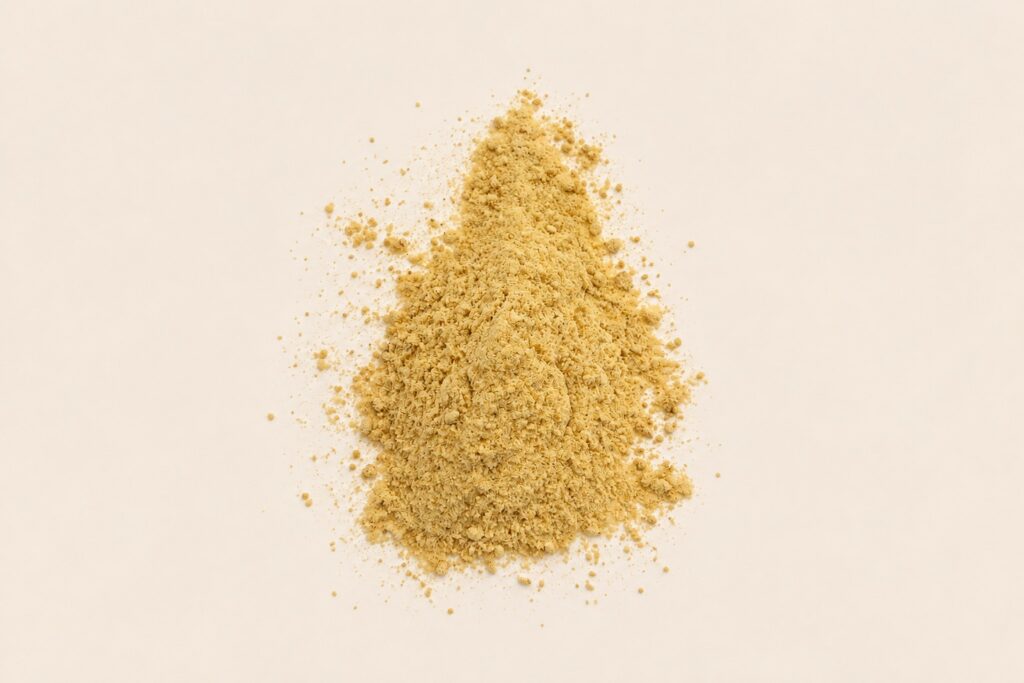
The same goes for yuzu shichimi: there is no official standard that defines "this is what yuzu shichimi is." Some products have more yuzu than chili pepper, and in some, yuzu is added while another ingredient is dropped. So even if you look up how to make it, the ingredients and ratios vary from recipe to recipe.
On this page, after verifying the actual contents from the ingredients that specialty shops disclose and from ingredient labels, we lay out home blending ratios, grinding methods, amounts and timing for shaking it on by dish, how to use it versus yuzu kosho, and how to choose commercial products and where to store them after opening. From our standpoint as a contract processor of dried vegetables and dried fruits, we have also added a way to skip the drying step by using yuzu powder. The procedure for drying the peel itself is Uses for yuzu peel and how to dry it, so please look there.
TOC
What is different in the contents of yuzu shichimi versus ordinary shichimi
Yuzu shichimi is often explained as "shichimi with yuzu added," but looking at actual products, it is not just addition. First we verify how far the contents of shichimi itself are fixed, then look at what changes when yuzu goes in.
No official standard defining the contents of shichimi can be found
Looking through the list of JAS standards published by the Ministry of Agriculture, Forestry and Fisheries, from food and drink to agricultural products, handling methods, and test methods, the items spice, chili pepper, and shichimi do not appear. There is no national standard defining the contents, at least not in the current JAS.
The makers write so too. On the history page of its own site, Yawataya Isogoro states clearly, "There is no strict definition of the ingredients that make up shichimi togarashi," and the same sentence appears on the page for the Three Great Shichimi joint project that Shichimiya Honpo publishes. Since it is from a pamphlet the three shops issued jointly, it can be read as an understanding shared within the industry.
In other words, there is no definitive answer that can assert "these are the seven of shichimi." The often-seen lineup of seven is either one shop's blend that spread, or a representative set chosen by combining the ingredients of several shops. On this page too, what can be verified is only as far as "this shop uses these ingredients," and beyond that is the writer's conjecture.
Among the Three Great Shichimi, the only overlap is chili pepper and sansho
When you put the ingredients the three shops disclose into a table, the overlaps and the outliers become clear. Yagenbori uses two kinds of chili pepper, Shichimiya Honpo fills everything but chili pepper with aromatic ingredients, and Yawataya Isogoro includes ginger.
| Shop (founded) | Disclosed seven | How it is built |
|---|---|---|
| Yagenbori Asakusa, Tokyo 1625 | Chili pepper, roasted chili pepper, black sesame, sansho, chinpi, poppy seed, hemp seed | Splits chili pepper into raw and roasted, two kinds, giving a range of heat |
| Shichimiya Honpo Kiyomizu, Kyoto 1655 | Chili pepper, sansho, hemp seed, white sesame, black sesame, aonori, green shiso | Everything but chili pepper is an aromatic ingredient. No chinpi, no ginger |
| Yawataya Isogoro Zenkoji, Shinshu Genbun 1 (1736) | Chili pepper, chinpi, sesame, hemp seed, shiso, sansho, ginger | Ginger appears only here among the three. Half heat, half aroma |
What all three include is chili pepper and sansho, plus sesame (white or black is split). Chinpi is in two shops, hemp seed in all three, and poppy seed, aonori, and ginger in one shop each. Yuzu is in none of these seven. It fits reality better to think of yuzu shichimi as a separate product from standard shichimi, assembled later.
Yuzu is not added — it is swapped in for something
Yawataya Isogoro lists the ingredients of both its standard shichimi togarashi and its yuzu shichimi on its product pages. The standard is seven: chili pepper, chinpi, sesame, hemp seed, shiso, sansho, ginger. The yuzu shichimi is chili pepper, yuzu, chinpi, black sesame, white sesame, shiso, sansho, ginger.
Lining them up, hemp seed is dropped in exchange for yuzu going in. And the sesame is split into two kinds, black and white. It is not just one yuzu added to the standard; the blend itself has been reassembled. You can read it as removing the hemp seed that carried the grainy texture and splitting the sesame into two kinds to widen the range of toastiness.
The same thing happens when you make it at home. Add yuzu powder to a basic shichimi and the total volume grows by the amount of yuzu, diluting both the chili pepper and the sansho. If you want the yuzu to come through, it is quicker to reduce something or to reassemble the blend around yuzu from the start.
There is also a yuzu shichimi where yuzu is the most abundant
The ingredient name list of "Kyo no Yuzu Shichimi" from the Kyoto shichimi specialty shop Ochanokosaisai is written in the order yuzu, Hontaka chili pepper, sesame, aonori, sansho, poppy seed, shiso, hemp seed. Since the ingredient names of processed food must be listed in order of weight, this product has more yuzu than chili pepper. It contains no chinpi.
A product where yuzu is second, and a product where yuzu is first. Even under the same name "yuzu shichimi," the impression on the palate is quite different. If you are unsure at the store, first look at where yuzu comes in the ingredient name list; that gives you a sense of whether it leans toward aroma or toward heat.
Incidentally, this product's name field on the label is also "shichimi togarashi." Even with eight ingredients, the name stays shichimi togarashi. This too shows that it is not named by counting the number.
When making yuzu shichimi, what to mix and how much
What people hesitate over most with homemade yuzu shichimi is the ratio. Even when you look at a recipe, it often ends with "to taste," so you cannot decide the first batch. Here we set a starting point in teaspoon units, then show how to swing it toward aroma or toward heat.
Using the teaspoon as the unit lets you make one portion
Yuzu shichimi is a condiment whose aroma fades, so making a few teaspoons' worth and using it up suits it better than making a jarful. The table below totals about 8 teaspoons, the amount of one commercial can. You can measure it with a mortar and a teaspoon.
| Ingredient | Standard (teaspoons) | Aroma-leaning | Heat-leaning | The role it plays |
|---|---|---|---|---|
| Chili pepper (ichimi / powder) | 2 | 1 | 3 | Heat and red color. The amount sets the flavor |
| Yuzu peel (dried / powder) | 1.5 | 3 | 1 | A bright aroma. The signature of yuzu shichimi |
| Chinpi (mandarin peel) | 1 | 1 | 0.5 | A slight bitterness and a settled aroma |
| Sansho | 1 | 1.5 | 1 | A tingling stimulus and a green aroma |
| Black sesame / white sesame | 1 | 1 | 1 | Toastiness and the texture of the grains |
| Hemp seed / poppy seed | 1 | 1 | 1 | The snappy bite when chewed |
| Aonori | 1 | 1 | 0.5 | Green color and the aroma of the sea |
Taking only the ratio of yuzu to chili pepper, the standard is 3 to 4, aroma-leaning is 3 to 1, and heat-leaning is 1 to 3. Commercial yuzu shichimi where yuzu comes first in the ingredient name list is built close to the aroma-leaning column.
When you want to bring out aroma, increase yuzu and sansho
In the aroma-leaning column, the yuzu peel is doubled from standard and the sansho is also increased a little. Increasing only yuzu makes the citrus aroma monotonous; it is gorgeous right after you shake it on, but you tire of it as you eat. Adding sansho changes the direction it rises through the nose, so the aroma keeps standing up to the end.
You may reduce the chili pepper by the amount you increase the yuzu. If weak heat feels lacking, try increasing the aonori and sesame a little rather than the chili pepper. The outline of the flavor deepens, yet the heat does not rise. If you share the table with someone who is not good with spicy food, making it in this direction lets one jar do.
The Kyoto specialty shop placing yuzu first in the ingredient name list is likely the same thinking. Rather than pulling with the heat of chili pepper, thicken the aromatic ingredients to make a condiment you can shake on generously. The less condiment a dish takes, as with udon or yudofu, the more this difference tells.
If adding heat, add chili pepper first, little by little
The heat-leaning column sets the chili pepper at 1.5 times standard. But chili pepper varies greatly in heat by type, and the same one teaspoon becomes a different thing. It is surer to taste the ichimi togarashi you have on hand before deciding the amount. If you grind your own from dried chili peppers, it also changes depending on whether you leave the seeds in.
Reading records by people who made their own shichimi, you come across stories of adding chili pepper as if for commercial shichimi and it turning so hot their lips stung. Once mixed, you cannot reduce it, so starting small and adding while tasting lets you walk it back.
For tasting, shaking it onto miso soup or tonjiru is more accurate than licking the powder plain. The impression when the aroma rises in the steam of a soup is closer to the impression when you actually use it. Plain powder lets only the heat stand out, so you cannot tell whether the aroma is too much or too little.
Whether you put in chinpi or leave it out makes a different condiment
Chinpi is dried mandarin peel; Yagenbori and Yawataya Isogoro put it in their standard shichimi, but Shichimiya Honpo does not. For yuzu shichimi too, both with-chinpi and without-chinpi versions are sold.
Putting in two kinds of citrus peel creates a layer of slight bitterness beneath the bright aroma of yuzu. Yuzu alone makes the aroma easier to read, while with chinpi in, something lingers afterward. People who record homemade shichimi also write that the true source of the shichimi-like aroma was the chinpi. If you want to bring it closer to shichimi rather than yuzu shichimi, it is better not to reduce the chinpi.
There is also the option of using natsumikan peel instead of chinpi. Its bitterness and the impression of acidity come through more strongly than satsuma mandarin peel, so adding the same amount brings it forward more than chinpi. When swapping, start by trying half the amount first.
How to grind the ingredients so the aroma remains
Even with the ingredients ready, the finish changes with the grinding. The drying methods are Uses for yuzu peel and how to dry it, so here we look only at the steps after drying.
Roast the chili pepper and remove the seeds before grinding
Rather than grinding dried chili pepper as is, lightly dry-roasting it in a frying pan, letting it cool a little, then removing the seeds and grinding brings out toastiness. Yagenbori using raw chili pepper and roasted chili pepper separately is also to bring out the aroma of the roasted one on its own. At home too, roasting just half the total and mixing it in creates a step change in how the heat comes out.
When grinding in a mortar, wear gloves and a mask. If the finely ground chili pepper powder flies up, it hits the eyes and nose. When the quantity is large, using a mill is safer. Always wipe the mill or mortar after grinding, before grinding sesame next.
Sesame and hemp seed release oil if ground too much
Grind sesame too much and the oil seeps out and the powder clumps. Stop coarser than when making sesame dressing; letting go when about half the grains remain is just right. Hemp seed and poppy seed serve for the snap when chewed, so you may mix them in whole without grinding.
The order of mixing also relates to the oil. Combine the chili pepper, yuzu peel, chinpi, and sansho first, then add the sesame, hemp seed, poppy seed, and aonori at the end and mix lightly. In this order, the grainy ingredients remain without being crushed. Sansho is most aromatic right after grinding, so grind it just before mixing.
Decide coarse or fine grinding by the dish you use it in
With a coarse grind, the grains are visible when you shake it on, and the aroma comes out where you bite. It suits dishes with a high density in the mouth, such as yakitori and karaage. A fine grind scatters over the surface of the broth and mixes evenly, so it suits soups such as udon and suimono. To cover both with one jar, make it coarse and crush it a little in a mortar just before using it in soup to adjust.
Yuzu peel that is under-dried will not become powder no matter how much you grind it. There is even a record of it not getting fine after an hour in a food processor. Unless it is dry enough to snap crisply when folded, the blade just slips. If you want to make powder, not misjudging when to stop at the drying stage comes first.
As for grind level, you can make it finer later but cannot coarsen it back. When unsure, stop coarser and move only the amount you want finer to the mortar each time; that way you fail less. Thirty seconds of turning in a mortar gives a fineness suited to soups. Make everything fine at once and only a powdery feel lingers in the mouth when you shake it onto fried food.
Starting from yuzu powder, how much can you shorten it
Drying the yuzu peel yourself takes several days to a week in the sun. Using yuzu that is already powdered removes that step entirely. Let us sort out what gets shortened and by how much.
The drying step disappears entirely
Making it from fresh yuzu involves the steps of washing, thinly paring the peel, scraping off the white pith, cutting into fine strips, drying, folding to check the dryness, and grinding. Starting from powder, all that remains is the mixing step. Since you can make it even in a season when yuzu is not on the market, you will not be stuck without it after hot-pot season ends.
In the place of chinpi, you can Natsumikan peel powder and other citrus peel powders can be fitted in. It is not satsuma mandarin chinpi itself, but it takes on the role of the slight bitterness of citrus peel. For chili pepper and sansho, using commercial powders means you do not have to get out the mortar.
Since you can choose the particle size, you can decide the grind on purpose
When you grind at home, the particle size is decided by the performance of your tools. When buying powder, you can choose fine powder or peel coarse-ground. That means you can make the fine grind for soups and the coarse grind for fried food separately at the mixing stage.
Making two kinds of yuzu shichimi makes it easy to use them for different purposes. The fine grind on the kitchen counter, the coarse grind on the dining table. Both have the same ingredients inside; only the grind differs. yuzu powder Using a product that comes in a lineup of different particle sizes, you can do this separation directly.
The state of dried yuzu as we see it as makers
We dry domestic vegetables and fruits with warm air and grind them. With yuzu, that means drying the peel and taking it down to a powder of up to the equivalent of 100 mesh. We do not handle spices such as chili pepper and sansho themselves, so we are not making shichimi. Our range extends to supplying yuzu powder, other powders, and blends premixed with salt or tea leaves.
Unlike home sun-drying, warm-air drying is run with a set temperature and time, so the finished moisture is uniform. That is why clumps are less likely to form when powdered. We set the best-before date of dried products at about six months from the shipping date. The figure of half a year is not the time until it spoils, but a line for how long the aroma can be expected to still stand up. It is for the same reason that people are told it is better to make homemade yuzu shichimi in small amounts at a time.
We accept filling into small packs from 10 g up. For a condiment you shake on, the time after opening sets the flavor, so holding several small packs lets you use it up deliciously to the end better than holding one large bag. Yawataya Isogoro also writes that it recommends small packs to customers who are unsure.
FOR BUSINESS
Looking for dried yuzu as a raw material?
We dry and mill Japanese-grown yuzu to order. We welcome inquiries about specified cut shapes and particle sizes, as well as ongoing supply. For specifications, Dried yuzu・yuzu powder listed at.
Small-quantity purchases are handled at our sister brand's online shop, OYAOYA. There are two types: Tokushima-grown yuzu powder (fine) and a coarse type ground whole with the peel.
What to shake yuzu shichimi on, and how much
With yuzu shichimi, the result changes more with the timing of shaking it on than the amount. Added partway through heating, the citrus aroma flies off, so the basic rule is after turning off the heat, or after serving into the bowl. We have put suggested amounts by dish into a table.
| Dish | Guide per plate | Where to add it | Knack for shaking it on |
|---|---|---|---|
| Kake udon / buckwheat | Two shakes | Serve into the bowl and Just before eating | scatter over the broth. Eat without stirring |
| Hot pot / yudofu | One shake | The dipping broth | Do not add it directly to the pot, only to your own plate |
| Suimono / Miso soup | One shake | Turn off the heat and after serving into the bowl | A fine grind is Scatters easily on the surface |
| Pork miso soup / Kenchin soup | Two shakes | after serving into the bowl | Soups full of ingredients Hold up even in generous amounts |
| Fried chicken / Fried foods | The same amount as salt | Directly on freshly fried food | In place of salt. A coarse grind works well |
| Yakitori / Tsukune | One shake | Once grilled Place on top | On salt-seasoned rather than sauce. A small amount is enough |
| Grilled fish | One shake | Once grilled Serve alongside | Not on the skin side but on the flesh side |
| Light pickles / Salt-rubbed vegetables | A quarter teaspoon | Together with salt Rub in | After rubbing let sit for about ten minutes |
| Salad / Hiyayakko | One shake | Dressing or on top of soy sauce | Where there is oil the aroma spreads |
| Japanese-style pasta | Two shakes | Turn off the heat and After tossing | Into the cooking oil do not add it |
| Egg over rice / Natto | Less than one shake | After drizzling the soy sauce then | Add too much and only the yuzu lingers |
| Fried rice | One shake | After plating | In the pan it burns and turns bitter |
For noodles and soups, sprinkle after serving into the bowl

With kake udon or hot soba, the heat of the broth lifts the aroma, so two shakes just before eating is enough. If you stir it in, the first mouthful uses up the aroma, so leaving it scattered on the surface as you eat keeps it going to the end.
For hot pot and yudofu, do not add it to the pot itself. It makes everyone's portion spicy, and the longer it simmers, the more the yuzu aroma fades. Drop it into the dipping broth in your bowl and dissolve it there, or place it directly on the tofu. For miso soup and clear soup too, add it only after turning off the heat and ladling it into the bowl.
On fried foods, a generous amount in place of salt is fine
On fried chicken, fried foods, and tonkatsu, you can sprinkle it generously, just as you would salt. Yuzu shichimi contains no salt, so if you use it in place of salt, add a little salt as well. Making a seasoned salt by mixing salt and yuzu shichimi one to one means you won't have to guess the amount every time you fry.
Sprinkling it on the shredded cabbage served with fried food also helps cut the oiliness. A usage suggested by a specialty shop in Kyoto includes sprinkling it on the raw vegetables that accompany fried food. Eating back and forth between the fried food and the vegetables on your plate resets your palate for a moment.
For grilled fish and yakitori, add it once grilled
If you sprinkle it before grilling, the parts exposed to the flame burn and turn bitter. Once grilled, a single shake on the flesh side is enough. With yakitori, the yuzu aroma stands out more on salt-seasoned than on sauce. If you use it with sauce, choose a coarse grind so it isn't overpowered by the sweetness.
Fatty fish such as yellowtail and Spanish mackerel hold up even with plenty of yuzu shichimi. Delicate white fish, on the other hand, need just one shake. Adjusting the amount to the fattiness of the fish keeps the fish's flavor from being hidden by the shichimi.
For light pickles and salads, mix it in and let it sit a while
The first uses Yawataya Isogoro gives for yuzu shichimi are lightly pickled spring cabbage and a tofu-and-avocado salad. What's interesting is that cold dishes come before hot soups on their list.
For light pickles, rub it in together with salt and let it sit for about ten minutes. Cold dishes give off no steam, so the aroma is harder to bring out; the resting time transfers it to the vegetables. For salads and chilled tofu, sprinkle it over the dressing or soy sauce. With oil or moisture present, the powder stays in one spot instead of scattering.
In long-simmered dishes, the aroma doesn't last
In dishes that cook for a long time, such as curry, stew, simmered udon, and oden, adding it partway through won't keep the yuzu aroma. The heat and color remain, so if you only want heat, ichimi chili pepper suits the purpose better. Add yuzu shichimi after you've served the dish into the bowl.
For the same reason, adding it to stir-fry oil from the start doesn't work either. The powder burns in the oil and only bitterness comes out. For pasta and fried rice too, add it after turning off the heat or after plating. Deciding on it as a condiment you don't cook with leaves fewer things to agonize over.
In delicate broth soups, the yuzu takes over
In a clear soup made only from kombu and bonito, or a bowl built around the ingredients' own aroma, adding yuzu shichimi pushes the yuzu to the front. For such bowls, floating a single, very thinly shaved piece of fresh yuzu peel suits better. The dried, powdered form releases its aroma all at once, making the amount hard to adjust.
The same goes for sashimi. Sprinkling yuzu shichimi on white-fish sashimi erases the fish's aroma. If you want to pair citrus and heat with sashimi, rather than the powder, yuzu kosho is easier to adjust in amount.
How to choose between yuzu kosho and yuzu shichimi
Both use yuzu peel and chili pepper, but they are different seasonings. Mix them up and either the flavor won't come together or the salt doubles up. Here are the differences along four axes.
| Axis of comparison | yuzu kosho | how to make yuzu kosho |
|---|---|---|
| Form | Paste | Dry powder |
| Form of the yuzu | Fresh peel, grated | Dried peel, ground |
| Chili pepper | Fresh green chili or red chili | Powdered dried chili |
| Salt | Included | Not included |
| Other ingredients | Basically yuzu peel, chili, and salt—three in all | Sansho, sesame, and more— several aromatic ingredients |
| What it dissolves into | Broth, oil, mayonnaise | Not dissolved; scattered on the surface |
| Well-suited dishes | Sashimi, chilled tofu, hot pot, seasoning meat | Noodles, soups, fried foods, grilled dishes, light pickles |
| Handling of base seasoning | By the amount of salt, reduce the base seasoning | Add salt separately |
Paste and powder dissolve into different things
Yuzu kosho is a paste, so it dissolves into broth and oil. Dissolve it and toss, and it spreads through the whole dish. Yuzu shichimi is a powder, so even dropped into soup it won't dissolve and floats on the surface. Because it stays on the surface, the aroma comes with each bite. You can choose between them by whether you want it spread throughout or want to create distinct hits of flavor.
Remember it as yuzu kosho for mixing into dressing or mayonnaise, and yuzu shichimi for sprinkling on freshly fried food, and you won't go wrong. For how to use yuzu kosho itself, What do you put yuzu kosho on? Uses by dish covers it in detail.
Whether or not it contains salt changes the base seasoning
Yuzu kosho contains salt. When you mix it into meat seasoning, you have to cut the salt accordingly or it turns too salty. Yuzu shichimi contains no salt, so it is no substitute for salt. If it feels like something's missing when you sprinkle it on fried food, it's because the salt is short, not the heat or the aroma.
Because of this difference, decide the order when you use both in the same dish. Season first with yuzu kosho, then finish by sprinkling yuzu shichimi. Reverse it and the salt level becomes impossible to judge.
Whether the chili is fresh or dried changes how the heat comes out
Yuzu kosho uses fresh chili, so the heat hits the moment it enters your mouth and lingers. The heat of yuzu shichimi comes from powdered dried chili, so it builds gently. When you want to add a little at a time and adjust, yuzu shichimi suits better; when you want a small amount to pack a punch, yuzu kosho does.
The yuzu aroma works the same way: yuzu kosho, made from grated fresh peel, is more direct. The aroma of dried peel reaches you only after heat or steam lifts it. Yuzu shichimi shines in warm dishes because the steam helps bring out that lift.
"Yuzu kosho shichimi" doesn't necessarily contain yuzu kosho
On store shelves there are also products named "yuzu kosho shichimi togarashi." Buy one thinking yuzu kosho has been kneaded into shichimi, and the contents can be different. Checking the ingredient list of one commercial product, the order was chili pepper, chenpi (dried citrus peel), black sesame, aosa seaweed, poppy seed, hemp seed, sansho, yuzu, black pepper, and salt—and it contained no yuzu kosho itself.
In other words, it was a product that added yuzu, black pepper, and salt to shichimi. The character 胡椒 (kosho) is used here to mean pepper, not the kosho of yuzu kosho. Incidentally, the 胡椒 in yuzu kosho comes from a Kyushu dialect word for chili pepper. Since the same two characters are used in three ways, don't judge by the name alone—look at the ingredient list.
What to look at when choosing a store-bought yuzu shichimi
Yuzu shichimi differs in contents from product to product, so there are things you can read off the package label. Checking just three gives you a rough idea.
| What to check | What it tells you | A guide for choosing |
|---|---|---|
| The ingredient list's order | Listed by weight, most first. Where yuzu ranks | If yuzu is first, it leans aromatic. Third or later leans toward heat |
| Presence of chenpi | One kind of citrus or two | With chenpi, a bitterness lingers after. Yuzu alone is lighter |
| Position of sansho | Strength of the tingle | The nearer the front, the more the sansho stands out |
| Net content | Time to use it up Time | A tin of around 10 g, or a small pack. Avoid large volumes |
| Container shape | How moisture gets in | Tins and jars have a shaker top that closes. Transfer bags to an airtight container |
| Yuzu's growing region | Domestic or imported | If labeled, it will say domestically grown |
The ingredient order tells you how much yuzu there is
Ingredient lists on processed foods are written in order of weight, most first. With yuzu shichimi, where yuzu comes in the list tells you how much of it the product uses. A product with yuzu first means there is more yuzu than chili. Third or later, and chili and other spices are more plentiful—a heat-leaning build.
At the same time, check whether chenpi is included. A product whose only citrus is yuzu has a brighter aroma and leaves less behind. With chenpi, there's an added layer of mild bitterness. To tell which you prefer, dry a bit of mandarin peel you have at home and taste it—that gives you an idea.
A smaller size tastes good right to the end
Yawataya Isogoro writes that shichimi starts losing its flavor the moment it's opened and meets the air, so they want you to buy a little at a time and use it up soon. They also say they recommend small packs to customers who are unsure. The fact that the makers themselves don't push large volumes is something to weigh when choosing.
For a table of one or two, a tin of around 10 g is enough. A larger container has a lower unit price, but if the aroma has faded by the time half remains, buying cheap was pointless. Only when you have a large family, or use it at every meal, should you choose a large size.
Tins, jars, and bags let moisture in differently
Tins and jars have a lid over the shaker top that you can close after each use. A bag only folds shut once opened, so moisture gets in easily. If you buy a bag, transfer it to a tin, a jar, or a small sealable bottle. Some products come in single-use packets of about 0.2 g, which suit carrying around and bento.
When you transfer it, dry the container completely first. Put it into a just-washed jar and the leftover moisture clumps the powder. Yuzu shichimi, once damp, hardens at the shaker top and won't come out, so a dry container matters more than you'd think.
Check whether the yuzu's growing region is stated, too. Yuzu is grown widely in Japan, while many products use imported chili, and the origin is sometimes noted beside the ingredient name. A product using domestically grown yuzu usually states so on the front of the package or beside the ingredient name. If it doesn't, that simply means it fell within the range where stating origin isn't required, so that alone isn't grounds to judge quality.
Where to keep yuzu shichimi after opening
Knowing what happens after opening makes it easier to decide where to keep it and how long to take using it up.
Moisture gets in every time you shake it
Most of what clumps yuzu shichimi is the moisture that gets in as you use it. Shake it right over the pot and the rising steam enters the shaker top. Hold the bowl away from the pot and shake where the steam won't reach. If you spoon it out, use a dry spoon.
Keep it out of direct sunlight and away from heat. The side of the stove is within easy reach, but heat and steam come and go there while you cook. Bringing it over only when you use it and keeping it elsewhere makes it last longer.
How to decide between refrigerating and freezing
If you'll use it up in a month, room temperature is fine. Keep it longer and refrigerate; across seasons, freeze—that's the order to think in. With both refrigeration and freezing, the container sweats when you take it out, so don't open it while cold. Let it return to room temperature before opening, or portion it out and take out only what you'll use.
You can also make a large batch in yuzu season, freeze it, and bring it out to room temperature a little at a time. If you make it yourself, portioning it into small containers from the start makes this taking-out-and-putting-back easier.
Uses for yuzu shichimi that has lost its aroma
Yuzu shichimi whose aroma has faded can go into cooked dishes before you throw it out. It's no longer suited to sprinkling as a finish, but for kinpira, stir-fries, or mixing into miso, the heat and color remain. In any use that doesn't rely on aroma, it still works.
You can also revive it by adding a little yuzu powder. Mixing in yuzu peel powder at about ten percent of the whole brings the aroma back. But add it repeatedly and the yuzu alone builds up until the heat is gone, so keeping it to twice is safer.
FOR BUSINESS
Looking for dried yuzu as a raw material?
We dry and mill Japanese-grown yuzu to order. We welcome inquiries about specified cut shapes and particle sizes, as well as ongoing supply. For specifications, Dried yuzu・yuzu powder listed at.
Small-quantity purchases are handled at our sister brand's online shop, OYAOYA. There are two types: Tokushima-grown yuzu powder (fine) and a coarse type ground whole with the peel.
A product catalog that shows around 100 items we handle
Agriture, flexibly handling everything from small lots to large lots
- Available for purchase in small lots from 1 kg
- We handle heirloom vegetables from across Japan
- Dried fruit and herbs also supported
FAQ
Summary
There's no official standard defining what goes into shichimi, and even among the ingredients disclosed by the three long-established makers, only chili and sansho overlap. Yuzu shichimi is an extension of this: in some products yuzu comes first in the ingredient list, while in others the hemp seed is dropped to make room for yuzu. Starting from the premise that "yuzu shichimi" can't be pinned to one definition leaves you less unsure, both when choosing and when making it.
To make it at home, work in teaspoons, make about eight total, and decide the chili amount by tasting with miso soup. When you want to lift the aroma, increase the yuzu and sansho; for heat, the chili. Whether you add or leave out chenpi turns the same ingredients into a different condiment. To skip the drying, start from yuzu powder and only the mixing step remains.
When you use it, add it after serving into the bowl, not partway through cooking. Two shakes for udon and soups, a generous amount in place of salt for fried food, and for light pickles rub it with salt and let it sit ten minutes. Don't add it to long-simmered dishes or stir-fry oil. It differs from yuzu kosho in both form and the presence of salt, so choose between them by whether you're seasoning or finishing.
Download the product catalog
We will send the materials to your email address based on the information you provide.
- What do you put yuzu kosho on? We've compiled how to use it by dish and a guide to amounts
- We checked the difference between chili pepper, takanotsume, and shishito against the national crop classification
Author of this article
Related articles
-
 Aojiru vs. vegetable juice vs. dried vegetables, thoroughly compared | Which method truly works for beating vegetable deficiency?
-
 What is yakuzen? Its meaning, the difference from kampo, and the basics of starting with familiar ingredients explained
-
 What's the Difference Between Yakuzen and Kampo? A Gentle Look at Food vs. Crude Drugs, Purpose, and Philosophy
-
 Complete guide to using dried mugwort | From rehydrating to popular recipes and storage tips
-
How to make yomogi mochi with dried mugwort | Ingredients, amounts, and foolproof tips explained
-
How to make mugwort tea | Easy with dried mugwort, explained for teapot, decoction, and homemade
-
 What Are Edible Flowers? Types, How to Eat Them, and How to Choose, Explained by a Grower
-
 How to Make Vegetable Furikake: Easy with Dried Vegetables, a Kid-Pleasing Homemade Recipe, and How to Choose