Dried Kamo eggplant


TOC
Product overview of dried Kamo nasu
The heirloom vegetable "Kamo nasu," cultivated for over 300 years in the Kamigamo district of Kyoto. It has the property of being fine-grained and firm yet tender, and resistant to falling apart when simmered. Drying it makes the flesh even firmer, bringing out its refined aroma and sweetness in a transformed taste.
When heat-cooked, it becomes a melting texture, just like grilled eggplant, with a fruity sweetness that gets even eggplant-averse people reaching for their chopsticks. As a material that earns high marks in taste, texture, and appearance alike—able to be the star of a dish or a supporting player—and with its established name recognition, it is also used in settings such as novelties.
Three commitments Agriture values
01 A Kyoto heirloom vegetable with 300 years of history
Kamo nasu is a storied Kyoto vegetable cultivated in the Kamigamo district for over 300 years. As a material with particularly high brand value even among Kyoto vegetables, it adds depth to a product's story.
02 A melting texture on par with grilled eggplant
When heated, it transforms into a melting texture like grilled eggplant. It is resistant to falling apart, making it an easy-to-handle material for sauces and pasta ingredients as well.
03 A sweetness that even eggplant-averse people find easy to eat
Kamo nasu's greatest appeal is that it has little of eggplant's grassy smell and its fruity sweetness comes to the fore. It is an easy material to develop for children's and vegetable menus too.
Product catalog showing the items we handle
Flexible support from small lots to large lots
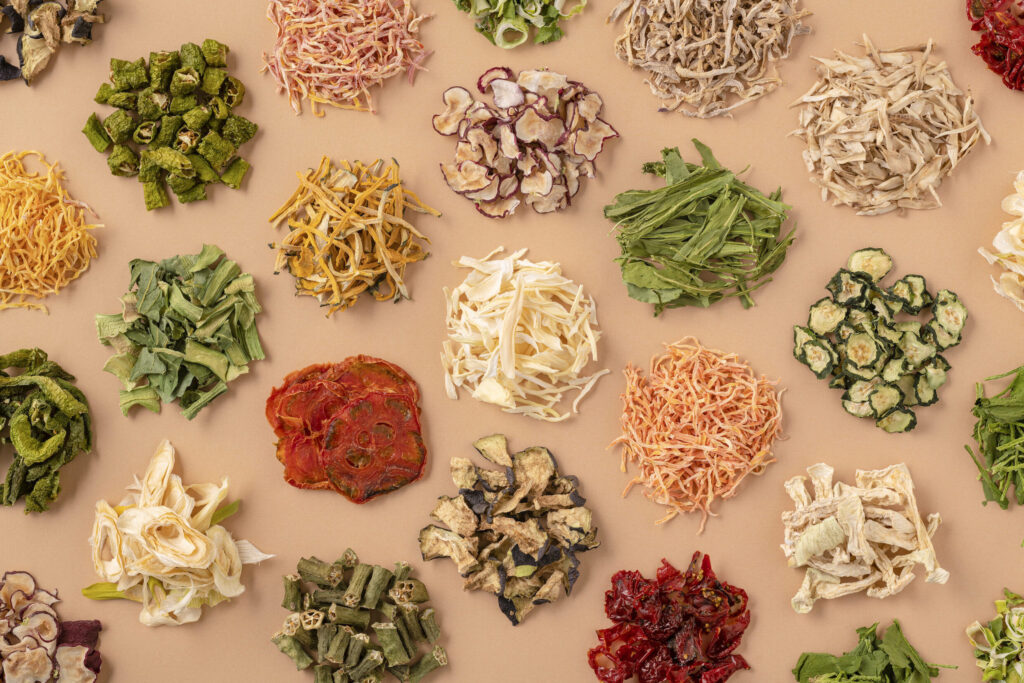
- Sold in small lots from 1 kg
- Handling heirloom vegetables from across Japan
- Dried fruits and herbs also supported
Six reasons to choose Kamo nasu
Produced in Kyotamba, Kyoto
Young producers in Kyotamba Town cultivate Kamo nasu, a traditional Kyoto vegetable. We receive supply from farmers who also put effort into revitalizing the region.
Kyoto heirloom vegetable
A Kyoto heirloom vegetable with over 300 years of history. It is a material with high name recognition even among Kyoto vegetables.
Melting texture
When heated, it transforms into a melting texture like grilled eggplant. It blends into both Japanese and Western dishes.
Resistant to falling apart
Because the flesh is fine-grained and firm, it has the property of holding its shape even in long simmering and sauce processing.
Diced specification
A diced specification with a strong presence, in a shape easy to handle for simmered dishes, sauces, pâtés, and the like.
No glucose added
The raw material is 100% Kamo nasu. Without adding sugars or preservatives, it makes the most of the ingredient's own sweetness.
Product specifications
|
Item |
Details |
|---|---|
|
Raw material growing region |
Kyoto Prefecture (partner farmers) |
|
Specification |
Diced |
|
Storage method |
Room temperature (store away from high heat and humidity) |
|
Best-before date |
6 months from the shipping date |
|
Minimum lot |
From 10 bags / 100 g |
|
Powder |
△ Possible depending on coarseness |
|
Manufacturing period |
August |
Customization support
We flexibly accommodate the following customizations to match your OEM product development. Please feel free to contact us for large-lot orders or consultations on specification changes. Even product concepts that can't be fully expressed with the standard specification can be supported by Agriture through combinations of drying conditions and cutting methods.
|
Item |
Details |
|---|---|
|
Change in cut thickness |
10 kg or more |
|
Adjustment of dice size |
Consultation available |
|
Large-lot manufacturing |
Advance consultation required three months before the manufacturing period |
|
Powder processing |
△ Possible depending on coarseness |
Depending on the customization content, there may be constraints on the raw material procurement timing and lot size. Consulting us early to match the peak season of Kamo nasu and the manufacturing schedule allows manufacturing to your desired specification to proceed smoothly.
POWDER
Kamo nasu powder is also available
Powdering is also possible depending on the coarseness. We can propose ways to make the most of Kamo nasu's deep flavor as a base material for vegetable pâtés, sauces, and soups.
About the Kamo nasu raw material
Agriture's dried Kamo nasu is sourced by forming long-term relationships with partner farmers within Kyoto Prefecture. By managing it with links down to the growing region, producer, and variety, we have a system in place to deliver commercial-use raw material of stable quality every year.
BRAND
Variety:Kamo nasu (Kyoto heirloom vegetable)
PRODUCER
Producer:Partner farmers in Kyotamba Town, Kyoto. A young U-turn farmer works on cultivating Kyoto vegetables alongside radishes.
REGION
Growing region:Kyotamba Town, Kyoto. The basin climate and cool nights raise the fine-grained flesh of Kamo nasu.
CULTIVATION
Cultivation method:A summer-harvest variety grown by open-field cultivation. Good-quality Kamo nasu of uniform shape and size are sorted and sent to processing.
*Reference: OYAOYA product page
Agriture's low-temperature drying technology
At Agriture, to make the most of Kamo nasu's qualities, we adopt a proprietary drying process that slowly draws out moisture at low temperature. Compared with high-temperature drying it takes time, but the greatest benefit is being able to cherish the ingredient's color, aroma, and nutrition. By finely controlling the three—temperature, humidity, and airflow—we can draw the optimal drying curve for each ingredient, which is a feature of Agriture's low-temperature drying.
Raw material delivered from partner farmers is processed on an integrated line—washing, cutting, and drying—all on the same day. While reducing raw material loss, we lock the fresh flavor into the dried product. Being able to keep the time from harvest to processing short is a strength that comes precisely from having a processing base in the growing region of Kyoto.
For each post-processing lot, we check the moisture value and color tone one by one and ship only those that meet the quality standard. Even for commercial-use lots, because we check on both the visual and measurement fronts, we can deliver Kamo nasu at a stable finished quality.
💡 TIPS | Drying-processing trivia
Kamo nasu has a high flesh moisture content and is a material prone to uneven drying. By taking a long time at low temperature, we achieve a uniform finish that isn't hardened only on the surface but has moisture drawn out thoroughly to the interior.
Use scenes and OEM case studies
Dried Kamo nasu is used across a wide range of business types—from food makers to restaurants and EC mail-order brands. In addition to menus that make the most of the ingredient as is, its adoption is spreading as an OEM raw material for processed foods, seasonings, and blended products. Here we introduce representative use scenes.
Simmered dishes / Japanese-style deli sides
Reconstituted with water and simmered together with dashi, it becomes a thick, hearty dish like simmered Kamo nasu. Because it saves the trouble of peeling and prep, it is popular as a raw material for frozen deli sides and vacuum-packed deli sides. It can be stored at room temperature and is an easy material to incorporate into product designs that emphasize a Kyoto-vegetable character.
Grilled dishes / dengaku
Lightly reconstituted and then used in grilled dishes, it has enough presence to serve as the main dish, such as miso dengaku or grilled deli sides. Because the flesh is firm, it resists falling apart even when grilled, making it an easy material for designing a hearty plate.
Vegetable sauces / pâtés
Making the most of the melting texture achieved by heating, it can also be developed as a raw material for vegetable pâtés and meat-alternative substitutes. Because it is easy to produce satisfaction even while reducing the meat amount, it can be considered as a material for plant-based products.
Shojin cuisine / vegetable menus
Even in meat-free vegetable menus, the hearty flesh of Kamo nasu can create satisfying eating quality. Because you can use just the needed amount from room-temperature stock, it also suits as a material for shojin cuisine and plant-derived products.
Kyoto tourism / gift products
Making the most of the brand strength of "Kyoto heirloom vegetable, Kamo nasu," it can be used as a raw material for tourist souvenirs and gifts. Because the growing region and variety can be clearly stated, it is a raw material well-suited to planning value-added products that highlight the story of Kyoto vegetables.
About commercial OEM / processing consultations
By using "Kamo nasu," a top brand of Kyoto vegetables, you can carry the storytelling of Kyoto into your product. It is a material with good compatibility with Kyoto-vegetable series and tourist-destination brand development.
At Agriture, we also support launching private-brand products centered on dried Kamo nasu and renewing existing products. We accompany the entire development process—recipe design, prototyping, preparing specification sheets, and packaging proposals.
Custom-size support (change in cut thickness, shape adjustment): consultation available from orders of 10 kg or more. OEM support: available. Large-lot manufacturing: available (advance consultation required three months before the manufacturing period). We guide you consistently through everything from quotation to sample arrangement to match your requests.
Past initiative case studies are here
Please also see related initiative case studies and columns.
- Kamo Eggplant: A Kyoto Vegetable Prized for Its Round Shape and Rich Flavor
- The Work of "Subtraction" That Makes the Most of Kyoto Vegetables
- How to Build a Seasonal Course Woven with Kyoto Vegetables
Product catalog showing the items we handle
Flexible support from small lots to large lots
- Sold in small lots from 1 kg
- Handling heirloom vegetables from across Japan
- Dried fruits and herbs also supported
Frequently asked questions
Q1. How does it differ from ordinary eggplant?
Kamo nasu is a Kyoto heirloom vegetable, characterized by flesh that is fine-grained and firm yet becomes melting when heated. Its fruity sweetness also differs from ordinary eggplant.
Q2. Does the grassy smell of eggplant remain?
Kamo nasu is originally a variety with little grassy smell. Drying makes the aroma even more refined.
Q3. Is powder processing possible?
It is possible depending on the coarseness. Please consult us to match your application.
Q4. How do I reconstitute it?
About 10–15 minutes in lukewarm water is the guideline. For simmered dishes or miso dengaku, you can also heat it directly without reconstituting.
Q5. What is the minimum commercial lot?
It can be handled from 10 bags (1 bag = 100 g).
Q6. Can Kamo nasu be used for novelties too?
It has been adopted in many tourist souvenirs and novelty products that make the most of the brand strength of Kyoto vegetables.
Q7. What is the manufacturing period?
We manufacture centered on August each year. For large-lot orders, please consult us at least three months in advance.
RETAIL
For those looking to purchase in small packs
For those who want to try it in a small pack, we offer dried Kamo nasu from our sister brand OYAOYA in small bags from 20 g to 500 g. It is also a popular item as a Kyoto-vegetable gift.
Medicinal (yakuzen) benefits (in the case of raw Kamo nasu)
In the world of yakuzen, eggplant is classified as "cooling," and it is an ingredient expected to work to cool excess heat accumulated in the body. It has long been enjoyed as a vegetable easy to incorporate in seasons when summer flushing, dry mouth, or loss of appetite become a concern.
Furthermore, it is also expected to work to promote blood circulation and ease swelling. In seasons when the body tends to feel heavy from heat and humidity, incorporating it gently in simmered dishes or agebitashi is recommended.
💡 TIPS | Yakuzen trivia
Dried Kamo nasu is characterized by not cooling the body as much as raw eggplant, with its sweetness and umami concentrated. It is an easy material to incorporate even for those with a cold-sensitive constitution, and easy to cook to match one's physical condition.
The heirloom vegetable Kamo nasu is an ingredient that has long appeared in Kyoto's dietary wellness. Through various cooking methods such as sauces, pâtés, and simmered dishes, you can casually incorporate the ideas of yakuzen.
YAKUZEN
For those who want to know more about eggplant from a yakuzen perspective
Ways to incorporate eggplant to match your constitution and the season, and combinations with other ingredients, are explained in detail on our sister site "Yasai Yakuzen."
Samples and inquiries
We can also prepare trial samples first. For the initial transaction, samples are supplied for a fee. Please feel free to contact us for consultations on OEM development and stable supply as well.
Commercial-use dried vegetable OEM is here
Commercial vegetable powder is here
Recommended reading
- Kamo Eggplant: A Kyoto Vegetable Prized for Its Round Shape and Rich Flavor
- The Work of "Subtraction" That Makes the Most of Kyoto Vegetables
- How to Build a Seasonal Course Woven with Kyoto Vegetables
Download the product catalog
We will send the materials to your email address based on the information you provide.