Dried zucchini


TOC
Product overview of dried zucchini
Zucchini is a vegetable characterized by its vivid green color and juicy texture. Kyoto-grown zucchini in particular is tender and free of harshness, making it suitable for pasta, salads, and grilled dishes. Drying concentrates that vivid color and flavor, and a distinctive feature is that it resists losing color even when heated.
Turned into powder, it can be used as a hidden flavor in cooking or as a coloring agent that adds a natural green, making it ideal not only for foodservice but also for product development.
Three commitments Agriture values
01 A vivid green that resists fading
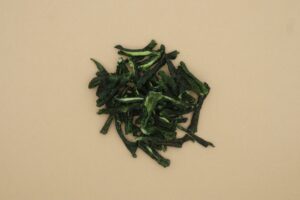
Low-temperature drying retains a vivid green that resists fading even when heated, enhancing the look of both dishes and powder products.
02 Free of harshness and versatile
Zucchini has little harshness in taste and aroma, blending into any Japanese, Western, or Chinese dish. It is an ingredient that is easy to use as a basic vegetable raw material.
03 Commercial spec that resists falling apart when simmered
Because dried zucchini has had its moisture removed, it resists falling apart when simmered, making it suitable for long-cooked sauces and ratatouille.
Product catalog showing the items we handle
Flexible support from small lots to large lots
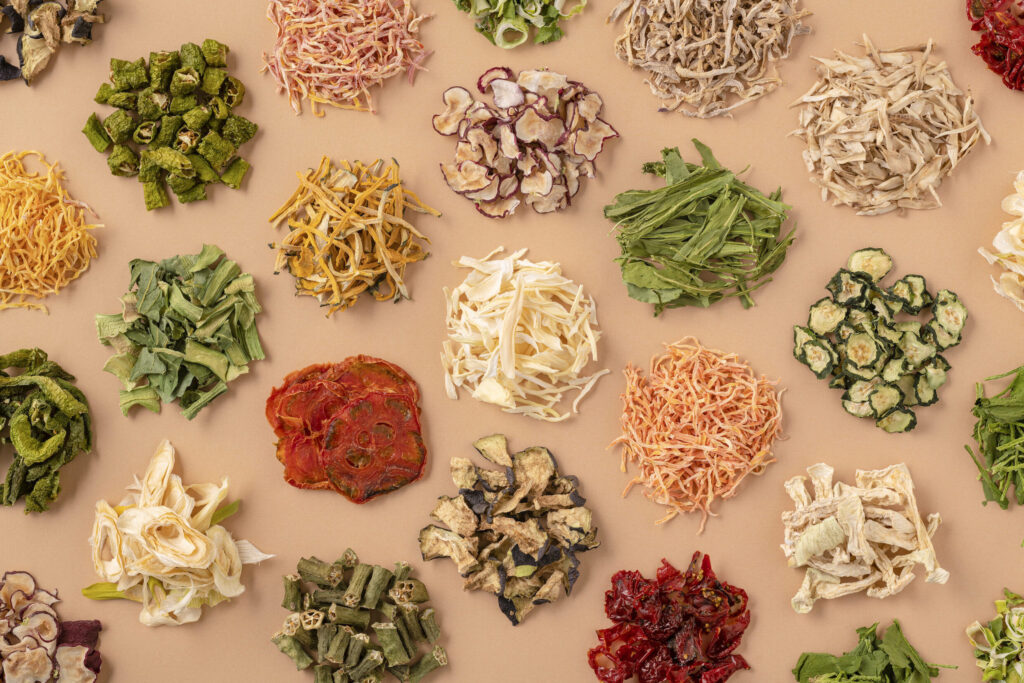
- Sold in small lots from 1 kg
- Handling heirloom vegetables from across Japan
- Dried fruits and herbs also supported
Six reasons to choose zucchini
Grown in Kyotango, Kyoto Prefecture
Made with fresh zucchini grown by partner farms in Kyotango, Kyoto. It is characterized by a tender flavor with little harshness.
Round-slice spec
Sliced into rounds, it is a shape that can be used as-is in pasta, ratatouille, omelets, and more.
Vivid green color
Low-temperature drying keeps it resistant to fading even when heated, so it can be used as a color accent that enhances a product's look.
Concentrated flavor
As moisture is removed, zucchini's inherent umami and aroma become concentrated. Even a small amount conveys a real sense of the ingredient.
No glucose added
The raw material is 100% zucchini. With no additives, we deliver the taste and nutrition of the ingredient as-is.
OEM support
Customization such as cut thickness and powdering is available for orders of 10kg or more.
Product specifications
Item | Details |
|---|---|
Raw material growing region | Kyoto Prefecture (partner farmers) |
Specification | Rounds |
Storage method | Room temperature (store away from high heat and humidity) |
Best-before date | 6 months from the shipping date |
Minimum lot | From 10 bags / 100 g |
Powder | Available |
Manufacturing period | July |
Customization support
We flexibly accommodate the following customizations to match your OEM product development. Please feel free to contact us for large-lot orders or consultations on specification changes. Even product concepts that can't be fully expressed with the standard specification can be supported by Agriture through combinations of drying conditions and cutting methods.
Item | Details |
|---|---|
Change in cut thickness | 10 kg or more |
Round-slice thickness / dice | Consultation available |
Large-lot manufacturing | Advance consultation required three months before the manufacturing period |
Powder processing | Available |
Depending on the customization, there may be constraints on raw material sourcing timing and lot size. Consulting us early, in line with the peak zucchini season and the production schedule, helps production proceed smoothly to your desired specifications.
POWDER
We also welcome inquiries about zucchini powder
We can also discuss powder that makes use of zucchini's natural green color. It achieves a natural, additive-free hue for coloring soups, sauces, and bread doughs.
About the zucchini raw material
Agriture sources the raw material for its dried zucchini by building long-term relationships with partner farms in Kyoto Prefecture. By managing the growing region, grower, and even the variety in a linked way, we have built a system that delivers a commercial raw material of stable quality every year.
BRAND
Variety:Kyoto-grown zucchini (green type)
PRODUCER
Producer:Partner farms in Kyotango, Kyoto. Grown in open fields, they raise tender zucchini with little harshness.
REGION
Growing region:Kyotango, Kyoto. The sunshine and temperature swings of the climate bring out zucchini's vivid green color and sweetness.
CULTIVATION
Cultivation method:Open-field, summer-harvested zucchini. We sort with an emphasis on size and freshness and process it while fresh.
*Reference: OYAOYA product page
Agriture's low-temperature drying technology
To make the most of zucchini's character, Agriture uses a proprietary drying process that removes moisture slowly at low temperature. It takes more time than high-temperature drying, but the biggest advantage is that it preserves the color, aroma, and nutrition of the ingredient. By finely controlling the three factors of temperature, humidity, and airflow, we can draw the optimal drying curve for each ingredient, which is the hallmark of Agriture's low-temperature drying.
Raw material delivered from partner farmers is processed on an integrated line—washing, cutting, and drying—all on the same day. While reducing raw material loss, we lock the fresh flavor into the dried product. Being able to keep the time from harvest to processing short is a strength that comes precisely from having a processing base in the growing region of Kyoto.
We check the moisture value and color tone of each processed lot one by one, shipping only those that meet our quality standards. Even for commercial lots, because we check both visually and by measurement, we can deliver zucchini with consistent quality.
💡 TIPS | Drying-processing trivia
Zucchini is a vegetable with very high moisture content, and its green color fades easily if dried all at once at high temperature. By taking time at low temperature, we achieve a finish that balances a vivid green with flavor.
Use scenes and OEM case studies
Dried zucchini is used across a wide range of business types, from food makers to restaurants and EC mail-order brands. Beyond dishes that use the ingredient as-is, it is increasingly adopted as an OEM raw material for processed foods, seasonings, and blended products. Here we introduce representative use cases.
Pasta & ratatouille
Simply adding it to tomato sauce or oil-based pasta finishes the dish with summery, colorful flair. Rehydrated in water, the flesh softens back up, reproducing a texture close to fresh zucchini as an ingredient in ratatouille and pasta. Being storable at room temperature and usable stably regardless of season, it is also valued for commercial use.
Soups & minestrone
Simmering it together with its soaking liquid lets zucchini's umami spread throughout minestrone and potage. With no prep work and easy portioning, it is an ingredient that slots readily into retort and frozen soup production.
Omelets & frittata
Lightly rehydrated and added to egg dishes, it finishes into colorful, satisfying omelets and frittata. Because it releases little water and is easy to handle, it is also easy to use as an ingredient for deli dishes and cafe menus.
Grilled vegetable mix
Combined with other dried vegetables such as bell pepper and eggplant, it can be developed as a grilled vegetable mix. Multiple ingredients can be stocked together at room temperature, and by simply changing the ratio, it becomes easy to design mix products for different uses, such as Mediterranean or Japanese style.
Baby food and nursing-care food
With little harshness and a soft rehydration, it is also suitable for baby food and nursing-care meals. Turned into powder, it is easy to use for thickening or blending into recipes by age in months, serving as an ingredient that easily boosts vegetable intake.
About commercial OEM / processing consultations
It is ideal for product development that values the sense of the ingredient and its color, such as summer menus, Mediterranean dishes, and baby food. Its ease of inventory management compared with frozen ingredients is also appreciated.
Agriture also supports launching private-brand products built around dried zucchini, as well as renewing existing products. From recipe design and prototyping to preparing specification sheets and proposing packaging, we work alongside you across the entire development process.
Custom-size support (change in cut thickness, shape adjustment): consultation available from orders of 10 kg or more. OEM support: available. Large-lot manufacturing: available (advance consultation required three months before the manufacturing period). We guide you consistently through everything from quotation to sample arrangement to match your requests.
Past initiative case studies are here
Product catalog showing the items we handle
Flexible support from small lots to large lots
- Sold in small lots from 1 kg
- Handling heirloom vegetables from across Japan
- Dried fruits and herbs also supported
Frequently asked questions
Q1. How do I rehydrate it?
Lukewarm water for 5 to 10 minutes is the guide. For soups and simmered dishes, you can heat it as-is without rehydrating.
Q2. Is powder processing available?
Q3. Does it have zucchini's characteristic bitterness?
We select varieties with little harshness, and even after drying there is almost no bitterness.
Q4. Why the commitment to domestic raw material?
Because working with domestic partner farms lets us secure safety, transparency of cultivation history, and high freshness.
Q5. What is the minimum commercial lot?
It can be handled from 10 bags (1 bag = 100 g).
Q6. How does it keep?
Because it can be stored at room temperature for 6 months, it is easier to handle than frozen ingredients and helps reduce inventory loss.
Q7. What is the manufacturing period?
We produce it mainly around July each year. For large lots, please consult us at least 3 months in advance.
RETAIL
For those looking to purchase in small packs
For those who want to buy a small pack, our sister brand OYAOYA offers dried zucchini in small packs from 20g to 500g. It can also be used for home prototyping.
Medicinal-food properties (for fresh zucchini)
In yakuzen, zucchini is classified as "cooling" and is regarded as an ingredient that cools heat built up in the body while gently regulating the stomach and gut. It is recommended when you want to reset a body flushed with heat, or in seasons when thirst is a concern.
Its harshness-free flavor blends with any seasoning, and it can be enjoyed in a wide range of dishes such as simmered and sautéed preparations. It is also expected to provide moisture, making it easy to incorporate at the table in seasons when air conditioning tends to dry things out.
💡 TIPS | Yakuzen trivia
A feature of dried zucchini is that it cools the body less than fresh zucchini and is easy to use in heated dishes. Enjoyed warm in soups or ratatouille, it helps regulate circulation while letting you enjoy its umami.
When you feel your stomach and gut are tired, or when heat has dulled your appetite, it is recommended to start with light dishes using zucchini.
YAKUZEN
For those who want to learn more about zucchini from a yakuzen perspective
Our sister site "Yasai Yakuzen" explains in detail how to incorporate zucchini according to the season and your condition, along with pairings with other ingredients.
Samples and inquiries
We can also prepare trial samples first. For the initial transaction, samples are supplied for a fee. Please feel free to contact us for consultations on OEM development and stable supply as well.
Commercial-use dried vegetable OEM is here
Commercial vegetable powder is here
Download the product catalog
We will send the materials to your email address based on the information you provide.