
Kabosu is in season from August to October, so why does it line the shelves all year round

Summary of this article
In the Ministry of Agriculture, Forestry and Fisheries' 2023 crop-year statistics, about 98% of Japan's kabosu comes from Oita Prefecture. We organized, from the growing region's primary sources: a month-by-month table of the year-round shipping that links open-field (Aug–Sep), storage (Oct–Feb), and greenhouse (Mar–Jul); use by dish based on a standard of 30 ml per fruit; the difference from sudachi; and the GI registration that was cancelled in 2026.
Squeeze it over freshly fried karaage. Give one squeeze at the rim of a bowl of miso soup. That use, taken for granted in Oita, has had trouble reaching tables outside the prefecture. Many people probably have the impression that you only see it in stores for a few months a year.
Yet Oita Prefecture links open-field, storage, and greenhouse to ship kabosu all year round. The reason it still doesn't stand out on shelves in Tokyo or Kansai becomes visible when you trace the statistics. On this page, we traced—from the statistics of the Ministry of Agriculture, Forestry and Fisheries and the public materials of Oita Prefecture and the Japan Patent Office—the season and months in circulation, use by dish, the difference from sudachi, the growing region's figures, and the change surrounding the 2026 registration of "Oita Kabosu." From our position of contract-processing dried vegetables, we also summarize at the end how to use it after the season has passed.
TOC
What kind of citrus is kabosu? A tennis-ball-sized green fruit you squeeze
Kabosu is a "fragrant acidic citrus" (kosan kankitsu) used not to eat the flesh but to add the aroma of its juice and peel to dishes. Rather than taking the lead like a mandarin, it plays the side that rounds off the edges of fat and salt to bring out the ingredient's flavor. First, let's get a handle on the fruit itself.
In the shipping season, roughly 80–100 g per fruit, with about 30 ml of juice
It's about the size of a tennis ball. The Oita Prefecture Kabosu Promotion Council states that its main variety is "harvested at 80–100 g during the August–September shipping season." Since a golf-ball-sized sudachi is 20–40 g each, there's roughly a threefold difference in weight.
This difference becomes a difference in use. Oita Prefecture gives the juice amount of kabosu as about 30 ml per fruit That's two tablespoons. You can figure two fruits to finish a hot pot for four, or three to four fruits to make 300 ml of homemade ponzu, so it's a citrus whose quantity to buy is easy to decide.
It's harvested while green because that's when the aroma stands out most
Kabosu in stores is almost all deep green. Oita Prefecture explains that, in both greenhouse and open-field cultivation, it "is harvested in the green period when the aroma reaches its peak." Rather than waiting for it to ripen yellow, they pick it at the peak of aroma.
In the product description of "Oita Kabosu" registered with the Japan Patent Office, too, a refreshing aroma and a gentler acidity than lemon or sudachi are cited as features. Rather than throwing acid at a dish, it draws close with its aroma. That kabosu is used even in delicate dishes like miso soup and clear soup owes much to this character.
85% within the prefecture is "Oita No. 1." Varieties with few seeds also remain
Kabosu is divided into several varieties. In the Oita Prefecture Kabosu Promotion Council's breakdown, the Oita No. 1 selected in 1973 from a line within the prefecture, accounts for 85% of the prefecture's kabosu. Next most common is Yutaka Midori, a variety found in 1971 as a bud sport in Ogata-machi, Bungo-ono City. With deeply green fruit and resistance to low temperatures, it's used for storage and accounts for about 12% within the prefecture.
The remaining few percent include varieties with extremely few seeds. Kami-no-kawa, found in Tsukumi City, is around 75 g, and Sobo-no-ka, found in Ogata-machi, Bungo-ono City, is about 70 g—both slightly smaller than Oita No. 1. The name Sobo-no-ka comes from Mount Sobo on the border with Miyazaki Prefecture. When you come across a smaller kabosu at a farm stand or direct-sales outlet, it may be one of these rare varieties.
A 300-year-old tree remaining in Usuki, and a split over the origin of the name
In the growing region's lore, it's said to have begun when a physician named Sogen planted a sapling brought back from Kyoto in the Edo period in the Otomi district of Usuki City. Descriptions of "kabosu" appear in the literature from the mid-Showa period, but within Usuki City there is an old tree said to be 300 years old, and several trees around 200 years old also remain. That such old kabosu trees aren't found in other prefectures is the basis for regarding Oita Prefecture as the place of origin.
As for the origin of the name, the way the materials are written splits. Food media often introduce the theory that "ka-ibushi" (mosquito smoking)—from smoking chopped peel to repel mosquitoes—became corrupted, and the theory of writing it with the characters "香母酢." On the other hand, the official regional body, the Oita Prefecture Kabosu Promotion Council, only cites the Sogen legend as the origin and touches on neither the ka-ibushi theory nor the "香母酢" spelling. There isn't enough material in the public sources to declare either one correct, so it's accurate to take it as a state where several theories stand side by side.
Kabosu's season is August–October. So why is it on shelves all year?
Search "kabosu season" or "kabosu time" and the answer comes back as August–October. That's about the open-field crop, and it doesn't mean the kabosu on shelves exists only three months a year. Oita Prefecture has set up a system that relays three shipments to keep green kabosu in stock all year round.
Linking the three periods—open-field, storage, and greenhouse—for year-round shipping
In its reply to a proposal from residents, Oita Prefecture "supplies green kabosu year-round by relaying the open-field period of August–September, the storage period of October–February, and the greenhouse cultivation period of March–July"it explains. The Oita Prefecture Fruit Tree Agriculture Promotion Plan also states, "Fruit grown in facilities is shipped from March. The open-field peak is September, and stored fruit is shipped until around February," and the way the months are divided almost matches.
There is one difference between the materials. For the end of the greenhouse crop, Oita Prefecture says until July, while the Oita Prefecture Kabosu Promotion Council says "from mid-March to early August." The only difference is the handling of the period that overlaps with the start of the open-field crop; the flow—greenhouse from spring to early summer, open-field from summer to autumn, storage from autumn to winter—is common.
| Category | Period in circulation | Tendency of taste and peel | Suitable use |
|---|---|---|---|
| Greenhouse kabosu | March–July (mid-March to early August per some materials) | Peel is soft and juice is plentiful | Dishes that use a lot of juice, Drinks |
| Open-field kabosu | August to September (season Aug–Oct) | Aroma is strongest. Peak is September | Grilled fish, karaage, miso soup, Preparing ponzu |
| Stored kabosu | October–February | After pre-treatment and low-temperature storage, keeps its green color | Hot pot, winter soups, finishing simmered dishes |
| Fully ripe kabosu (yellow kabosu) | November–December | Turns yellow on the tree and Mellow acidity | Processing that uses a lot of juice, jam, drinks |
Winter kabosu is green because its color is stopped in a 2°C storage room
Kabosu bought in December being green seems strange, but this is due to storage technology. The Oita Prefecture Kabosu Promotion Council explains that if harvested kabosu is left as is, moisture escapes from the peel and freshness drops, while at the same time the peel color changes from green to yellow.
So they first go through a step that lets a little of the peel's moisture evaporate, put it in special plastic bags, and a storage temperature of 2°C store it in a storeroom at. With this procedure, it became possible to ship with the vivid green peel and aroma kept until around February of the following year. Storage shipping got fully under way in 1990, which broadened uses to autumn and winter dishes and established the year-round shipping that connects to the next spring's greenhouse crop.
You can't reproduce this state in a home refrigerator. The growing region's green is possible only with a dedicated storeroom and prior moisture adjustment. Even if a kabosu left at home for a few weeks starts turning yellow, that isn't a failure—it's just the natural change proceeding.
From November to December, "fully ripe kabosu" turned yellow on the tree appears
Apart from the flow of keeping it green, there is also a shipment where it is deliberately turned yellow before harvest. The product description of "Oita Kabosu" registered with the Japan Patent Office states that from November to December, "yellow kabosu"—harvested by delaying the harvest time and letting it fully ripen on the tree—is also available.
JA Zen-Noh Oita states that fully ripe kabosu, compared with green kabosu, has milder acidity and yields more juice. At the same time, it notes that because the acidity is weaker, it's hard to use as is in existing processed products, and that since 2017 it has been considering product development that makes use of the characteristics of fully ripe kabosu juice. Collection volume expanded from 300 t in 2019 to 800 t in 2021.
If you spot a yellow kabosu, it isn't a spoiled one—it's fruit picked with a different aim. Since the acid doesn't stand out, its character comes through better in juice, jam, or honey pickling that use a lot of juice. For scenes where you squeeze a little over grilled fish to cut through with aroma, choosing a green one is more reliable.
The start of the open-field crop is announced with a "season-start declaration"
The switch from greenhouse to open-field is clearly announced by the growing region every year. The Oita Prefecture Kabosu Promotion Council makes a "season-start declaration" to coincide with the time open-field Oita kabosu begins shipping, broadly announcing that the season has started. Since the declaration is issued based on that year's crop conditions, it's a guide closer to the actual circulation than a calendar date.
Using this declaration as a marker, you won't miss the buying time. The open-field period is about two months from the declaration, with September being the peak. If you're buying in bulk, the window from when the declaration is issued through the end of September is the target.
Changing the use by the month you buy means no waste
For dishes where you want to compete on aroma, it's most reliable to concentrate them in August–September when the open-field crop is out. Uses where aroma comes to the front—finishing grilled fish, karaage, grating the peel—are what you want to bunch up in this period.
On the other hand, for scenes where the amount of juice matters, like hot pot, ponzu, or dressing, stored or greenhouse crops are no shortfall. Rather than ranking the periods by superiority, changing the role to match what's out that month lets you use it all up in the end.
What do you use kabosu for? Use by dish and juice guidelines
If you stop at "squeeze it on grilled fish" for kabosu's uses, you'll have leftovers even after buying one bag. On the premise that about 30 ml of juice comes from one fruit, counting the amount needed for each scene reduces the hesitation.
| Scene where you want to use it | Part used | Juice and number-of-fruit guideline | Suitability of kabosu |
|---|---|---|---|
| Grilled fish / dried fish (1 fillet) | Juice | 5〜10ml (1/4 fruit) | Cuts the fat. Standard use |
| Karaage / tempura (for 2 servings) | Juice | About 15 ml (1/2 fruit) | In Oita always served with karaage |
| Miso soup / clear soup (1 bowl) | Juice | About 5 ml (1/4 fruit) | Oita's everyday How to use |
| Hot pot (serves 4) | Juice | About 60 ml (2 fruits) | Suits it best. Can use a lot |
| Homemade ponzu (300ml) | Juice | About 100 ml (3–4 fruits) | Convenient for making in bulk |
| Dressing (200ml) | Juice | About 50 ml (2 fruits) | Acid doesn't stand out too much |
| Sashimi / carpaccio | Juice and thin slices | About 15 ml (1/2 fruit) | Adding thin slices also makes it look good |
| Shochu & sour (1 bowl) | Juice | About 15 ml (1/2 fruit) | A standard in Oita |
| Juice & Sparkling water mix (2 glasses) | Juice | About 60 ml (2 fruits) | Because it has a lot of juice, the quantity is predictable |
| For adding aroma, grating | Peel | a pinch | can be used, but yuzu is stronger |
The role changes depending on whether you squeeze, thinly slice, or grate the peel
There are roughly three ways to use kabosu. Cutting it in half and squeezing is the most common, and every situation where the amount of juice directly matters falls into this category. When you squeeze it, turning the skin side down lets the aromatic compounds from the peel fall into the dish along with the juice.
Thin round slices are used for drinks and plating sashimi. Rather than extracting juice, their role is to add visual appeal and an aroma just before it reaches your mouth. The third way is grating the peel, and here you can't use much. Kabosu peel isn't as strongly aromatic as yuzu, so using the same amount in place of yuzu will leave it tasting flat.
Miso soup and karaage are uses that need no explanation in Oita

What surprises people from outside the prefecture most is squeezing kabosu into miso soup. In the growers' comments published by the Oita Prefecture Kabosu Promotion Council, miso soup comes up repeatedly as a favorite use. A grower in Kunisaki City who produces kabosu for juicing says that while he wouldn't do it with other citrus like lemon in miso soup, kabosu is the one that works.
Serving it alongside karaage is likewise a pairing that needs no explanation in the growing region. A grower in Usuki City lists karaage along with tempura, mozuku, and miso soup as a favorite way to eat it, adding that it is "the classic in Oita." Since chicken karaage is also a local dish of Oita, I think kabosu has sat beside it in households for a very long time.
Ponzu and dressing are better made in batches
The juice volume of 30 ml per fruit is a figure well suited to making condiments. For homemade ponzu that combines equal parts juice, soy sauce, and dashi, making 300 ml takes around 100 ml of juice, or 3 to 4 fruits. Getting the same amount from sudachi would require considerably more fruit, so this is kabosu's exclusive domain.
In batched ponzu, the aroma fades first. Plan to use it up within about a week in the refrigerator, and not making too much lets you finish it while it still tastes good. On days when you get a lot, the practical move is to split it into a portion for ponzu and a portion to freeze as juice.
When a box arrives, divide it three ways first
Buying a box in season gets you about 15 to 25 fruits per 2 kg. As juice, that comes to roughly 450 to 750 ml. If you cram them all into the vegetable drawer on the day they arrive, they turn yellow before you can use them up. It's more reliable to divide them three ways at the start.
As a guide, keep only as many fresh in the refrigerator as you can squeeze within a week. Next, squeeze the portion for ponzu and dressing that same day. Squeeze all the rest into an ice cube tray. If you grate the peel after squeezing and freeze it in small portions, you can secure several months' worth for adding aroma.
For jam or honey preserves, fully ripened kabosu from November onward is better suited than the green ones, because the milder acidity lets you use less sugar. When you have green kabosu left over, freezing it as juice preserves its character better than turning it into jam.
In Oita, even fish that have eaten kabosu are on sale
Kabosu's uses extend beyond the kitchen. Oita Prefecture markets farmed yellowtail raised on feed mixed with kabosu as "Kabosu Buri," and has even set production standards: juice added to the feed at 1.0% fed 30 times, and peel powder added at 0.5% fed 25 times. Research began in fiscal 2007, and sales started in fiscal 2010.
In fiscal 2013, the Kabosu Buri and Kabosu Hirame Sales Promotion Council was formed, extending the scope to flounder as well. Kabosu Buri is in season from around October to the end of March, overlapping with the period when green kabosu enters storage. In the growing region, not just the fruit itself but even the peel left after squeezing is transformed into a separate product.
How does it differ from sudachi, yuzu, and lemon? Tell them apart by size and the months they appear
"Sudachi vs. kabosu difference" is the most searched comparison among acidic citrus. The clues for telling them apart are surprisingly few—size and the months they're on shelves are almost enough on their own.
Telling them apart by size is the most reliable
Oita Prefecture describes kabosu as about the size of a tennis ball and sudachi as about the size of a golf ball, with kabosu the largest and sudachi the smallest of the three. Since a sudachi weighs 20 to 40 g each, it's small enough to hold several in your palm. The weight of a single kabosu in your hand makes a mix-up almost impossible.
You can also tell them apart once cut. Oita Prefecture distinguishes the cut surface of kabosu as a reddish yellow and that of sudachi as a yellowish green. Yuzu is a faint yellow with a bumpy peel, and yields only a very small amount of juice.
| Type | Size and weight | Aroma and acidity | Main growing region (2023 crop) | Suited to How to use |
|---|---|---|---|---|
| Kabosu | Tennis-ball size. In shipping season, 80〜100g | Aroma is mild, acidity is soft | Oita Prefecture (about 98% of the national total) | Hot pot, ponzu, miso soup, dishes that use a lot of juice |
| Sudachi | Golf-ball size. 20 to 40 g each | The peel's aroma is sharp, acidity is crisp | Tokushima Prefecture (about 98% of the national total) | A garnish for grilled fish and noodles, grated peel |
| Yuzu | Larger than kabosu, with a bumpy peel | The peel's aroma takes center stage. juice is scarce | Kochi, Ehime, Tokushima Prefecture | Peel for aroma, yuzu kosho, yuzu tea |
| Lemon | Comparable to kabosu, or greater | Strong acidity and a Western-style aroma | Hiroshima, Ehime, Wakayama Prefecture | Western dishes, confectionery, Drinks |
The months they appear also differ by 1 to 2 months
Both are distributed year-round, but the divisions differ slightly. For sudachi, Tokushima Prefecture bridges the year with three phases: greenhouse from March to August, open-field from August to October, and cold storage from October to March. Kabosu runs greenhouse from March to July, open-field from August to September, and storage from October to February. Sudachi is given a month longer in both its open-field and storage phases.
Both are on shelves together from August to October. If you're unsure which to buy during this period, kabosu when you need volume and sudachi when you're adding a little aroma will rarely steer you wrong. The details of sudachi's season and storage are summarized in Sudachi's season and storage tips.
When substituting, change the amount
If you don't have kabosu, you can substitute another acidic citrus, but not in the same number of fruits. When substituting sudachi, its aroma and acidity come through sharply, so start by adding a little and taste as you go. Because the juice volume also differs, hot pot and ponzu uses will require considerably more fruit.
Substituting lemon can bring too much of a Western aroma to Japanese dishes. Dividing it as Japanese acidic citrus for Japanese food and lemon for Western dishes and sweets makes it less likely to feel out of place. Yuzu yields almost no juice, so it isn't suited to squeezing in place of kabosu.
FOR BUSINESS
Looking for dried acidic citrus similar to kabosu?
We don't carry dried kabosu; among the same acidic citrus we offer Dried sudachi・Sudachi powder and yuzu. Please let us know whether it's for a use that calls for a lot of juice or for the peel's aroma.
Small-quantity purchases are handled through OYAOYA, our sister brand's online shop. We offer products made from dried sudachi grown in Tokushima and Ehime.
Kabosu's growing region is Oita. About 98% of the national total is concentrated in a single prefecture
Search "kabosu growing region" or "kabosu famous production area" and, after the answer of Oita Prefecture, you'll find different figures depending on the source: 97%, 98%, 99%, over 90%. None are wrong—they simply come from different crop years and sources.
In the 2023 crop, Oita accounts for 6,500 t of the national 6,613 t
According to the Ministry of Agriculture, Forestry and Fisheries' 2023 crop-year Survey of Production Trends in Specialty Fruit Trees, kabosu's national cultivated area is 550.8 ha and its harvest is 6,613.7 t. Of this, Oita Prefecture accounts for 541.0 ha and 6,500.0 t. Oita's share by harvest works out to about 98%.
The Oita Prefecture Fruit Agriculture Promotion Plan records, for the same 2023 crop, a kabosu cultivated area of 541 ha, output value of 2.7 billion yen, the largest cultivated area in the country, and states that "over 90% of production is from Oita." The Oita Prefecture Kabosu Promotion Council, drawing on the 2022 crop, puts it at "99% nationwide." The range in figures arises from these differences in crop year and phrasing.
The main production areas within the prefecture are Usuki, Taketa, and Bungo-Takada
The same statistics also list the main production areas for each prefecture by municipality. Oita's main kabosu production areas are Usuki City, Taketa City, and Bungo-Takada City. The Oita Prefecture Fruit Agriculture Promotion Plan treats these plus Bungo-Ono City and Kunisaki City—five cities in all—as the main production areas. Usuki City, regarded as the birthplace, thus remains at the forefront as a growing region.
The prefecture has set a goal of expanding the cultivated area to 600 ha by the 2030 crop. At the same time, the plan notes that a decline in shipments has left the supply of fruit for processing short, and that securing shipment volumes for both fresh and processing fruit is a challenge. It doesn't look like simply increasing the area will be enough.
Besides Oita, small amounts are grown in Miyazaki, Saitama, and Fukuoka
Kabosu is often described as a fruit of Oita alone, but statistically there is production in five other prefectures too. The amounts are tiny—together they don't reach 2% of the national total. You sometimes come across kabosu from outside Oita at farm stands because of these small growing areas.
| Prefecture | Harvest volume | Municipalities of the main production areas |
|---|---|---|
| Oita Prefecture | 6,500.0t | Usuki City, Taketa City, Bungo-Takada City |
| Miyazaki Prefecture | 73.1t | Hinokage Town, Takachiho Town, Nichinan City |
| Saitama Prefecture | 18.6t | Ogano Town, Chichibu City, Minano Town |
| Fukuoka Prefecture | 16.7t | Ukiha City, Toho Village, Munakata City |
| Kagoshima Prefecture | 3.0t | Kagoshima City |
| Ehime Prefecture | 2.3t | Ainan Town, Uwajima City, Imabari City |
| Nationwide | 6,613.7t | — |
Half the harvest never reaches shelves: why kabosu is hard to find in Tokyo
Of kabosu, Oita Prefecture writes that "about half is consumed within Kyushu, and compared with sudachi its name recognition and sales in Tokyo and Kansai are low." That's the growing region's own analysis. Digging a little further into the same statistics brings the reasons into view in numbers.
Against a harvest of 6,613 t, shipments are 3,342 t
The 2023 kabosu crop had a harvest of 6,613.7 t against shipments of 3,342.9 t. Only about half went to shipment. The Ministry of Agriculture, Forestry and Fisheries defines shipment volume as "the portion of the harvest sold for fresh consumption or processing," excluding home consumption and feed use. In other words, the difference of a little over 3,270 t is fruit that never went to sale.
The contrast with sudachi is clear. For the same crop year, sudachi had a harvest of 3,356.3 t against shipments of 3,005.9 t, with nearly 90% of the harvest going to sale. I think kabosu's figures reflect a growing region where trees stand in people's yards and a lot is picked and used at home.
Nearly 70% of what's shipped goes to processing
Another factor is the makeup of the shipments. Of kabosu's 3,342.9 t in shipments, 2,272.8 t goes to processing. About 68% of shipments go to processing by this calculation. The remaining fresh-consumption portion comes to only about 1,070 t.
For sudachi, 1,561.6 t of its 3,005.9 t in shipments goes to processing, a ratio of about 52%. The fresh-consumption portion is roughly 1,444 t. Looking at the fresh-consumption share of the harvest, kabosu is about 16% and sudachi about 43%—a gap of nearly threefold. The sheer volume that reaches shelves as fresh produce is simply low for kabosu.
Oita's statement that "sales in Tokyo and Kansai are low" can be read less as a matter of popularity than as the volume that can be sent out of the prefecture as fresh produce being structurally limited. As juice drinks and processed goods it reaches the whole country, yet as a fresh fruit it's hard to come by. That's the kind of citrus kabosu is.
To buy it fresh, aim for the season or a farm stand
Once you understand this structure, deciding how to buy becomes easier. The sure time to find it at your local supermarket is August to September, when the open-field crop comes in. Boxes also appear during this period, making it a good time to buy in bulk with ponzu or jam in mind.
In other months, direct-from-the-grower online shops and farm stands are more likely to come through. Home-use grades with slight blemishes on the peel pose no problem at all when you're squeezing them. The greater the quantity you need, the more easily you can get kabosu from a farm stand than from a greengrocer.
The GI registration of "Oita Kabosu" was removed in 2026. What remains now
Many articles introducing kabosu state that "Oita Kabosu is registered as a geographical indication (GI)." That description also remains on the growing region's official site. As of March 2026, however, this no longer matches the current situation.
Registered as No. 33 in 2017
"Oita Kabosu" was registered under the Geographical Indication protection system as registration No. 33. The Oita Prefecture Kabosu Promotion Council gives the registration date as May 26, 2017. The registration covered fresh green-stage kabosu sorted in line with unified quality standards.
Lapsed on January 31, 2026, with the registration removed on March 11
According to the "Public Notice of Removal of Registration (Registration No. 33)" issued by the Ministry of Agriculture, Forestry and Fisheries, the registered producer organization, the Oita Prefecture Kabosu Promotion Council, filed notice of lapse of registration, and the registration was removed. The date of lapse of registration is January 31, 2026; the reason is discontinuation of production-process management operations (Article 20, Paragraph 1, Item 2 of the Act); the date of removal of registration is March 11, 2026, contained in burdock and cocoa.
Indeed, in the Ministry of Agriculture, Forestry and Fisheries' list of registered products, the only entry remaining in the Oita column is No. 22, "Kunisaki Shichitoi Omote," while No. 33 is marked "removed." Its individual registration page can no longer be viewed either. The GI registration description still remains on the growing region's site, but under the system the registration no longer exists.
"Oita Kabosu" remains as a regional collective trademark
Protection of the name hasn't disappeared entirely. "Oita Kabosu" is Trademark Registration No. 7011487, registered as a regional collective trademark with the Japan Patent Office. The rights holders are the Oita Agricultural Cooperative and the Beppu Hiji Agricultural Cooperative, and the designated goods are "kabosu produced in Oita Prefecture." The Patent Office's information page was updated as of March 4, 2026, and it is treated as a currently valid registration.
Geographical indications and regional collective trademarks are separate systems. A geographical indication is a mechanism by which the state registers and protects the production standards and management structure together, while a regional collective trademark is a mechanism by which an organization holds the right to use a name as a trademark right. In kabosu's case, the former has fallen away and the latter remains.
Sudachi's registration continues
Looking at the situation in the paired growing region makes the difference clear. "Tokushima Sudachi" was registered as a geographical indication under registration No. 129 on March 31, 2023, and still appears on the list. The circumstances on the sudachi side are covered in Sudachi's season and storage tips.
If there's one thing to keep in mind as a buyer, it's that for kabosu the GI mark can no longer serve as a guide. When you want to confirm the origin, the practical things to check are whether it came through JA's joint-sales route, whether it carries the "Oita Kabosu" label, and whether the origin is specified down to the municipality within Oita Prefecture.
How to choose fresh kabosu and store it at home
Kabosu is a fruit whose value centers on the amount of juice. Both when choosing and when storing it, how much moisture you can retain directly becomes its quality.
Choose ones that are deep green and heavy in the hand
Here are the four things to look for on the shelf.
- The peel is deep in color, uniform, and glossy
- It feels heavier than it looks when held
- The cut at the stem end is fresh and hasn't turned brown
- Avoid ones with a shriveled surface or that dent when pressed
Weight is directly tied to the amount of juice. For the same size, taking the heavier one is the sure bet. As for the depth of green, it's something the growing region puts effort into as well; a grower in Usuki City says the work of removing the leaves and branches around the fruit so sunlight reaches it evenly is what determines the color.
Left at room temperature, it turns yellow
Left at room temperature, kabosu loses moisture from the peel and declines in freshness, turning from green to yellow at the same time. The growing region uses storehouses at 2°C to halt this change. At home, the basic rule is to put it in the refrigerator the same day you buy it.
To refrigerate, wipe the moisture from the peel, place it in a plastic bag, press out the air, and set it in the vegetable drawer. Bagging it is to prevent drying—the aim is the same as the growing region's use of special plastic bags. Rather than putting many together, dividing them into portions of two or three avoids drying them all out each time you open and close the bag.
Why the shelf-life estimates vary across sources
For home shelf life, there's no clear standard in materials from the growing region or government. The estimates given by food media also range from a few weeks refrigerated to about a month. Since the condition before storage and the refrigerator temperature differ from home to home, a range is only natural.
To use it while keeping the aroma, treat a week as the guide, and if it looks like it will take longer, it's safer to move it to the freezer. The table below lays out the published estimates as ranges. Use it on the understanding that these aren't definitive figures.
| Storage method | Published estimate | Suited uses |
|---|---|---|
| Room temperature | A few days. Tends to turn yellow | Within the same day, the portion to use up |
| Refrigerated (bag + vegetable drawer) | A few weeks to a month Varies by source | Everyday cooking use |
| Frozen (whole) | About 1 to 2 months | Grated peel, thin round slices |
| Frozen (wedges) | About 1 to 2 months | Thaw and squeeze as is |
| Frozen (juice / ice cube tray) | About 2 to 3 months | Hot pot, ponzu, Drinks |
| Dried product | Depends on each product's best-before date | Tea, finishing dishes |
Use up both the peel and the juice with nothing left
The moment you realize you can't use it all up, the sure move is to separate it into juice and peel. If you freeze the squeezed juice in an ice cube tray, you can take out just the amount you need for hot pot or drinks. At 30 ml per fruit, one slot of an ice cube tray is roughly half a fruit's worth.
Grate the peel thinly, stopping just before the white pith, then divide it into portions, wrap in plastic, and freeze. Since the amount used for adding aroma is small, even one fruit's worth lasts quite a long time. There's a custom in Oita of floating the squeezed peel in the bath, but at home it will more often come in handy for adding aroma.
How to use kabosu's aroma after the season has passed
Because there are stored and greenhouse crops, kabosu itself can be bought year-round. But whether it has the same aroma as the open-field crop—it doesn't, and depending on where you live, there are months when you can't find the fresh fruit. It's reassuring to secure a batch in season and know how to make it keep in another form.
Freezing the juice fails least often

Juice-rich kabosu is well suited to being squeezed and frozen. Buy a box in August to September when the open-field crop comes in, use half fresh, and squeeze all the rest. Splitting it this way keeps homemade ponzu and drinks going until winter.
When freezing, setting it in an ice cube tray first and then moving it to a storage bag saves space. The aroma does fade compared with freshly squeezed, but for uses involving heat, like hot pot or soups, the difference is hardly noticeable.
Processed goods are available year-round
As the statistics show, nearly 70% of kabosu shipments go to processing. Put the other way, processed goods like juice drinks and ponzu are distributed throughout the year. The Oita Prefecture Fruit Agriculture Promotion Plan also cites kabosu juice drinks as an example of a product that can be differentiated.
JA Zen-Noh Oita explains that the juice of fully ripened kabosu, which appears from November onward, has a milder acidity than the green ones. When choosing processed goods, checking whether they use green or fully ripened kabosu reduces hit-or-miss with the flavor.
When drying acidic citrus, lower the temperature and take your time
Drying it to keep at room temperature is another option. That said, drying acidic citrus is one of the harder tasks, because overheating drives off the aroma first and leaves a flavor of acidity alone.
At Agriture we dry domestically grown ingredients with hot air, and the more we want to preserve the aroma of a raw material, the lower the temperature and the longer the time we use. Thin-skinned acidic citrus is especially tricky to judge, and it means testing combinations of slice thickness and temperature many times over. Enjoy the season with fresh fruit in its prime, and bridge the rest of the year with dried products and frozen juice. Setting it up in these two tiers means you never run out of kabosu.
FOR BUSINESS
Looking for dried acidic citrus similar to kabosu?
We don't carry dried kabosu; among the same acidic citrus we offer Dried sudachi・Sudachi powder and yuzu. Please let us know whether it's for a use that calls for a lot of juice or for the peel's aroma.
Small-quantity purchases are handled through OYAOYA, our sister brand's online shop. We offer products made from dried sudachi grown in Tokushima and Ehime.
A product catalog that shows around 100 items we handle
Agriture, flexibly handling everything from small lots to large lots
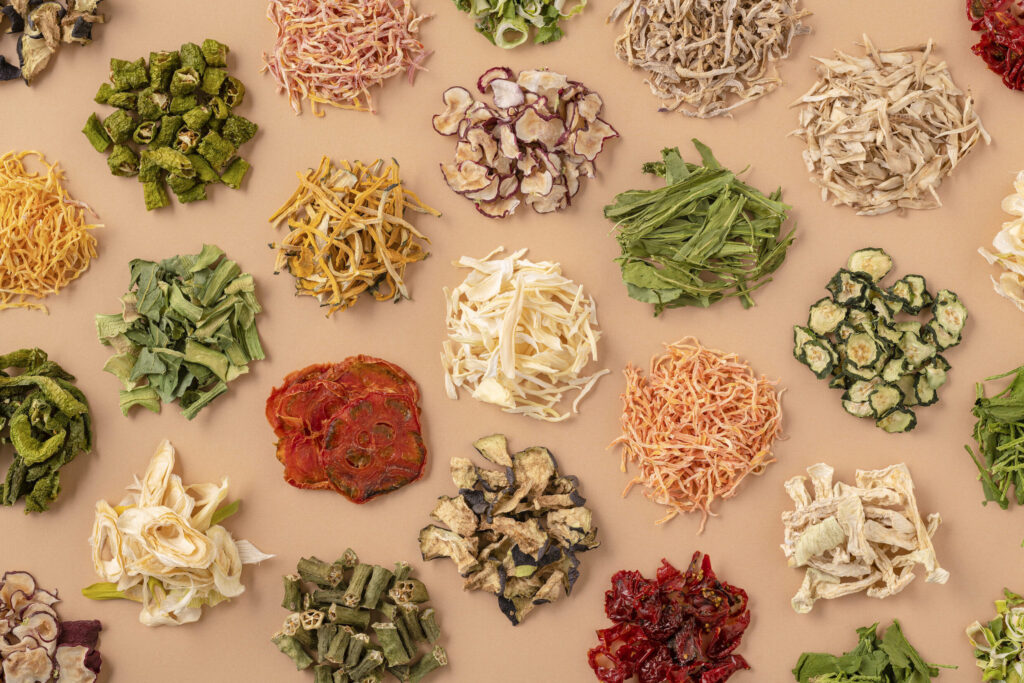
- Available for purchase in small lots from 1 kg
- We handle heirloom vegetables from across Japan
- Dried fruit and herbs also supported
FAQ
Summary
Kabosu is an acidic citrus of which Oita accounts for 6,500.0 t of the national harvest of 6,613.7 t in the Ministry of Agriculture, Forestry and Fisheries' 2023-crop statistics—about 98% concentrated in a single prefecture. The open-field season is August to October, but Oita ships green kabosu year-round by connecting three phases: open-field from August to September, storage from October to February, and greenhouse from March to July.
Since about 30 ml of juice can be taken from a single fruit, it suits dishes that use volume, like hot pot and ponzu. For moments when you want to squeeze a small amount over grilled fish to bring up the aroma, sudachi is better, and that's the dividing line for using them differently.
The fact that it's rarely seen on store shelves in Tokyo or Kansai isn't a matter of popularity. Only about half the harvest is shipped, and nearly 70% of what is shipped goes to processing, so the volume leaving the prefecture as fresh produce is small to begin with. To buy it fresh, your surest bet is open-field produce in August to September, or going direct from the grower.
There has been a change on the regulatory side. The geographical indication (GI) registration for "Oita Kabosu" lapsed on January 31, Reiwa 8, and was removed on March 11. What now protects the name is a regional collective trademark from the Japan Patent Office (Registration No. 7011487). It's worth keeping in mind that the marker to look for when buying has changed.
Download the product catalog
We will send the materials to your email address based on the information you provide.
- How to Make Vegetable Furikake: Easy with Dried Vegetables, a Kid-Pleasing Homemade Recipe, and How to Choose
- How far do citrus fruits extend? We've listed the angles of classification and representative varieties
Author of this article
Related articles
-
 Aojiru vs. vegetable juice vs. dried vegetables, thoroughly compared | Which method truly works for beating vegetable deficiency?
-
 What is yakuzen? Its meaning, the difference from kampo, and the basics of starting with familiar ingredients explained
-
 What's the Difference Between Yakuzen and Kampo? A Gentle Look at Food vs. Crude Drugs, Purpose, and Philosophy
-
 Complete guide to using dried mugwort | From rehydrating to popular recipes and storage tips
-
How to make yomogi mochi with dried mugwort | Ingredients, amounts, and foolproof tips explained
-
 We checked how to make and use yuzu shichimi against long-established makers' blend charts and ingredient labels
-
How to make mugwort tea | Easy with dried mugwort, explained for teapot, decoction, and homemade
-
 What Are Edible Flowers? Types, How to Eat Them, and How to Choose, Explained by a Grower