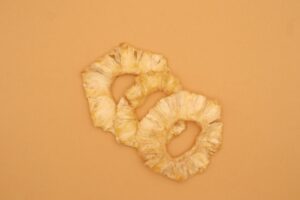
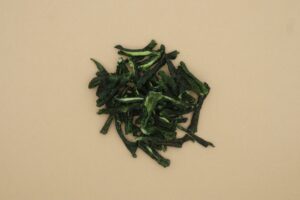
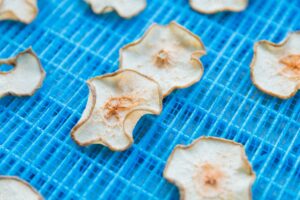
Dried kiwi


Dried Kiwi: product overview
Dried kiwi made with Kyoto-grown kiwifruit, concentrating its sweet-tart flavor as-is. Low-temperature drying brings out a vivid green color and tartness, finishing it so you can enjoy natural sweetness. Drying removes the moisture characteristic of the fruit, and a concentrated flavor is the feature. Its slice shape is easy to use, and being able to take in dietary fiber and vitamins easily is also part of the appeal.
A commercial ingredient usable in dishes seeking color or tartness—yogurt, cereal, baked goods, sweets, and more.
Dried kiwi: three points of care
01 Care in cultivation by Kyoto-grown partner farmers
Kiwi that partner farmers within Kyoto harvest after waiting for full ripeness is put into the processing line in the shortest number of days from harvest. By routing it into drying while fresh, we seal in the flesh's own juicy tartness and sweetness.
02 Low-temperature drying preserves color and flavor
By drawing out moisture slowly at low temperature, around 40 to 50°C, it keeps a vivid green close to the fresh flesh and the popping texture of the black seeds as-is. A natural finish unobtainable with high-heat drying.
03 Sugar-, bleaching-agent-, and colorant-free
No sugars, sulfites, colorants, or flavorings are used whatsoever. The raw material is only kiwifruit. It has ample adoption at craft-confectionery and health-food brands that want to keep the ingredient list simple.
Product catalog showing the items we handle
Flexible support from small lots to large lots
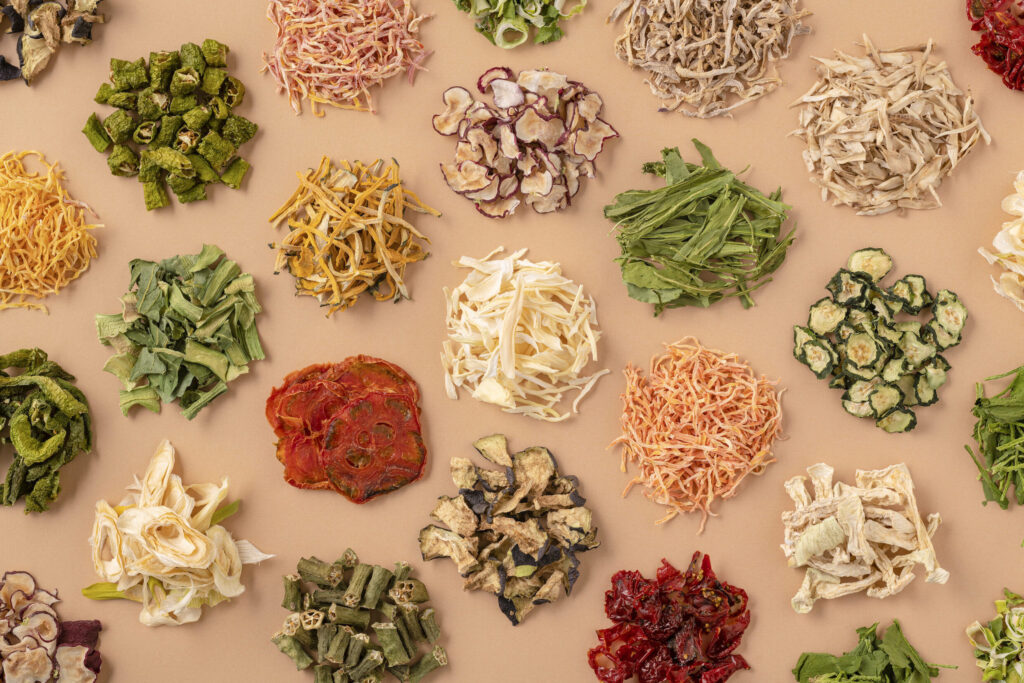
- Sold in small lots from 1 kg
- Handling heirloom vegetables from across Japan
- Dried fruits and herbs also supported
TOC
Features of commercial dried kiwi
Uses Kyoto-grown kiwi
Kiwi harvested fully ripe by partner farmers is sliced in rounds. From the seeds' popping texture to the juiciness just under the peel, it is a finish with everything concentrated into a single slice.
Easy to use in a round-slice specification
The round-slice shape is excellent as a visual material usable straight as a topping for baked goods or a decoration for drinks, and also contributes to omitting the rehydration and cutting steps.
The balance of acidity and sweetness
Drying removes moisture, concentrating acid and sugar at once. It is characterized by a two-tier structure: a refreshing tartness that spreads with each chew, and a natural sweetness that follows behind.
6-month room-temperature storage
It is set with a 6-month best-before date from the shipping date. Because it requires no refrigeration or freezing equipment and can ride room-temperature logistics, it is an easy raw material to handle for regional makers and overseas export.
Small-lot 100g support
Shippable from a minimum lot of 10 bags in 100g units. A flexible lot design that lets you start prototyping from small quantities for recipe development, test sales, and craft-confectionery workshops.
Powder-processing support
The same-lot raw material can also be routed straight to powder processing. It also handles flavoring baked goods and developing drinks and sauces that make the most of the kiwi color.
Dried kiwi: product specifications
Item | Details |
|---|---|
Raw material growing region | Kyoto Prefecture (partner farm) |
Specification | Rounds |
Storage method | Room temperature (store away from high heat and humidity) |
Best-before date | 6 months from the shipping date |
Minimum lot | From 10 bags / 100 g |
Powder | Available |
Manufacturing period | October |
Customization and OEM support
Commercial shiitake powder is here
OEM support: available
Manufacturing in large lots: available (advance consultation required three months before the manufacturing period)
Commitments to variety, grower, and growing region
BRAND
Cultivar:Mainly uses green kiwi. A standard variety with vividly green flesh, a good balance of tartness and sweetness, and the popping texture of the seeds remaining.
PRODUCER
Producer:In partnership with partner farmers within Kyoto. By judging the ripeness at harvest and shipping directly to the processing base while fresh, we minimize deterioration of the flesh.
REGION
Production area:Kyoto. Thanks to day-night temperature swings and moderate rainfall, it is an environment where fruit with tightened flesh, balancing tartness and sweetness, grows readily.
CULTIVATION
Cultivation method:Grown on a trellis to reduce the burden on the fruit, it is harvested in stages while watching the progress of after-ripening. Only fruit of a quality also shipped for fresh eating is routed to dry processing.
*Reference: OYAOYA product page
Low-temperature drying preserves color, tartness, and the seeds' popping texture
Because kiwi is a fruit high in moisture with delicate tartness and pigment, in dry processing temperature management greatly affects the finish. At Agriture, we use a drying method that draws out moisture over time at low temperature, around 40 to 50°C, keeping the contrast between vivid green and the black seeds while concentrating tartness and sweetness.
The finish is a two-layer structure: crisp on the surface, slightly moist at the center. It is characterized by a refreshing tartness that spreads the moment you bite in, a natural sweetness that follows behind, and the popping texture of the seeds.
💡 TIPS | Drying-processing trivia
Kiwi has a low pH and contains the protein-digesting enzyme actinidin, so mixing it straight into jelly or mousse may prevent it from setting. Because drying calms the enzyme activity, it becomes easier to handle as a confectionery and dessert material. After opening, sealing it and storing in a cool, dark place lets you enjoy the color and texture longer.
Use cases for commercial dried kiwi
Confectionery and baked-goods makers
Kneaded straight into pound cakes, cookies, muffins, and granola bars, or as a topping. Its round-slice look can be used as-is for decorating tarts and shortcakes.
Beverage and fruit-tea makers
As an ingredient for fruit teas, infused water, and herbal-tea blends. Dried kiwi's characteristic tartness pairs well with black tea and oolong tea, letting you present both the visual and the aroma.
Cafe and hotel desserts
Usable as a topping for yogurt parfaits, açaí bowls, fruit salads, and ice cream. Kiwi's green color and the seeds' granular texture gorgeously tighten up the whole plate. Being able to distribute at room temperature and use it in cafe and hotel desserts regardless of season is also an advantage.
Health foods and cereal
As a material for muesli, granola, protein bars, and dried-fruit mixes. It suits a component material for health foods that appeal to supplying vitamins and dietary fiber.
OEM and collaboration product development
We handle product planning that highlights raw-material origin—chocolate and craft confectionery particular about domestic ingredients, collaboration products with regional brands, and the like. Because we can also respond to origin certification, it suits designing premium products built around an origin story.
How to use commercial dried kiwi and related cases
Agriture's dried kiwi can be developed across product categories—used as-is as a finishing material, chopped finely and kneaded into chocolate or cookie dough, or powdered and used to flavor drinks and sauces. Because it is designed to make the most of the dried-as-is texture without assuming rehydration, it also suits volume-production lines that want to avoid complicating the process.
In addition to everyday uses such as yogurt, cereal, and baked goods, it also has a track record of adoption as a component material for health foods that appeal to dietary-fiber and vitamin intake.
Related cases
Product catalog showing the items we handle
Flexible support from small lots to large lots
- Sold in small lots from 1 kg
- Handling heirloom vegetables from across Japan
- Dried fruits and herbs also supported
Commercial Dried Kiwi: OEM Consultation FAQ
From how large a minimum lot can you accommodate?
Available from a minimum of 10 bags in 100g units. We flexibly handle the flow of starting from small-lot prototyping and test sales, then switching to large lots in the volume-production phase.
Do you publish prices?
Because it varies with raw-material market prices, specification, lot, and packaging spec, we do not publish it uniformly. If you tell us the application and desired quantity, we will return a quote.
How long is the lead time?
Kiwi's main production period is October. When stock is available, it can ship in as little as 1 to 2 weeks, but for volume production, please consult us by 3 months before the production period.
Can you issue a certificate of origin for the raw material?
Origin certification stating it is Kyoto-grown, partner-farmer information, and the like can be issued as needed. They can also be used as attachments to export and commercial spec sheets.
Can you provide pesticide/analysis reports?
Cultivation records provided by partner farmers and necessary post-processing test results can be shared depending on the project content. Please consult us in advance on the items needed at OEM design time.
Are HACCP and export support possible?
Production is under a HACCP-compliant processing process, and we also handle raw-material supply for product planning that assumes overseas sales. Necessary documents and the like are handled individually per project.
Please tell me how to proceed with an OEM consultation
Please let us know your desired application, quantity, and delivery time via the inquiry form. From sample provision (first time paid) to specification adjustment, prototyping, and full production, we propose it all one-stop.
RETAIL
For those looking to purchase in small packs
If you want to check the flavor in a small-bag size before prototyping, or use just a small amount at a craft-confectionery workshop, you can obtain retail packs at our sister brand OYAOYA's online shop.
Medicinal-food properties (in the case of fresh kiwi)
What we introduce here is the medicinal-food thinking for fresh kiwi before dry processing. It does not guarantee the properties of the dried product itself, but please use it as reference information for understanding the raw material's nature.
Kiwifruit is a fruit said to have the workings of removing excess heat and regulating the stomach. It is said to be easy to include as a dessert for hydration when you are concerned about indigestion or thirst, or in the drying season.
💡 TIPS | Yakuzen trivia
In medicinal food, tart fruits are thought to generate body fluids and help keep the body moist. Beyond eating kiwi as-is, adding it to yogurt or salad, or putting it in a smoothie with the peel on, allows a wider range of enjoyment depending on the combination.
Medicinal food is a traditional way of thinking about food based on Chinese medicine, where the basic approach is choosing ingredients by combining them with constitution, season, and physical condition. When putting dried kiwi to use in product design, you can also use this kind of traditional viewpoint as an angle for storytelling.
YAKUZEN
For those who want to learn more about kiwi from a medicinal-food perspective
If you want to know in detail about seasonal ways to include kiwi and how to combine it with other ingredients from a medicinal-food perspective, please see the Yasai Yakuzen feature page.

Recommended reading
- 8 Effective Ways to Relieve Constipation Caused by Vegetable Shortage (Column)
- We prototyped “dried kiwi” using domestic kiwi
Download the product catalog
We will send the materials to your email address based on the information you provide.