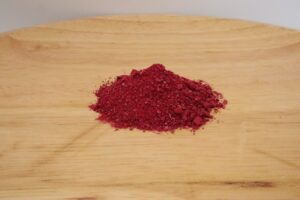
Welsh onion powder

Domestic wakegi powder is a commercial powder raw material made by low-temperature drying of wakegi — a cross between green onion and onion — then processing it consistently through milling at our in-house processing facility in Kyoto Prefecture. Without using glucose, coloring, or antioxidants, it retains wakegi's inherent mild sweetness and gentle aroma in the powder. It is a raw material we are often consulted about in food development where you want to blend a green-onion-type flavor gently and uniformly — soup bases, dressings, okonomiyaki flour, seasoning mixes, and more. We also accommodate prototyping from 1 kg of raw leaf. For consultations on dried vegetable and powder OEM here Please let us know your intended use and desired specifications from
TOC
Agriture's wakegi powder: three points of commitment
01 Low-temperature drying that concentrates the mild sweetness into the powder
Among the onion family, wakegi has a gentle sweetness close to onion, and its delicate flavor is heat-sensitive. At Agriture, we adopt hot-air drying that keeps the product temperature in a low range, structuring the process to retain wakegi's mellow aroma even after milling. Vegetable & herb powder list You can also consult us about blending with other materials from
02 100% domestic wakegi, zero-additive ingredient design
The raw material uses only domestic wakegi delivered from domestic partner farms, finished without adding any glucose coating, coloring, or antioxidants. It is a specification that pairs well with brands wanting to develop products with the appeal of "domestic ingredients only" and "additive-free."The nutritional value and benefits of vegetable powder.
03 Small-lot prototypes from 1 kg of raw leaf and comparison runs
At Agriture, we accept prototyping of wakegi powder from units of 1 kg of raw leaf, so it is easy to compare sensory evaluation before commercialization — a form we are consulted about in the early development of PB and OEM.
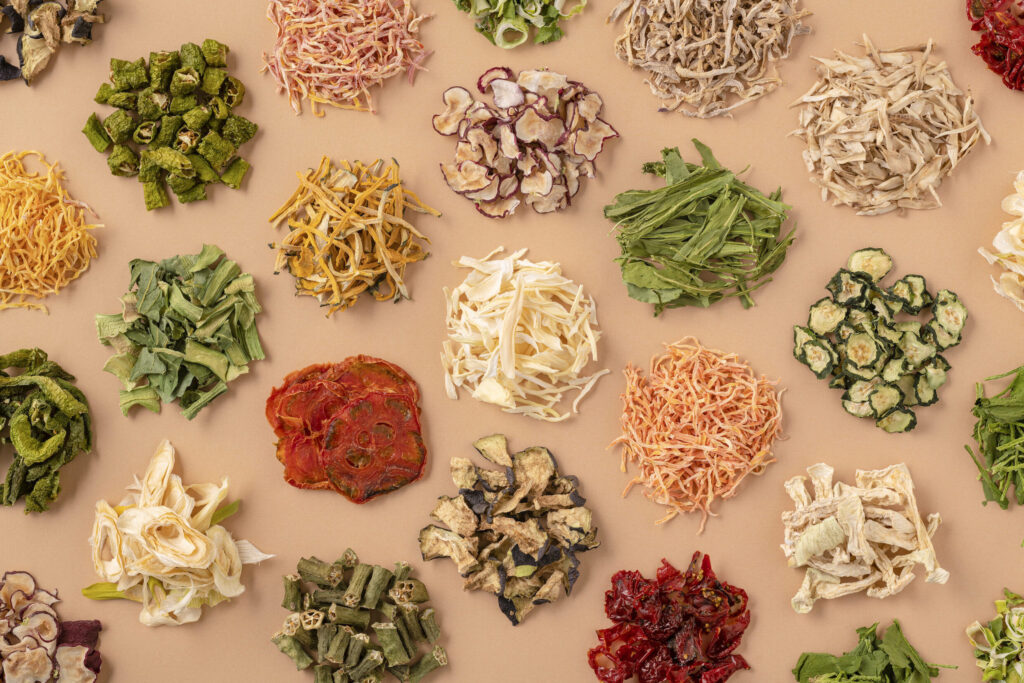
Product catalog showing the items we handle
Flexible support from small lots to large lots
- Sold in small lots from 1 kg
- Handling heirloom vegetables from across Japan
- Dried fruits and herbs also supported
Features of commercial wakegi powder
Mild green-onion flavor
Wakegi is a cross between green onion and onion, with a milder pungency than green-onion powder and a mellow sweetness close to onion as its feature. With a refined aroma that does not interfere with dashi or soup flavors, it suits Japanese-cuisine product designs.
Vivid green color
Through low-temperature drying and short-duration milling, the wakegi-derived green remains even after powdering. Kneaded into okonomiyaki flour or noodle dough, it can convey the presence of green onion visually as well.
Low-off-flavor blending suitability
Compared with green-onion powder it has less off-flavor and high harmony with other ingredients. It is a flavor easy to use as a base for veg-broth or health foods that blend multiple vegetable powders.
Zero additives, no coloring
No glucose, dextrin, antioxidants, or coloring are used at all. It is a specification that also pairs well with PB development for additive-free brands that want to keep the ingredient list simple. We can also discuss raw-material design for dashi-type mixes and okonomiyaki flour.
Product specifications (commercial)
|
Item |
Details |
|---|---|
|
Raw material |
Wakegi (domestically grown, partner-farm cultivated) At the prototype stage, by milling dried wakegi as-is, a powder that retains a vivid green we have confirmed a process that finishes it into. Among the onion family, whose color escapes readily with heating and milling, it is finished as a powder raw material that can make use of color, aroma, and flavor at the same time. |
|
Best-before date |
About 6 months from the shipping date |
|
Processing plant |
Our own processing plant within Kyoto Prefecture |
|
Shipping unit |
Choose from 500 g bag, 1 kg bag, or 5 kg commercial bag |
|
Minimum-lot OEM |
Prototype from 1 kg of raw leaves / main production from 10 kg of raw leaves |
*Prototype consultations are possible from 1 kg of raw leaf. sample, you can narrow down to the specification that suits your application. We also offer finely chopped and minced dried wakegi. For applications where you want to make use of appearance and texture — okonomiyaki toppings, condiments for soups, and the like — the leaf type is suitable.
Commitments to variety, grower, and growing region
The raw material used in Agriture's wakegi powder is domestic wakegi sourced directly from domestic partner farms. Wakegi is a cross between green onion and onion, cultivated widely in western Japan, centered on Hiroshima Prefecture. Wakegi grown in a warm climate tends to have thick leaves and increased sweetness, and its mellow flavor comes through even after powdering.
BRAND
Variety: Wakegi (Amaryllidaceae, genus Allium, Allium × wakegi). A cross between green onion and onion, with a gentle pungency and a mellow sweetness close to onion as its features. Even powdered, it has a refined aroma distinct from green-onion powder.
PRODUCER
Producer: Sourced from partner farms linked with domestic wakegi growing regions, with an operation that shortens the lead time from harvest through processing.
REGION
Growing region: Raw material is procured from wakegi growing regions of western Japan, centered on Hiroshima Prefecture. The warm climatic conditions influence wakegi's mild sweetness.
CULTIVATION
Cultivation method: With managed cultivation that keeps pesticide use low,
Low-temperature drying technology and quality control
Wakegi's delicate sweetness and aroma are heat-sensitive, and high-temperature drying causes the flavor to dissipate and can also cause browning. At Agriture, we adopt hot-air drying that keeps the product temperature in a low range, designing it to let only the moisture escape and retain wakegi's inherent flavor to the maximum. By milling immediately after drying and shortening contact time with oxygen, we structure the process to preserve the freshness of the green color development and aroma.
Manufacturing is done at our own processing plant in Kyoto Prefecture, with integrated management from raw-material acceptance inspection to shipment. It is filled after passing through a foreign-matter removal process, and for OEM projects we issue necessary documents such as specification sheets, raw-material origin certificates, and microbiological test reports, upon consultation for each project.
TIPS|Wakegi Powder Know-How
Wakegi powder looks similar to green-onion powder, but the flavor profile differs. Whereas green-onion powder has a sharp pungency, wakegi powder features a mellow, onion-leaning sweetness. Because harmony with dashi is high, using them by purpose — wakegi powder as a base ingredient for Japanese-style powdered soups and instant miso soup — leads to product differentiation.
Use cases and adoption examples
Blending into okonomiyaki flour and takoyaki flour
Blending wakegi powder into okonomiyaki flour or takoyaki flour spreads a mild green-onion flavor throughout the dough. Even in cases where green-onion powder makes the pungency stand out too much, wakegi powder's gentle flavor makes harmony with the dough easy — a use we are often consulted about in the development of flour-based products.
- Suitable products: Okonomiyaki flour, takoyaki flour, chijimi flour
- Blending guide: 1–3% of the total flour
- Points to note in development: Its mildness that does not spoil dashi's delicate flavor is valued, and there is demand in the development of Japanese-style soups in general.
- Suitable products: Powdered miso soup, Japanese-style soup base. It can spread the green-onion flavor uniformly. With dried chopped green onion, sedimentation and dispersion unevenness tend to occur, but the powder suspends easily, improving the stability of the production process. In developing variations such as "negi udon" and "negi soba," it can be used as an ingredient that imparts flavor and color at the same time.
- Suitable products: Negi udon, negi soba, negi pasta
- Blending guide: 5–15 g per 1 kg of flour
- Points to note in development: The way the color develops changes with the hydration rate and the timing of kneading it in
- Suitable products: Green-juice mix, green smoothie powder, . Vegetable powder list We can propose it in combination with
- Suitable products: Japanese-style dashi mix, veg-broth powder, powder mix for miso soup
- Blending guide: 5–15% of the whole blend
- Points to note in development: When blending into liquid, kneading it with a little water before adding to the main step reduces clumping and spreads the flavor throughout. For blending into okonomiyaki flour or takoyaki flour, dry-blending it with other powder ingredients beforehand saves the trouble of measuring.
For storage, sealed containers away from light, heat, and moisture are best. After opening, use it up promptly or reduce air contact with nitrogen fill or a zip-top bag to keep the green color development and flavor longer.
- Dried wakegi (Leaf-version product page)
- Vegetable & herb powder list
- The nutritional value and benefits of vegetable powder
- Sold in small lots from 1 kg
- Handling heirloom vegetables from across Japan
- Dried fruits and herbs also supported
- Dried wakegi (Leaf-version details)
- Vegetable & herb powder list
- For consultations on dried vegetable and powder OEM here
Related cases and articles
Product catalog showing the items we handle
Flexible support from small lots to large lots
Frequently asked questions
Q. What is the minimum lot and prototype handling?
A. Prototyping is guided from 1 kg of raw leaf, and full production from 10 kg of raw leaf as a guide. From 1 kg of raw leaf, roughly 100–120 g finishes in powder equivalent, and a sample.
Q. How does it differ from green-onion powder?
A. Whereas green-onion powder has a sharp pungency, wakegi powder features a mellow sweetness close to onion. Because harmony with dashi is high, it suits Japanese-style soups and flour-based products.
Q. What is the price guideline?
A. Pricing varies with packaging specifications and lot quantity, so for an accurate quote please consult us via the inquiry form. If you tell us your product concept, we will propose lot design along with an estimated unit price.
Q. What is the lead time?
A. When stock is available, shipping is possible around 2–3 weeks after order. For projects that include new processing, please plan for a lead time of 4–8 weeks. In relation to wakegi's harvest seasons (spring and autumn), consulting us in the previous year makes it easier to plan for stable supply.
Q. Can you issue a certificate of raw material origin and an analysis table?
A. Both a raw-material origin certificate showing it is domestic wakegi and a microbiological test report can be issued after discussion on a case-by-case basis.
Q. Can it be blended with other powders?
A. Yes. We can also discuss blend design for Japanese-style dashi mixes and okonomiyaki flour.
Q. Please tell me the flow of an OEM consultation
A. The process runs from consultation via the inquiry form → concept hearing → sample shipment → paid prototyping (from 1 kg of raw leaf) → specification finalization → full production. We provide hands-on development support where the blend ratio can be refined at the prototype stage.
Recommended reading
A blending ingredient for health foods and green-juice mixes
Uses of wakegi powder as a blending ingredient for health foods that let you conveniently take in the nutritional components of the onion family are also expanding. Adding a small amount to green juice or green smoothie mixes lets the green-onion flavor work as a hidden accent, balancing drinkability.
- Suitable products: Powdered miso soup, Japanese-style soup base. It can spread the green-onion flavor uniformly. With dried chopped green onion, sedimentation and dispersion unevenness tend to occur, but the powder suspends easily, improving the stability of the production process. In developing variations such as "negi udon" and "negi soba," it can be used as an ingredient that imparts flavor and color at the same time.