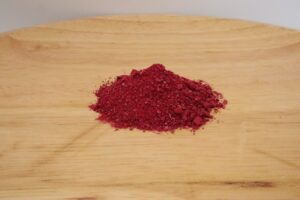
A Japanese aroma / wagashi, dressings

Domestic moringa powder is a commercial superfood ingredient made by drying and milling the leaves of Kagoshima-grown moringa (Moringa oleifera). Using a drying technique adapted from the Chiran tea process, it is processed shortly after harvest to retain the leaves' vivid green and nutritional components in the powder. No glucose, coloring, or antioxidants are used. Rich in vitamins, minerals, and amino acids, it is a raw material we are often consulted about for product development centered on nutritional appeal — green juice, smoothies, health foods, protein drinks, and more. Sourced from a partner factory, its quality is stable. For consultations on dried vegetable and powder OEM here Please let us know your intended use and desired specifications from
TOC
Agriture's moringa powder: three points of commitment
01 Kagoshima-grown moringa, drying technique adapted from the Chiran tea process
The raw material uses 100% Kagoshima-grown moringa leaf. By applying the drying technique cultivated in Chiran tea production and moving into the processing step shortly after harvest, degradation of the leaves' vivid green, aroma, and nutritional components is kept to a minimum. A drying profile drawing on tea-leaf processing know-how underpins the finished quality of the moringa powder. Vegetable & herb powder list You can also consult us about blending with other materials from
02 Zero additives — nutrients kept intact in the powder
It is finished with moringa leaf alone, with no glucose coating, coloring, or antioxidants added. Moringa is a superfood said to contain more than 90 kinds of nutrients, and it is rich in vitamins, minerals, and amino acids. Because the ingredient list can be kept to just "moringa (domestic)," the specification pairs well with health-food development for additive-free brands. The nutritional value and benefits of vegetable powder.
03 Stable supply system from a partner factory
Moringa powder is sourced from a partner factory. It is not a process Agriture handles in-house, but it is produced stably at a partner that shares our quality standards, allowing year-round supply. We sell and propose it under the Agriture brand, and handle everything from OEM development consultations to prototype arrangements in one stop.
Product catalog showing the items we handle
Flexible support from small lots to large lots

- Sold in small lots from 1 kg
- Handling heirloom vegetables from across Japan
- Dried fruits and herbs also supported
Features of commercial moringa powder
100% Kagoshima-grown
Uses 100% moringa leaf grown in Kagoshima's warm climate. It is a raw material with which you can appeal to origin in superfood products and health-food PB development where you want to emphasize domestic sourcing.
Drying technique adapted from the Chiran tea process
Applying the drying technique cultivated in Chiran tea production, it is processed shortly after harvest. By drawing on tea-leaf processing know-how, it is finished into a powder that suppresses degradation of the moringa leaf's color, aroma, and nutritional components.
A nutrient-rich superfood
Moringa is said to contain more than 90 kinds of nutrients and is rich in vitamins, minerals, and amino acids. As a main or supporting ingredient in health foods, it is a material easy to use in product designs centered on nutritional appeal.
Zero additives, no coloring
No glucose, dextrin, antioxidants, or coloring are used at all. Because the ingredient list can be kept to just "moringa (domestic)," the specification pairs well with health-food development for additive-free brands.
Vivid green color
Thanks to color retention through short-duration processing, a vivid green remains even after powdering. When blended into green juice or smoothies, it has appeal as a "green ingredient" in appearance as well.
Flexible for blend design too
We also accommodate pre-blending with other green powders such as young barley grass, kale, matcha, and mugwort. We can discuss blend design for PB use, such as original green juice or smoothie bases.
Product specifications (commercial)
|
Item |
Details |
|---|---|
|
Raw material |
Moringa (Kagoshima-grown, Moringa oleifera) |
|
Best-before date |
About 6 months from the shipping date |
|
Processing plant |
Partner factory |
|
Shipping unit |
Choose from 500 g bag, 1 kg bag, or 5 kg commercial bag |
|
Minimum-lot OEM |
Prototype from 1 kg of raw leaves / main production from 10 kg of raw leaves |
*Prototype consultations are possible from 1 kg of raw leaf.
※ Note: Please refrain from use if you are pregnant or may be pregnant.
Customization support
|
Item |
Available |
Details |
|---|---|---|
|
Blend design |
◎ |
Pre-blending with other ingredients such as young barley grass, kale, and matcha available |
|
OEM small-lot prototyping |
◎ |
Multiple versions can be prototyped in parallel from 1 kg of raw leaf |
|
Packaging changes |
◎ |
500 g, 1 kg, and 5 kg bags can be sorted out |
|
Quality document issuance |
◯ |
Specification sheet, raw-material origin certification, microbiological test report (discussed per project) |
POWDER
Leave blend development with other vegetable and herb powders to us
Beyond moringa on its own, we also develop original green juice and green smoothie bases combining it with young barley grass, kale, matcha, mugwort, and the like. From more than 60 vegetable, herb, and fruit powders, we propose raw-material formulations tailored to your product concept.
Commitment to variety and growing region
The raw material used in our moringa powder is the leaf of Kagoshima-grown moringa (Moringa oleifera). Moringa is a plant of the Moringaceae family, native to tropical and subtropical regions; in Japan it is cultivated in warm areas such as Kagoshima and Okinawa. Kagoshima's sunlight and warm climate suit moringa's growth, producing leaves rich in nutritional components. Moringa powder is sourced from a partner factory — it is not a process Agriture dries in-house — but it is produced stably at a partner that shares our quality standards. We sell and propose it under the Agriture brand and handle everything from OEM development consultations to prototype arrangements in one stop.
BRAND
Variety: Moringaceae, genus Moringa (Moringa oleifera). Also called the "Miracle Tree," it has drawn global attention as a superfood said to contain more than 90 kinds of nutrients.
REGION
Growing region: Kagoshima-grown. Its warm climate and abundant sunshine suit moringa's growth, making it a region that produces leaves rich in nutritional components.
TECHNOLOGY
Drying technique: Uses a drying technique adapted from the Chiran tea process. Drawing on tea-leaf processing know-how, it is processed shortly after harvest to finish into a powder that suppresses degradation of color, aroma, and nutritional components.
SUPPLY
Supply system: As it is sourced from a partner factory, it balances quality stability with year-round supply. With Agriture as your point of contact, we guide you through everything from OEM development consultations to prototyping and full production.
Drying technique and quality control
Moringa leaf oxidizes rapidly after harvest and yellows readily. At the partner factory, a drying technique adapted from the Chiran tea process is used, and by moving into the processing step shortly after harvest, the leaves are powdered while retaining their vivid green and nutritional components. Temperature and humidity control know-how cultivated in tea production underpins the quality of the moringa powder.
The product is managed according to Agriture's quality standards, and for OEM projects, we issue necessary documents — specifications, raw-material origin certificates, microbiological test reports, and the like — after discussion on a case-by-case basis.
💡 TIPS|Moringa Nutrition Know-How
Moringa leaf is said to contain more than 90 kinds of nutrients, including vitamins A, C, and E, calcium, iron, potassium, and essential amino acids. Drying and powdering increases the nutrient density per unit weight, so nutritional appeal can be made even with a small amount added — a point valued when it is used as a raw material for green juice and protein drinks. Please note that those who are pregnant or may be pregnant should refrain from use.
Use cases and adoption examples
Main ingredient for green juice and green smoothies
Moringa powder is increasingly used as a main ingredient for green juice and green smoothies, as a differentiating ingredient in place of young barley grass or kale. The messaging of "superfood" and "more than 90 kinds of nutrients" becomes a strength in health-food marketing.
- Suitable products: Moringa green juice, green smoothie mix, health-drink base
- Blending guide: 1–3 g per serving (on its own); 20–50% of the total in a blend
- Points to note in development: It has a distinctive flavor, so adjust drinkability by blending with matcha or fruit
Supporting ingredient for protein drinks and shakes
By blending moringa into protein powder, you can reinforce the nutritional balance of vitamins and minerals in addition to protein. It is a use case we are often consulted about as a differentiating ingredient for green-type proteins and vegan proteins.
- Suitable products: Green protein, vegan protein, nutritional supplement drinks
- Blending guide: 1–3 g per serving
- Points to note in development: The vivid green provides visual appeal, but too high a share strengthens the flavor
Health-food and supplement ingredients
As a raw material for tablets, capsules, and granule sticks, moringa powder is sometimes filled as-is or blended with other health ingredients. A powder form that makes it easy to design daily intake is a point that gets it chosen in supplement development.
- Suitable products: Moringa tablets, moringa capsules, granule sticks
- Blending guide: 1–3 g as daily intake
- Points to note in development: A cautionary note for pregnant individuals is required
Knead-in ingredient for confectionery and bakery
Kneading it into the dough of cookies, muffins, pound cake, and the like produces vividly green baked goods. Under a "healthy sweets" concept that appeals to moringa's nutritional value, consultations from cafés and mail-order brands are increasing.
- Suitable products: Moringa cookies, moringa muffins, green sweets
- Blending guide: 5–20 g per 1 kg of flour
- Points to note in development: If the baking temperature is too high the color dulls, so bake at low to medium temperature
Moringa tea and blended-tea ingredient
We also propose moringa tea made by filling moringa leaf directly into tea bags, and as a blended-tea ingredient with hojicha or rooibos. The property of being caffeine-free and nutrient-rich becomes a differentiating point in the health-tea market. See details of our tea OEM service here。
- Suitable products: Moringa tea, caffeine-free blended tea. When using it in green juice or smoothies, simply dissolve it in water, milk, or soy milk and shake for an easy moringa drink. When using it in confectionery, mixing it into the flour beforehand and then combining with the liquid ingredients reduces clumping and gives a uniform green finish.
For storage, sealed containers away from light, heat, and moisture are best. After opening, use it up promptly or reduce air contact with a zip-top bag to keep the green color and nutritional components longer.
- Dried moringa product page
- Vegetable & herb powder list
- The nutritional value and benefits of vegetable powder
- Tea OEM service
- Sold in small lots from 1 kg
- Handling heirloom vegetables from across Japan
- Dried fruits and herbs also supported
Related cases and articles
Product catalog showing the items we handle
Flexible support from small lots to large lots
Frequently asked questions
Q. What is the minimum lot and prototype handling?
A. Prototyping is guided from 1 kg of raw leaf, and full production from 10 kg of raw leaf as a guide. Even from the prototype stage, we can run sensory evaluation in green juice or smoothies in parallel.
Q. What is the price guideline?
A. Pricing varies with packaging specifications and lot quantity, so for an accurate quote please consult us via the inquiry form. If you tell us your product concept, we will propose lot design along with an estimated unit price.
Q. Is it processed in-house?
A. Moringa powder is sourced from a partner factory. It is produced stably at a partner that shares Agriture's quality standards, and we accept sales, proposals, and OEM development consultations under the Agriture brand.
Q. Can it be used during pregnancy?
A. Those who are pregnant or may be pregnant should refrain from use. We also provide guidance on a cautionary note for the product packaging.
Q. Can you issue a certificate of raw material origin and an analysis table?
A. Both a raw-material origin certificate showing it is Kagoshima-grown and a microbiological test report can be issued after discussion on a case-by-case basis. We can also discuss meeting the quality requirements of health foods and supplements.
Q. Can it be blended with other powders?
A. Yes. We accommodate pre-blending with other green powders such as young barley grass, kale, matcha, and mugwort, and we accept consultations on PB development of original green juice and smoothie bases.