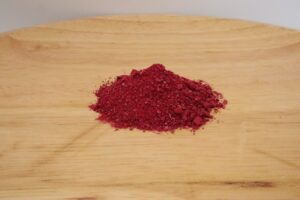
Shimonita green onion powder

Domestic Shimonita Leek Powder is a commercial vegetable raw material made by drying and grinding "Shimonita leek," a heirloom vegetable from Shimonita, Gunma Prefecture. Without glucose, coloring, or antioxidants, it concentrates into a powder the rich sweetness and flavor that come from the Shimonita leek's characteristically thick white stalk. It is a raw material we often get inquiries about for food development that wants to make the most of the leek's sweetness and richness — as a base for soups, hot-pot broths, and seasonings, a secret ingredient in ramen soup, or an ingredient in freeze-dried miso soup. We also handle prototyping from 1 kg of raw leaves. For consultations on dried vegetable and powder OEM here Please let us know your intended use and desired specifications from
TOC
Three points of pride in Agriture's Shimonita leek powder
01 Made from a heirloom vegetable of Shimonita, Gunma Prefecture
The Shimonita leek is a heirloom vegetable grown mainly in Shimonita, Kanra District, Gunma Prefecture. Its outward hallmark is a white stalk that is thicker and shorter than an ordinary long onion; raw, it has a strong pungency, yet when heated it becomes remarkably sweeter. This "becomes sweet when heated" quality is the greatest strength as a powdered raw material, drawing out sweetness and richness during the heating step of soups and hot-pot broths. Vegetable & herb powder list You can also consult us about blending with other materials from
02 Zero additives, putting the ingredient's sweetness front and center
Finished with Shimonita leek alone — no glucose coating, coloring, or antioxidants added. Because the ingredient listing can be kept to "leek" only, it pairs well with product development that values a simple ingredient design, such as additive-free soups and natural-ingredient seasoning bases. The nutritional value and benefits of vegetable powder.
03 Small-lot prototyping from 1 kg of raw leaves
Agriture takes on prototyping of Shimonita leek powder from units of 1 kg of raw leaves. It is easy to compare and evaluate sensory results at the prototyping stage of soup bases and seasonings, and it is a form in which we often receive inquiries for early-stage PB and OEM development.
Product catalog showing the items we handle
Flexible support from small lots to large lots
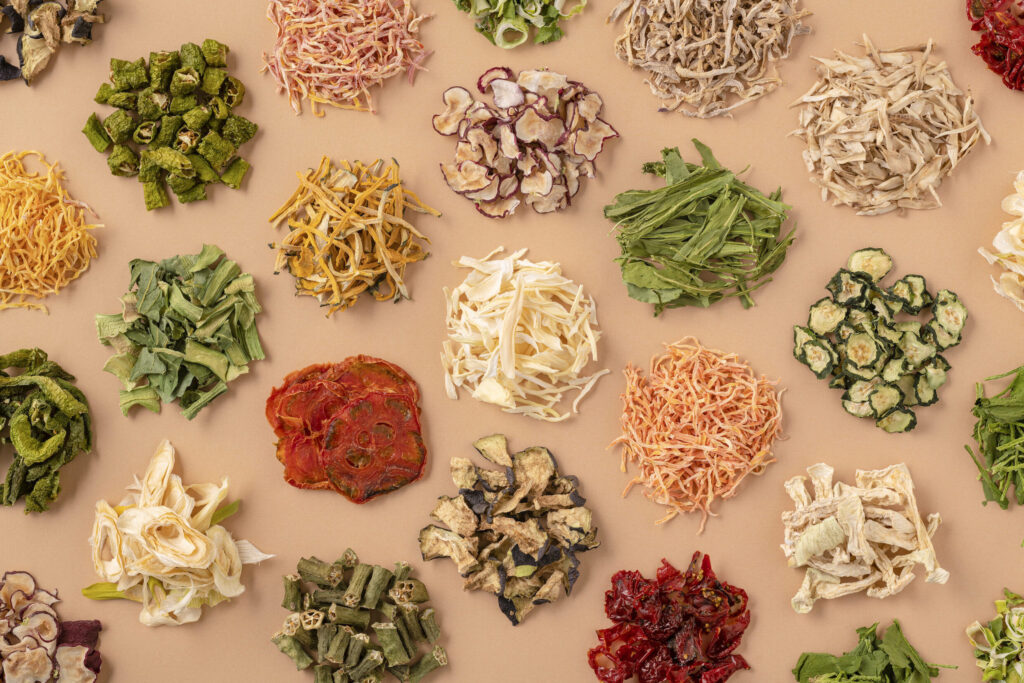
- Sold in small lots from 1 kg
- Handling heirloom vegetables from across Japan
- Dried fruits and herbs also supported
Features of commercial Shimonita leek powder
Appeal of a heirloom-vegetable brand
Well known as a heirloom vegetable of Shimonita, Gunma Prefecture, it carries the brand strength to state "uses Shimonita leek" on product packaging. It is also a raw material that is easy to use in PB development for regional specialties and hometown-tax gift items.
Rich sweetness drawn out by heating
The Shimonita leek has the varietal trait of becoming much sweeter when heated. Its strength as a powdered raw material is that, during the step of blending it into soups and hot-pot broths and heating them, it produces natural sweetness and richness without using sugar.
The thick white stalk ground whole
Ground mainly from the thick white stalk that is the Shimonita leek's greatest feature. A depth of sweetness and richness of flavor unlike ordinary long-onion powder becomes a point of differentiation in the flavor design of soups and broths.
Zero additives, no coloring
No glucose, dextrin, antioxidants, or coloring used at all. It is a specification that pairs well with PB development for additive-free brands wanting to keep the ingredient listing simple, and with natural-ingredient seasoning design.
Flexible for blend design too
We also handle pre-blending with other ingredients such as ginger powder, garlic powder, and dried mushrooms. We can discuss PB-oriented blend design for products like hot-pot broth bases and all-purpose seasonings.
Product specifications (commercial)
|
Item |
Details |
|---|---|
|
Raw material |
Shimonita leek (grown in Shimonita, Gunma Prefecture) |
|
Best-before date |
About 6 months from the shipping date |
|
Processing plant |
Our own processing plant within Kyoto Prefecture |
|
Shipping unit |
Choose from 500 g bag, 1 kg bag, or 5 kg commercial bag |
|
Minimum-lot OEM |
Prototype from 1 kg of raw leaves / main production from 10 kg of raw leaves |
*Prototype consultations are possible from 1 kg of raw leaf.
Customization support
|
Item |
Available |
Details |
|---|---|---|
|
Blend design |
◎ |
Handles pre-blending with other ingredients such as ginger, garlic, and dried mushrooms |
|
OEM small-lot prototyping |
◎ |
Multiple versions can be prototyped in parallel from 1 kg of raw leaf |
|
Packaging changes |
◎ |
500 g, 1 kg, and 5 kg bags can be sorted out |
|
Quality document issuance |
◯ |
Specification sheet, raw-material origin certification, microbiological test report (discussed per project) |
POWDER
Leave blend development with other vegetable and herb powders to us
Beyond Shimonita leek on its own, we also handle blend development for hot-pot broth bases and all-purpose seasonings combining it with ginger, garlic, dried shiitake, dried onion, and more. From over 60 kinds of vegetable, herb, and fruit powders, we propose a raw-material design tailored to your product concept.
Commitment to variety and growing region
The raw material used in Agriture's Shimonita leek powder is the "Shimonita leek," a heirloom vegetable grown mainly in Shimonita, Kanra District, Gunma Prefecture. Compared with an ordinary long onion (Senju type), its outward features are a thicker, shorter white stalk and softer fibers. While it has a strong pungency raw, when heated it transforms into a strong sweetness and a soft, melting texture, which is why it has long been loved as an ingredient in sukiyaki and hot-pot dishes. This "becomes sweet when heated" varietal trait is also a major advantage as a powder raw material.
BRAND
Variety: Shimonita leek (a heirloom vegetable of Gunma Prefecture). A white-leek variety of the genus Allium in the lily family, its greatest features are a thick white stalk and sweetness when heated.
REGION
Growing region: A growing region centered on Shimonita, Kanra District, Gunma Prefecture. An inland climate with wide temperature swings nurtures the sweetness of the white stalk. The Shimonita leek is a single-stalk leek that takes 14-15 months to grow, with the harvest concentrated in the winter, from November to the following February.
PRODUCER
Producer: We source raw material from growers around Shimonita. By having it harvested at a thickness and size suited to processing, we secure leeks with concentrated white-stalk sweetness.
PROCESSING
Processing: Integrated handling from low-temperature hot-air drying to grinding at our own processing facility in Kyoto Prefecture. We manage everything from raw-material acceptance inspection through shipping.
Low-temperature drying technology and quality control
Because the Shimonita leek is a high-sugar vegetable, drying it all at once at high heat advances the Maillard reaction (browning) and turns the sweetness into a scorched smell. Agriture performs low-temperature hot-air drying while managing the product temperature, designed to drive off only the moisture while retaining the white-stalk sweetness. Grinding is done immediately after drying, and storing it in powdered form curbs deterioration of flavor.
Manufacturing takes place at our own processing facility in Kyoto Prefecture, with integrated management from raw-material acceptance inspection through shipping. For OEM projects, we discuss and issue the necessary documents — specifications, raw-material origin certificates, microbiological test reports, and so on — on a project-by-project basis.
💡 TIPS | Trivia about leek powder
The Shimonita leek is a highly seasonal raw material whose harvest is limited to winter (November to February). Agriture processes it in bulk during the harvest season and stocks the year's supply. For projects where the annual required volume is clear, consulting us before the harvest (around September-October) makes it easier to plan for stable supply.
Use cases and adoption examples
Base ingredient for soups and potages
When Shimonita leek powder is blended into soups and potages as a base ingredient, the heating step draws out its sweetness, finishing into a soup with natural richness and sweetness without using sugar. It is an application we often get inquiries about for OEM development of retort soups, cup soups, and commercial soups.
- Suitable products: leek potage, a secret ingredient in consommé soup, Japanese-style soup base
- Blending guide: 1-3% of the total soup
- Points to note in development: because the way the sweetness comes out changes with heating temperature and time, confirm the optimal conditions in prototyping
Flavoring for hot-pot broths and dashi packs
Blended as a powder base for hot-pot broths or as an ingredient in dashi packs, the sweetness and aroma distinctive to the Shimonita leek dissolve into the dashi. The brand appeal of being able to label "uses Shimonita leek" is also a benefit in product design.
- Suitable products: powdered hot-pot broth, dashi packs, cube-type hot-pot seasoning
- Blending guide: 3-8% of the entire powder base
- Points to note in development: the flavor design changes with the balance against other ingredients (mushrooms)
Base for seasonings and mixes
We also get inquiries for use as a powder base for negi-shio (leek-salt) sauce combined with salt, pepper, and garlic powder, and as a lead ingredient in furikake and seasoning mixes. Adding the Shimonita leek's sweetness enables a rich flavor design unlike ordinary leek flavor.
- Suitable products: negi-shio sauce (powder type), leek furikake, all-purpose seasoning
- Blending guide: 5-15% of total weight
- Points to note in development: the interaction with salt makes the leek's sweetness stand out, so it also suits reduced-salt design
Secret ingredient for ramen soup and dipping broth
Adding a small amount when preparing ramen soup or dipping broth, the leek's sweetness broadens the depth of the dashi. It pairs especially well with soy-sauce and salt-based soups, and it is a raw material easy to propose for OEM seasoning development aimed at noodle makers and ramen shops.
- Suitable products: ramen soup base, dipping broth base, commercial seasoning
- Blending guide: 0.5-1.5% of the total soup
- Points to note in development: tends to pair better with soy-sauce and salt bases than with tonkotsu
Ingredient for freeze-dried foods and instant miso soup
Cases of blending Shimonita leek powder as an ingredient in freeze-dried miso soup and instant soups are increasing. Because it is powdered, it rehydrates quickly and disperses evenly, which is a processing benefit.
- Suitable products: freeze-dried miso soup, instant soup. When used in heated cooking, adding it in the first half of the simmer lets the sweetness dissolve out, while adding it at the finish makes the leek's aroma stand out more easily. Because you can adjust the balance of sweetness and aroma by amount and timing, we recommend comparing and evaluating at the prototyping stage.
For storage, it is best to keep it sealed away from light, heat, and moisture. Because it is a high-sugar ingredient, it tends to cake if it absorbs moisture after opening. Using a zip-lock bag together with a desiccant keeps quality longer.
- Dried Shimonita Leek product page
- Vegetable & herb powder list
- The nutritional value and benefits of vegetable powder
- Tea OEM service
- Sold in small lots from 1 kg
- Handling heirloom vegetables from across Japan
- Dried fruits and herbs also supported
Related cases and articles
Product catalog showing the items we handle
Flexible support from small lots to large lots
Frequently asked questions
Q. What is the minimum lot and prototype handling?
A. As a guide, prototyping is from 1 kg of raw leaves and full production from 10 kg of raw leaves. Since you can verify the blend ratio and timing at the prototyping stage before moving to full production, it is a flow that makes it easier to keep product-development risk down.
Q. What is the price guideline?
A. Because the Shimonita leek is a highly seasonal raw material whose harvest is limited to winter, the unit price tends to be higher than ordinary leek powder. It varies with packaging specifications and lot size, so please consult us via the inquiry form for an accurate estimate.
Q. Is year-round supply possible?
A. The Shimonita leek harvest is concentrated from November to February, but Agriture has a system for processing and stocking it in bulk during the harvest season. However, there is an upper limit on annual supply, so if you plan to use it year-round in a standard line, please consult us early.
Q. Can you issue a certificate of raw material origin and an analysis table?
A. We proceed with issuing, on a project-by-project basis, both a raw-material origin certificate showing it is grown in Shimonita, Gunma Prefecture, and a microbiological test report. You can also use them as documents backing up a "uses Shimonita leek" package claim.
Q. Can it be blended with other vegetable powders?
A. Yes. We handle pre-blending with ginger powder, garlic powder, dried shiitake, dried onion, and more, and we take on PB-oriented blend design consultations for hot-pot broth bases, all-purpose seasonings, soup bases, and the like.
Q. What is the difference from ordinary leek powder?
A. Compared with ordinary long-onion (Senju type) powder, the Shimonita leek has a thicker white stalk and higher sugar content, so its sweetness and richness when powdered have more depth. The brand appeal of the "Shimonita leek" heirloom vegetable is also a point of differentiation in product design.