
What are Shinshu’s heirloom vegetables? Features, season, and ways to eat 54 main items out of the 79 certified explained

The heirloom vegetables of Shinshu (Nagano Prefecture) are a group of native varieties handed down within the elevation differences created by mountainous terrain—the Japanese Alps (Northern, Central, Southern), the Yatsugatake range, the Shiga Highlands, and the Kiso Valley. The Japan Traditional Vegetable Promotion Association and Nagano Prefecture's "Shinshu Heirloom Vegetable Certification System" have selected 85 items, including nationally famous items such as nozawana, nezumi daikon, Matsumoto ippon negi, teiza nasu, botagosho, and Togakushi daikon.
In this article, we organize 54 major items among Shinshu's 85 heirloom vegetables by category and explain 7 representative items in detail. We introduce native varieties that support Shinshu's food culture—Nozawaonsen Village, the birthplace of nozawana; the representative pungent daikon "nezumi daikon" (Sakaki Town); northern-Shinano vegetables such as Sakai-imo and Tokiwa gobo; and the giant eggplant of Tenryu Village, "teiza nasu."
TOC
The definition of "heirloom vegetable" and the scope of this article
There is no nationwide unified definition for "heirloom vegetable," and the criteria differ by certifying body. To help you understand this article's content accurately, we organize the criteria of major certifying bodies.
| Certifying body | Main criteria |
|---|---|
| Kyoto Prefecture "Kyoto Heirloom Vegetables" | Cultivated in Kyoto from before the Meiji era and unique to Kyoto |
| Osaka Prefecture "Naniwa Heirloom Vegetables" | Cultivated within Osaka Prefecture from roughly 100 or more years ago |
| Nara Prefecture "Yamato Heirloom Vegetables" | Items whose production in Nara Prefecture is confirmed from before the war |
| Akita Prefecture "Akita Heirloom Vegetables" | Cultivated within the prefecture from before the Showa 30s |
| Yamagata Prefecture "Yamagata Heirloom Vegetables" | Cultivated within the prefecture from before Showa 20 |
| Nagano Prefecture "Shinshu Heirloom Vegetable Certification System" | Three items—provenance, food culture, and variety characteristics—with provenance being cultivation from before the Showo 30s |
Nagano Prefecture has its own "Shinshu Heirloom Vegetable Certification System," selecting 85 items. Of these, 56 items are certified as "heritage-site cultivation," carried on in their place of origin, with 51 producer groups certified. In this article, based on Nagano Prefecture's official "Shinshu Heirloom Vegetables" encyclopedia and information from the Japan Traditional Vegetable Promotion Association, we organize 54 major items and explain 7 representative items in detail.
What are Shinshu's heirloom vegetables? Native varieties raised by mountains, basins, and highlands
Although Nagano Prefecture is a landlocked inland prefecture without a sea, it is surrounded by the Northern Alps, Central Alps, Southern Alps, Yatsugatake, the Shiga Highlands, and the Kiso Mountains, and has topographic diversity—the Zenkoji Plain, Matsumoto Basin, Ina Basin, Saku Basin, and Kiso Valley. Because the elevation differences are large and heavy-snow zones and cold-highland areas coexist, the lineages of native vegetables are also wide-ranging.
The 10 regions and item distribution
| Region | Representative items | Regional characteristics |
|---|---|---|
| Hokushin (Nozawaonsen, Iiyama, Nakano) | Nozawana, Sakai-imo, Tokiwa gobo, botankosho, shishikosho | The heavy-snow zone of the Shiga Highlands and the northern-Shinano mountains |
| Nagano (Nagano City, Suzaka, Chikuma, Sakaki, Obuse, Shinano Town) | Nezumi daikon, Togakushi daikon, Matsushiro ippon negi, Obuse marunasu, botagosho, Murayama wase gobo, Kurohime mochi morokoshi, Numame shirouri, Hacchō kyuri, Uwadaira daikon, Haibara pungent daikon | The Zenkoji Plain and the highlands of Togakushi and Shinano Town |
| Matsumoto (Matsumoto City, Yamagata Village, Azumino, Shiojiri) | Matsumoto ippon negi, Maki daikon, Inekoki-na, Bandokoro kyuri, Habuchi kiuri, Hodaira kabu, Hotaka ingen | The Matsumoto Basin and the gateway to Kamikochi |
| Kiso (Kiso Town, Agematsu Town, Otaki Village, Kiso Village, Nagiso Town) | Kaida kabu, Yoshino kabu, Ashijima kabu, Otaki kabu, Hosojima kabu, Mitake Kurose kabu, Akatatsu | The mountainous areas of the Kiso Valley |
| Minamishinshu (Ina, Iida, Shimoina) | Teiza nasu, Suzugasawa nasu, Shigeko nasu, Oyada pungent daikon, Akane daikon, Seinaiji kyuri, Seinaiji kabocha, Shimoguri-imo, Seinaiji ki-imo, Gensuke kabuna, Shimojo ninniku, Akaishi beni ninniku, Chiyo negi, Oshika togarashi, Suzugasawa uri | The mountain villages of the Southern Alps and the Tenryu River basin |
| Kamiina (Ina City) | Habiro-na | The eastern foot of the Central Alps |
| Suwa (Suwa City, Okaya, Chino) | Itokaya kabocha, Uwano daikon | The highlands around Lake Suwa |
| Saku (Komoro, Saku) | Saku kota kyuri, Sora nanban, Hishi no nanban | The Saku Basin and the foot of Mount Asama |
| Ueda (Ueda City) | Yamaguchi daikon | The basin in the upper reaches of the Chikuma River |
| Northern Alps (Ikeda Town) | Uchikama yugao | The eastern foot of the Northern Alps |
Minamishinshu and the Nagano region have many items by count, and the Kiso region shows a composition specialized in "turnip types." With Hokushin featuring leafy and root vegetables characteristic of a heavy-snow zone, and Matsumoto featuring basin-type vegetables, the clear division of item composition by region is a feature of Shinshu.
Historical background—nationally famous native varieties such as nozawana and nezumi daikon
- Nozawana — synonymous with the pickling greens cultivated in Nozawaonsen Village. Known for the tradition that during the Horeki era (18th century), the head priest of Kenmeiji Temple brought back seeds of Osaka's Tennoji turnip while studying in Kyoto
- Nezumi daikon — the pungent daikon of Sakaki Town and Chikuma City. Characterized by a shape whose root tip extends like a mouse's tail and by intense pungency, it has supported the food culture of Shinshu soba as a condiment since the Edo period
- Matsumoto ippon negi — a native negi of Matsumoto City and Yamagata Village that develops a melting sweetness when heated
- Teiza nasu — a large eggplant cultivated in the Kanbara district of Tenryu Village. It grows to 25 cm long and over 400 g in weight, and is said to have begun cultivation when a local, Kyūkichi Taizawa, obtained it from a seed and seedling shop around Meiji 20
- Botagosho — a native chili pepper of Shinano Town. Its appearance resembles a bell pepper, but it has a distinctive flavor where heat and sweetness coexist
Shinshu's heirloom vegetables coexist as items that spread nationwide, like nozawana, and items that support regional food culture limited to their growing region, like nezumi daikon and teiza nasu. The wide item composition spanning 10 regions within the prefecture is known for its large number of items even among prefectural independent certification systems.
FOR BUSINESS
乾燥野菜を業務用でお探しですか
国産の野菜・果物を乾燥し、必要に応じて粉砕してお出ししています。扱っている品目は100種前後で、規格は 乾燥品の一覧・パウダーの一覧 に掲載しています。
少量でのご購入は、姉妹ブランドの通販サイト OYAOYA で承っています。
A list of Shinshu's 54 major heirloom vegetables and a seasonal calendar
Among the 85 items certified under the Shinshu Heirloom Vegetable Certification System, this article organizes the 54 major items with well-established public information, by category. From eggplant, chili pepper, daikon, turnip, and cucumber to leafy greens, a diverse set of categories born of the regions and climate is assembled.
Eggplant types / chili pepper types
| Item | Category | Growing region | Season |
|---|---|---|---|
| Shigeko nasu | Eggplant | Takagi Village | Early July–late October |
| Obuse marunasu | Eggplant (round) | Obuse Town | July–September |
| Suzugasawa nasu | Eggplant | Anan Town | July–September |
| Teiza nasu | Eggplant (large) | Tenryu Village | Mid-July–late October |
| Botagosho | Chili pepper | Shinano Town | Mid-July–late October |
| Shishikosho | Chili pepper | Sakae Village | Mid-July–late October |
| Oshika togarashi | Chili pepper | Oshika Village | Summer–autumn |
| Botankosho | Chili pepper | Nagano City, Nakano City Nagae | Mid-July–late October |
| Sora nanban | Chili pepper | Komoro City | Early July–late October |
| Hishi no nanban | Chili pepper | Komoro City | Mid-July–late October |
Daikon types / turnip types
| Item | Category | Growing region | Season |
|---|---|---|---|
| Uwadaira daikon | Daikon | Chikuma City Mori | September |
| Haibara pungent daikon | Pungent daikon | Nagano City Shinko-machi | Mid-October–mid-November |
| Maesaka daikon | Daikon | Yamanouchi Town | Mid-October–mid-November |
| Maki daikon | Daikon | Azumino City Hotaka | Early November–early December |
| Yamaguchi daikon | Daikon | Ueda City | Early–mid November |
| Akane daikon | Daikon (red-core) | Achi Village Seinaiji | Mid-June–mid-July, mid-October–mid-November |
| Togakushi daikon | Pungent daikon | Nagano City Togakushi | Mid-October–mid-November |
| Nezumi daikon | Pungent daikon | Sakaki Town, Chikuma City | Late October–November |
| Oyada pungent daikon | Pungent daikon | Shimojo Village | September–December |
| Uwano daikon | Daikon | Suwa City | Early–mid November |
| Yoshino kabu | Turnip | Agematsu Town | November–March |
| Kaida kabu | Turnip | Kiso Town Kaida Highlands | Mid-October–mid-November |
| Ashijima kabu | Turnip | Agematsu Town | November–March |
| Otaki kabu | Turnip | Otaki Village | Mid-October–mid-November |
| Hosojima kabu | Turnip | Kiso Village | Mid-October–mid-November |
| Hodaira kabu | Turnip | Matsumoto City Nagawa | Mid-October–mid-November |
| Mitake Kurose kabu | Turnip | Kiso Town Mitake | Mid-October–mid-November |
Cucumber types / gourd types / squash
| Item | Category | Growing region | Season |
|---|---|---|---|
| Habuchi kiuri | Cucumber | Shiojiri City Niekawa | Early July–September |
| Numame shirouri | Gourd (uri) | Suzaka City Numame | July–August |
| Saku kota kyuri | Cucumber | Saku City | Early July–late October |
| Seinaiji kyuri | Cucumber | Achi Village Seinaiji | Mid-July–late August |
| Hacchō kyuri | Cucumber | Suzaka City | Late June–September |
| Bandokoro kyuri | Cucumber | Matsumoto City Azumi | August |
| Uchikama yugao | Yugao (bottle gourd) | Ikeda Town Aizome | Mid-July–end of September |
| Suzugasawa uri | Gourd (uri) | Anan Town | July–September |
| Itokaya kabocha | Squash | Suwa region | Early September–late November |
| Seinaiji kabocha | Squash | Achi Village Seinaiji | Mid-August–late September |
Potato types / bean types / root vegetables / grains
| Item | Category | Growing region | Season |
|---|---|---|---|
| Shimoguri-imo | Potato | Iida City Kamimura | Late July–mid-August |
| Seinaiji ki-imo | Potato | Achi Village Seinaiji | Mid–late July |
| Sakai-imo | Taro | Iiyama City Kijima | Early September–mid-November |
| Tokiwa gobo | Burdock | Iiyama City | October |
| Murayama wase gobo | Burdock | Suzaka City | Mid-August–late November |
| Akatatsu | Bean type | Nagiso Town | Mid-October |
| Hotaka ingen | Common bean | Azumino City Hotaka | Late June–early November |
| Kurohime mochi morokoshi | Corn | Shinano Town | Early August–late September |
Leafy greens / negi types / garlic
| Item | Category | Growing region | Season |
|---|---|---|---|
| Matsushiro ippon negi | Negi | Nagano City Matsushiro-machi | November–December |
| Matsumoto ippon negi | Negi | Matsumoto City, Yamagata Village | Mid-October–early February of the following year |
| Chiyo negi | Negi | Iida City | Late September–mid-January of the following year |
| Shimojo ninniku | Garlic | Shimojo Village | July–September |
| Akaishi beni ninniku | Garlic | Takagi Village | July–November |
| Gensuke kabuna | Leafy green (kabuna) | Iida, Shimoina | Mid-October–mid-December |
| Inekoki-na | Leafy green (pickling greens) | Matsumoto City Azumi | Mid-November |
| Nozawana | Leafy green (kabuna) | Nozawaonsen Village | Mid-June–September, late October–late November |
| Habiro-na | Leafy green | Ina City Nishiminowa | Mid-October–mid-November |
A product catalog that shows around 100 items we handle
Agriture, flexibly handling everything from small lots to large lots
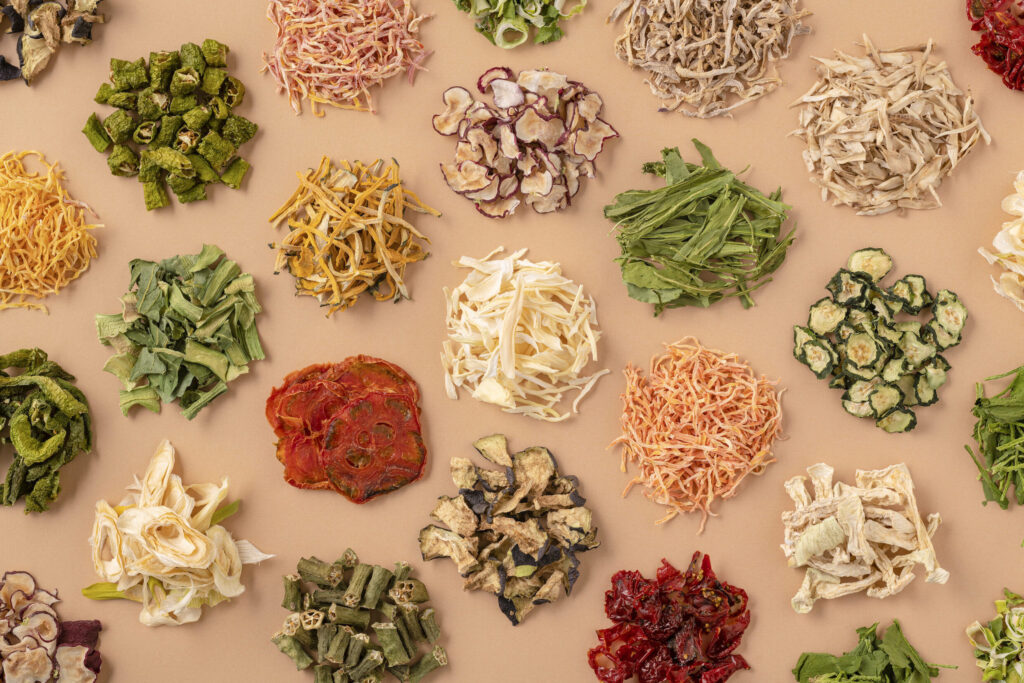
- Available for purchase in small lots from 1 kg
- We handle heirloom vegetables from across Japan
- Dried fruit and herbs also supported
The features and ways to eat 7 representative Shinshu heirloom vegetables
From among the 85 items, we selected 7 representative items based on name recognition, distribution volume, and influence on food culture.
Nozawana — synonymous with nationally famous pickling greens
| Season | Late October–late November (harvest); processed products year-round |
| Growing region | Nozawaonsen Village, Shimotakai District |
| Well-suited dishes | Nozawana pickles, stir-fries, oyaki, soba accompaniment |
Nozawana is a large leafy green originating in Nozawaonsen Village and a native leafy green of Shinshu with nationwide name recognition. According to legend, during the Horeki era (18th century), the head priest of Kenmeiji Temple in Nozawaonsen Village brought back seeds of Osaka's Tennoji turnip while studying in Kyoto, and it adapted to the climate of northern Shinano and developed as a leafy green. On the other hand, there is also research finding that a direct lineage relationship with the Tennoji turnip cannot be confirmed by genetic analysis, and investigation is proceeding on both the origin story and the variety characteristics.
The salt-pickled "nozawana pickles" are a standard Shinshu souvenir, letting you enjoy a crisp bite and umami from fermentation. It is also standard in Nagano's oyaki (with stir-fried nozawana as a filling) and as a soba accompaniment, an ingredient indispensable to Shinshu cuisine.
Nezumi daikon — the pungent condiment of Shinshu soba
| Season | Late October–November |
| Growing region | Sakaki Town, Chikuma City |
| Well-suited dishes | Oshibori udon, grated daikon, pickles, condiment |
Nezumi daikon is a pungent daikon with intense heat and a distinctive shape whose root tip extends thin like a mouse's tail. Grown in the sandy loam along the Chikuma River in Sakaki Town and Chikuma City, when grated it produces a pungency strong enough to bring tears.
The representative way to eat it is "oshibori udon," a local dish of Sakaki Town in which you dip udon into a dipping broth made by dissolving miso into the pressed juice of nezumi daikon, savoring the heat and sweetness. During the harvest season of late October–November, fresh nezumi daikon lines up at Michi-no-Eki Sakaki, and during the season it is distributed mainly locally.
Matsumoto ippon negi — a native negi that is sweet when heated
| Season | Mid-October–early February of the following year |
| Growing region | Matsumoto City, Yamagata Village, Higashichikuma District |
| Well-suited dishes | Hot pot, sukiyaki, grilled negi, soups |
Matsumoto ippon negi is a native negi with a thick white stalk handed down in the Matsumoto Basin. Through a distinctive cultivation method called "bent planting," in which negi planted once is pulled out in summer, laid down, and replanted, the white stalk grows bent and tender.
Because it develops a distinctive strong sweetness when heated, its qualities stand out in hot pot, sukiyaki, and grilled negi. It lines up at JA direct-sales outlets in Matsumoto and Yamagata Village in winter, and is also shipped nationwide via hometown tax outside Nagano Prefecture.
Teiza nasu — the large eggplant of Tenryu Village
| Season | Mid-July–late October |
| Growing region | Tenryu Village, Shimoina District |
| Well-suited dishes | Dengaku, grilled eggplant, agebitashi, stir-fries |
Teiza nasu is a large eggplant cultivated in the Kanbara district of Tenryu Village in Minamishinshu; according to Nagano Prefecture's official materials, it is 25 cm long and over 400 g in weight, with large ones reaching over 30 cm long and over 1 kg in weight. Around Meiji 20, a local, Kyūkichi Taizawa, obtained it from a seed and seedling shop and began cultivation, and Tenryu Village's warm climate and sloped-terrain soil have raised it. Its skin is thin and its flesh tender, becoming a melting texture when heated.
Made into dengaku or grilled eggplant, its enormous size makes a hearty dish, and its flesh's tenderness stands out in agebitashi too. It lines up at Tenryu Village and nearby direct-sales outlets only in summer–autumn, and its visual impact makes it popular with tourists too.
Botagosho — the bell-pepper-shaped chili pepper of Shinano Town
| Season | Mid-July–late October |
| Growing region | Shinano Town, Kamiminochi District |
| Well-suited dishes | Miso stir-fry, stuffed with meat, grilled and marinated, soy-sauce pickle |
Botagosho is a native chili pepper of a shape resembling a bell pepper, cultivated in Shinano Town. The flesh portion has bell-pepper-like sweetness and texture, but there is intense heat around the seeds, and individual variation is also large. In Shinshu it is a representative native chili pepper alongside the "botankosho" of Nakano City Nagae.
Removing the seeds restrains the heat, and its flesh's sweetness comes alive in stuffed-with-meat, grilled-and-marinated, and miso-stir-fry dishes. The spicy miso stir-fry using the seeds and all is a local standard dish, obtainable at Shinano Town's direct-sales outlets and roadside stations only in summer–autumn.
Togakushi daikon — the pungent condiment of Togakushi soba
| Season | Mid-October–mid-November |
| Growing region | Nagano City Togakushi |
| Well-suited dishes | Condiment for Togakushi soba, grated daikon, simmered dishes |
Togakushi daikon is a pungent daikon cultivated in the Togakushi district of Nagano City (a highland at around 1,000 m elevation). Though not as intense as nezumi daikon, it has a good balance of aroma and moderate pungency and has long been prized as the grated daikon served with Togakushi soba.
It is incorporated into the tourist route of Togakushi Shrine worship and Togakushi soba, and in the autumn season the soba restaurants of the Togakushi district serve grated daikon of this variety. It is an all-purpose pungent daikon whose dense flesh comes alive even in simmered dishes.
Obuse marunasu — the round eggplant of Obuse Town
| Season | July–September |
| Growing region | Obuse Town, Kamitakai District |
| Well-suited dishes | Simmered dishes, oyaki, dengaku, pickles |
Obuse marunasu is a native round eggplant of Obuse Town, known for chestnuts and Hokusai. Palm-sized and spherical with dense flesh, it holds its shape even when simmered, and is used as an ingredient in Obuse's local dish "nasu no oyaki."
Obuse Town is famous as a tourist destination, and this round eggplant can also be enjoyed at summer direct-sales outlets and local-cuisine restaurants. It is one of the representative items in the round-eggplant category among Nagano-produced eggplants, and is sometimes discussed alongside Kyoto's Kamo nasu.
How to purchase Shinshu heirloom vegetables and tips for storage
Shinshu's heirloom vegetables are mainly obtained via growing-region JA direct-sales outlets, roadside stations, hometown tax, and processed-product mail order. Items such as nozawana pickles, Matsumoto ippon negi, nezumi daikon, and teiza nasu are sometimes also handled at antenna shops and product fairs in the Tokyo metropolitan area.
In-prefecture direct-sales outlets / roadside stations
| Item | Main sources | Timing |
|---|---|---|
| Nozawana | Nozawaonsen Village direct-sales outlets / roadside stations | October–November (pickles year-round) |
| Nezumi daikon | JA direct-sales outlets in Sakaki Town and Chikuma City | Late October–November |
| Matsumoto ippon negi | Matsumoto / Yamagata Village JA direct-sales outlets | October–February of the following year |
| Teiza nasu | Direct-sales outlets within Tenryu Village | July–October |
| Botagosho | Michi-no-Eki Shinano, direct-sales outlets within Shinano Town | July–October |
| Togakushi daikon | Direct-sales outlets in Togakushi, Nagano City | October–November |
| Obuse marunasu | Direct-sales outlets within Obuse Town | July–September |
Mail order / hometown tax to outside the prefecture
- Nozawana pickles — distributed year-round in Nozawaonsen Village and at product fairs and mail order nationwide
- Nezumi daikon — shipped in November only as a Sakaki Town hometown tax return gift
- Matsumoto ippon negi — shipped in winter as a Matsumoto City hometown tax return gift
- Teiza nasu — summer only as a Tenryu Village hometown tax return gift
- Processed products — nozawana oyaki, nezumi daikon grated, botagosho miso, and the like are distributed year-round
Storage methods by item
| Item | Short-term storage | Long-term storage |
|---|---|---|
| Nozawana | Moisten and keep 3 days in the vegetable compartment | A few months as nozawana pickles |
| Nezumi daikon | Wrap in newspaper and keep 1 week in the vegetable compartment | Kiriboshi (dried strips) / freeze (2 weeks) |
| Matsumoto ippon negi | Wrap in newspaper and keep 1 week in the vegetable compartment | Chop and freeze (1 month) |
| Teiza nasu | Wrap in newspaper and keep 3–5 days in the vegetable compartment | As agebitashi, 3 days chilled, 1 month frozen |
| Botagosho | In a poly bag, 5 days in the vegetable compartment | 1 month or more as a miso pickle |
| Togakushi daikon | Wrap in newspaper and keep 1 week in the vegetable compartment | Kiriboshi (dried strips) / freeze (2 weeks) |
| Obuse marunasu | Wrap in newspaper and keep 3–5 days in the vegetable compartment | 2 weeks as pickles |
A product catalog that shows around 100 items we handle
Agriture, flexibly handling everything from small lots to large lots
- Available for purchase in small lots from 1 kg
- We handle heirloom vegetables from across Japan
- Dried fruit and herbs also supported
Initiatives to protect Shinshu's heirloom vegetables
To maintain the 85 native varieties, activities in which Nagano Prefecture, JA Nagano, the various municipalities, and producer groups collaborate are advancing.
The Shinshu Heirloom Vegetable Certification System and heritage-site cultivation certification
| Efforts | Details |
|---|---|
| Shinshu Heirloom Vegetable Certification System | Certifies items meeting three criteria—provenance, food culture, and variety characteristics—with provenance being items cultivated from before the Showa 30s. 85 items selected |
| Heritage-site cultivation certification | Officially certifies, for 56 of the 85 items, cultivation carried on in the place of origin. 51 producer groups have obtained certification |
| Oishii Shinshu Food official website | An information platform operated by the prefecture. Posts details for each certified item |
| Regional branding | JA and municipalities actively promote nozawana, nezumi daikon, Matsumoto ippon negi, teiza nasu, and the like |
Nagano Prefecture's "Shinshu Heirloom Vegetable Certification System" is large in scale even among the nation's prefectural independent certification systems, and its certification criteria are clear. By combining heritage-site cultivation certification, it builds a mechanism to protect native varieties on both the growing-region and variety fronts.
FOR BUSINESS
乾燥野菜を業務用でお探しですか
国産の野菜・果物を乾燥し、必要に応じて粉砕してお出ししています。扱っている品目は100種前後で、規格は 乾燥品の一覧・パウダーの一覧 に掲載しています。
少量でのご購入は、姉妹ブランドの通販サイト OYAOYA で承っています。
FAQ
Other regional specialty varieties
This article organized 54 major items in detail, but the Shinshu Heirloom Vegetable Certification System has selected 85 items. The following are items not covered in the main text, among those with limited distribution information.
| Item | Category | Notes |
|---|---|---|
| About 31 items among the 85 certified items not featured in this article | Various | Details can be confirmed in the "Shinshu Heirloom Vegetables" encyclopedia on Nagano Prefecture's "Oishii Shinshu Food" official website |
Summary
Shinshu (Nagano Prefecture)'s 85 heirloom vegetables have been handed down across 10 regions within mountainous terrain such as the Japanese Alps, Yatsugatake, the Shiga Highlands, and the Kiso Valley. As a prefecture-specific certification system, it has one of the largest numbers of items in the nation. Nationally famous items are assembled—nozawana, nezumi daikon, Matsumoto ippon negi, teiza nasu, botagosho, Togakushi daikon, Obuse marunasu, and more.
In summer, eggplant and chili pepper types; in autumn, turnip and daikon types; and from winter to early spring, leafy greens and negi types—Shinshu's native varieties line up through all four seasons. Through roadside stations, hometown tax, and antenna shops, you can bring the native varieties raised by the mountainous prefecture of Shinshu to your home table.
References / information sources
- Nagano Prefecture "Oishii Shinshu Food: Shinshu Heirloom Vegetable Encyclopedia" — official information on the 85 certified items
- Japan Traditional Vegetable Promotion Association "Heirloom Vegetables of Nagano Prefecture" — introduction of the certification system
- National Agriculture and Food Research Organization Genebank "Native Variety Database" — information on native varieties nationwide
Related articles
- Japan's Heirloom Vegetables: Precious Varieties Handed Down in Each Region
- Kyoto Heirloom Vegetables
- Heirloom vegetables of Yamanashi
- Heirloom vegetables of Gunma (including Shimonita negi)
- Heirloom vegetables of Niigata
- Heirloom vegetables of Toyama
- Heirloom vegetables of Fukui
Download the product catalog
We will send the materials to your email address based on the information you provide.
- What are Yamanashi’s heirloom vegetables? Features, season, and ways to eat the 13 items explained
- What are the Hida-Mino heirloom vegetables? Features, season, and ways to eat the 32 items explained
Author of this article
Related articles
-
 Okinawa island vegetables: individualistic vegetables nurtured by a subtropical climate
 -
 Kaga vegetables: Kanazawa brand vegetables where tradition lives on
 -
 The appeal of Kansai heirloom vegetables | Specialties of Naniwa, Kyoto, and Yamato thoroughly explained
 -
 Kyoto heirloom vegetables: Kyoto specialties with a long history
 -
 A list of heirloom vegetables of the 8 prefectures of Kyushu and Okinawa|A thorough introduction to characteristics, growing regions, and seasons
 -
 Know the heirloom vegetables of Edo Tokyo | The city’s vanishing food culture
 -
 They'll make you smile! The fun names of heirloom vegetables and their origins
 -
 5 cases and strategies that succeeded in branding heirloom vegetables