
What are Oita’s heirloom vegetables? Features, season, and ways to eat the 16 items organized by the association (Sorin kabocha, Kuju takana, Yaso seri) explained

Oita Prefecture's heirloom vegetables are a group of cultivars grown across diverse regions—the Setouchi coast of the Kunisaki Peninsula and Usa, the Aso-Kuju foothills of Yufu and Kuju, the Bungo Channel coast of Usuki and Saiki, and the Hita Basin. The Japan Traditional Vegetable Promotion Association organizes a total of 16 items from Oita Prefecture: 13 heirloom vegetables and 3 heirloom fruit trees (as of this writing).
We introduce items handed down in Bungo, including the revived cultivar linked to Otomo Sorin, "Sorin pumpkin" (Bungo pumpkin = a kikuza kabocha lineage), Kuju takana of the Kuju highlands, Beppu's aonaga jibai cucumber, Usuki's large ginger, Taketa's chorogi, and yasozeri (Oita's name for watercress) of Yufuin and Kuju.
TOC
The definition of "heirloom vegetable" and the scope of this article
| Certifying body | Main criteria |
|---|---|
| Kyoto Prefecture "Kyoto Heirloom Vegetables" | Cultivation history predating the Meiji era, covering the entire prefecture |
| Osaka Prefecture "Naniwa Heirloom Vegetables" | Grown within Osaka Prefecture from roughly 100 or more years ago, with clear provenance, Osaka-specific or regional character, and produced within the prefecture |
| Nagano Prefecture "Shinshu Heirloom Vegetable Certification System" | Cultivation, food culture, and varietal traits from before the 1955–1964 period |
| Oita Prefecture | A prefecture-specific "heirloom vegetable" definition has not been confirmed as of this writing. The Japan Heirloom Vegetable Promotion Association organizes 13 heirloom vegetables and 3 heirloom fruit trees |
In this article, of the 16 Oita items organized by the Japan Heirloom Vegetable Promotion Association, we cover 13 vegetables in the main text, and introduce the 3 heirloom fruit trees in the "Other local specialty cultivars" section at the end. Shiitake (Kunisaki Peninsula / Usa area) is categorized in MAFF statistics as a "special forest product," separate from vegetables (agricultural products), but because it is included in the Association's organization, we list it in this article's table and treat it, like the Association, as one of the 13 items.
Main items of Oita's heirloom vegetables
| Item | Features | Growing region | Season |
|---|---|---|---|
| Aotade | A knotweed of the Polygonaceae family. Compared with common red tade, its leaves are green and its pungency is said to be milder | Taketa City, Kokonoe Town | Around June |
| Aonaga jibai cucumber | About 1kg; contrast of green and white | Beppu City | June to October |
| Usuki's large ginger | Large rhizome; easy to cook | Usuki City | Late November |
| Kuju takana | Highland-grown; overwinters; strong pungency | Kuju, Taketa City | Late March |
| Sudo cucumber | Superb flesh; standout aroma | Mainly home gardens | Around July |
| Sorin pumpkin | A cultivar revived by Usuki City from Bungo pumpkin (kikuza kabocha); sticky, low sweetness | Usuki City | June–September |
| Yurihonjo City, Nikaho City | Whorl-shaped rhizome; crisp | Taketa City | Late November to December |
| Mataguro | Taro; cold-hardy | Iida, Kokonoe Town, Kusu District | October (before frost) |
| Mitori bean | Cowpea; skin resists splitting | Nagasu, Usa City and other areas of the prefecture (for home use / sekihan) | Late July–early August |
| Muta tokibi | A chewy, springy native corn. Mainly self-saved seed, so supply is limited | Kokonoe Town, Kusu District | Summer–autumn (mainly self-saved seed, so timing varies by year) |
| Yakatajima imo | Red-and-white sweet potato; rare variety | Yakatajima, Kamae, Saiki City | Autumn |
| Yasozeri | Oita's name for watercress; refreshing aroma | Yufuin, Yufu City / Kuju, Taketa City | March–June |
| shiitake | Thick-fleshed; rich aroma | Kunisaki Peninsula / Usa area | Mid-October–April |
A product catalog that shows around 100 items we handle
Agriture, flexibly handling everything from small lots to large lots
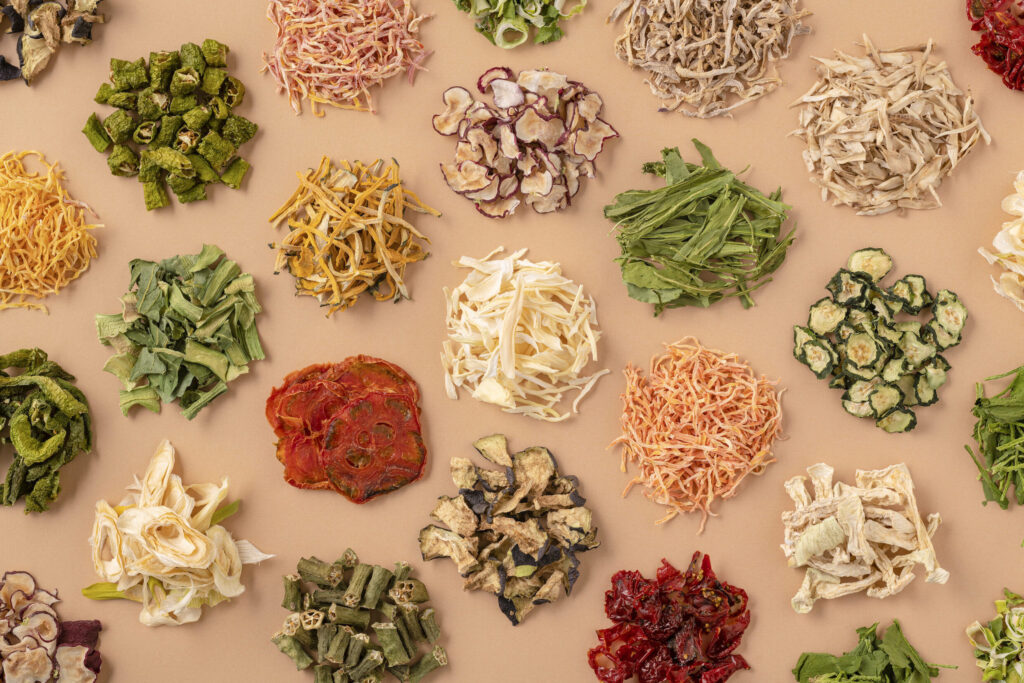
- Available for purchase in small lots from 1 kg
- We handle heirloom vegetables from across Japan
- Dried fruit and herbs also supported
FOR BUSINESS
乾燥野菜を業務用でお探しですか
国産の野菜・果物を乾燥し、必要に応じて粉砕してお出ししています。扱っている品目は100種前後で、規格は 乾燥品の一覧・パウダーの一覧 に掲載しています。
少量でのご購入は、姉妹ブランドの通販サイト OYAOYA で承っています。
Characteristics and how to eat 7 representative Oita heirloom vegetables
Sorin pumpkin — a native variety linked to pumpkin's arrival, revived in Usuki
| Season | June–September |
| Growing region | Usuki City |
| Well-suited dishes | Simmered dishes, tempura, potage, dengaku |
Sorin pumpkin is a Japanese pumpkin grown in Usuki City, a cultivar that Usuki City revived and branded from the once-grown "Bungo pumpkin (kikuza kabocha)" (Usuki City official). It is tied to the legend of pumpkin's arrival in Japan—a Portuguese ship drifting ashore in Bungo in 1541 (Tenbun 10) brought pumpkin, and it was presented to Otomo Sorin at the start of trade in 1548 (Tenbun 17) (per Oita Prefectural Library reference and others)—and was named "Sorin pumpkin" after the Christian daimyo Otomo Sorin. The flesh is sticky with restrained sweetness, pairs well with soy sauce and dashi, and shows its qualities in simmered dishes, tempura, and potage.
In its June–September season it is sometimes shipped to farm stands within Usuki City.
Kuju takana — a strongly pungent takana of the Kuju highlands
| Season | Late March |
| Growing region | Kuju, Taketa City |
| Well-suited dishes | Takana pickles, stir-fries, rice balls, fried rice |
Kuju takana is a native takana grown in Kuju, Taketa City (the Aso-Kuju highlands), characterized by strong pungency. Its harvest is in late March, and after processing it circulates year-round as takana pickles or onigiri filling.
Distribution is mainly as pickles; it can be found at pickle makers and JA farm stands within Taketa City.
Aonaga jibai cucumber — Beppu's 1kg-class large cucumber
| Season | June to October |
| Growing region | Beppu City |
| Well-suited dishes | Sashimi garnish, salad, quick pickles, vinegared dishes |
The aonaga jibai cucumber is a large cucumber grown in Beppu City, characterized by a weight of around 1kg and a contrast of green and white. Grown by ground-trailing cultivation, it is used for sashimi garnish, salad, and quick pickles.
In its June–October season it is shipped to farm stands within Beppu City (distribution is limited).
Usuki's large ginger — a large ginger that's easy to cook
| Season | Late November |
| Growing region | Usuki City |
| Well-suited dishes | Sweet-vinegar pickles, tsukudani, ginger-fried dishes, condiment |
Usuki's large ginger is a native large ginger grown in Usuki City, characterized by a large rhizome that's easy to cook. It's used as an ingredient for sweet-vinegar pickles, tsukudani, and ginger-fried dishes.
In its late-November season it is sometimes shipped to farm stands within Usuki City.
Yasozeri — the watercress of Yufuin and Kuju
| Season | March–June |
| Growing region | Yufuin, Yufu City / Kuju, Taketa City |
| Well-suited dishes | Salad, garnish for meat dishes, tempura, sauce |
Yasozeri is Oita's name for watercress (the Brassicaceae plant Nasturtium officinale), grown in the clear-stream areas of Yufuin (Yufu City) and Kuju (Taketa City). European watercress naturalized across Japan from the Meiji era onward, and in Yufuin and Kuju it took hold along the clear streams and came to be used as a local ingredient, which is why it is included in the Japan Heirloom Vegetable Promotion Association's organization. Its refreshing aroma and slightly bitter pungency are its hallmarks.
Used in salads, as a garnish for meat dishes, in tempura and sauces, it can be found at farm stands in Yufuin and Kuju from spring into early summer.
Mitori bean — Usa Nagasu's split-resistant cowpea
| Season | Late July–early August |
| Growing region | Centered on the Nagasu area of Usa City, and across the prefecture (widely grown for home use / sekihan in the Kunisaki Peninsula, Oita City, Usuki City, and elsewhere) |
| Well-suited dishes | Simmered beans, sekihan, bean rice, amanatto |
The mitori bean is a native cowpea handed down mainly in the Nagasu area of Usa City and across Oita Prefecture (Kunisaki Peninsula, Oita City, Usuki City, and elsewhere) for home use and sekihan; because its skin resists splitting, it suits sekihan (Oita Prefecture official). It is also used for simmered beans, bean rice, and amanatto.
In its late-July–early-August season it is shipped to farm stands within Usa City (supply is limited).
Chorogi — Taketa's whorl-shaped rhizome
| Season | Late November to December |
| Growing region | Taketa City |
| Well-suited dishes | Plum-vinegar pickles, osechi, tempura, dressed dishes |
Chorogi is a Lamiaceae rhizome grown in Taketa City, characterized by a distinctive whorl shape and a crisp bite. Pickled in plum vinegar it turns pink, and it's used as an auspicious item in New Year's osechi cuisine.
In its late-November–December season it is shipped to farm stands within Taketa City.
How to buy Oita's heirloom vegetables
| Item | Main sources | Timing |
|---|---|---|
| Sorin pumpkin | Farm stands within Usuki City | June–September |
| Kuju takana | Pickle makers and JA in Kuju, Taketa City; pickles year-round | Late March |
| Aonaga jibai cucumber | Farm stands within Beppu City | June to October |
| Usuki's large ginger | Farm stands within Usuki City | Late November |
| Yasozeri (watercress) | Farm stands at tourist spots in Yufuin and Kuju | March–June |
| Mitori bean | Farm stands in Nagasu, Usa City | Late July–early August |
| Yurihonjo City, Nikaho City | Farm stands within Taketa City; plum-vinegar pickles year-round | Late November to December |
A product catalog that shows around 100 items we handle
Agriture, flexibly handling everything from small lots to large lots
- Available for purchase in small lots from 1 kg
- We handle heirloom vegetables from across Japan
- Dried fruit and herbs also supported
FOR BUSINESS
乾燥野菜を業務用でお探しですか
国産の野菜・果物を乾燥し、必要に応じて粉砕してお出ししています。扱っている品目は100種前後で、規格は 乾燥品の一覧・パウダーの一覧 に掲載しています。
少量でのご購入は、姉妹ブランドの通販サイト OYAOYA で承っています。
FAQ
Other regional specialty varieties (3 heirloom fruits)
| Item | Category | Growing region | Features |
|---|---|---|---|
| Bansankichi | Pear (winter pear) | Hita City | A highly storable winter pear. November–February |
| Oita No. 1 | Kabosu (citrus) | Usuki City, Taketa City, and others | The leading lineage that Oita Prefecture selected and promoted in 1973 (Showa 48) from Oita's kabosu grown since the Edo period (Oita Prefecture official). Juicy. Mid-August–late October |
| Chansu | Citrus (dooryard fruit tree) | Taketa City and others | A native citrus passed down in Oita's dooryards. When green it's used as a "vinegar mandarin" whose juice seasons dishes; when ripe, its refined sweet-tartness and aroma make it eaten fresh too |
Summary
Oita's heirloom vegetables are a total of 16 items: 13 items passed down across the prefecture—Usuki, Taketa, Beppu, Yufuin, Usa, Kokonoe, Saiki, and elsewhere—and 3 heirloom fruit trees (Bansankichi, Oita No. 1, Chansu). Bungo's own native items such as Sorin pumpkin, Kuju takana, yasozeri, mitori bean, and chorogi remain.
References / information sources
- Japan Heirloom Vegetable Promotion Association, "Oita Prefecture"
- National Agriculture and Food Research Organization Genebank "Native Variety Database"
Related articles
- Heirloom vegetables of Japan
- Heirloom vegetables of Kumamoto (Higo vegetables)
- Heirloom vegetables of Fukuoka
- Heirloom vegetables of Nagasaki
Download the product catalog
We will send the materials to your email address based on the information you provide.
- What are higo vegetables? Features, season, and ways to eat the 15 heirloom vegetables designated by Kumamoto City (Suizenji bean sprouts, Kumamoto long carrot, Kumamoto red eggplant) explained
- What are Miyazaki’s heirloom vegetables? Features, season, and ways to eat the 15 items organized by the association (itomaki daikon, Sadowara eggplant, Heike daikon) explained
Author of this article
Related articles
-
 Okinawa island vegetables: individualistic vegetables nurtured by a subtropical climate
 -
 Kaga vegetables: Kanazawa brand vegetables where tradition lives on
 -
 The appeal of Kansai heirloom vegetables | Specialties of Naniwa, Kyoto, and Yamato thoroughly explained
 -
 Kyoto heirloom vegetables: Kyoto specialties with a long history
 -
 A list of heirloom vegetables of the 8 prefectures of Kyushu and Okinawa|A thorough introduction to characteristics, growing regions, and seasons
 -
 Know the heirloom vegetables of Edo Tokyo | The city’s vanishing food culture
 -
 They'll make you smile! The fun names of heirloom vegetables and their origins
 -
 5 cases and strategies that succeeded in branding heirloom vegetables