
What are higo vegetables? Features, season, and ways to eat the 15 heirloom vegetables designated by Kumamoto City (Suizenji bean sprouts, Kumamoto long carrot, Kumamoto red eggplant) explained

Kumamoto City's "Higo vegetables" are varieties handed down around the outskirts of Kumamoto City—the spring-fed areas around Lake Ezu, the foothills of Mount Aso, the Kumamoto Plain, and Kikuchi and Mashiki. In fiscal 2006 (Heisei 18) Kumamoto City designated 15 items as "Higo vegetables," and it operates a system that trademarked them in January 2008 (Heisei 20); The Japan Traditional Vegetable Promotion Association here too the 15 items are organized.
In addition to Kumamoto kyona, Suizenji moyashi, hitomoji, Kumamoto naga Carrot, Kumamoto akanasu, Suizenji seri, and Kumamoto kurokawa kabocha, we introduce items handed down in Kumamoto City such as Kasuga bobura, Kumamoto negi, zuiki, and lotus root (native).
TOC
The definition of "heirloom vegetable" and the scope of this article
| Certifying body | Main criteria |
|---|---|
| Kyoto Prefecture "Kyoto Heirloom Vegetables" | Cultivation history predating the Meiji era, covering the entire prefecture |
| Osaka Prefecture "Naniwa Heirloom Vegetables" | Cultivated within Osaka Prefecture from roughly 100 or more years ago |
| Nagano Prefecture "Shinshu Heirloom Vegetable Certification System" | Cultivation, food culture, and varietal traits from before the 1955–1964 period |
| Kumamoto City "Higo vegetables" | Items with characteristics unique to Kumamoto, cultivated in the Kumamoto climate since ancient times and designated by Kumamoto City. The growing regions also include Mifune, Ashikita, and Minamiaso outside the city. |
In this article, we list 14 of the 15 Kumamoto City "Higo vegetables" that qualify as vegetables, sorted into "leafy vegetables," "root and tuber vegetables," and "fruit vegetables and others," and explain 7 representative items in detail in the main section. Suizenji-nori, a freshwater alga (one of the 15 Higo vegetables), is handled separately at the end under "other local specialty varieties" because of its classification characteristics.
Classification list of the 14 Higo vegetables (Suizenji-nori is introduced at the end)
Leafy greens
| Item | Features | Growing region | Season |
|---|---|---|---|
| Kumamoto kyona | Round-leaf oval type, tender | Jozan Kamishiro, Kumamoto City | Early October to late March |
| Suizenji moyashi | Grows to 35–40 cm in the spring water of Lake Ezu | Izumi, Chuo Ward, Kumamoto City | End of December |
| Suizenji-na | Asteraceae perennial with green leaf tops and purple undersides; the same species as Kanazawa's "kintoki-so" | Mifune, Ashikita, Minamiaso, and others | Open field May–October; greenhouse year-round (association) |
| Suizenji seri | The foremost of the seven spring herbs; grown in spring water | Ezu, Kumamoto City | December to February |
| Hitomoji | A type of wakegi (bunching onion); propagated by division | Throughout Kumamoto City | March and November |
| Kumamoto ingen | Flat pods 25 cm long; few strings and tender | Ikegami, Nishi Ward, Kumamoto City | Spring mid-May to June; autumn early October |
Root and tuber vegetables
| Item | Features | Growing region | Season |
|---|---|---|---|
| Kumamoto naga ninjin | Oriental type; up to about 1.2 m | Jozan, Nishi Ward, Kumamoto City | Mid-December to early March |
| Imo no me | Light-blocked sprouts of red-budded Miyako-imo; pink in color | Akita, Kumamoto City; Kikuyo, Kikuchi District | December to January |
| Zuiki | Leaf stalks of hasu-imo (lotus taro); a stem vegetable with a crisp texture | Kengun, Miyuki, Akita | August to September |
| Lotus root (native) | Long, slender internodes | Okishin, former Tenmei, Jonan, and Nakashima, Kumamoto City | Mid-June to the end of March the following year |
Fruit vegetables and others
| Item | Features | Growing region | Season |
|---|---|---|---|
| Kumamoto akanasu | Around 30 cm; red-purple skin; melts when cooked | Kumamoto City, Mashiki, Mifune | February–June; September–November |
| Kasuga bobura | Japanese squash; over 30 cm; loofah-shaped | Kasuga and Nakashima, Kumamoto City | August–November |
| Kumamoto negi | Kujo type; tillering leaf onion | Miyukikibe-machi, Minami Ward, Kumamoto City, and others | December to March |
| Kumamoto kurokawa kabocha | Japanese squash; fine-textured and sticky | Tomiai-machi, Kumamoto City | Late May to early November |
A product catalog that shows around 100 items we handle
Agriture, flexibly handling everything from small lots to large lots
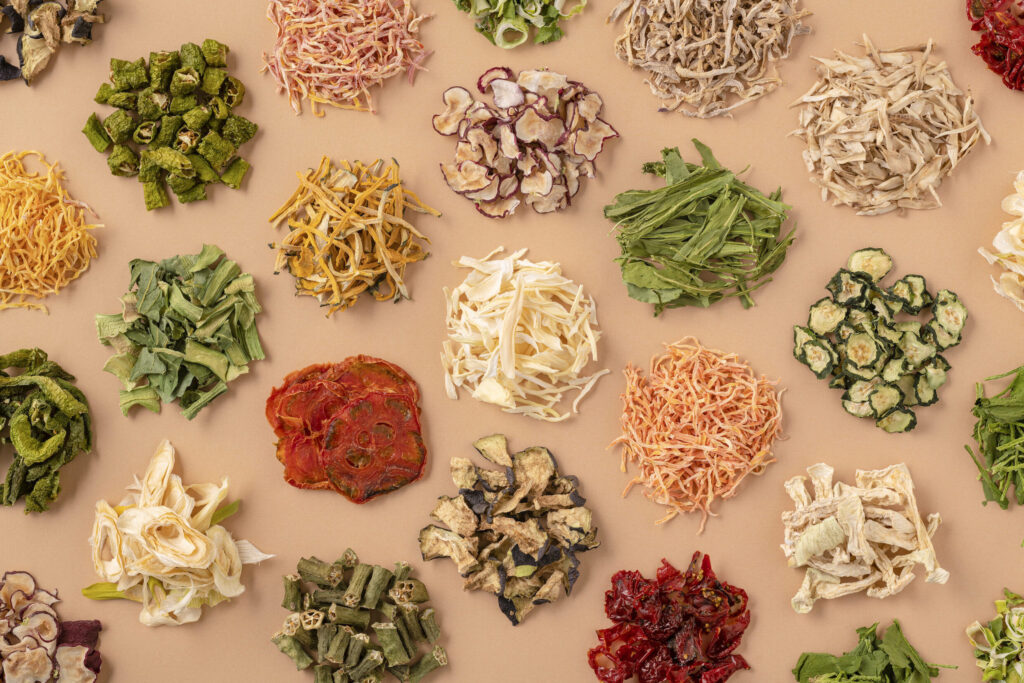
- Available for purchase in small lots from 1 kg
- We handle heirloom vegetables from across Japan
- Dried fruit and herbs also supported
FOR BUSINESS
乾燥野菜を業務用でお探しですか
国産の野菜・果物を乾燥し、必要に応じて粉砕してお出ししています。扱っている品目は100種前後で、規格は 乾燥品の一覧・パウダーの一覧 に掲載しています。
少量でのご購入は、姉妹ブランドの通販サイト OYAOYA で承っています。
Characteristics and how to eat the 7 representative Higo vegetables
Suizenji moyashi — 35–40 cm large bean sprouts grown in the spring water of Lake Ezu
| Season | End of December |
| Growing region | Izumi, Chuo Ward, Kumamoto City |
| Well-suited dishes | Zoni, hot pot, stir-fries, dressed salads |
Suizenji moyashi is a native bean sprout grown in Izumi, Chuo Ward, Kumamoto City, distinguished by a traditional cultivation method that grows soybeans to 35–40 cm using the spring water of Lake Ezu. With its long, slender, crisp texture, it has been used as an ingredient in Kumamoto's New Year zoni.
A precious item shipped only during a limited period at year-end, it is sold at direct-sales outlets within Kumamoto City at the end of December.
Kumamoto naga ninjin — an Oriental long-root carrot up to 1.2 m
| Season | Mid-December to early March |
| Growing region | Jozan district, Nishi Ward, Kumamoto City |
| Well-suited dishes | Simmered dishes, osechi, kinpira, salads |
Kumamoto naga ninjin is an Oriental long-root carrot grown in the Jozan district of Nishi Ward, Kumamoto City. It has a long, slender, burdock-like shape, with some individuals reaching 1.2 m. Its distinctive Oriental crimson color and sweetness make it a favorite for adding red-and-white color to simmered dishes and osechi.
It is shipped at JA direct-sales outlets within Kumamoto City during its season from mid-December to early March.
Kumamoto akanasu — a 30 cm red-purple eggplant that melts when cooked
| Season | February–June; September–November |
| Growing region | Kumamoto City, Mashiki, Mifune |
| Well-suited dishes | Dengaku, grilled eggplant, agebitashi, simmered dishes |
Kumamoto akanasu is a large eggplant grown in Kumamoto City, Mashiki, and Mifune, distinguished by red-purple skin about 30 cm long and a melt-in-your-mouth texture when cooked. It suits dishes that make use of its large size, such as dengaku, grilled eggplant, and agebitashi.
Its two seasons are February–June and September–November, and it is sold at JA direct-sales outlets within Kumamoto City.
Hitomoji — a type of wakegi divided from the base
| Season | March and November |
| Growing region | Throughout Kumamoto City |
| Well-suited dishes | Hitomoji guruguru (dressed with vinegar miso), condiment, soups |
Hitomoji is a type of wakegi grown within Kumamoto City, distinguished by its small size and stalks that divide from the base. It is used as the ingredient for Kumamoto's local dish "hitomoji guruguru" (a dish where boiled hitomoji is rolled up from the base and eaten with vinegar miso).
It is shipped at direct-sales outlets within Kumamoto City in March and November.
Kumamoto kyona — a tender round-leaf leafy vegetable
| Season | Early October to late March |
| Growing region | Around Jozan Kamishiro, Kumamoto City |
| Well-suited dishes | Ohitashi, dressed salads, miso soup, stir-fries |
Kumamoto kyona is a round-leaf, oval-shaped leafy vegetable grown around Jozan Kamishiro, Kumamoto City, with a tender leaf quality. It is distributed as a winter-to-early-spring leafy vegetable in Kumamoto.
It is versatile in ohitashi, dressed salads, miso soup, and stir-fries, and has a long shipping period from early October to late March.
Suizenji seri — a spring herb grown in the spring water of Lake Ezu
| Season | December to February |
| Growing region | Ezu district, Kumamoto City |
| Well-suited dishes | Nanakusa-gayu, seri hot pot, ohitashi, dressed salads |
Suizenji seri is a native seri (water dropwort) grown in the Ezu district of Kumamoto City using the spring water of Lake Ezu, regarded as the foremost of the seven spring herbs. Growing in clear spring water yields tender, richly fragrant leaves.
Its fragrance stands out in nanakusa-gayu, seri hot pot, and ohitashi, and it is sold at JA direct-sales outlets within Kumamoto City during its season from December to February.
Kumamoto kurokawa kabocha — a fine-textured, sticky Japanese squash
| Season | Late May to early November |
| Growing region | Tomiai-machi, Kumamoto City |
| Well-suited dishes | Simmered dishes, soups, tempura, fukumeni |
Kumamoto kurokawa kabocha is a Japanese squash grown in Tomiai-machi, Kumamoto City. Compared with Western squash it is more restrained in sweetness, with a fine-textured flesh and a sticky texture as its distinctive traits. It suits simmered dishes, soups, tempura, and fukumeni.
It is distributed over a long season from late May to early November at JA direct-sales outlets within Kumamoto City.
How to buy Higo vegetables
| Item | Main sources | Timing |
|---|---|---|
| Suizenji moyashi | Direct-sales outlets and year-end department store sections within Kumamoto City | End of December |
| Kumamoto naga ninjin | JA direct-sales outlets within Kumamoto City | Mid-December to early March |
| Kumamoto akanasu | JA direct-sales outlets in Kumamoto City, Mashiki, and Mifune | February–June; September–November |
| Hitomoji | Direct-sales outlets within Kumamoto City | March and November |
| Kumamoto kyona | Direct-sales outlets around Jozan, Kumamoto City | October to late March |
| Suizenji seri | Direct-sales outlets in the Ezu district, Kumamoto City | December to February |
| Kumamoto kurokawa kabocha | JA direct-sales outlets in Tomiai-machi, Kumamoto City | Late May to early November |
A product catalog that shows around 100 items we handle
Agriture, flexibly handling everything from small lots to large lots
- Available for purchase in small lots from 1 kg
- We handle heirloom vegetables from across Japan
- Dried fruit and herbs also supported
FOR BUSINESS
乾燥野菜を業務用でお探しですか
国産の野菜・果物を乾燥し、必要に応じて粉砕してお出ししています。扱っている品目は100種前後で、規格は 乾燥品の一覧・パウダーの一覧 に掲載しています。
少量でのご購入は、姉妹ブランドの通販サイト OYAOYA で承っています。
FAQ
Other regional specialty varieties
| Item | Category | Growing region | Features |
|---|---|---|---|
| Suizenji-nori | Freshwater cyanobacterium (blue-green alga) | Mashiki and Kashima | A rare freshwater cyanobacterium endemic to Japan. Its historical place of occurrence is Upper Lake Ezu; today it is cultivated and conserved in Mashiki and Kashima. Dried and used in confectionery (gyuhi) and as food. |
Summary
Kumamoto's "Higo vegetables" are the 15 items of a system in which Kumamoto City designated 15 items in fiscal 2006 (Heisei 18) and trademarked them on January 25, 2008 (Heisei 20). They include items making use of the spring water of Lake Ezu—Suizenji moyashi, Suizenji seri, and Suizenji-na—as well as a diverse range: Kumamoto naga ninjin, Kumamoto akanasu, Kumamoto kurokawa kabocha, Kasuga bobura, Kumamoto negi, hitomoji, Kumamoto kyona, Kumamoto ingen, imo no me, zuiki, and lotus root (native). Suizenji-nori was introduced separately as a freshwater alga.
References / information sources
- Japan Heirloom Vegetable Promotion Association "Kumamoto Prefecture"
- National Agriculture and Food Research Organization Genebank "Native Variety Database"
Related articles
- Heirloom vegetables of Japan
- Heirloom vegetables of Nagasaki
- Heirloom vegetables of Fukuoka
- Heirloom vegetables of Saga
Download the product catalog
We will send the materials to your email address based on the information you provide.
- What are Nagasaki’s heirloom vegetables? Features, season, and ways to eat the 16 “Nagasaki heirloom vegetables” (Unzen kobu takana, Nagasaki hakusai, Karako lotus root) explained
- What are Oita’s heirloom vegetables? Features, season, and ways to eat the 16 items organized by the association (Sorin kabocha, Kuju takana, Yaso seri) explained
Author of this article
Related articles
-
 Okinawa island vegetables: individualistic vegetables nurtured by a subtropical climate
 -
 Kaga vegetables: Kanazawa brand vegetables where tradition lives on
 -
 The appeal of Kansai heirloom vegetables | Specialties of Naniwa, Kyoto, and Yamato thoroughly explained
 -
 Kyoto heirloom vegetables: Kyoto specialties with a long history
 -
 A list of heirloom vegetables of the 8 prefectures of Kyushu and Okinawa|A thorough introduction to characteristics, growing regions, and seasons
 -
 Know the heirloom vegetables of Edo Tokyo | The city’s vanishing food culture
 -
 They'll make you smile! The fun names of heirloom vegetables and their origins
 -
 5 cases and strategies that succeeded in branding heirloom vegetables