
FOOD STYLE Tokyo

FOOD STYLE Tokyo is one of the largest food business meeting events in the Tokyo metropolitan area, where restaurant, ready-made meal and retail buyers do business directly with food manufacturers and producers. Held at Tokyo Big Sight, it draws menu developers at restaurants and izakaya, ready-made meal businesses making prepared dishes, bento and institutional meals, and supermarket and convenience store buyers looking for new ingredients, menu components and promotional products. This article covers the Tokyo show's dates, venue, exhibit categories and how to register as a visitor, as well as how to prepare to move business meetings forward and how to think about novelties handed out at your booth that stay memorable. The visitors' market differs from regional shows such as Okinawa and Fukuoka, so here we focus on restaurants, ready-made meals and retail in the Tokyo metropolitan area.
We have materials available to help you understand vegetable-based novelties
Agriture OEM, flexibly handling everything from small lots to large lots
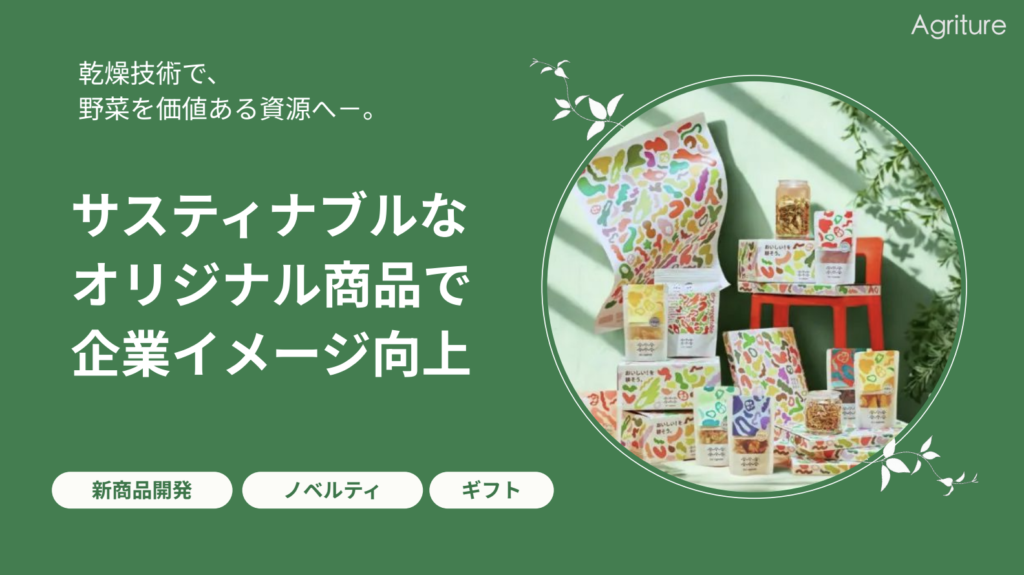
- SDGs-friendly products using non-standard vegetables
- Delivery possible in as short as two weeks
- Small lots from 500 bags
TOC
FOOD STYLE Tokyo: Basic Information
The next upcoming show is the autumn 2026 Tokyo edition. It uses East Halls 1–3 at Tokyo Big Sight, and admission is free with advance visitor registration. With head office functions for restaurants, ready-made meals and retail concentrated in the Tokyo area, a strength unique to the Tokyo show is being able to pitch the same product to buyers from several sectors in a single visit.
| Item | FOOD STYLE Tokyo 2026 |
|---|---|
| Dates | September 30 (Wed) – October 2 (Fri), 2026 |
| Venue | Tokyo Big Sight, East Halls 1–3 |
| Admission | Free (advance visitor registration required) |
| Organizer | FOOD STYLE Japan Executive Committee (Innovent Inc.) |
The dates for the 2027 Tokyo show had not been announced at the time of writing. The venue and dates will be posted on the official website once confirmed, so if you are considering exhibiting or visiting next year, check there for the latest information. Past patterns suggest a show around autumn, but it is safer not to lock in your schedule until confirmed information is released.
What companies and products does it attract?
Food and Product Categories Covered by Exhibitors
A wide range of ingredients used in restaurant and ready-made meal kitchens is exhibited, from primary products such as fresh produce, meat and seafood to seasonings, frozen foods, retort products, dried goods, beverages and confectionery and baking ingredients. Related fields for turning menus into dishes and serving them are also on display, including kitchen equipment, cooking utensils, packaging materials and store operation services. Restaurants and ready-made meals in the Tokyo area turn over quickly, and many visitors are looking for usable ingredients for seasonal menus and new store concepts.
Even ingredients whose yield or prep workload is an issue when fresh are more readily adopted by kitchens with limited staff and central kitchens once processed into easy-to-handle forms by drying, cutting or powdering. Items that tend to come in small lots when a growing region works alone can also more easily meet chain-scale volumes when growers team up with a processor to put them into a form that can be supplied steadily.
The Restaurant, Ready-Made Meal and Retail Buyers Who Attend
Visitors are mainly menu developers at restaurant chains such as restaurants, izakaya and cafes, ready-made meal businesses making prepared dishes, bento and institutional meals, and merchandising buyers at supermarkets, convenience stores and specialty stores. Many are head office staff covering the Tokyo market, so a feature of business meetings at the Tokyo show is how easily they move into detailed discussions of how to sell an ingredient in the buyer's own market.
What resonates varies by sector. Restaurants look at whether prep work can be reduced, ready-made meal businesses at shelf life and yield, and retailers at how products look on the shelf and whether there is room for private labels. If you identify your target sectors in advance using the exhibitor search and visitor data, and prepare separate proposal angles for restaurants, ready-made meals and retail, you will not waste limited meeting time.
Concurrent specialized shows
FOOD STYLE Tokyo is held at the same time and in the same venue as several specialist exhibitions. The Ramen Industry Expo, focused on noodle businesses, the Food Packaging Materials & Machinery Expo, covering food packaging and filling, and the Food Logistics & 3PL Expo, covering transport and storage, run alongside it, so you can cover the process from sourcing ingredients to packing and shipping in one visit.
In commercializing products for restaurants and ready-made meals, adoption only happens once you have put in place not just a good ingredient but packaging that holds up in stores and in delivery and logistics that keep products fresh. With related specialist shows laid out side by side, this event can also be used as a place to find partners for the processes your company is missing, all at once.
Highlights for visitors and exhibitors
Direct Business Meetings with Tokyo-Area Buyers
The biggest highlight is the chance to meet restaurant, ready-made meal and retail buyers face to face. Beyond offering tastings, preparing to answer on the spot about price range, minimum lot, available delivery timing and prep steps makes it more likely to lead to quote requests and adoption discussions later. Rather than ending with an exchange of business cards, recording each buyer's sector and interests makes follow-up after the show easier.
Gathering Ideas for Menu Development and Store Displays
The venue is lined with actual ingredients that can be used to develop restaurant menus, commercialize ready-made meals and build retail displays. How competitors present their booths and serve tastings can also give you ideas for rethinking how you communicate your own products. Even when attending as a visitor, asking about prep conditions and lot sizes on the spot for ingredients that catch your interest speeds up evaluation back at the office.
Finding Process Partners Across the Co-Located Shows
By also visiting the co-located packaging and logistics shows, you can find contacts in a single visit not only for adopting ingredients but also for packaging that fits store fixtures and delivery setups suited to frozen or room-temperature ranges. Anticipating where commercialization tends to get stuck and planning a route that crosses booths for several processes will increase what you take away.
For companies considering exhibiting
Exhibitors include food manufacturers, producers and joint exhibits from growing regions that want to open sales channels to restaurants, ready-made meals and retail in the Tokyo area. Details on exhibit formats and booth fees can be confirmed with the organizer, Innovent Inc., or through the inquiry contact on the official website. To make the most of limited meeting time, it is effective to narrow your target to one of restaurants, ready-made meals or retail, and prepare samples and materials matched to what that sector wants to know: prep steps, yield or shelf presentation.
If you prepare a one-page sheet summarizing price, lot and delivery terms, along with tastings that show the product rehydrated or cooked, you can move into negotiating terms on the spot. Making booth samples something that can be tried in the kitchen or merchandising department after being taken home helps people remember your company during internal discussions later.
Visitor registration and how to participate
Once you complete advance registration on the official website, the data needed for entry is sent to you. Registering in advance lets you avoid the reception crowds on the day and review the exhibitor list before the show to choose the booths you want to meet with. The nearest stations are Kokusai-Tenjijo Station on the Rinkai Line and Tokyo Big Sight Station on the Yurikamome. Because the show is in the Tokyo area, many visitors can make it a day trip, but the surroundings get crowded during the show, so if you are attending several days it is safest to allow extra travel time.
Tips for Making the Most of FOOD STYLE Tokyo
Restaurants, ready-made meal businesses and retailers in the Tokyo area are more likely to adopt ingredients that reduce prep work and can be supplied steadily year-round. Even vegetables that are hard to handle fresh can be kept in the kitchen in a light, shelf-stable, easy-to-measure form once dried or powdered. Agriture dries and powders vegetables, including off-spec produce, and can consult with you from the raw material selection stage on designing usable forms for restaurant menu ingredients and ready-made meal mass production.
Reactions from each sector gathered in business meetings help decide the direction of the next prototype. If you take home requests such as "rehydrate a little faster" or "put this flavor in small bags," make small-lot prototypes and then go into the next meeting, the back-and-forth up to adoption moves faster. Because business formats change quickly in the Tokyo area, the speed from prototype to adoption review can decide whether a deal succeeds.
Leave Head Office Buyers with Samples They Can ”Still Try the Following Week”
At FOOD STYLE Tokyo, held in the capital region, head office staff from restaurant chains and ready-made meal manufacturers visit dozens of booths in a day. By evening, all that remains is a stack of business cards, and which booth offered what tends to blur. Whether you can hand over something that stays with them and can be tried as-is at the office or in the kitchen later is what decides whether your company gets called in for the next week's prototyping.
For restaurant and ready-made meal buyers, dried vegetables and dried vegetable soups that can be rehydrated work well when handed over as small bags of commercial samples. If you take a two-step approach, having buyers check only the taste and how the product rehydrates at the venue and then test detailed prep conditions with the samples they take back to their central kitchens or kitchens, your product is more likely to be put on the table for consideration even in fast-moving Tokyo-area operations.
Put Samples in a Form That Can Go Straight into Prep Once Taken Home
If you assume samples will be tested in a head office merchandising department or central kitchen, they should hold up to transport and storage and show at a glance how to rehydrate them. Adding a small note with soaking time and finished texture for dried vegetables, or the amount of hot water and serving size per cup for dried vegetable soup, makes it easier for recipients to reproduce the result in their own kitchens. Separating samples for restaurants and ready-made meals and portioning them so they are easy to test in each kitchen can sometimes lead to follow-up contact later.
Turning Feedback from Business Meetings into Commercial Staples and PB Products
Feedback that arrives after the show, such as "rehydrate a bit faster" or "could this blend be made in small bags," is material for deciding your next move. If you prepare prototypes reflecting those requests in small lots (from 50 bags) and bring them to the next meeting, talks can move toward commercial staple ingredients or retail PB products. Because business formats change quickly in the Tokyo area, having a processing partner who can quickly turn feedback into something tangible can shorten the distance to adoption. We cannot make tablets or capsules, but we can join discussions from the raw material selection stage on turning vegetables into dried products, powders and soups.
We have materials available to help you understand vegetable-based novelties
We have materials available to help you understand vegetable-based novelties
Agriture OEM, flexibly handling everything from small lots to large lots
- SDGs-friendly products using non-standard vegetables
- Delivery possible in as short as two weeks
- Small lots from 500 bags
FAQ: FOOD STYLE Tokyo
- Is there an admission fee?
-
If you register as a visitor on the official website in advance, admission is free. Same-day registration without pre-registration may be charged, so advance registration is recommended.
- How does it differ from the Okinawa and Fukuoka shows?
-
FOOD STYLE is held in several regions, and the Tokyo show is distinguished by gathering restaurant, ready-made meal and retail buyers whose market is the Tokyo metropolitan area. Choose which show to visit or exhibit at based on the market you are targeting.
- When is the 2027 Tokyo show?
-
At the time of writing, the dates for the 2027 Tokyo show had not been announced. Confirmed information will be posted on the official website, so if you are planning for next year, check there for the latest announcement.
- What industries do most visitors come from?
-
Visitors are mainly buyers from restaurants such as restaurants and izakaya, ready-made meals such as prepared dishes, bento and institutional meals, and retail such as supermarkets and convenience stores. Many are head office staff in the Tokyo area, so it is easy to lead directly into discussions about adoption and commercialization.
- Can booth novelties be made in small lots?
-
Dried vegetables, vegetable powders, dried vegetable soups and more can be prepared in small lots from 50 bags. You can also make commercial samples and in-store giveaway bags separately and use them for both adoption discussions and PB development.
Summary: Expanding Sales Channels in the Tokyo Area at FOOD STYLE Tokyo
FOOD STYLE Tokyo is a business-meeting trade show for restaurants, ready-made meals and retail in the Tokyo metropolitan area, held at Tokyo Big Sight East Halls 1–3 from September 30 to October 2, 2026. Because head office buyers visit many booths in a day, handing over a set of on-the-spot tastings and samples they can take home and test in the kitchen or merchandising department keeps your company in mind through post-show discussions. If you prepare rehydratable dried vegetables and dried vegetable soups as commercial samples and reflect requests picked up in meetings in small-lot prototypes, it becomes easier to move toward commercial adoption or PB discussions. The dates for the 2027 Tokyo show have not been announced, so build next year's plans after the announcement on the official website.
Official information: FOOD STYLE Tokyo official website

Recommended reading
Commercial dried vegetables / Original vegetable novelties / FOOD STYLE Fukuoka / FOOD STYLE Okinawa
Last updated: August 12, 2026
Download the novelty materials
We will send the materials to your email address based on the information you provide.