
Tea– category –
-

Buddy’s Farm
About Buddy’s Farm. Buddy’s Farm (Odawara City, Kanagawa) is an agricultural corporation known for growing somewhat rare mini tomatoes. About six years since founding, it has shipped to local direct sales and restaurants while committing to varieties with thin skins and strong individual flavor. Making use of that know-how, last year... -
Takii & Company, Limited
A dried vegetable series using Phytorich. We produced dried vegetables using vegetables from the Phytorich series developed by Takii & Company, Limited, known for its “vegetables with a good reason.” From that series, we used “Kyo-kurenai carrot,” “Orange carrot,” and “Healthy oku... -

Aida LLC
A flavored tea using dried Kujo green onion wins a Japanese Tea Award. Aida LLC provides experiences of time and space by making use of diverse cultures—food, art, aroma, music, and more—centered on the tea ceremony and Japanese tea. At the company’s shop located in Minami-ku, Kyoto City, “a Japanese tea space to enjoy time”... -
A list of heirloom vegetables from the six Tohoku prefectures | The regional food culture we want to protect
The Tohoku region, with its dramatic seasonal changes, retains many locally distinctive heirloom vegetables. Landrace varieties rooted in the climate and terroir are food materials and, at the same time, a resource that carries the region's cultivation techniques and food culture to the present. On the other hand, with diversifying diets and a shortage of successors, cultivation is declining... -
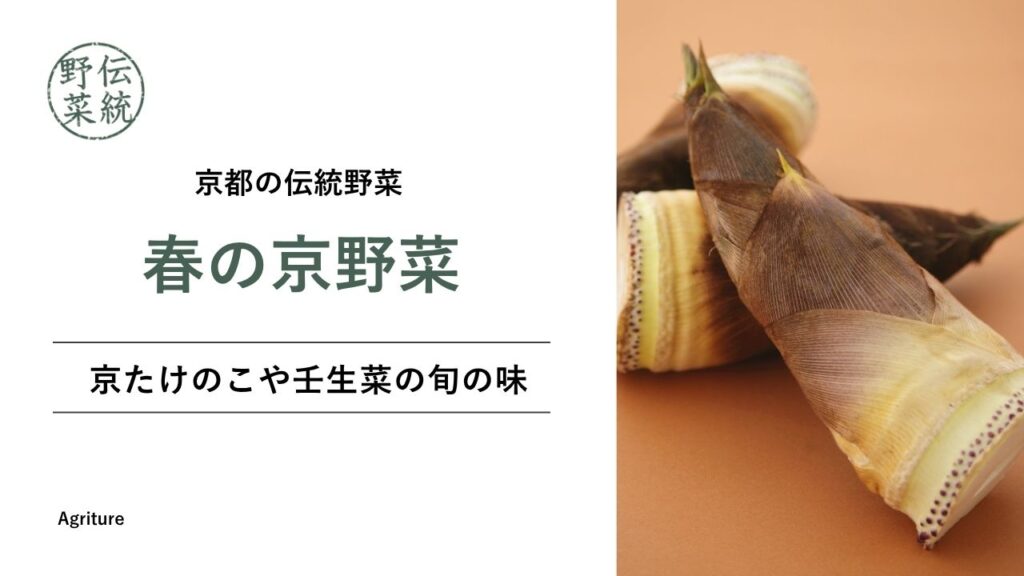
Spring Kyoto vegetables: the seasonal taste of Kyoto bamboo shoots, mibuna, and Kujo green onion
Every vegetable has its season, and by enjoying them season by season you can savor flavors unique to that time of year. Spring, along with the start of the new fiscal year, is when fresh vegetables line the shop shelves. Vividly colored, full of character, spring Kyoto vegetables include Kyoto bamboo shoots, hanana rape blossoms, and Kyoto udo—all shaped by Kyoto's climate and land... -

Vessels and Kyoto Vegetables. Creating the Scenery of Plating.
What always comes at the end of cooking is the step of "plating." After cutting, applying heat, and adjusting the flavor, the moment of setting the dish on the vessel. Here, the dish's impression changes greatly. It doesn't change the flavor itself. But the color, texture, and shape a vessel holds, when they meet a vegetable... -
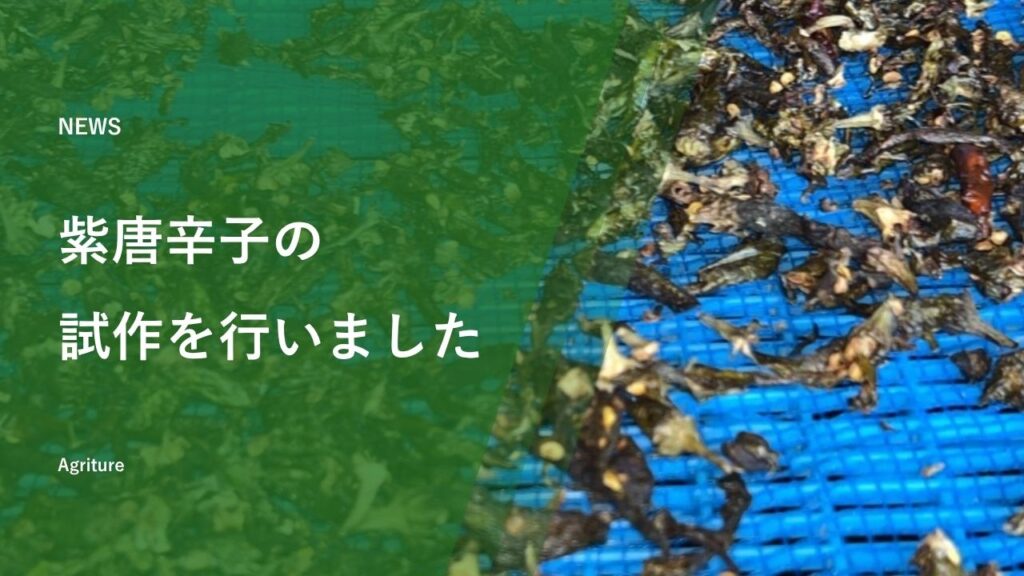
We Prototyped "Purple Chili Powder" Using Domestically Grown Purple Chili
Agriture recently prototyped "purple chili powder" using domestically grown purple chili. Purple chili is a variety rich in anthocyanin, prized for its beautiful purple color and fruity aroma. It has a deep richness within its heat, and gives color and flavor to dishes, sweets, drinks, and more... -
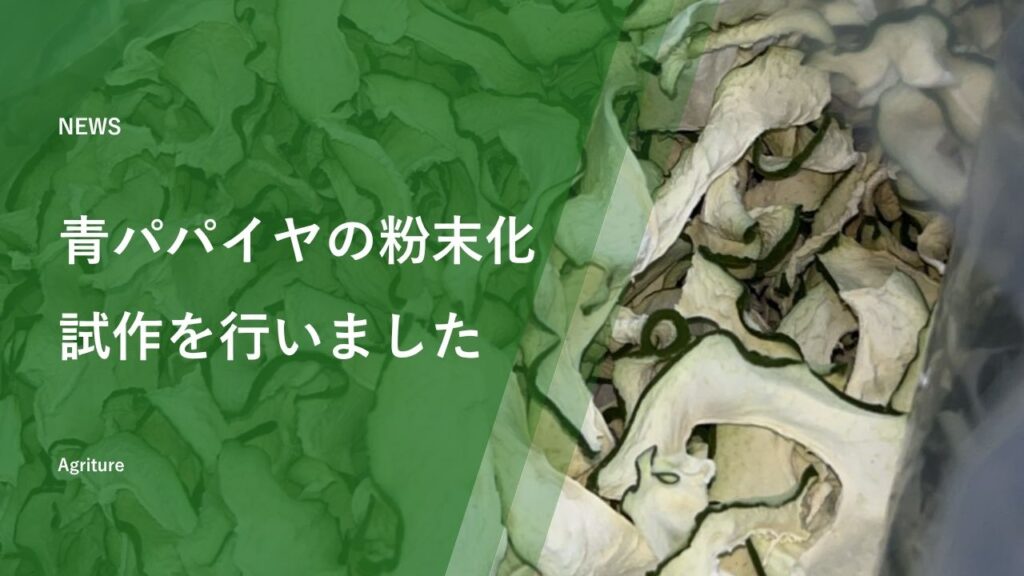
We Prototyped "Green Papaya Powder" Using Domestically Grown Green Papaya
Agriture recently prototyped "green papaya powder" using domestically grown green papaya. Green papaya is papaya harvested before full ripeness, and because it's rich in enzymes and dietary fiber, it draws attention as "papaya as a vegetable." The enzyme papain in particular... -
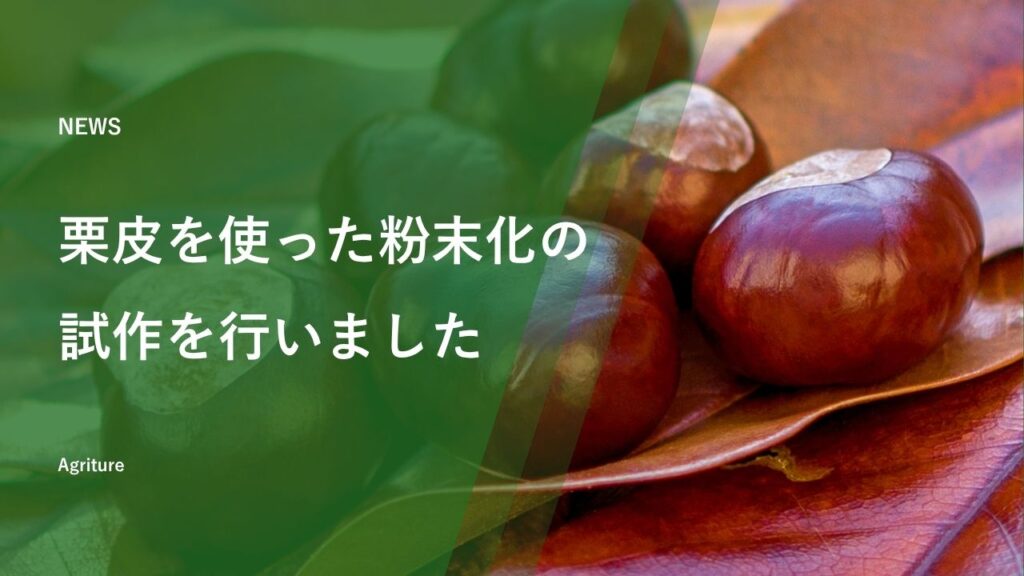
We Prototyped "Chestnut Skin Powder" Using Domestically Grown Chestnut Skins
Agriture recently prototyped "chestnut skin powder" making use of domestically grown chestnut skins. Chestnut skins have so far been a by-product often discarded in the food-processing process, but they draw attention as a sustainable ingredient. In particular, chestnut's inner and outer skins contain polyphenols and tannins... -

A Notice About the Rose Prototype
The rose is known as an aromatic, gorgeous flower, and because it contains relaxing aromatic compounds beyond just visual beauty, it's also used for food and herbal tea. Edible rose is an ingredient that can add aroma and color just by adding a small amount to sweets, beverages, seasonings, and more... -

How to eat vegetables during hay fever season
When hay fever season comes, days of being troubled by sneezing, runny nose, and itchy eyes begin. Many people may feel, here comes the tough season again this year. In fact, it has been pointed out that your diet, especially your vegetable intake, may be affecting hay fever symptoms... -
10 Ways to Solve Vegetable Shortage That Even Busy People Can Practice
The vegetable intake of Japanese is in a serious situation. The daily vegetable intake recommended by the Ministry of Health, Labour and Welfare is 350 g, but the actual average intake stops at about 280 g. People in their 20s and 30s especially are about 30 g below average. There are not a few people who cannot get enough vegetables, citing busyness... -
Vegetable powder cost-performance comparison! 7 points on how to choose and use
Do you know about vegetable powder? The daily vegetable intake recommended by the Ministry of Health, Labour and Welfare is 350 g, but the average intake of Japanese stops at about 280 g. Seeing this figure, you can tell that many people are unable to take in the vegetables they need. Especially for busy businesspeople, every... -
Black Tea OEM Original Blends: Origin and Flavor Design
Black tea OEM is a contract service for planning and manufacturing original black tea products under your own brand. You outsource everything—selecting tea leaves, blend design, flavoring, and packaging—to a specialist black tea manufacturer, allowing you to roll out black tea products bearing your own name from small lots. D2C, cafés, hotels, food... -
Preventing Food OEM Failures: Common Failure Cases and Countermeasures for Success
You want to make a food under your own brand. More and more companies are thinking this way. Entrants from other industries—retail, restaurants, startups—are becoming more active, and the food OEM market continues to expand. On the other hand, cases such as "the product didn't turn out as expected" or "costs exceeded expectations"... -
What Is Phytorich? A Vegetable Series Developed by Takii & Co. That You "Choose by Color," Rich in Functional Components
As diets diversify today, there is demand not just for "getting nutrition" but for higher-value-added foods. Vegetables rich in functional components are drawing particular attention. Among them, the "Phytorich series" developed by Takii Seed offers a rich range of functional components you "choose by color."... -
How to find a food OEM | How to efficiently find the best manufacturing partner
More and more companies want to roll out their own brand products in the food industry. Entrants from other industries—retail, restaurants, startups—are becoming more active, and inquiries such as "we want to prototype from small quantities" and "we want to make a product that leverages our strengths" are rapidly increasing... -
Food OEM Market Trends 2026: A Growth Strategy Seen Through Small-Lot and Domestic-Ingredient Needs
The food OEM market is at a turning point. Not only major companies but also retailers, restaurants, and startups—entrants from other industries are surging. Voices saying "we want to make our own brand product" and "we want to try prototyping from small quantities" are rising like never before. Behind this... -
How to Use OEM Matching Sites: Efficiently Finding the Optimal Manufacturing Partner
With a stream of entrants from other industries—retail, restaurants, startups—inquiries saying "we want to make our own brand product" never stop. But what many companies face is the challenge of "how to find a manufacturing partner they can trust." With trade shows and referrals alone... -

How to proceed with hometown-tax product development | OEM techniques that make the most of local ingredients
The market for furusato tax (hometown tax) donations continues to expand year after year. For municipalities, return gifts are an important means of broadcasting a region's appeal nationwide. But quite a few operators struggle with worries like "how do we develop an attractive product" or "we can't put together a manufacturing setup on our own"...