
- Minimum lot100g〜
- ShapeRounds (slices)
- Best-before dateAbout 6 months from the shipping date
- Growing regionDomestically grown

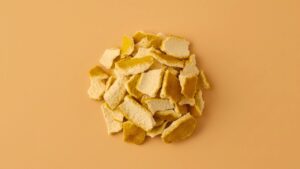
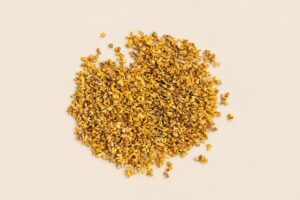
Yuzu Slices are a commercial ingredient made by cutting Japanese-grown yuzu into rounds without separating the peel and flesh, then drying them with low-temperature hot air. The round shape and yellow color stay intact, and when floated in hot water or tea, the yuzu aroma and acidity infuse slowly. No glucose, colorings or preservatives are used. Other dried forms of the same yuzu include Yuzu peel with the flesh removed, the granular Coarse Powder (Chips), and the finely milled Yuzu Powder (Japan-grown). We suggest Yuzu Slices where you want the shape to show, Yuzu Peel when you only want to add aroma, and the powder for blending into doughs and liquids.
Yuzu is extremely sour even when ripe; its juice has long been used for seasonings and beverages, and its peel as a garnish for cooking. Dried as whole rounds, Yuzu Slices add that aroma and acidity in a single piece, and the cut surface doubles as decoration. Use them as a raw material for tea blends and tea bags, garnishes for hot drinks and cocktails, honey-steeped yuzu tea, decorations for baked goods and Japanese sweets, and flavoring for hot pots and simmered dishes.
TOC
3 things we care about in Agriture's Yuzu Slices
1. Rounds with peel and flesh kept together
Yuzu's aromatic compounds are concentrated in the peel, while the flesh is strongly sour. Yuzu Slices are cut into rounds without separating the peel and flesh, so a single slice adds both aroma and acidity. The cross-section of the segments and the yellow rim of peel remain, so when added to drinks or sweets, it is clear at a glance that yuzu is in them.
2. Low-temperature hot-air drying to keep color and aroma
Yuzu Slices are finished by removing moisture with low-temperature hot air. They keep a bright yellow color and a clear yuzu fragrance. Yuzu has many seeds, and they fall out during drying. You may see holes near the center of a slice; these are where the seeds were.
3. Made only from Japanese-grown yuzu
The raw material is Japanese-grown yuzu. We add no glucose, colorings or preservatives, and finish it with yuzu alone. Because the only ingredient is yuzu, using it in tea blends or sweets does not complicate the ingredient list of the final product.
Product catalog showing the items we handle
Flexible support from small lots to large lots
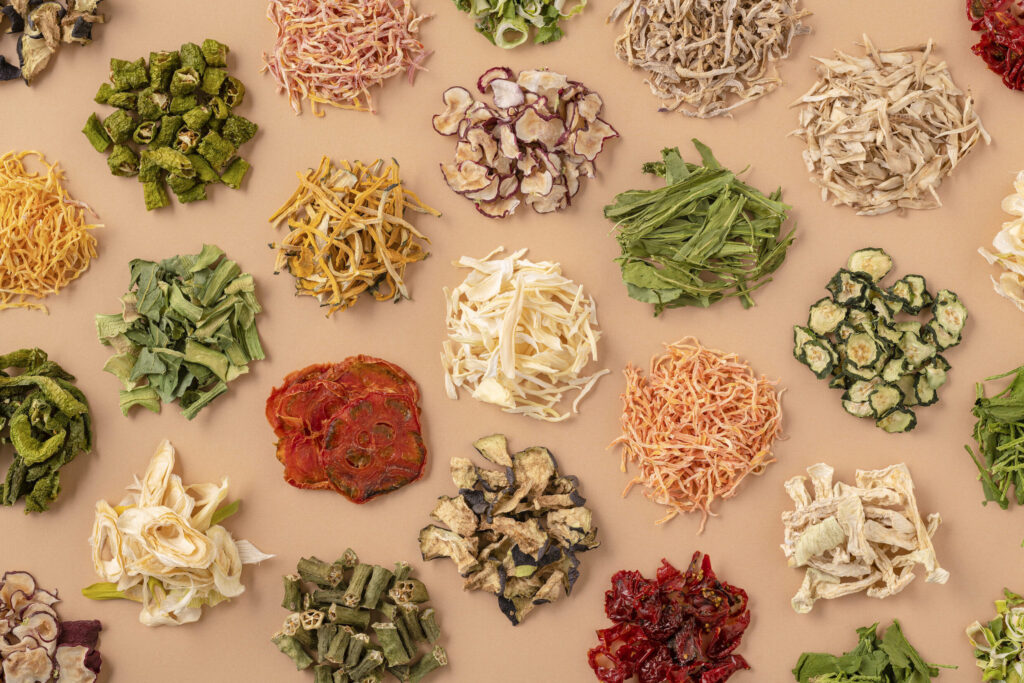
- Sold in small lots from 1 kg
- Handling heirloom vegetables from across Japan
- Dried fruits and herbs also supported
Features of commercial Yuzu Slices
Among dried citrus slices, yuzu stands out for its Japanese aroma and wintry feel, which makes its uses clear. Here are six features from the point of view of a commercial raw material.
The round shape stays intact
Rounds that show the cross-section of the segments and the rim of peel. They suit uses where the ingredient is shown, such as floating in drinks or placing on top of sweets.
Aroma and acidity in one slice
Each slice contains both the aroma of the peel and the acidity of the flesh. Floated in hot water or tea, the aroma and acidity infuse slowly.
Vivid yellow
Drying with low-temperature hot air keeps the yuzu's yellow color. It also works as a color accent.
Stores at room temperature
The best-before date is about 6 months from the shipping date. Fresh yuzu is only on the market from autumn to winter, but the dried product can be used in any season.
No additives
No glucose, colorings or preservatives are used. Since no sweetness is added, the sweetness can be set in the final product.
Choosing between peel and powder
Slices suit uses where the shape should show, Yuzu Peel suits adding aroma alone, and powder suits blending into doughs and liquids. We can suggest a matching set of forms from the same yuzu.
Product specifications (commercial)
The basic specifications are as follows. Please contact us individually about quantity, lead time and packaging.
| Item | Details |
|---|---|
| Product name | Yuzu Slices |
| Raw material | Yuzu (domestic) |
| Shape | Rounds (slices) |
| Appearance | Rounds showing a yellow rim of peel and the cross-section of the segments |
| Aroma | A clear yuzu fragrance |
| Net content | 100g〜 |
| Best-before date | About 6 months from the shipping date |
| Storage method | Avoid high temperature, high humidity, and direct sunlight; after opening, seal and store in a cool, dark place |
| Minimum lot | From 100g (OEM full production from 10kg) |
Customization support
You can consult us about everything from choosing the form to blending, packaging and product development.
| Item | Available | Details |
|---|---|---|
| Choice of form | Rounds / peel only / coarse powder / powder | We suggest the yuzu form to match the finish you have in mind |
| Blend design | Blending with tea leaves and other dried ingredients | Blends with green tea, hojicha, herbal tea and more |
| Packaging form | Commercial bags / small bags | We can also use packaging materials you bring in |
| Small-pouch filling | From 500 bags in total | Product launches in tea bags or individual packs |
| OEM productization | Full production from 10kg | Talk to us about developing tea, drink and confectionery products |
For those considering the fine-powder type
For uses where you want to blend evenly into doughs or liquids, the finely milled Yuzu Powder (Japan-grown) is the better fit. Consider it for ponzu, dressings, yuzu salt, kneading into doughs, and drinks.
Commitments to variety, grower, and growing region
Yuzu is an acid citrus of the Rutaceae family, with the scientific name Citrus junos. It is said to originate in the upper reaches of the Yangtze River in China and is thought to have reached Japan via the Korean Peninsula around the 7th century. Records show it was grown for medicinal use and as a vinegar in the Nara period.
BRAND | Where Yuzu Slices fit
Rather than being eaten as is, yuzu has long been used to carry its aroma and acidity into dishes and drinks. Yuzu Slices offer that aroma and acidity plus the look of the round slice. Use them in tea, drinks, sweets and other products where the ingredient is visible.
PRODUCER | How we source
Yuzu fruiting varies from year to year, with some years yielding less. Dried yuzu keeps longer than fresh yuzu, so it can be used outside the harvest season. If your annual volume is fixed, contacting us before the harvest makes it easier to secure the quantity you need.
REGION | Main growing regions
In Japan, yuzu is mainly grown in Kochi and Tokushima prefectures, and also in Ehime Prefecture. Saitama Prefecture was once a main growing region, but since 1970 production has shifted to Kochi, Tokushima and other prefectures, and the growing regions in western Japan have expanded. Agriture's Yuzu Slices use Japanese-grown yuzu. The origin of each lot is given on the specification sheet.
CULTIVATION | Growing and harvest
Yuzu is a cold-hardy citrus. Grown from seed, a tree takes 10 years or more to bear fruit, so it is often grafted onto trifoliate orange (karatachi) to allow harvesting within a few years. The harvest runs from autumn to winter; in Ehime Prefecture, shipments run from late October to mid-December.
Low-temperature drying technology and quality control
Sliced into rounds, then dried
After washing, the yuzu is cut into rounds without separating the peel and flesh and dried as is. Because the flesh and peel are not separated, the shape of the segments stays intact. The seeds fall out during drying.
Low-temperature hot-air drying that keeps color and aroma
Removing moisture with low-temperature hot air keeps the yuzu's yellow color and aroma. After drying, light, heat and humidity change the color and aroma. After opening, close the bag tightly and store away from light and humidity. Moving it to a light-blocking container is also recommended.
Use cases
Here are ways to use the shape, aroma and acidity of Yuzu Slices, in six categories.
1. Tea blends and tea bags
Use them in blends with green tea, hojicha or herbal tea. Pour hot water over them together with the tea leaves and the yuzu aroma rises. In products sold as loose leaf, the round shape adds color.
2. Garnishes for hot drinks and cocktails
Float a single slice in hot water, black tea or plain hot water to add aroma and a yellow round. They also work as a garnish for highballs and spirits mixed with hot water. There is no need to cut fresh yuzu, and you can serve the same look in any season.
3. Honey-steeping and syrups
Steep them in honey, then dilute with hot water to make yuzu tea. They can also be steeped in syrup. Because no sweetness is added to the raw material, the sweetness is set by what you steep them in.
4. Decorations for baked goods and Japanese sweets
Placed on baked goods or Japanese sweets as a finishing touch, the round shape becomes decoration. In sweets that feature yuzu flavor, it shows what is inside at a glance.
5. Hot pots, simmered dishes and soups
Add them to hot pots, simmered dishes or soups at the finishing stage and the yuzu aroma comes through. They keep at room temperature, so you can take out only what you need.
6. Winter seasonal products and gifts
Yuzu is a fruit that represents winter, also used in yuzu baths on the winter solstice. It works as an ingredient that adds a seasonal touch to tea and drink sets for the year-end and winter gift season.
Commercial usage and rehydration
Rehydration basics
- Drinks: float as is in hot water, black tea or plain hot water. The aroma and acidity infuse slowly
- Honey-steeping: steep in honey, then dilute with hot water to make yuzu tea
- Hot pots and soups: add at the finishing stage. They rehydrate in the liquid
- Decorating sweets: place on top dry, as a finishing touch
Blending guide
- Drinks: about one slice per cup
- Tea blends: set the ratio to tea leaves through prototypes while checking how the aroma comes through
- Sweets and cooking: start with a small amount while checking the strength of aroma and acidity
How to store
- Before opening: store in a cool, dark place at room temperature, away from heat, humidity, and direct sunlight
- After opening: transfer to a zip bag or airtight container and use up soon
- The best-before date is about 6 months from the shipping date. Note that light, heat and humidity change the color and aroma
- If stored in the refrigerator, bring it back to room temperature before opening to avoid condensation
Related cases and articles
- Dried yuzu, yuzu peel and yuzu powder (commercial)
- Yuzu Peel – peel only, dried with the flesh removed
- Yuzu Powder (Japan-grown) – a fine powder raw material
- Tea OEM – developing tea products with yuzu
- Consult us on food OEM and raw material supply
Product catalog showing the items we handle
Flexible support from small lots to large lots
- Sold in small lots from 1 kg
- Handling heirloom vegetables from across Japan
- Dried fruits and herbs also supported
Frequently asked questions
How do these differ from Yuzu Peel and Yuzu Powder?
Yuzu Slices are rounds containing both peel and flesh, suited to uses where the shape should show. Yuzu Peel is peel only, with the flesh removed; choose it when you want to add aroma without adding sourness. Yuzu Powder is a fine powder, suited to products where you want it to blend evenly into doughs or liquids.
Where is the growing region?
We use Japanese-grown yuzu. The origin of each lot is given on the specification sheet.
Do you use additives?
No glucose, colorings or preservatives are used. The only ingredient is yuzu.
Can it be used in tea blends or tea bags?
Yes. It can be combined with loose-leaf tea as whole rounds. For tea bags too small to hold a whole round, we suggest Yuzu Peel or the coarse powder.
What is the minimum lot?
You can order from 100g. OEM full production starts at 10kg, and small-pouch filling at 500 bags in total. Tell us the quantity and timing you have in mind and we will give you a quote and lead time.
Please tell me the best-before date and how to store it.
The best-before date is about 6 months from the shipping date. Store at room temperature in a cool, dark place, away from high temperature, humidity and direct sunlight. After opening, seal it and use it up soon.
Recommended reading
- Dried yuzu for commercial use
- Dried Yuzu – coarse powder (chips)
- Yuzu peel
- Wholesale Japanese-grown dried fruit
- Dried Vegetables and Dried Fruit List
Download the product catalog
We will send the materials to your email address based on the information you provide.